

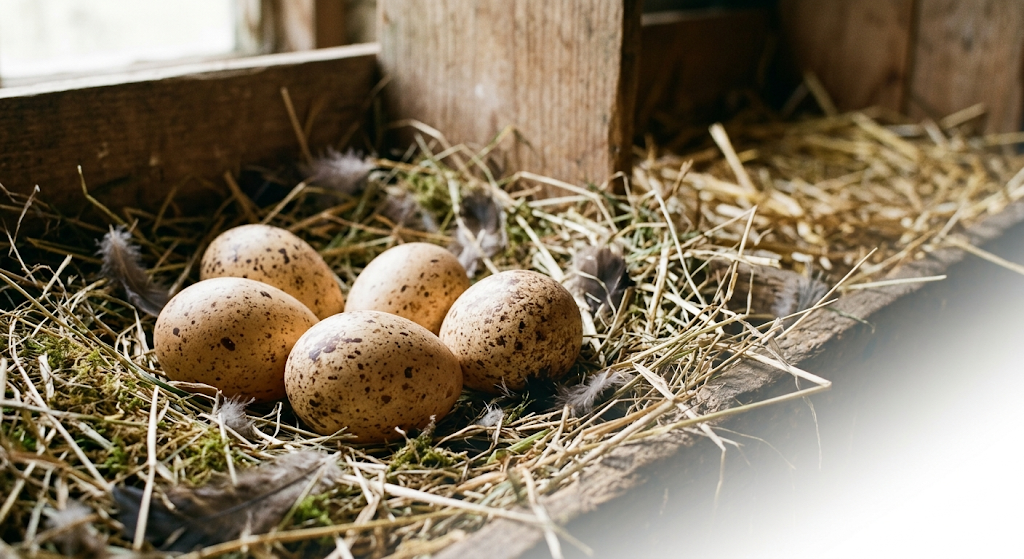
Guinea fowl eggs are good to eat. They are safe, nutritious, and have a rich flavor that many people prefer over regular chicken eggs. If you’ve wondered whether these small, speckled eggs from your backyard flock are worth eating, the short answer is absolutely yes.
This article covers everything you need to know — nutrition, taste, health benefits, and how to use them. Let’s get right to it.
What Do Guinea Fowl Eggs Taste Like Compared to Chicken Eggs?
Guinea fowl eggs taste richer and creamier than chicken eggs. The yolk is larger relative to the egg size, which gives them a deeper, more buttery flavor. Many people describe the taste as more “eggy” — satisfying and full-bodied.
The texture when cooked is also slightly denser. This makes them excellent for baking, frying, or eating scrambled.
Key taste differences:
- Yolk-to-white ratio — Guinea fowl eggs have a higher yolk ratio than chicken eggs, making them creamier.
- Flavor intensity — The taste is richer but not overpowering. It’s closer to a free-range chicken egg in depth.
- Shell thickness — The shell is noticeably harder. You’ll need a firm crack to open them.
- Size — Guinea fowl eggs are roughly half the size of a standard large chicken egg.
Two guinea fowl eggs are roughly equal to one large chicken egg in cooking.
Guinea Fowl Egg Nutrition Facts: Are They Actually Healthy?
Guinea fowl eggs are highly nutritious. A single guinea fowl egg provides a strong concentration of protein, healthy fats, vitamins, and minerals for its small size.
Because the yolk takes up more of the egg than in a chicken egg, guinea fowl eggs deliver more fat-soluble vitamins per gram. According to nutritional data on poultry eggs, egg yolks are a key source of vitamins A, D, E, and K, as well as choline — a nutrient important for brain and liver health (Healthline: Egg Nutrition).
Approximate nutrition per guinea fowl egg (one egg, ~40g):
| Nutrient | Amount (approx.) |
|---|---|
| Calories | 55–65 kcal |
| Protein | 5–6g |
| Total Fat | 4–5g |
| Saturated Fat | 1.2g |
| Cholesterol | 130–150mg |
| Vitamin A | 8–10% DV |
| Vitamin B12 | 10–12% DV |
| Iron | 4–6% DV |
| Choline | 90–110mg |
Values are estimates based on comparable small poultry eggs. Exact content varies by diet and husbandry.
Nutritional highlights:
- High-quality protein — Guinea fowl eggs contain all essential amino acids, making them a complete protein source.
- Vitamin B12 — Critical for nerve function and energy metabolism. Even one egg contributes a meaningful amount.
- Choline — Supports brain development and liver function. Guinea fowl eggs are a strong source due to their large yolk.
- Healthy fats — Rich in monounsaturated and polyunsaturated fats, especially if the birds are pasture-raised.
- Vitamin A — Supports immune function, vision, and skin health.
Are Guinea Fowl Eggs Good or Bad for Your Cholesterol?
This is a fair question. Guinea fowl eggs do contain cholesterol — around 130–150mg per egg — which comes mostly from the large yolk.
However, current research shows that dietary cholesterol from eggs does not raise the risk of heart disease for most healthy people. The American Heart Association notes that one egg per day is acceptable for people without diabetes or heart disease.
The type of fat in an egg matters more than the cholesterol number. Guinea fowl eggs from pasture-raised birds tend to have a better omega-6 to omega-3 ratio than factory-farmed chicken eggs, which supports cardiovascular health over time.
Who should watch their intake:
- People with type 2 diabetes or existing heart disease should limit egg yolk consumption.
- For most others, 1–2 guinea fowl eggs per day fits within a balanced diet.
Can You Eat Guinea Fowl Eggs Raw or Do They Need Cooking?
Guinea fowl eggs should be cooked before eating, just like chicken eggs. Eating raw eggs — of any poultry — carries a risk of Salmonella contamination. Cooking to an internal temperature of 71°C (160°F) eliminates that risk.
The eggs are safe and delicious when:
- Fried (sunny side up, over easy)
- Scrambled
- Hard or soft boiled
- Baked into cakes, breads, or quiches
- Poached
The hard shell means they take a firm strike to crack, but once open they behave just like any other egg in the kitchen.
How Do Guinea Fowl Eggs Compare to Chicken and Duck Eggs?
Guinea fowl eggs sit between chicken and duck eggs in richness and size. Here’s how they compare across key factors:

| Feature | Guinea Fowl Egg | Chicken Egg | Duck Egg |
|---|---|---|---|
| Size | Small (~40g) | Medium–Large (~60g) | Large (~70g) |
| Yolk ratio | Higher | Standard | Higher |
| Flavor | Rich, creamy | Mild | Very rich |
| Shell | Very hard | Standard | Hard |
| Protein per egg | ~5–6g | ~6–7g | ~8–9g |
| Availability | Limited/seasonal | Widely available | Specialty stores |
| Best for | Baking, frying | All uses | Baking, pasta |
Guinea fowl eggs are excellent for baking because the rich yolk adds moisture and color to cakes and pastries. Many bakers who discover them prefer them over duck eggs for flavor balance.
When Are Guinea Fowl Eggs Available? Understanding Their Laying Season
Guinea fowl are seasonal layers. Unlike chickens that lay year-round, guinea hens typically lay from spring through early fall — usually March to October in the Northern Hemisphere. This depends on daylight hours, temperature, and the individual bird.
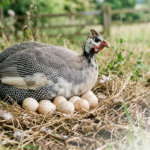
A healthy guinea hen lays around 100–180 eggs per year during her laying season. Eggs are laid daily in clutches, often in hidden nests on the ground if birds are free-ranging.
Practical tips for egg availability:
- Check for hidden ground nests if your guinea fowl are free-range.
- Collect eggs daily to prevent spoilage or brooding behavior.
- Store unwashed eggs at room temperature for up to 2 weeks, or refrigerated for up to 6 weeks.
- Freshness test: place the egg in a bowl of water. Sinks and lies flat = very fresh. Floats = discard.
Frequently Asked Questions
Guinea fowl eggs come with a lot of questions — especially for new keepers or those seeing them for the first time. Here are clear answers to the most common ones.
Are guinea fowl eggs safe to eat? Yes. Guinea fowl eggs are completely safe to eat when properly handled and cooked. They carry the same food safety rules as chicken eggs — wash hands after handling, refrigerate after washing, and cook to 71°C (160°F) to kill any bacteria.
Do guinea fowl eggs taste different from chicken eggs? Yes, they taste noticeably richer and creamier due to their larger yolk. The flavor is more intense than a standard supermarket chicken egg but similar to a high-quality free-range egg. Most people who try them enjoy the difference.
How many guinea fowl eggs equal one chicken egg? Two guinea fowl eggs roughly equal one large chicken egg in volume. Use this ratio when substituting in recipes.
Are guinea fowl eggs good for baking? Yes — they’re excellent for baking. The large, rich yolk adds color, moisture, and depth of flavor to baked goods. Many home bakers prefer them for cakes, custards, and pasta doughs.
Are guinea fowl eggs more nutritious than chicken eggs? They are comparable in most nutrients and slightly richer in some fat-soluble vitamins due to the larger yolk-to-white ratio. Neither is dramatically superior — both are nutritious whole foods.

Can guinea fowl eggs be eaten if the hen is not fertilized? Yes. Unfertilized guinea fowl eggs are just as safe and nutritious as fertilized ones. Fertilization only matters for hatching chicks — not for eating.
Final Thoughts
Guinea fowl eggs are good to eat, safe, and genuinely nutritious. They offer a richer flavor than chicken eggs, solid protein content, important vitamins, and healthy fats — all in a small, sturdy package.
If you keep guinea fowl or have access to fresh eggs from a local farm, don’t overlook them. Use them just like chicken eggs — fried, baked, boiled, or scrambled. The taste speaks for itself.

Ready to try them? Check your local farmers market or ask nearby backyard flock owners during spring and summer. Fresh guinea fowl eggs are a real treat worth seeking out.
Have you tried guinea fowl eggs? Drop a comment below and share your experience — we’d love to hear how you used them.