

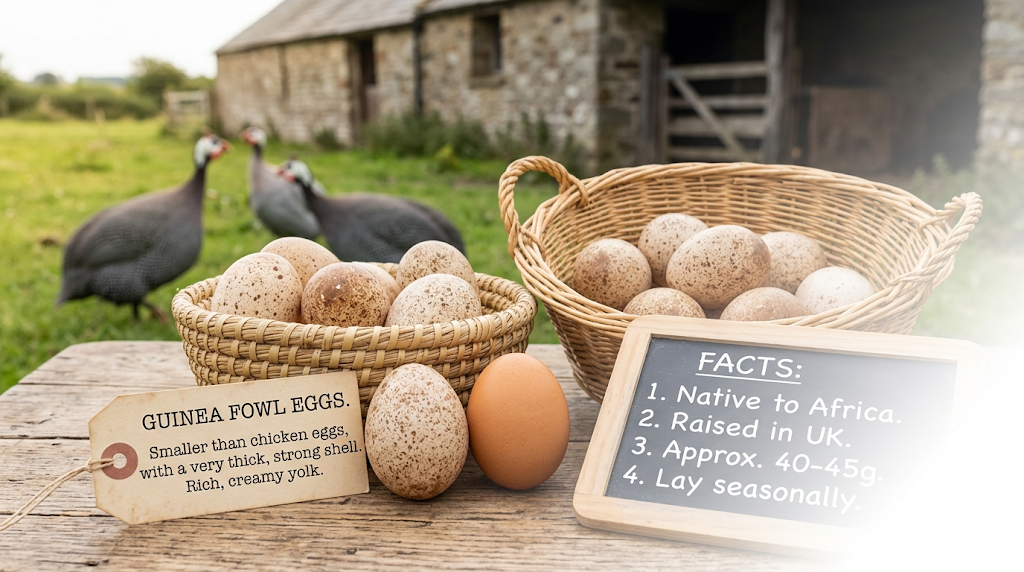
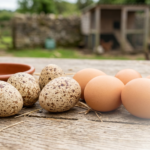
Guinea fowl eggs are small, hard-shelled, and light brown with speckles. They are noticeably smaller and harder than chicken eggs, but they pack strong flavor and nutrition. If you raise guinea fowl — or are thinking about it — knowing what their eggs look like helps you find, collect, and use them with confidence.
This guide covers guinea fowl egg size, color, shell texture, and how they compare to chicken eggs. Everything here is practical and straight to the point.
What Do Guinea Fowl Eggs Look Like?
Guinea fowl eggs have a distinct appearance that sets them apart from most backyard poultry eggs. They are small, pear-shaped, and light tan or cream-brown in color, often dotted with tiny dark speckles.
The shell is noticeably thicker and harder than a chicken egg shell. This makes them tougher to crack but also better at resisting damage during collection.
Key visual traits at a glance:
- Shape: Pear-shaped or slightly pointed at one end
- Color: Light tan, cream, or pale brown with speckles
- Shell texture: Thick, smooth, and very hard
- Size: Smaller than a standard chicken egg
Guinea Fowl Egg Color: What Shades Are Normal?
Guinea fowl eggs range from pale cream to light tan or warm brown. Most have small, dark brown speckles scattered across the surface. The color can vary slightly depending on the hen and her diet, but the speckled, muted-tan appearance is consistent across most guinea fowl breeds.
Unlike chicken eggs, guinea fowl eggs do not come in white or deep brown tones. The pale speckled shell is a reliable identifying feature.
| Egg Feature | Typical Appearance |
|---|---|
| Base color | Pale cream to light tan |
| Speckles | Dark brown, fine and scattered |
| Shell finish | Smooth, matte |
| Shell thickness | Notably thick — harder than chicken |
Guinea Fowl Egg Size: How Big Are They?
Guinea fowl eggs are smaller than standard chicken eggs. On average, a guinea fowl egg weighs about 1.2 to 1.4 ounces (35–40 grams). A standard large chicken egg weighs around 2 ounces (56 grams).
In practical terms, you’ll need about one and a half to two guinea fowl eggs to replace one large chicken egg in a recipe.
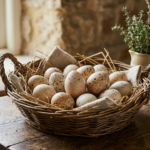
Quick size comparison:
| Egg Type | Average Weight | Shell Strength |
|---|---|---|
| Guinea fowl egg | 35–40 g (1.2–1.4 oz) | Very thick and hard |
| Large chicken egg | ~56 g (2 oz) | Standard thickness |
| Quail egg | ~10 g (0.35 oz) | Thin |
Are Guinea Fowl Eggs Bigger Than Chicken Eggs?
No. Guinea fowl eggs are smaller than chicken eggs — roughly two-thirds the size of a standard large chicken egg. However, the yolk-to-white ratio in guinea fowl eggs is higher, meaning more yolk per egg compared to a chicken egg of similar size.
This makes guinea fowl eggs richer in flavor, especially in baked goods and scrambled eggs.
Guinea Fowl Egg Shell: Why Is It So Hard?
Guinea fowl eggshells are significantly thicker than chicken eggshells. This is a natural adaptation — guinea fowl originally nested on the ground in wild or semi-wild conditions, where eggs needed extra protection.
The thick shell serves two purposes:
- Protection in the nest — resists cracking from ground nesting
- Longer storage — the dense shell slows moisture loss and may extend shelf life slightly
When cracking guinea fowl eggs, use a firm, decisive tap. A gentle tap often isn’t enough to break through cleanly.
Guinea Fowl Eggs vs Chicken Eggs: Key Differences
Guinea fowl eggs and chicken eggs can be used interchangeably in the kitchen, but they have notable differences in size, shell, and flavor.
Flavor: Guinea fowl eggs have a richer, more pronounced yolk flavor than most chicken eggs. Many people describe them as “more eggy” with a creamier texture.
Nutrition: Guinea fowl eggs are comparable to chicken eggs in protein and fat, though the higher yolk ratio means slightly more fat per gram of egg. According to general poultry nutrition data, guinea fowl eggs contain similar levels of vitamins A, B12, and D as chicken eggs.
Availability: Guinea hens lay seasonally, primarily from spring through early fall. They don’t lay year-round like commercial chickens, so eggs can be limited in supply.
| Feature | Guinea Fowl Egg | Chicken Egg |
|---|---|---|
| Size | Smaller (35–40 g) | Larger (~56 g) |
| Shell | Thick and hard | Standard |
| Color | Tan/cream, speckled | White, brown, blue/green |
| Flavor | Rich, creamy | Mild |
| Laying season | Seasonal | Year-round (commercial) |
| Yolk ratio | Higher | Standard |
How Many Eggs Do Guinea Fowl Lay?
A guinea hen typically lays 80–160 eggs per year, depending on breed, environment, and management. This compares to 250–300 eggs per year for a productive laying hen.

Guinea fowl are not bred for high egg production. They are kept more often for pest control, meat, and as alert animals on a farm. Egg production is a bonus, not their primary role.
Laying season facts:
- Peak laying: Spring through early fall
- Daily habit: Usually lays in the morning, often in hidden nests
- Clutch behavior: Guinea hens may hide eggs in tall grass or brush before going broody
How to Find Guinea Fowl Eggs on a Free-Range Farm
Guinea hens are notorious for hiding their nests. Unlike chickens, they rarely use a nest box. On a free-range setup, eggs are often found in tall grass, under shrubs, or along fence lines.
Practical tips for collection:
- Walk the perimeter of their ranging area daily
- Watch the hen — if she disappears at the same time each morning, she likely has a hidden nest
- Use fake eggs in nest boxes to encourage laying in accessible spots
- Collect daily to prevent broodiness and reduce predator attraction
Are Guinea Fowl Eggs Good to Eat?
Yes. Guinea fowl eggs are fully edible and considered a delicacy in some regions. They taste similar to chicken eggs but richer, with a deeper yolk flavor. They work well in scrambled eggs, omelets, baking, and pasta dough.

The thick shell means they stay fresh slightly longer than chicken eggs when stored at room temperature, though refrigeration is still recommended.
Best uses for guinea fowl eggs:
- Scrambled or fried — rich flavor stands out
- Baking — higher yolk ratio adds moisture and color
- Hard-boiled — firm yolk, easy to peel once shell is cracked
- Pasta dough — creamy yolk improves texture
FAQs: Guinea Fowl Egg Size, Color, and Facts
These questions come up often among new guinea fowl keepers and backyard poultry owners.
Q: What color are guinea fowl eggs? Guinea fowl eggs are pale cream to light tan with small dark brown speckles. They do not come in white or deep brown like some chicken eggs.
Q: How do I tell a guinea fowl egg apart from a chicken egg? Guinea fowl eggs are smaller, pear-shaped, and have a noticeably thicker, harder shell. The speckled tan color is also a strong visual cue. Chicken eggs feel lighter and crack more easily.
Q: Can I substitute guinea fowl eggs for chicken eggs in recipes? Yes. Use 1.5 to 2 guinea fowl eggs per 1 large chicken egg. The flavor will be slightly richer and the yolk color deeper.
Q: Do guinea fowl eggs taste different from chicken eggs? Most people find guinea fowl eggs richer and more flavorful than chicken eggs, with a creamier yolk. The difference is noticeable but not dramatic.
Q: Why are guinea fowl eggshells so hard? The thick shell is a natural adaptation from ground nesting in the wild. It protects eggs from breakage and helps retain moisture longer.
Q: How long do guinea fowl lay eggs? Guinea hens lay seasonally, mainly from spring through early fall. A healthy hen produces around 80–160 eggs per year — far fewer than a commercial laying hen.
Final Thoughts
Guinea fowl eggs are small, speckled, and hard-shelled — easy to identify once you know what to look for. They are smaller than chicken eggs but richer in flavor, with a higher yolk ratio that makes them excellent for cooking and baking.
If you keep guinea fowl, expect to do some searching for hidden nests and plan for seasonal laying. The eggs are worth the effort — flavorful, nutritious, and a genuine farm-fresh bonus from birds that earn their keep in other ways too.
Next step: If you’re raising guinea fowl or thinking about starting, check out what to feed guinea fowl for better egg production — small adjustments to diet can make a real difference in laying frequency and egg quality.