

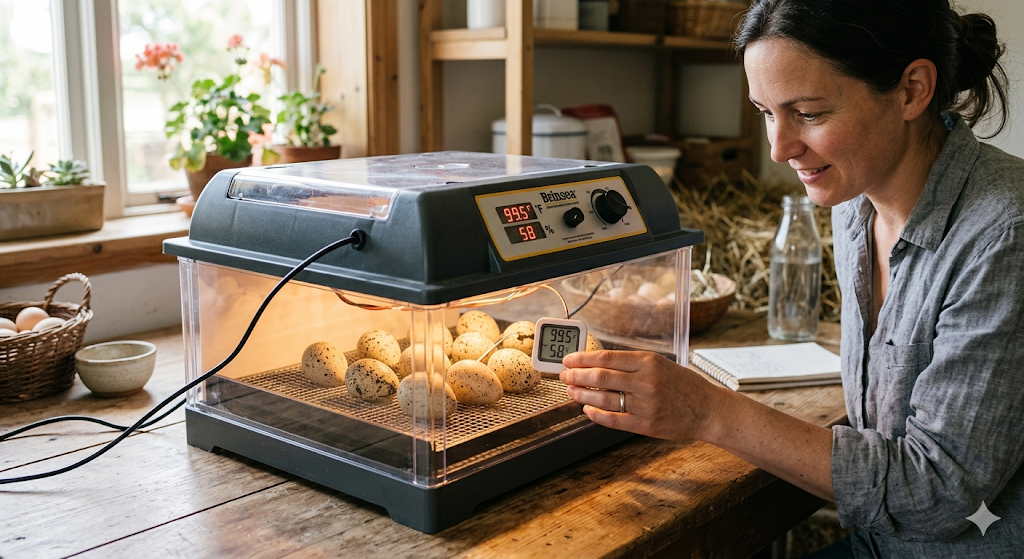
Guinea fowl eggs take 28 days to hatch. Get the temperature, humidity, and turning schedule right, and your hatch rate will reward you.
Most people who fail at hatching guinea eggs make the same three mistakes: wrong temperature, low humidity at lockdown, or not turning often enough. This guide covers all three — plus a simple day-by-day breakdown so you always know what to do next.
Guinea Fowl Egg Incubation Period: How Long Does It Take?
Guinea fowl eggs have an incubation period of 26 to 28 days. Most eggs begin pipping (cracking from the inside) on day 25 to 26 and fully hatch by day 28.
The exact hatch time depends on egg freshness, incubator consistency, and whether the eggs were stored before setting. Research published in Poultry Science found that storing guinea eggs for more than 7 days before incubation delays hatching and reduces hatchability. For the best results, set eggs within 7 days of laying.
Key incubation timeline at a glance:
| Phase | Days | What Happens |
|---|---|---|
| Setting phase | Days 1–25 | Embryo develops; eggs are turned regularly |
| Lockdown phase | Days 25–28 | Turning stops; humidity is raised |
| Hatching | Days 26–28 | Pipping begins; keets emerge |
Do Guinea Fowl Hatch Their Own Eggs?
Guinea hens can hatch their own eggs — but it’s not always a reliable process.
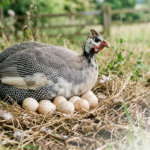
A guinea hen typically lays 20 to 30 eggs before going broody. Once she sits, she is a committed incubator. The problem is after hatching. Guinea hens are known to abandon the nest as soon as the first keets start moving, leaving unhatched eggs behind.
Many small farmers find better results giving guinea eggs to a broody chicken hen. A large chicken can cover 20 to 28 guinea eggs and tends to be a more attentive sitter. Still, an incubator gives the most control — especially if no broody hen is available.
Guinea Fowl Egg Incubation Temperature: Getting It Right
The correct incubation temperature for guinea fowl eggs is 99–100°F (37.2–37.8°C) in a forced-air incubator. In a still-air incubator, raise the temperature slightly to 101–102°F (38.3–38.9°C) since heat is less evenly distributed.

Research on 8,000 guinea fowl eggs, published in the British Poultry Science journal, found the optimal incubation temperature to be 37.2°C (99°F), with even small deviations significantly impacting hatch rates.
A variation of more than 1–2°F from the target can slow embryo development or cause early embryo death. Always use a calibrated thermometer — never rely solely on the incubator’s built-in display.
Temperature tips:
- Run the incubator empty for 24 hours before setting eggs. This lets the environment stabilize.
- Place the thermometer at egg level, not at the top or sides.
- Avoid direct sunlight or drafts near the incubator — both cause temperature swings.
- On lockdown (day 25), some keepers lower temperature slightly to 98°F (36.7°C) to support hatching.
Guinea Fowl Egg Humidity Levels: What You Need at Each Stage
Humidity is the most overlooked variable in a guinea fowl hatch. Too low, and the keet dries out inside the shell. Too high, and it can drown.
Guinea fowl egg humidity follows two distinct phases:
Phase 1 — Days 1 to 25 (Incubation): Maintain relative humidity at 45–55%. Some experienced keepers use the “dry incubation” method, keeping humidity closer to 30–45%, which can improve hatch rates by allowing proper moisture loss through the porous shell.
Phase 2 — Days 25 to 28 (Lockdown): Raise humidity to 70–80% (some sources suggest up to 85%). This softens the shell membrane so the keet can zip out cleanly without getting stuck.
Humidity quick reference:
| Stage | Days | Humidity Target |
|---|---|---|
| Incubation | 1–25 | 45–55% |
| Lockdown | 25–28 | 70–85% |
Use a calibrated hygrometer, not an estimate. Add warm water to the reservoir — cold water can cause temperature dips inside the incubator.
How to Incubate Guinea Fowl Eggs at Home: Step-by-Step
Here is a practical, step-by-step process for hatching guinea fowl eggs in a home incubator.

Before you start:
- Use fresh eggs — no older than 7 days from laying for best hatchability.
- If eggs were shipped, let them rest for 24 hours at room temperature before setting. Setting cold eggs causes condensation and can crack the shell.
- Mark each egg with an “X” on one side and an “O” on the other using a soft lead pencil. This makes it easy to confirm eggs are being turned correctly.
Step-by-step incubation process:
- Run the incubator for 24 hours before adding eggs. Confirm temperature and humidity are stable at target levels.
- Place eggs on their side (or pointy-end down in an egg carton turner). Guinea eggs have a noticeably pointed end, which makes positioning easier than with chicken eggs.
- Turn eggs at least 3 times daily from day 1 through day 25. Turning every 6–8 hours gives the best results. Always turn an odd number of times per day so the egg doesn’t rest on the same side each night.
- Monitor temperature twice daily and log readings. Address any variation above 1–2°F immediately.
- Maintain humidity at 45–55% through day 25. Add warm water to the reservoir as needed.
- Candle eggs on day 7 and day 14 to check development. Remove any clear (infertile) or dark (early death) eggs promptly.
- Stop turning on day 25 (lockdown). Raise humidity to 70–80%. Do not open the incubator again until hatching is complete.
- Wait for pipping, which usually begins on day 25–26. Do not assist keets unless they have been pipping for more than 24 hours without progress.
- Leave keets in the incubator until they are fully dry and fluffy — usually 12 to 24 hours after hatching.
- Move dried keets to a prewarmed brooder set to 95°F (35°C) for the first week.
Candling Guinea Fowl Eggs: When and What to Look For
Candling means shining a bright light through the egg to check for development. It helps remove unfertile or dead eggs early — which protects healthy embryos from bacterial contamination.
When to candle:
- Day 7: Look for a small dark spot with visible blood vessels. This is the developing embryo.
- Day 14: The egg should appear mostly dark with a clear air cell at the wide end. Movement may be visible.
- Day 21: The air cell will be larger. The embryo should fill most of the egg.
Guinea fowl shells are thicker and darker than chicken eggs, so candling can be harder. Use a very bright LED candler in a dark room for the best view.
Remove any eggs that appear completely clear (infertile) or show a “blood ring” (early embryo death). Leave borderline eggs in — when in doubt, wait until the next candling day.
Common Guinea Fowl Incubation Problems and How to Fix Them
Even experienced farmers run into hatching problems. Here are the most common issues and their solutions.
- Low hatch rate (below 50%): Often caused by poor egg storage, low fertility in the flock, or inconsistent incubator temperature. Check breeder nutrition and male-to-female ratios (1 male to 4–5 females is standard).
- Keets fully developed but not hatching: Usually a humidity problem during lockdown. Raise humidity to 80% and give keets more time before considering intervention.
- Keets hatching too early or too late: Caused by temperature running too high or too low. Recalibrate the incubator thermometer.
- Sticky keets (stuck to shell membrane): A sign humidity was too low during lockdown. This is one of the most preventable problems — don’t skip the humidity increase on day 25.
- Eggs weeping or smelling bad: Remove these immediately. A rotten egg can explode and contaminate the entire incubator.
Frequently Asked Questions
Guinea fowl incubation raises a lot of practical questions. Here are honest, experience-based answers to the most common ones.
How long does it take for guinea fowl eggs to hatch? Guinea fowl eggs typically hatch in 26 to 28 days. With a well-calibrated incubator, pipping often begins on day 25 and most keets are out by day 27–28.
What temperature should a guinea fowl incubator be set to? Set a forced-air incubator to 99–100°F (37.2–37.8°C). For a still-air incubator, use 101–102°F (38.3–38.9°C). Temperature at egg level is what matters most — always verify with a reliable thermometer.
What humidity is needed to hatch guinea fowl eggs? Keep humidity between 45–55% for the first 25 days. Raise it to 70–80% during lockdown (days 25–28) to help keets break free from the shell membrane.
How often should guinea fowl eggs be turned during incubation? Turn eggs at least 3 times daily from day 1 through day 25. Every 6–8 hours is ideal. Stop turning completely on day 25 when lockdown begins.
Can I hatch guinea fowl eggs without an incubator? Yes — a broody guinea hen or chicken hen can hatch guinea eggs naturally. A large chicken hen can cover 20–28 eggs. The challenge is the hen may abandon the nest once the first keets hatch, leaving remaining eggs behind.
How do I know if my guinea fowl eggs are fertile? Candle the eggs on day 7. A fertile, developing egg shows a dark central spot with radiating blood vessels — sometimes called a “spider” pattern. A clear egg is likely infertile.
Final Thoughts
Hatching guinea fowl eggs at home is very doable with the right setup. The incubation period runs 26 to 28 days. Temperature should stay at 99–100°F in a forced-air incubator. Humidity sits at 45–55% for the first 25 days, then jumps to 70–80% at lockdown.

The biggest wins come from using fresh eggs, keeping conditions stable, and resisting the urge to open the incubator during hatch. Patience counts for more than perfect equipment.
If this is your first guinea fowl hatch, start small — a batch of 12 to 20 eggs is manageable. Keep a simple log of temperature and humidity each day. It makes troubleshooting much easier if something goes wrong.