

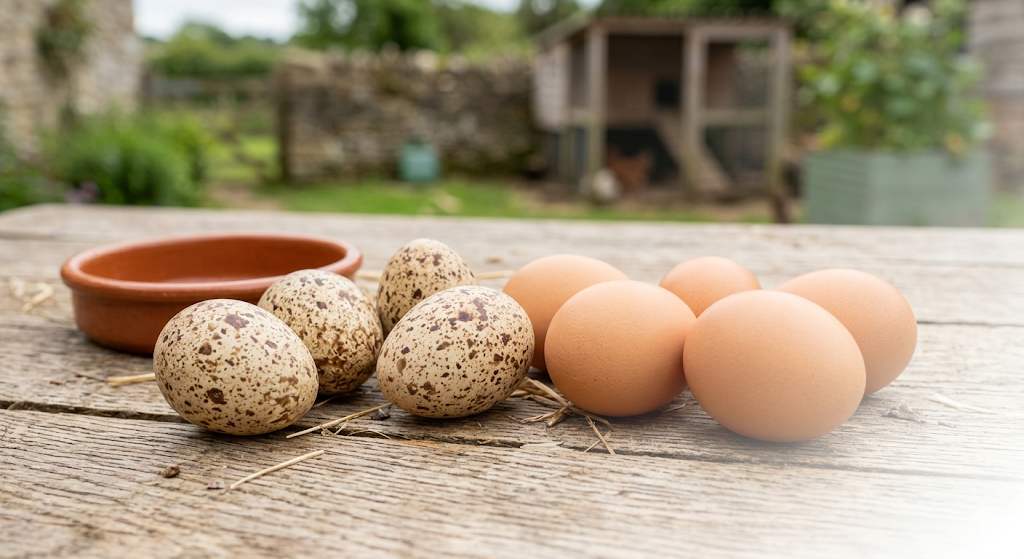
Most people eat chicken eggs without a second thought. But guinea fowl eggs are quietly earning attention from farmers, nutritionists, and health-conscious eaters alike.
This guide breaks down the guinea fowl eggs vs chicken eggs nutrition debate clearly. You’ll see exactly how they compare on protein, fat, vitamins, taste, and more — so you can decide which egg works best for you.
Guinea Fowl Eggs vs Chicken Eggs: Key Nutrition Facts at a Glance
Guinea fowl eggs contain significantly more protein than chicken eggs — about 20.3 grams per 100g compared to 12.6 grams in chicken eggs. That’s more than 60% extra protein, gram for gram. Guinea fowl eggs also score higher on overall amino acid quality, making them a nutritionally dense option worth understanding.
Here’s a side-by-side comparison of the core nutrition facts (per 100g, raw):
| Nutrient | Guinea Fowl Egg | Chicken Egg |
|---|---|---|
| Calories | ~207 kcal | ~143 kcal |
| Protein | ~20.3 g | ~12.6 g |
| Fat | ~13.0 g | ~9.9 g |
| Carbohydrates | ~1.0 g | ~1.1 g |
| Total Amino Acid Score | 0.92 | 0.75 (exotic chicken) |
| Essential Amino Acids | 49.6 g/100g protein | ~41.1 g/100g protein |
Guinea fowl eggs are higher in calories and fat. However, those extra calories come packaged with significantly more protein and superior amino acid quality.
Protein Quality
Guinea fowl eggs deliver more protein — and better protein — than chicken eggs.
A peer-reviewed study published in PMC (PubMed Central) found that guinea fowl eggs had the highest total amino acid score (TAAS) of 0.92 among five common egg types tested. Exotic chicken eggs scored 0.75 and local chicken eggs scored just 0.65.
What this means in practical terms:
- More essential amino acids (EAA): Guinea fowl eggs contain 49.6 g of EAA per 100g of protein — that’s 55.1% of their total protein content.
- Better muscle support: Higher levels of branched-chain amino acids (leucine, isoleucine, valine) support muscle repair and growth.
- More complete nutrition: Your body can use a higher proportion of the protein from guinea fowl eggs compared to chicken eggs.
This is especially important for children, athletes, and anyone with higher protein needs. The same study specifically noted that guinea fowl egg consumption “should be encouraged for children as this can significantly reduce the risk of protein-energy malnutrition.”
Fat Content
Guinea fowl eggs contain more fat than chicken eggs — roughly 13g per 100g compared to about 9.9g in chicken eggs. That’s a meaningful difference, and it’s worth understanding.

The fat profile of guinea fowl eggs includes both saturated fats and healthy unsaturated fatty acids, including omega-3 fatty acids. Free-range guinea fowl naturally forage for insects, seeds, and plants. This foraging diet — similar to that of free-range chickens — contributes to a healthier fat composition in their eggs.
Key points on guinea fowl egg fat:
- Omega-3 content: Presumed to be similar to free-range chicken eggs due to the bird’s strong foraging behavior.
- Yolk fat: The yolk of a guinea fowl egg is 32.2–32.7% fat, which gives it a richer, creamier texture.
- Cholesterol: Guinea fowl eggs are theorized to contain slightly more cholesterol than standard chicken eggs, but less than duck, goose, or turkey eggs.
For most healthy adults, the type of fat matters more than the total amount. The unsaturated fat content in guinea fowl eggs supports heart health, brain function, and nutrient absorption.
Vitamins and Minerals
Both egg types deliver a strong range of micronutrients. Guinea fowl eggs and chicken eggs both contain vitamin B12, riboflavin, and selenium — three nutrients essential for energy production and immune function.
Guinea fowl eggs are notable for:
- Potassium: Guinea fowl egg whites contain the highest potassium levels among chicken, quail, and guinea fowl eggs.
- Magnesium and iron: Support energy levels and reduce fatigue.
- Calcium: Contributes to strong bones and teeth.
- Zinc and copper: Support immune function and antioxidant activity.
- Vitamin A: Found in the yolk, important for vision and immunity.
Guinea fowl eggs may also contain vitamin D, phosphorus, and trace amounts of vitamins E and K, though research on the full micronutrient profile is still developing.

Chicken eggs are one of the most well-studied foods in the world, with a thoroughly documented nutrient profile. For those looking for consistent, well-verified nutrition, chicken eggs remain a solid choice.
Taste and Texture
Guinea fowl eggs have a richer, creamier flavor than chicken eggs. Many people describe them as having a slightly gamey taste — deeper and more distinctive, with a satisfying intensity that chicken eggs don’t quite match.
Why they taste different:
- Larger yolk-to-white ratio: Guinea fowl eggs have proportionally bigger yolks, which gives them their deep golden-orange color and richer flavor.
- Runnier egg whites: The egg white has a higher moisture content (around 87%), making it slightly thinner than a chicken egg white.
- Foraging diet: Free-range birds that eat insects, seeds, and plants produce eggs with more complex, developed flavors.
In cooking, guinea fowl eggs work well in any application that uses chicken eggs — frying, poaching, boiling, and baking. For baking, approximately 2 guinea fowl eggs equal 1 large chicken egg in volume, given their smaller size.
Some people prefer guinea eggs in omelets and baked goods because their distinct flavor adds depth. Others find the taste nearly identical to a high-quality free-range chicken egg.
Shell Strength and Shelf Life
One practical advantage of guinea fowl eggs is their noticeably harder shell.
Guinea fowl eggs have a significantly thicker and stronger shell than chicken eggs. This makes them slightly harder to crack open, but it also provides:

- Longer natural shelf life thanks to better protection against moisture loss and contamination.
- Better resistance to damage during handling and storage.
- Reduced risk of bacterial penetration through the shell.
For backyard farmers and small-scale producers, this durability can be a real benefit — especially when eggs are gathered less frequently or stored without refrigeration for short periods.
Egg Allergy Considerations
Some people who react to chicken eggs may be able to tolerate guinea fowl eggs.
A clinical study evaluated guinea fowl eggs as an alternative for children with confirmed chicken egg allergies. The results were encouraging:
- Most children showed tolerance without skin or gastrointestinal allergic reactions.
- 73.3% showed decreased IgE antibodies against chicken egg proteins by the end of the study.
- Guinea fowl eggs have a slightly different protein structure than chicken eggs, which may bypass common allergy triggers.
Important: Never assume guinea fowl eggs are safe if you have a chicken egg allergy. Individual responses vary significantly. Always consult an allergist or doctor before trying any alternative egg if you have a known allergy.
Availability and Cost
Chicken eggs are one of the most available and affordable foods in the world. Guinea fowl eggs are a different story.
Chicken eggs:

- Available year-round in virtually every grocery store
- Affordable and produced at scale
- Hens lay 250–300 eggs per year on productive breeds
Guinea fowl eggs:
- Seasonal layers — typically spring through late fall only
- Rarely found in standard grocery stores; usually available at farmers’ markets or specialty suppliers
- Hens lay around 80–150 eggs per year depending on management
- Generally more expensive per egg due to limited supply
For most people, guinea fowl eggs are a specialty or supplemental food rather than a daily staple. If you raise guinea fowl yourself, access becomes much easier and cost-effective.
Frequently Asked Questions
These are the most common questions people ask when comparing guinea fowl eggs vs chicken eggs.
Do guinea fowl eggs have more protein than chicken eggs? Yes — significantly more. Guinea fowl eggs contain around 20.3g of protein per 100g, compared to 12.6g in chicken eggs. That’s over 60% more protein per gram. They also score higher on amino acid quality, with a total amino acid score of 0.92 vs 0.75 for commercial chicken eggs.
Can you eat guinea fowl eggs every day? Yes, guinea fowl eggs are safe for daily consumption for most healthy adults. However, they are higher in calories and fat than chicken eggs, so portion awareness matters. Their high protein and amino acid content makes them a nutritionally excellent choice.
Are guinea fowl eggs good for people with chicken egg allergies? Possibly. Clinical research shows that some children with chicken egg allergies tolerated guinea fowl eggs without an allergic reaction, and 73.3% showed reduced IgE antibodies over the study period. However, individual responses vary widely. Always get medical advice before trying guinea fowl eggs as a substitute if you have a confirmed egg allergy.

How do guinea fowl eggs taste compared to chicken eggs? Guinea fowl eggs have a richer, creamier, and slightly more gamey flavor than chicken eggs. The larger yolk gives them a deep golden color and more intense taste. Free-range guinea fowl eggs tend to taste even more flavorful due to the birds’ natural foraging diet.
How many guinea fowl eggs equal one chicken egg in a recipe? Approximately 2 guinea fowl eggs equal 1 large chicken egg by volume. Guinea fowl eggs are smaller — typically 29–38g each compared to a standard large chicken egg at around 50g. Adjust quantities accordingly when substituting in recipes.
Are guinea fowl eggs better for keto or low-carb diets? Yes. Guinea fowl eggs contain virtually zero carbohydrates, higher protein, and a rich fat content — making them a strong fit for keto and low-carb eating patterns. Their higher caloric density per egg should be factored into daily totals.
Conclusion
Guinea fowl eggs and chicken eggs are both nutritious, whole-food protein sources. The core difference comes down to nutritional density and accessibility.

Guinea fowl eggs offer more protein, superior amino acid quality, a harder shell, and a richer flavor. They may also be a viable option for some people with chicken egg sensitivities. Chicken eggs are easier to find, more affordable, and backed by decades of well-documented nutritional research.
If you have access to guinea fowl eggs and want a protein-packed, flavorful alternative — they’re well worth trying. If chicken eggs are your daily staple, they remain one of the most complete foods available.
Ready to explore guinea fowl eggs further? Check your local farmers’ market, or consider adding guinea fowl to your backyard flock for a steady supply of these nutritional powerhouses.