

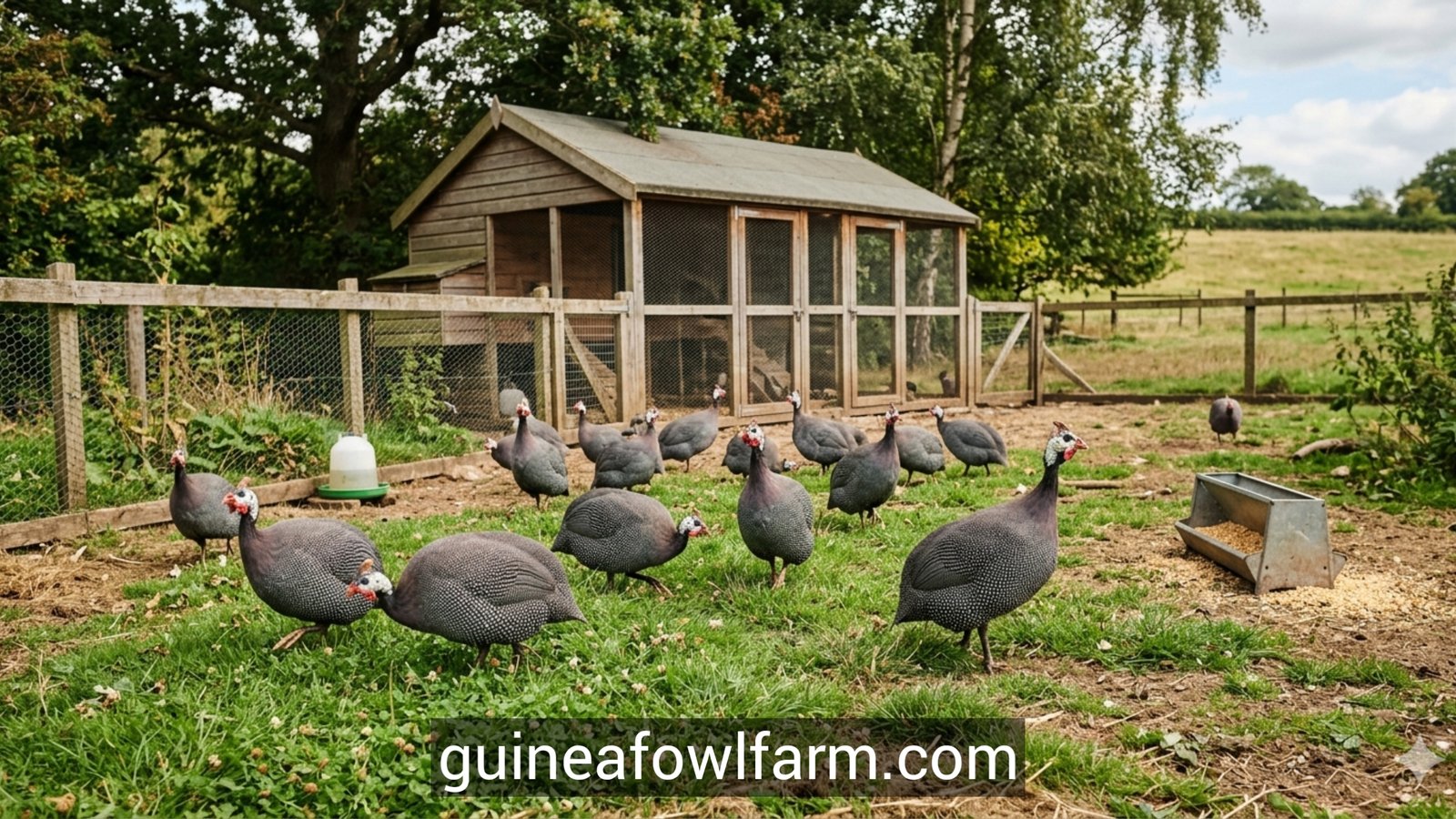
Guinea fowl farming is one of the most rewarding and low-maintenance choices a smallholder can make. These hardy birds are natural pest controllers, alert watchdogs, and a source of rich eggs and lean meat — all from a bird that thrives with relatively little fuss.
Whether you’re thinking about starting a small flock or you’ve already got a few birds and want to improve how you manage them, this guide covers everything you need. From setting up housing and choosing the right feed, to breeding, health care, and even making a profit — it’s all here.
By the end, you’ll have a clear, practical picture of what guinea fowl farming involves and exactly how to do it well.
What Is Guinea Fowl Farming and Why Should You Start
Guinea fowl (Numida meleagris) are native to West Africa and have been farmed across the UK and Europe for centuries. They are hardy, disease-resistant, and surprisingly versatile. A well-managed flock can provide pest control, eggs, meat, and even a modest income.
Unlike chickens, guinea fowl are not fully domesticated. They retain strong instincts and behave like semi-wild birds. That makes them better foragers, more alert to predators, and naturally resistant to many common poultry illnesses.
Key Benefits of Raising Guinea Fowl
- Natural pest control: Guinea fowl eat ticks, beetles, grasshoppers, and even small snakes. Farmers with tick-infested land see dramatic results within a season.
- Low feed costs: They forage heavily, especially in warmer months, which reduces reliance on commercial feed.
- Excellent alarm system: Guinea fowl are loud. They will alert you to foxes, cats, and unfamiliar visitors with unmistakable noise.
- Disease resistance: Compared to chickens and turkeys, they have a stronger natural immunity to many common poultry diseases.
- Lean, flavourful meat: Guinea fowl meat is darker and richer than chicken, with a flavour closer to pheasant.
- Eggs: Smaller than chicken eggs but richer in flavour, guinea fowl eggs are popular with food enthusiasts and at farmers’ markets.
Challenges to Know Before You Start
Guinea fowl are not completely trouble-free. They are noisy — a flock of guinea fowl is not suitable for urban settings or close-neighbour properties. They also roost outdoors in trees if given the chance, which puts them at serious risk from foxes and other predators.
They can be difficult to confine early on, and keets (baby guinea fowl) are fragile and require careful brooding. Being aware of these challenges upfront means you plan better from day one.
Planning Your Guinea Fowl Farm — Getting Started the Right Way
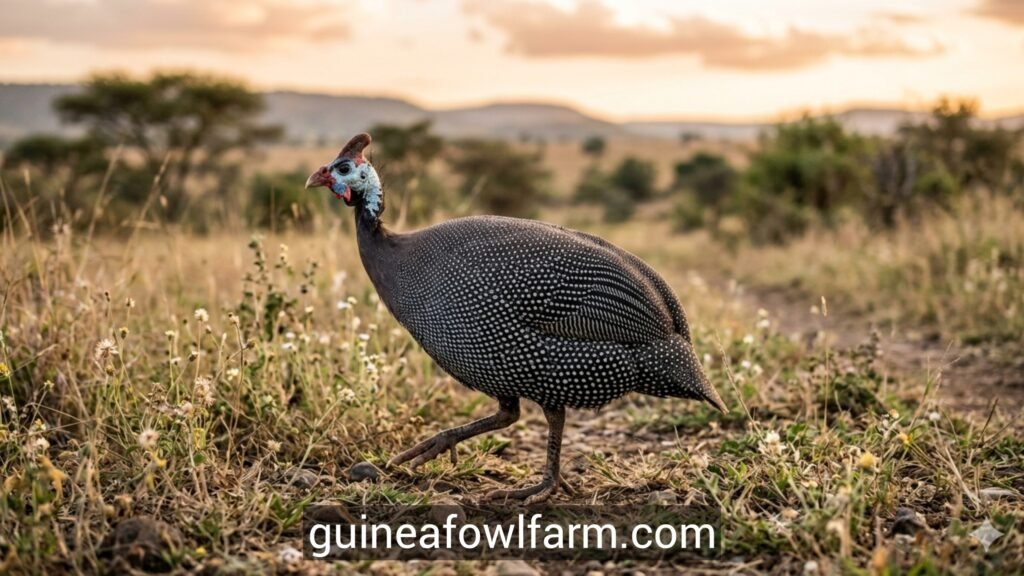
Good planning prevents most common mistakes in guinea fowl farming. Before you buy your first bird, decide on your purpose, your scale, and your infrastructure.
Choosing Your Purpose
Ask yourself: why are you raising guinea fowl? Your answer shapes every decision that follows.
| Purpose | Flock Size Needed | Key Focus |
|---|---|---|
| Pest control only | 6–10 birds | Free-range access, minimal housing |
| Home egg supply | 10–15 hens | Nutrition, laying boxes |
| Meat production | 30–50+ birds | Feed efficiency, processing setup |
| Small income / market sales | 50–100+ birds | Biosecurity, records, marketing |
| Breeding stock | 10–20 birds | Genetics, hatch rates, keet care |
Checking UK Legal Requirements
In the UK, if you keep 50 or more poultry birds, you must register your flock with APHA (Animal and Plant Health Agency) under DEFRA guidelines. Even with fewer birds, registering is good practice, as it gives you access to disease alerts and outbreak notifications.
Contact your local APHA office or visit the DEFRA website to register and check any current avian influenza restrictions before setting up your flock.
How Many Birds to Start With
For a first flock, 15–20 birds is a sensible starting point. It gives you enough birds to observe natural behaviours, establish a pecking order, and manage without feeling overwhelmed. A ratio of one male (called a guinea cock) to every four or five females is a standard recommendation.
Buying Your First Guinea Fowl
You can buy guinea fowl as day-old keets, as juveniles aged six to eight weeks, or as adult birds. Each has its advantages:
- Day-old keets are cheaper but need intensive brooding care for the first six weeks.
- Juveniles are easier to manage and already past the most fragile stage.
- Adult birds are the simplest option but cost more and can be harder to tame.
Buy from a reputable breeder or UK poultry auction. Always inspect birds for signs of illness before purchasing — bright eyes, clean nostrils, and active movement are good signs.
Guinea Fowl Housing — How to Build the Right Setup
Housing is one of the most critical factors in guinea fowl farming. Get it right and your birds will be safe, healthy, and productive. Get it wrong and you risk losing birds to predators, disease, or stress.
What Guinea Fowl Need From Their Housing
Guinea fowl naturally want to roost high up. In the wild, they sleep in trees. Your housing needs to respect this instinct while keeping them safe from the risks that come with it.
A good guinea fowl house must be:
- Draught-free but well-ventilated — no damp, stale air
- Predator-proof — foxes, mink, and rats are persistent threats in the UK
- Spacious enough — guinea fowl need more room than chickens
- Easy to clean — to prevent disease build-up
- Fitted with high roosting perches — at least 90–120cm off the floor
Space Requirements
| Bird Type | Minimum Indoor Space | Outdoor Run Space |
|---|---|---|
| Adult guinea fowl | 0.5–0.75 sq m per bird | 2–4 sq m per bird minimum |
| Keets (brooder) | Small enclosed brooder | No outdoor access until 6 weeks |
How to Build or Set Up a Guinea Fowl Coop
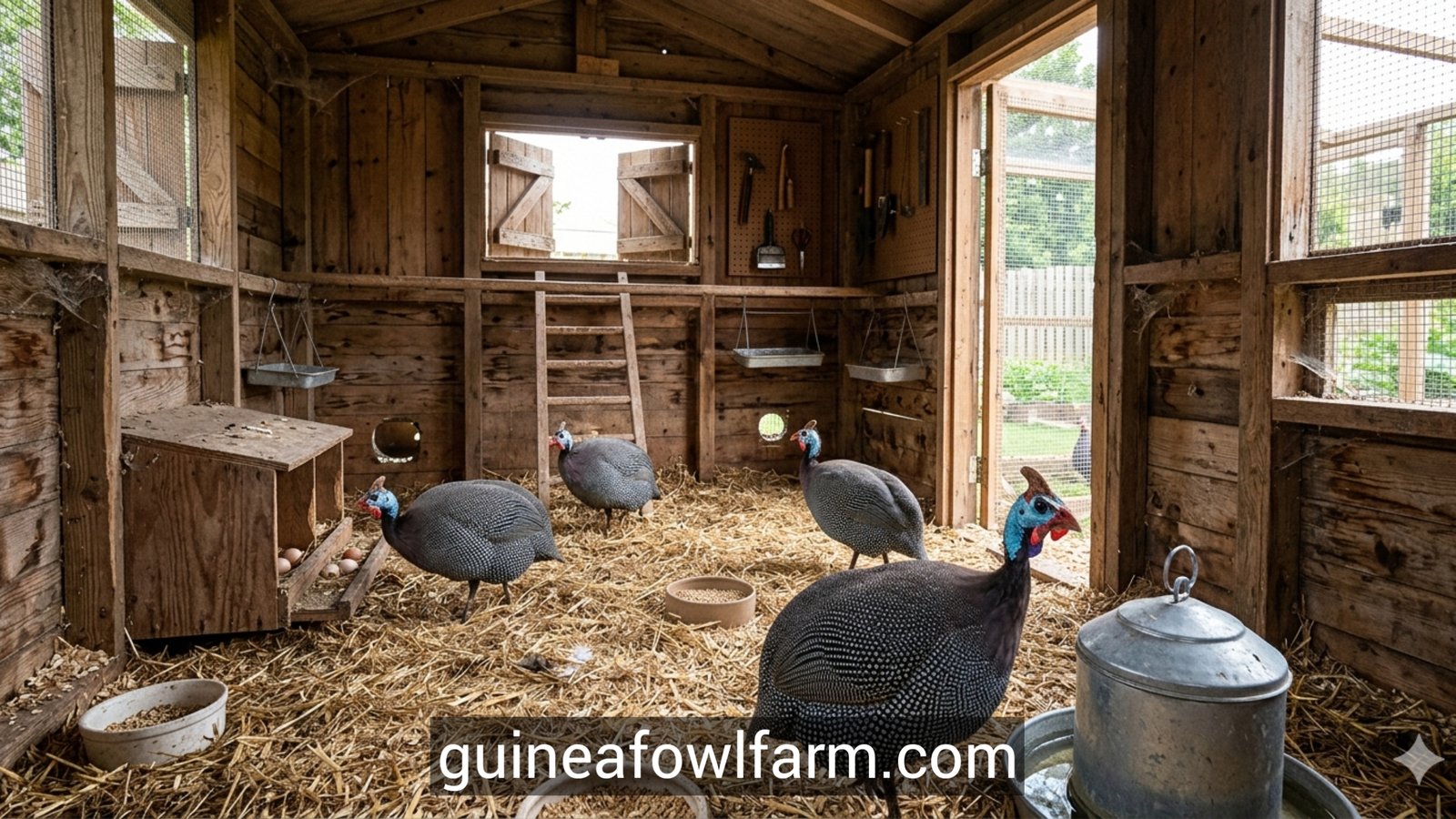
Building a proper coop for guinea fowl is essential for their health, safety, and comfort. These birds are naturally active and alert, so they need a space where they can rest securely while staying protected from predators. A well-designed coop not only shields them from harsh weather conditions but also supports their natural behavior and daily routine. The steps below will guide you in creating a secure, comfortable, and practical guinea fowl coop.
Step 1 — Choose the right location.
Place the coop on well-drained ground, away from standing water. A south-facing position makes good use of natural light.
Step 2 — Build or buy a structure with high ceilings.
Guinea fowl need height. A minimum internal height of 1.5–2 metres is ideal. If converting an existing shed, ensure the ceiling is high enough for roosting bars at the correct height.
Step 3 — Install roosting bars at height.
Use sturdy wooden bars at 90–120cm from the floor. Space them at least 30cm apart to prevent overcrowding. Guinea fowl prefer to roost together, so make sure all birds have enough bar space.
Step 4 — Fit secure ventilation.
Use mesh-covered vents near the roof to allow airflow without creating cold draughts at bird height. Ventilation prevents ammonia build-up from droppings.
Step 5 — Make it predator-proof.
Use 19-gauge welded wire mesh rather than chicken wire — a fox can tear through chicken wire easily. Bury wire at least 30cm below ground to prevent digging. Fit secure latches on all doors.
Step 6 — Add bedding.
Use a 5–10cm layer of dry straw, wood shavings, or hemp bedding on the floor. Spot-clean daily and fully replace every two to four weeks.
Step 7 — Ensure a safe run or ranging area.
If birds are not fully free-range, provide a fenced run. Use 1.8m-high fencing minimum, as guinea fowl can fly. Clip one wing lightly if needed to discourage flight during the settling-in period.
Training Guinea Fowl to Return to the Coop
This is one of the most important early steps. Guinea fowl raised from keets in the coop are far easier to manage than adults moved into a new environment. Confine new birds to the coop for the first two to four weeks before allowing any outdoor access. This teaches them where home is.
Use a regular call or whistle combined with a treat — cracked grain or dried mealworms work well. Repeat this every evening at the same time. Within two to three weeks, most birds will associate the call with food and return voluntarily at dusk.
Feeding Guinea Fowl — Nutrition and Feed Management
A well-fed guinea fowl is a healthy, productive one. Their diet changes significantly across different life stages, and understanding those changes prevents most common health and production problems.
What Guinea Fowl Eat Naturally
In free-range conditions, guinea fowl are exceptional foragers. They eat:
- Insects and invertebrates — ticks, beetles, caterpillars, flies, ants
- Seeds and grains — wild grasses, fallen seeds
- Berries and plant matter — leaves, shoots, small fruits
- Small reptiles and rodents — occasionally, in larger free-range environments
This foraging behaviour means their commercial feed requirements are reduced in spring and summer. In winter, when forage is scarce, they rely much more heavily on the feed you provide.
Commercial Feed by Life Stage
| Age | Feed Type | Crude Protein % |
|---|---|---|
| Keets 0–6 weeks | Turkey or game bird starter crumble | 24–28% |
| Growers 6–12 weeks | Turkey or game bird grower pellets | 20–22% |
| Laying hens | Layer pellets (with calcium) | 16–18% |
| Meat birds | Broiler or finisher pellets | 18–20% |
Guinea fowl have a higher protein requirement than chickens, which is why turkey or game bird feed is recommended over standard chicken feed, especially for keets.
Supplements Worth Adding
- Grit: Insoluble flint grit is essential for grinding food in the gizzard. Provide it free-choice in a separate container.
- Oyster shell: For laying hens, crushed oyster shell supports strong eggshell formation.
- Apple cider vinegar: Adding a small amount to drinking water (not in metal drinkers) can support gut health and immunity.
- Diatomaceous earth: Mixed into feed or dusted in the coop, this helps manage internal parasites naturally.
Water
Clean, fresh water must be available at all times. Guinea fowl drink more than most people expect. During hot weather and laying season, check drinkers twice daily. Dirty water is a leading cause of disease in poultry — clean drinkers every one to two days.
Breeding Guinea Fowl — From Eggs to Keets
Breeding guinea fowl is not complex, but it does require attention to detail. The main challenges are encouraging hens to lay in manageable locations, achieving good hatch rates, and keeping vulnerable keets alive through the first weeks.
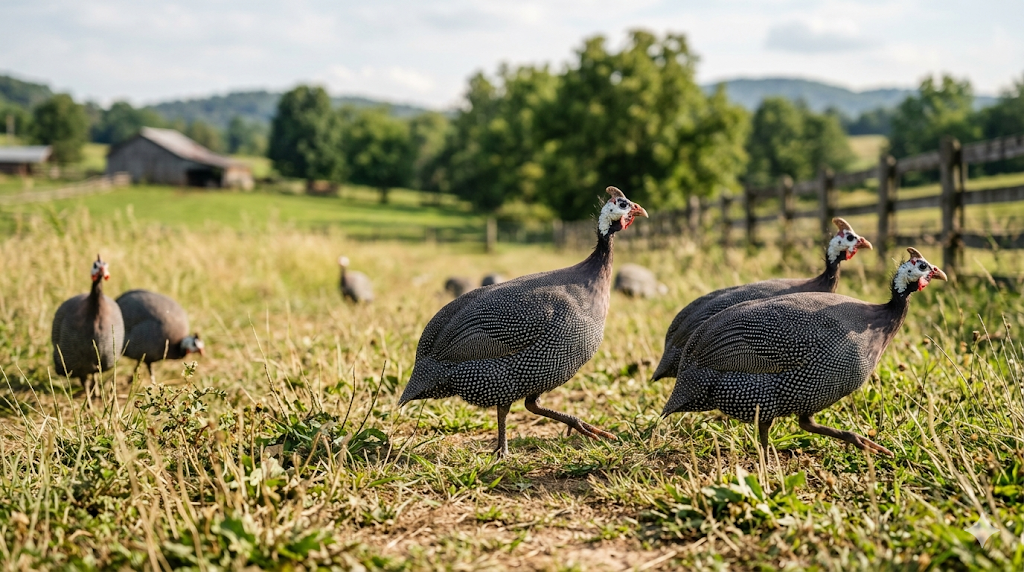
Understanding Guinea Fowl Reproduction
Hens typically begin laying at around 28–30 weeks of age. They are seasonal layers, with the majority of eggs laid between April and September in the UK, following natural daylight cues. A productive hen can lay 80–120 eggs per season if eggs are collected regularly.
Guinea fowl are communal layers — multiple hens will often share a nest and lay together in a hidden spot. This is natural behaviour but makes egg collection difficult. Providing secure, dark nest boxes inside the coop encourages hens to lay where you can easily access eggs.
Incubation — Natural and Artificial
Natural incubation: Guinea fowl are not the most reliable sitters. They often abandon nests, especially in wet or cold weather. If you have a broody hen or bantam, she is often a more reliable foster incubator.
Artificial incubation: For consistent results, use a forced-air incubator.
- Temperature: 37.5°C (99.5°F)
- Humidity: 55–60% for days 1–24, raise to 70% for the final three days
- Turning: Turn eggs at least three times daily (auto-turn incubators make this simple)
- Incubation period: 26–28 days, slightly longer than chickens
Candle eggs at day seven and day fourteen to identify clear (infertile) or dead eggs and remove them promptly.
Caring for Keets — The First Six Weeks (How To)
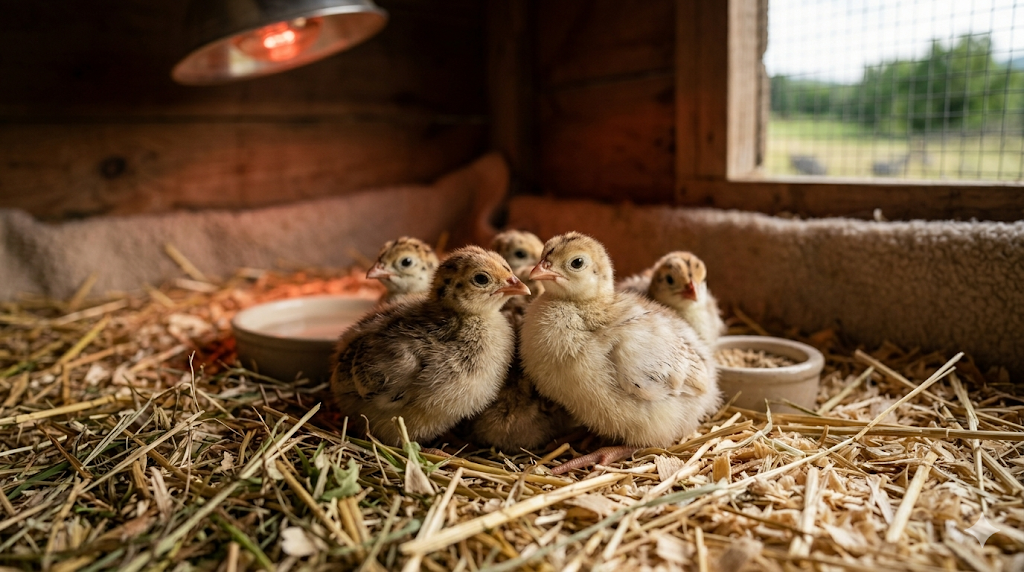
Keets are the most fragile stage of guinea fowl farming. Many beginners lose keets in the first two weeks due to cold, damp, or nutritional gaps.
Step 1 — Set up the brooder before keets arrive.
Use a clean, dry box or brooder pen. Line it with paper towels for the first week (not wood shavings — keets can eat them and become impacted).
Step 2 — Maintain brooder temperature.
Use a heat lamp or brooder plate. The temperature directly under the heat source should be 35°C in week one. Reduce by 3°C each week until birds no longer need supplemental heat, usually by weeks five to six.
Step 3 — Feed a high-protein starter.
Use turkey or game bird starter crumble with at least 24% protein. Add a probiotic to their water for the first week to support gut bacteria.
Step 4 — Keep everything dry.
Damp conditions kill keets quickly. Check water drinkers twice daily to ensure they are not tipping or overflowing. Replace wet bedding immediately.
Step 5 — Provide light.
Bright light for the first few days helps keets find food and water. Reduce to a natural light cycle from week two onwards.
Step 6 — Introduce outdoor access gradually.
Begin short supervised outings on dry, warm days from around five to six weeks. Never allow keets outside in wet or cold weather before eight weeks.
Guinea Fowl Health Care — Disease Prevention and Treatment
Guinea fowl are tougher than most poultry, but they are not invincible. Good biosecurity and regular observation prevent the majority of health problems.
Common Diseases in Guinea Fowl
| Disease | Symptoms | Prevention / Treatment |
|---|---|---|
| Marek’s Disease | Paralysis, wasting | Vaccination at day old |
| Newcastle Disease | Respiratory distress, neurological signs | Vaccination, strict biosecurity |
| Coccidiosis | Bloody droppings, lethargy in keets | Clean brooder, anticoccidials if needed |
| Histomoniasis (Blackhead) | Yellow droppings, listlessness | Avoid contact with turkeys and earthworms |
| Aspergillosis | Respiratory wheezing | Dry bedding, clean feed storage |
| Avian Influenza | Sudden death, respiratory signs | Register flock, follow APHA alerts |
Parasite Management
- Red mite: The most common poultry parasite in the UK. Treat the coop with licensed products and dust birds with diatomaceous earth.
- Lice and feather mites: Check under wings and around the vent area regularly. Dust baths help naturally; treat with pyrethrin-based products if needed.
- Worms: Guinea fowl on permanent pasture are at higher risk. Use a licensed wormer such as flubendazole in feed, ideally twice yearly.
Biosecurity Basics
- Clean and disinfect the coop thoroughly every six to eight weeks
- Isolate new birds for a minimum of 14 days before introducing them to the existing flock
- Keep feeders and drinkers clean and raised off the ground
- Control rats and mice — they carry disease and consume feed
- Avoid sharing equipment with other poultry keepers without disinfecting it first
- Follow any APHA avian influenza housing orders issued during outbreak periods
Signs of a Healthy Guinea Fowl
A healthy bird is active, alert, and vocal. It has bright, clear eyes, clean nostrils, smooth feathers, and firm droppings. Any bird that is hunched, quiet, or sitting apart from the flock should be isolated immediately and examined closely.
Seasonal Care for Guinea Fowl Throughout the Year
Guinea fowl farming requires a different focus in each season. Adapting your management to the time of year keeps your flock healthy year-round.
Spring and Summer
This is the most active period. Hens begin laying, birds forage heavily, and the risk of external parasites increases with warmer weather.
- Start collecting eggs daily to prevent hens from going broody in hidden nests
- Check for red mite infestations as temperatures rise
- Ensure fresh water is always available — consumption rises sharply in warm weather
- Begin any planned breeding or incubation programmes
Autumn
Birds begin to moult and egg production slows or stops. Use this period to carry out a thorough coop clean and health check.
- Worm the flock before the cold weather sets in
- Check and repair housing ahead of winter
- Begin supplementing feed as forage becomes scarce
Winter
Guinea fowl tolerate cold surprisingly well, but they struggle with wet and damp. Keep housing dry and draught-free.
- Increase feed provision as forage disappears
- Monitor for respiratory issues — these become more common in damp, cold conditions
- Ensure lighting in the coop is sufficient for birds to find feed and water during short days
- Follow any avian influenza housing orders from APHA promptly
Guinea Fowl Egg Production — What to Expect
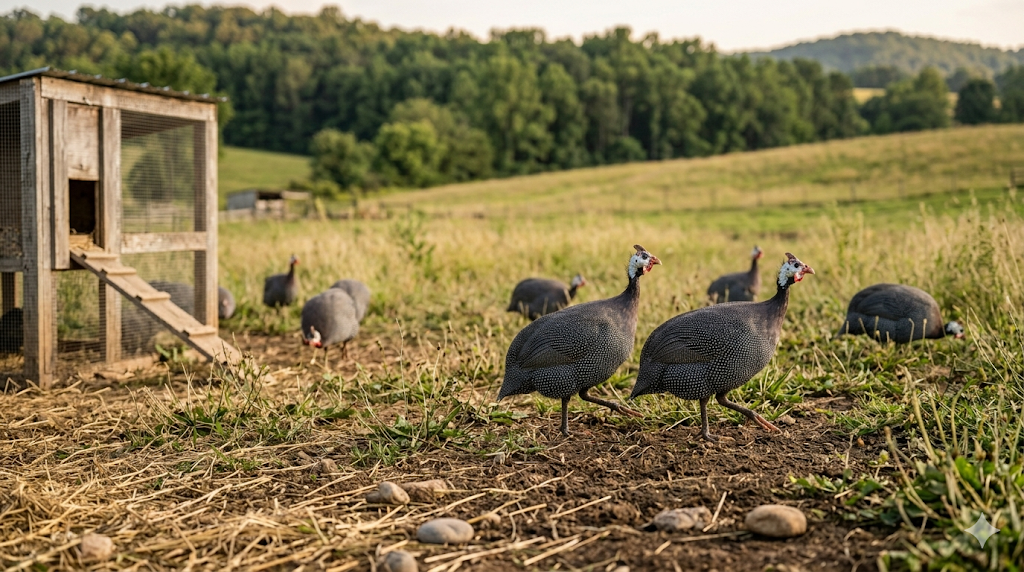
Guinea fowl eggs are a genuine market opportunity. They are smaller than chicken eggs but considerably richer, with a thicker shell that extends shelf life.
A well-managed laying hen can produce 80–120 eggs per season under natural lighting conditions. Using supplemental lighting (a 14–16 hour day) can extend the season into autumn, though this has limits.
Tips for Improving Egg Production
- Collect eggs daily to prevent hens from going broody
- Provide nest boxes inside the coop — one box per three to four hens
- Feed layer pellets with adequate calcium from the start of the laying season
- Reduce stress — erratic routines, predator scares, and overcrowding all suppress laying
- Supplement lighting in early spring and late summer to extend the productive season
Guinea fowl eggs are not sold in major supermarkets, which means direct selling at farmers’ markets, food fairs, or through local farm shops is where the real opportunity lies.
Making Money From Guinea Fowl Farming — Costs, Profits and Marketing
Guinea fowl farming can generate income, but it is rarely a get-rich-quick venture. The best results come from a diversified approach — selling eggs, meat, and day-old keets across multiple channels.
Typical Startup Costs
| Item | Approximate Cost (UK) |
|---|---|
| Starter flock (20 birds) | £80–£200 |
| Housing (new or converted) | £200–£1,500 |
| Incubator (optional) | £80–£300 |
| Fencing and predator protection | £100–£400 |
| Feed for first season | £50–£150 |
| Sundries (feeders, drinkers, grit) | £50–£100 |
Revenue Streams
- Guinea fowl eggs — typically 30–50p each at farm gate; £3–£5 per half dozen at market
- Meat birds — whole oven-ready birds typically sell for £8–£15 depending on size and market
- Day-old keets — popular with other smallholders; £2–£5 per keet
- Breeding pairs or trios — adult breeding stock can sell for £20–£50 per bird from good lines
Marketing Your Birds and Products
Word of mouth is powerful. Start with your local community — farmers’ markets, smallholder groups, and online local selling pages are all effective. Facebook groups for poultry keepers and local food networks are free and reach exactly the right audience.
A simple website or social media page with photos of your birds and flock builds credibility with buyers who want to know where their food comes from. Emphasise free-range conditions, natural diet, and minimal medication use — these are strong selling points for today’s food-conscious buyers.
If you want to sell at farmers’ markets or directly to restaurants, check local authority food business registration requirements. This is a straightforward process but must be completed before you begin selling food commercially.
Frequently Asked Questions About Guinea Fowl Farming
Here are honest answers to the questions most beginners ask when starting out. Whether you’re planning your first flock or troubleshooting problems with birds you already have, these cover the essentials.
Are guinea fowl easy to keep for beginners?
Yes, with the right preparation. Adult guinea fowl are hardier and lower-maintenance than chickens. The main challenges are training them to return to the coop, managing their noise level, and caring for keets in the early weeks. If you plan your housing well and confine new birds properly during the settling-in period, most beginners find them very manageable.
How long do guinea fowl live?
In well-managed conditions, guinea fowl typically live for ten to fifteen years. Most productive egg-laying years are between one and five years of age. Meat birds are usually processed at twelve to sixteen weeks.
Can guinea fowl live with chickens?
They can, but with some caution. Guinea fowl can bully smaller chickens, and the mixed flock dynamic needs monitoring. They can also spread diseases across species if biosecurity is poor. If you do keep them together, ensure plenty of space, separate feeders, and multiple exit points in the housing to prevent corners where birds can be trapped.
What do I do if a guinea fowl goes broody outside?
First, locate the nest as early as possible. You can either collect the eggs and incubate them yourself, or allow the hen to sit if the location is relatively safe. Wild nests are vulnerable to foxes, rats, and wet weather. If the nest is exposed, gently move the eggs and hen to a safer enclosed area at night — some hens will accept the move, others will abandon the nest. Using nest boxes inside the coop from the start reduces the likelihood of hidden nesting.
How do I tell male and female guinea fowl apart?
Sexing guinea fowl is notoriously difficult visually, especially in young birds. The most reliable method is by call — females make a distinctive two-syllable sound often described as “come back, come back.” Males only produce a single-syllable chatter. The wattle (fleshy growth below the beak) also tends to be larger and more curved in males, though this varies by breed.
Do guinea fowl need vaccinations in the UK?
They are not legally required but are strongly recommended. Vaccination against Marek’s Disease and Newcastle Disease is standard practice for any serious keeper. Speak to a poultry vet or your local agricultural supplier about a suitable programme for your flock size and location.
Conclusion
Guinea fowl farming rewards patience and good management. These birds are tough, self-reliant, and genuinely useful — from clearing ticks off your pasture to providing eggs and meat for your household or market customers.
The foundation of a successful flock is solid housing, appropriate nutrition, and regular observation. Most problems in guinea fowl farming are preventable. The farmers who do best are the ones who set up properly at the start rather than fixing problems as they arise.
Take the practical steps in this guide one at a time. Start with your housing, settle your birds in properly, and build from there. If you already have birds and want to improve management, choose one area — feeding, health, or breeding — and focus there first.
Explore more specific guides on topics like keet brooding, incubation, or setting up a farm stall — and if you have questions, your local smallholder group or a UK poultry vet is always a practical first port of call.