

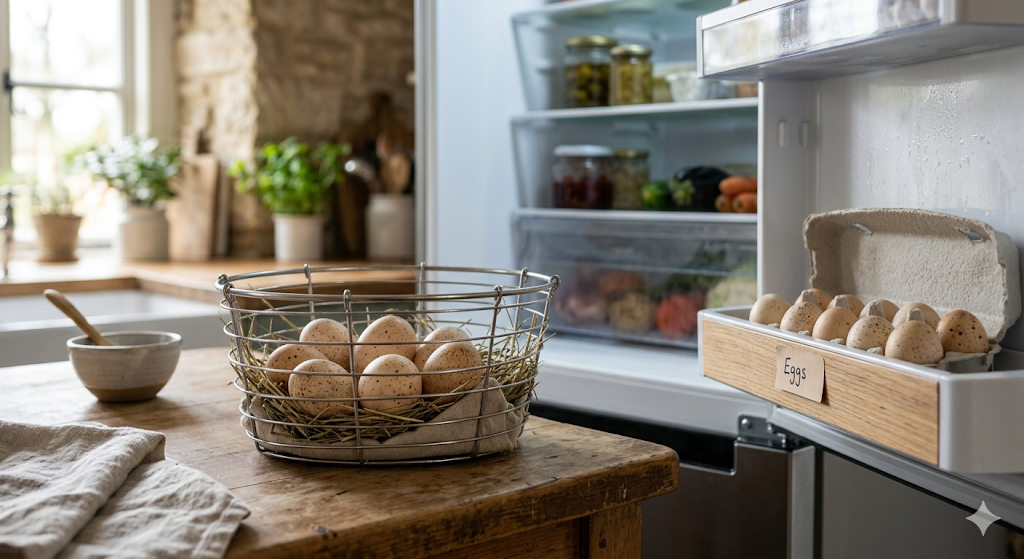
Guinea fowl eggs need the right storage to stay fresh and safe to eat. Store them unwashed at room temperature for up to 2–3 weeks, or refrigerate them for up to 2 months. Getting the temperature, humidity, and handling right makes a real difference — whether you’re eating them or hatching them.
Storing guinea fowl eggs is a little different from storing store-bought chicken eggs. They have a natural protective coating that changes how and where you keep them. Get it right, and they’ll last longer than you’d expect.
This guide covers 7 practical tips on how to store guinea fowl eggs at home, including shelf life, refrigeration advice, and what to avoid.
1. Leave the Bloom Intact — Don’t Wash Guinea Fowl Eggs
The single most important rule: don’t wash eggs before storing them.
Guinea fowl eggs have a natural coating called the bloom (or cuticle). This thin layer seals the shell’s pores, locking in moisture and keeping bacteria out. Washing removes the bloom and dramatically shortens the egg’s shelf life.
- Unwashed eggs can last 2–3 weeks at room temperature.
- Washed eggs must be refrigerated immediately and used within 1–2 weeks.
Only rinse an egg right before you crack it open. If an egg has visible dirt, wipe it gently with a dry cloth instead. According to the USDA Food Safety guidelines, washing eggs before storage removes their natural protection and increases contamination risk.
2. Store at the Right Temperature for Longer Shelf Life
Temperature is the second-biggest factor in how long guinea fowl eggs last.
Room temperature storage (55–70°F / 13–21°C) works well for unwashed eggs. Keep them in a cool, shaded spot away from heat sources, sunlight, and appliances that generate warmth.
Refrigerator storage (35–40°F / 2–4°C) extends shelf life significantly. Washed eggs must be refrigerated. Unwashed eggs can also go in the fridge for longer-term storage.
| Storage Method | Condition | Shelf Life |
|---|---|---|
| Room temperature | Unwashed, cool, dry | 2–3 weeks |
| Refrigerator | Washed or unwashed | Up to 2 months |
| Hatching storage | Unwashed, 55–65°F | 7–10 days (best) |
Avoid storing eggs near the stove, oven, or in direct sunlight. Heat accelerates spoilage and can crack the shell.

3. Keep Humidity Levels Consistent
Humidity affects how quickly an egg loses moisture through its shell. The ideal range for storing guinea fowl eggs is 70–75% relative humidity.
Too little humidity causes the egg to dry out faster. Too much humidity encourages mold growth on the shell. A cool pantry or basement usually maintains natural humidity well. If storing in a dry climate, a small bowl of water placed nearby in a closed space can help.
For hatching eggs specifically, humidity control is even more critical. The Cornell Lab of Ornithology and most poultry extension resources recommend storing hatching eggs at 70–75% humidity to maintain hatchability.
4. Store Eggs Pointed End Down
This is a simple trick that makes a real difference, especially for longer storage.
Place eggs with the pointed end facing down and the rounded end up. The air cell inside the egg sits at the rounded end. Storing the egg this way keeps the air cell stable and the yolk centered, which slows internal deterioration.
An egg carton works perfectly for this — it naturally holds eggs in the correct position. Reusing a clean carton is a practical, low-cost option.
5. Turn Eggs Regularly If Storing for More Than a Week
If eggs will be stored longer than 7 days, turn them once daily.
Turning the eggs prevents the yolk from sticking to the membrane inside the shell. This matters most for hatching eggs but also applies to eating eggs during extended storage.
A simple way to track turns: mark one side of the egg with a pencil (an “X” on one side). Rotate to the unmarked side each day.
- Eating eggs: Turn daily if storing longer than 1 week at room temperature.
- Hatching eggs: Turn at least once (ideally twice) per day until setting.
6. Can You Refrigerate Guinea Fowl Eggs? Yes — With One Caveat
Yes, guinea fowl eggs can be refrigerated. Refrigeration is actually the best way to extend storage beyond 3 weeks.
The key caveat: once an egg has been refrigerated, it must stay refrigerated. Moving an egg from the fridge back to room temperature causes condensation to form on the shell. Moisture breaks down the bloom, allows bacteria to enter through the shell pores, and accelerates spoilage.
Keep these rules in mind:
- Unwashed eggs from the fridge: Use within 6–8 weeks for best quality.
- Washed refrigerated eggs: Use within 3–4 weeks.
- Never leave refrigerated eggs out for more than 2 hours at room temperature.
Store eggs in the main body of the fridge, not in the door. Door shelves have temperature fluctuations from frequent opening and closing.

7. Check Egg Freshness Before Using
Even with proper storage, always test an egg before cracking it open.
The float test is the simplest freshness check:
- Fill a bowl with cool water.
- Gently place the egg in the water.
- Read the result:
| Float Test Result | What It Means |
|---|---|
| Sinks flat to the bottom | Very fresh — safe to eat |
| Stands upright on the bottom | Older but still safe to use |
| Floats to the surface | Spoiled — discard it |
A floating egg means the air cell has enlarged, which indicates the egg has gone bad. Never eat a floating egg. Also check for any cracked shells before storing — cracked eggs should be used immediately or discarded.
How Long Do Guinea Fowl Eggs Last?
Guinea fowl eggs shelf life depends on whether they’ve been washed, the storage temperature, and how they’re handled.
- Unwashed, room temperature: 2–3 weeks
- Unwashed, refrigerated: 6–8 weeks
- Washed, refrigerated: 3–4 weeks
- Hatching eggs, ideal conditions: Best used within 7–10 days; hatchability drops after 14 days
Guinea fowl eggs have a slightly harder shell than chicken eggs, which gives them a mild natural advantage in durability. But the same freshness and food safety rules apply. When in doubt, use the float test.
Storing Guinea Fowl Eggs for Hatching vs. Eating
Storage goals are different depending on intended use.
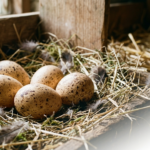
For eating: Focus on keeping eggs fresh, safe, and flavorful. Room temperature works for short-term use. Refrigeration is better for anything beyond 2–3 weeks.
For hatching: The priority is preserving hatchability. Key guidelines from most poultry extension services:
- Store at 55–65°F (13–18°C) — slightly warmer than a standard fridge.
- Maintain 70–75% humidity.
- Store no longer than 7–10 days for the best hatch rate.
- Turn eggs daily and keep pointed end down.
- Do not refrigerate hatching eggs — the cold is too low and damages embryos.
A dedicated egg incubation guide from Penn State Extension confirms that hatch rates decline sharply after 10 days of storage, regardless of conditions.
FAQs About Storing Guinea Fowl Eggs
Here are answers to the most common questions about guinea fowl egg storage.
Q: Do guinea fowl eggs need to be refrigerated? Not immediately. Unwashed guinea fowl eggs can stay at room temperature for 2–3 weeks if stored in a cool, dry spot. Once washed, they must be refrigerated right away.
Q: How long do guinea fowl eggs last in the fridge? Properly stored unwashed eggs last up to 6–8 weeks in the refrigerator. Washed eggs last 3–4 weeks. Always run the float test before using older eggs.

Q: Can you freeze guinea fowl eggs? Yes, but not in the shell. Crack the eggs, beat them lightly, and freeze in an airtight container for up to 12 months. Label with the date. Thaw in the refrigerator overnight before use.
Q: What happens if you wash guinea fowl eggs before storing? Washing removes the bloom — the natural protective coating. This makes the egg vulnerable to bacteria and speeds up moisture loss. Washed eggs must go straight into the fridge and should be used sooner.
Q: Can guinea fowl eggs be stored with chicken eggs? Yes. The same storage rules apply to both. Just keep in mind that guinea fowl eggs have a harder shell, so they may feel different to the touch — that’s normal.
Q: How do you know if a guinea fowl egg has gone bad? Use the float test. If the egg floats, discard it. A rotten egg also has a strong sulfur smell when cracked. If anything looks or smells off, don’t eat it.

Conclusion
Storing guinea fowl eggs correctly comes down to a few simple habits: leave the bloom intact, keep eggs cool and dry, store them pointed end down, and always check freshness before use.
Most guinea fowl eggs will last 2–3 weeks at room temperature and up to 2 months in the fridge — as long as they’re handled right from the start. Refrigerate washed eggs immediately, and remember: once they’re cold, keep them cold.
Try one or two of these tips today and notice the difference in how long your eggs stay fresh. For questions or tips from your own experience, leave a comment below — real-world knowledge from other keepers is always valuable.