

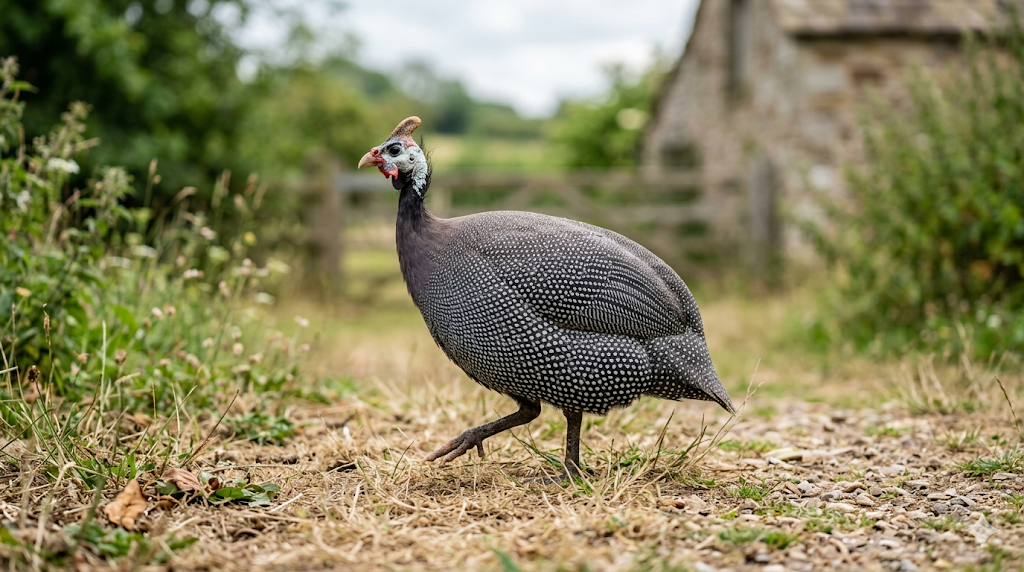
Guinea fowl meat has been quietly gaining attention among small-scale farmers and food lovers across the UK. If you’ve never tried it, you’re probably wondering — does it taste like chicken, or is it something entirely different?
The honest answer is: it’s somewhere in between. Guinea fowl has its own distinct flavour that sets it apart from common poultry. In this guide, you’ll learn exactly what guinea fowl meat tastes like, how it compares to other birds, how to cook it well, and whether it’s worth raising for the table.
What Does Guinea Fowl Meat Taste Like
Guinea fowl meat taste is best described as a cross between chicken and pheasant. It has a mild gamey quality that isn’t overwhelming — more like a richer, deeper version of free-range chicken.
The meat is slightly earthy and full-flavoured. It doesn’t taste bland like standard shop-bought chicken. Many people describe it as having more personality on the plate.
The flavour depends a lot on how the bird was raised. Free-range guinea fowl that forage naturally tend to produce better-tasting, more complex meat than birds kept in confined spaces.
How Guinea Fowl Compares to Chicken and Other Poultry
One of the most common questions is whether guinea fowl tastes like chicken. The short answer is: similar, but more interesting.
| Feature | Guinea Fowl | Standard Chicken | Pheasant |
|---|---|---|---|
| Flavour intensity | Medium-strong | Mild | Strong gamey |
| Texture | Lean and firm | Soft | Lean and dry |
| Gamey taste | Mild | None | Pronounced |
| Fat content | Low | Moderate | Very low |
| Best cooking method | Slow roast, braise | Roast, grill, fry | Slow cook |
Guinea fowl sits comfortably between everyday chicken and wild game. It’s a great starting point for anyone who wants to explore beyond chicken without going fully into game territory.
Understanding the Texture of Guinea Fowl Meat
Texture is just as important as flavour when evaluating any meat. Guinea fowl meat is noticeably leaner and firmer than chicken.
Why Guinea Fowl Meat Is Firmer Than Chicken
Guinea fowl are active birds. They roam constantly, which builds muscle. That extra muscle activity results in denser, firmer meat — especially in the legs.
The breast meat is lean and can dry out quickly if overcooked. This is an important point for anyone cooking it for the first time.
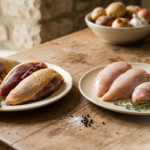
Comparing Breast and Leg Meat
- Breast meat is pale, lean, and delicately flavoured. It cooks faster and needs careful attention to stay moist.
- Leg meat is darker, richer, and more flavourful. It benefits from slower cooking methods like braising or pot roasting.
Both cuts reward good cooking technique. The key is low, slow heat with moisture.
Does Guinea Fowl Taste Gamey
This is one of the most searched questions about guinea fowl meat taste, and it deserves a direct answer.
Yes, guinea fowl does have a mild gamey note — but it’s subtle. It’s nowhere near as strong as pheasant, venison, or wild duck. Most people who find pheasant too strong actually enjoy guinea fowl without any issue.
The gamey quality comes from the bird’s active lifestyle and natural diet. Free-range birds raised on grass, insects, and mixed grains tend to have a slightly stronger flavour than those fed only commercial feed.
If you’re cooking for guests who are nervous about game flavours, guinea fowl is an ideal introduction. It bridges the gap beautifully.
Learn why it can be chewy and how to fix it in this guide to tough guinea fowl meat—reasons and fixes. Get simple tips for tender, flavorful results.
What Affects the Flavour of Guinea Fowl Meat
Not all guinea fowl taste the same. Several factors influence the final flavour on the plate.
- Diet: Birds that forage freely produce richer, more complex meat. A diet of insects, grass, and mixed grains adds depth to the flavour.
- Age at slaughter: Younger birds (around 12–16 weeks) produce milder, more tender meat. Older birds have a stronger flavour and tougher texture.
- Housing and activity: Active, free-range birds develop better muscle tone and flavour. Confined birds tend to be blander.
- Processing and resting: Allowing the carcass to rest properly after slaughter improves tenderness and flavour significantly.
- Feed quality: High-quality, varied feed — including protein-rich sources — contributes to richer-tasting meat.
If you’re raising guinea fowl yourself, these factors are entirely within your control.
See how they stack up in this quick guide to guinea fowl meat vs chicken meat. Compare taste, nutrition, and value in seconds.
How to Cook Guinea Fowl for the Best Flavour
Because guinea fowl is leaner than chicken, it needs slightly different cooking treatment. Overcooking is the biggest mistake home cooks make.
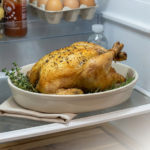
Roasting Guinea Fowl
- Preheat your oven to 180°C (fan 160°C).
- Rub the bird with softened butter or olive oil, garlic, and fresh herbs.
- Cover loosely with foil for the first 45 minutes to retain moisture.
- Remove the foil for the final 15–20 minutes to brown the skin.
- Rest the bird for at least 10 minutes before carving.
A typical 1.2–1.5 kg guinea fowl serves 2–3 people and needs around 55–65 minutes total roasting time.
Braising Guinea Fowl Legs
- Season the legs generously with salt, pepper, and smoked paprika.
- Sear in a hot pan with oil until golden on all sides.
- Add stock, wine, or cider to cover the legs halfway.
- Cover and cook in a low oven (160°C) for 1.5 to 2 hours.
- Check for tenderness — the meat should fall easily from the bone.
Braised legs are arguably the most forgiving and satisfying way to cook guinea fowl.
Flavour Pairings That Work Well
Guinea fowl has enough flavour to stand up to bold accompaniments.
- Herbs: thyme, rosemary, tarragon, bay
- Fruits: lemon, orange, plum, cherry
- Wines: dry white wine, cider, red wine for braising
- Vegetables: root vegetables, leeks, mushrooms, fennel
These pairings complement the mild gamey taste without overpowering it.
Try something new with these 10 flavorful guinea fowl meat recipes. Discover easy dishes to elevate your meals.
Nutritional Value of Guinea Fowl Meat
Beyond flavour, guinea fowl meat offers genuine nutritional benefits. It’s a practical choice for health-conscious consumers.
| Nutrient (per 100g cooked) | Guinea Fowl | Chicken Breast |
|---|---|---|
| Calories | ~150 kcal | ~165 kcal |
| Protein | ~25g | ~31g |
| Fat | ~4g | ~3.6g |
| Iron | Higher | Moderate |
| B vitamins | High | High |
Guinea fowl is a high-protein, low-fat meat with a good mineral profile. The slightly higher iron content is particularly useful for those managing dietary iron intake.
It compares very favourably to chicken and is often marketed as a premium alternative in farm shops and specialist butchers.
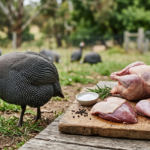
Is Guinea Fowl Meat Worth Raising for the Table
If you’re considering guinea fowl farming partly for meat production, the answer is yes — with some realistic expectations.
The case for raising guinea fowl for meat:
- Higher market value: Guinea fowl commands a premium price at farm shops, farmers’ markets, and through direct sales.
- Lower feed costs: They forage efficiently and supplement their diet naturally.
- Faster to table than some breeds: Birds reach slaughter weight between 12 and 16 weeks.
- Unique selling point: Few local farms offer guinea fowl meat, which creates a market gap you can fill.
Things to consider:
- The carcass yield is smaller than chicken due to the lean, active body.
- Demand can be seasonal — more interest around Christmas and game season.
- Buyers need educating on how to cook it, which is worth doing through your marketing.
For small-scale farmers selling direct to consumers, guinea fowl meat can be a profitable and genuinely distinctive product.
Frequently Asked Questions
Whether you’re curious about cooking it for the first time or thinking about raising guinea fowl for meat, these questions come up regularly.
Does guinea fowl taste like chicken? It’s similar but richer. Guinea fowl has more depth of flavour — a mild gamey note that chicken doesn’t have. Think of it as free-range chicken with more personality.
Is guinea fowl meat good for you? Yes. It’s lean, high in protein, and contains more iron than standard chicken. It’s a nutritious choice for anyone eating a balanced diet.
Why is my guinea fowl meat tough? Overcooking is the most common reason. Guinea fowl is lean, so it dries out quickly at high heat. Use slower, lower temperatures and always rest the meat before serving.
At what age should guinea fowl be slaughtered for meat? Between 12 and 16 weeks is ideal for tender, mild-flavoured meat. Older birds are edible but tougher and stronger in flavour — better suited to slow cooking or casseroles.
Can you eat guinea fowl like chicken? In most recipes, yes. You can substitute guinea fowl for chicken, but reduce cooking time slightly and add more moisture (butter, stock, or a lid) to prevent it drying out.
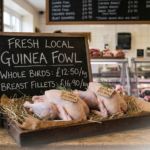
Where can I buy guinea fowl meat in the UK? Specialist butchers, farm shops, and farmers’ markets are your best options. Some online farm-direct suppliers also sell whole birds and portions.
Final Thoughts
Guinea fowl meat taste is one of its best-kept secrets. It sits right between everyday chicken and wild game — full of flavour, lean, and genuinely satisfying when cooked properly. Whether you’re eating it for the first time or thinking about raising birds for the table, it’s a poultry option well worth exploring.
The key takeaways are simple: cook it low and slow, keep it moist, and pair it with bold flavours. Do that, and guinea fowl will quickly become a favourite.
If you’re raising guinea fowl already, consider adding meat production to your operation. The market is there, the product stands out, and the birds are well suited to free-range farming. Explore more guides on our site to learn how to get started with guinea fowl farming from housing and feeding to breeding and sales.