If you’ve got guinea fowl meat in your fridge or freezer and aren’t sure where to start, these seven recipes — from a simple herb roast to a slow-braised stew — will get you a delicious meal without any guesswork.
I still remember the first time I cooked one of my own birds instead of a chicken — I treated it like a broiler and nearly dried it out. Guinea fowl behaves a little differently in the pan, and once you know that, cooking it becomes second nature.
Below is a quick look at all seven recipes before we get into the details.
| Recipe | Best For | Approx. Cook Time |
|---|---|---|
| Herb-Roasted Whole Guinea Fowl | Sunday dinner, special occasions | 1 hr 15 min |
| Braised Guinea Fowl with Mushrooms | Older or tougher birds | 1 hr 30 min |
| Guinea Fowl Casserole with Root Vegetables | One-pot family meals | 1 hr 45 min |
| Pan-Seared Guinea Fowl Breast | Quick weeknight dinners | 20 min |
| Guinea Fowl Curry | Spicy, bold flavor | 50 min |
| Grilled Guinea Fowl Skewers | Summer cookouts | 25 min |
| Slow Cooker Guinea Fowl Stew | Hands-off, budget-friendly | 6-7 hrs |
Why Guinea Fowl Meat Cooks Differently Than Chicken
Before jumping into the recipes, it helps to know what you’re working with. Guinea fowl meat is leaner and slightly firmer than chicken, with a mild, faintly gamey flavor that sits somewhere between chicken and pheasant. Because the birds carry less fat under the skin, they dry out faster if cooked too long or too hot. The fix is simple: keep the heat moderate, add moisture through basting, marinating, or braising liquid, and pull the meat as soon as it hits a safe temperature rather than cooking “until it looks done.” For the full rundown on how the two meats compare, see guinea fowl meat vs. chicken meat.
One more thing worth knowing before you start: bird age changes your method. Young birds under about 12 weeks are tender enough for quick roasting or pan-searing. Older, tougher birds do much better in a braise, casserole, or stew, where low, slow, moist heat has time to break down the connective tissue.
Whatever recipe you choose, always cook guinea fowl to a safe internal temperature. The USDA’s Food Safety and Inspection Service recommends cooking whole poultry to a minimum internal temperature of 165°F, checked in the innermost part of the thigh and wing and the thickest part of the breast. A digital meat thermometer is the only reliable way to confirm this — color and clear juices aren’t accurate indicators on their own.
1. Herb-Roasted Whole Guinea Fowl
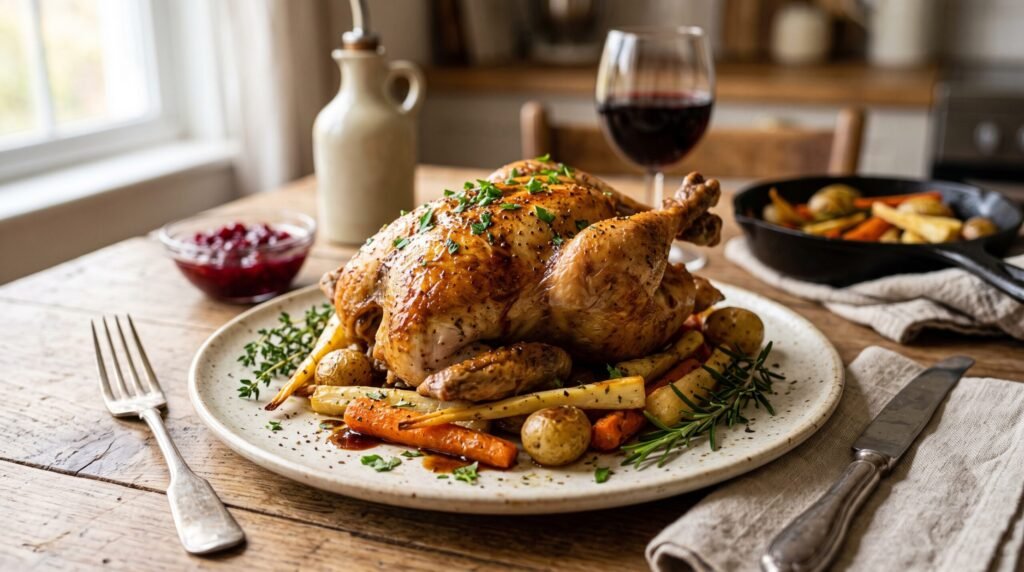
This is the recipe I reach for when I want something that looks impressive without much hands-on effort. A whole roasted guinea fowl, rubbed with butter and fresh herbs, makes a centerpiece dish that feeds a small family comfortably. Sourcing a bird for the first time? It’s worth checking where guinea fowl meat is sold and what it typically costs before you shop.
What you’ll need:
- 1 whole guinea fowl (about 2.5–3 lbs)
- 3 tbsp softened butter
- 2 cloves garlic, minced
- 1 tbsp fresh thyme, chopped
- 1 lemon, halved
- 1 small onion, quartered
- Salt and black pepper
How to make it:
- Preheat your oven to 400°F. Pat the bird dry inside and out — this matters more than people expect, because a dry surface is what lets the skin crisp instead of steam.
- Mix the softened butter with garlic and thyme, then rub it generously under and over the skin.
- Season the cavity with salt and pepper, then stuff it with the lemon halves and onion quarters.
- Truss the legs loosely with kitchen twine and place the bird breast-side up in a roasting pan.
- Roast for about 50–60 minutes, basting once or twice with the pan juices to keep the breast from drying out.
- Check the thickest part of the thigh with a meat thermometer. Pull the bird once it reads 165°F, then rest it for 10 minutes before carving.
The resting step isn’t optional in my kitchen — cutting into it too early lets all those juices run straight onto the cutting board instead of staying in the meat.
2. Braised Guinea Fowl with Mushrooms
Braising is the method I trust most for older birds or leg quarters, since slow, moist cooking turns naturally lean, firm meat tender. This one leans into earthy mushroom and wine flavors that pair beautifully with guinea fowl’s subtle game notes.
What you’ll need:
- 4 guinea fowl leg quarters or a whole bird, jointed
- 2 tbsp olive oil
- 8 oz cremini mushrooms, sliced
- 1 onion, diced
- 2 cloves garlic, minced
- 1 cup dry white wine
- 1 cup chicken or guinea fowl stock
- 1 tbsp flour
- Salt, pepper, and a few sprigs of fresh thyme
How to make it:
- Season the guinea fowl pieces well and dust lightly with flour.
- Heat the olive oil in a heavy pot or Dutch oven over medium-high heat, then brown the pieces on all sides. Remove and set aside.
- In the same pot, sauté the onion and mushrooms until softened, then add the garlic for another minute.
- Pour in the wine, scraping up any browned bits from the bottom of the pot, then add the stock and thyme.
- Return the guinea fowl to the pot, cover, and simmer gently on low heat for about an hour, or until the meat is fork-tender and reaches 165°F.
- Uncover for the last 10 minutes if you want the sauce to reduce and thicken slightly.
Serve this one over mashed potatoes or wide egg noodles — the sauce is too good to leave on the plate.
3. Guinea Fowl Casserole with Root Vegetables
This is my go-to for a busy weeknight when one pot needs to do all the work. Root vegetables hold up well to the longer cook time and soak up the flavor of the meat as everything simmers together.
What you’ll need:
- 1 whole guinea fowl, jointed into 8 pieces
- 3 carrots, chopped
- 2 potatoes, cubed
- 1 parsnip, chopped
- 1 onion, sliced
- 2 cups chicken stock
- 1 tbsp tomato paste
- 1 bay leaf
- Salt, pepper, olive oil
How to make it:
- Preheat the oven to 350°F.
- Brown the guinea fowl pieces in olive oil in an oven-safe pot, then set aside.
- Add the onion, carrots, parsnip, and potatoes to the same pot and cook for a few minutes until lightly colored.
- Stir in the tomato paste, then pour in the stock and add the bay leaf.
- Nestle the browned guinea fowl pieces back into the pot, cover, and transfer to the oven.
- Cook for about 1 hour to 1 hour 15 minutes, until the vegetables are tender and the meat reaches 165°F.
I like to check the pot around the halfway mark and add a splash more stock if it’s looking dry — leaner meat means less rendered fat to keep things moist compared to a chicken casserole.
4. Pan-Seared Guinea Fowl Breast
When there’s no hour to spare, boneless guinea fowl breast is the fastest way to get a good meal on the table. The key is high heat for a short time, not low heat for a long time — the opposite of the whole-bird recipes above.
What you’ll need:
- 2 boneless guinea fowl breasts, skin on
- 1 tbsp olive oil
- 1 tbsp butter
- 1 clove garlic, smashed
- A sprig of rosemary or thyme
- Salt and pepper
How to make it:
- Pat the breasts dry and season both sides with salt and pepper.
- Heat the olive oil in a skillet over medium-high heat. Place the breasts skin-side down and press gently for even contact.
- Cook for about 6–7 minutes without moving them, letting the skin turn deep golden and crisp.
- Flip, then add the butter, garlic, and herb sprig to the pan. Tilt the pan and spoon the melted butter over the breasts for a minute or two.
- Continue cooking until the internal temperature reaches 165°F, usually another 4–5 minutes depending on thickness.
- Rest for 5 minutes before slicing.
Because breast meat is the leanest part of the bird, this is the recipe where overcooking shows up fastest — a thermometer genuinely saves the dish here.
5. Guinea Fowl Curry
Guinea fowl takes on spices beautifully, and curry is a great way to use leg and thigh meat, which stays juicy even after a long simmer in a well-spiced sauce. This is one of my family’s most-requested dinners.
What you’ll need:
- 1.5 lbs guinea fowl thighs and legs, cut into pieces
- 2 tbsp cooking oil
- 1 onion, finely chopped
- 2 cloves garlic, minced
- 1-inch piece ginger, grated
- 2 tsp curry powder
- 1 tsp ground cumin
- 1 can (14 oz) crushed tomatoes
- 1 cup coconut milk
- Salt to taste
How to make it:
- Heat the oil in a deep pan and brown the guinea fowl pieces on all sides. Remove and set aside.
- In the same pan, cook the onion until soft, then stir in the garlic, ginger, curry powder, and cumin for about a minute until fragrant.
- Add the crushed tomatoes and simmer for 5 minutes to let the sauce deepen.
- Return the guinea fowl to the pan, pour in the coconut milk, and stir to combine.
- Cover and simmer on low heat for about 30–35 minutes, until the meat is tender and reaches 165°F.
- Season with salt to taste and serve over rice.
6. Grilled Guinea Fowl Skewers
Grilling is one of the quickest ways to get a smoky, charred flavor out of guinea fowl, and skewers make portioning effortless for a backyard cookout. A short marinade does a lot of the work here, adding moisture the lean meat doesn’t have much of on its own.
What you’ll need:
- 1.5 lbs boneless guinea fowl, cut into cubes
- 3 tbsp olive oil
- 2 tbsp lemon juice
- 2 cloves garlic, minced
- 1 tsp paprika
- Salt and pepper
- Bell peppers and red onion, cut into chunks
How to make it:
- Whisk together the olive oil, lemon juice, garlic, paprika, salt, and pepper.
- Toss the guinea fowl cubes in the marinade and let sit for at least 30 minutes, or up to 4 hours in the fridge.
- Thread the meat onto skewers, alternating with pepper and onion chunks.
- Grill over medium-high heat for about 10–12 minutes, turning every few minutes, until the meat is nicely charred and reaches 165°F.
- Let the skewers rest for a couple of minutes before serving.
If you’re using wooden skewers, soak them in water for 20 minutes first so they don’t scorch on the grill.
7. Slow Cooker Guinea Fowl Stew
This is the recipe I turn to on a cold day when dinner needs to cook itself. A slow cooker is forgiving with guinea fowl’s lean meat because the low, steady heat and covered moisture keep everything tender without any babysitting.
What you’ll need:
- 1 whole guinea fowl, jointed, or 4 leg quarters
- 3 carrots, sliced
- 2 celery stalks, sliced
- 1 onion, diced
- 2 potatoes, cubed
- 3 cups chicken stock
- 1 tbsp tomato paste
- 1 bay leaf
- Salt and pepper
How to make it:
- Season the guinea fowl pieces and place them in the slow cooker.
- Add the carrots, celery, onion, and potatoes around the meat.
- Stir the tomato paste into the stock, then pour it over everything and add the bay leaf.
- Cover and cook on low for 6–7 hours, or on high for about 3–4 hours, until the meat is falling-tender and reaches 165°F.
- Remove the bay leaf, adjust seasoning, and serve in bowls with crusty bread.
This is also one of the best ways to use up an older bird, since the long cook time takes care of any extra toughness on its own.
Storing and Reheating Leftover Guinea Fowl
However you cook it, don’t let leftovers sit at room temperature for more than a couple of hours. Refrigerate cooked meat promptly in a shallow, covered container, and plan to eat it within a few days. If you’re not sure how long your leftovers will keep or how best to freeze extra portions, I’ve put together a full guide on storing guinea fowl meat and eggs safely.
Frequently Asked Questions
Does guinea fowl meat taste like chicken?
Close, but not identical. It has a milder, slightly gamey flavor and a firmer texture than standard chicken, and most people who enjoy chicken find it an easy substitute.
Can I substitute guinea fowl for chicken in any recipe?
Yes, in most cases. The main adjustment is cook time and moisture — guinea fowl is leaner and can dry out faster on the exact same timing, so shorten the cook slightly or add a bit more liquid or fat.
What’s the best cooking method for an older guinea fowl?
Slow, moist-heat methods like braising, stewing, or a covered casserole. Older birds have tougher muscle fibers that need time to break down; quick methods like grilling or pan-searing will leave the meat chewy.
How do I know when guinea fowl meat is fully cooked?
Use a meat thermometer in the thickest part of the meat, avoiding bone. It’s safe once it reaches 165°F, regardless of color or how clear the juices run.
Guinea fowl meat rewards a little attention to method, and once you’ve got the basic idea — moderate heat, extra moisture, and a thermometer instead of guesswork — these recipes become just as easy as any weeknight chicken dinner. If you’re new to cooking this bird altogether, my guide to guinea fowl meat’s taste, nutrition, and health benefits is a good next stop.
Which one of these are you trying first? I’d love to hear how it turns out, or see your own twist on any of these recipes in the comments.
Hi, I’m Rayyan. I raise guinea fowl and share practical, research-backed guides for backyard keepers and homesteaders. I combine hands-on flock experience with trusted poultry management and university extension resources to help you raise healthier, more productive birds — with confidence, not guesswork.