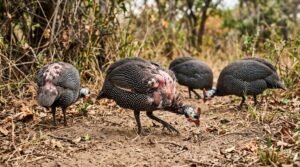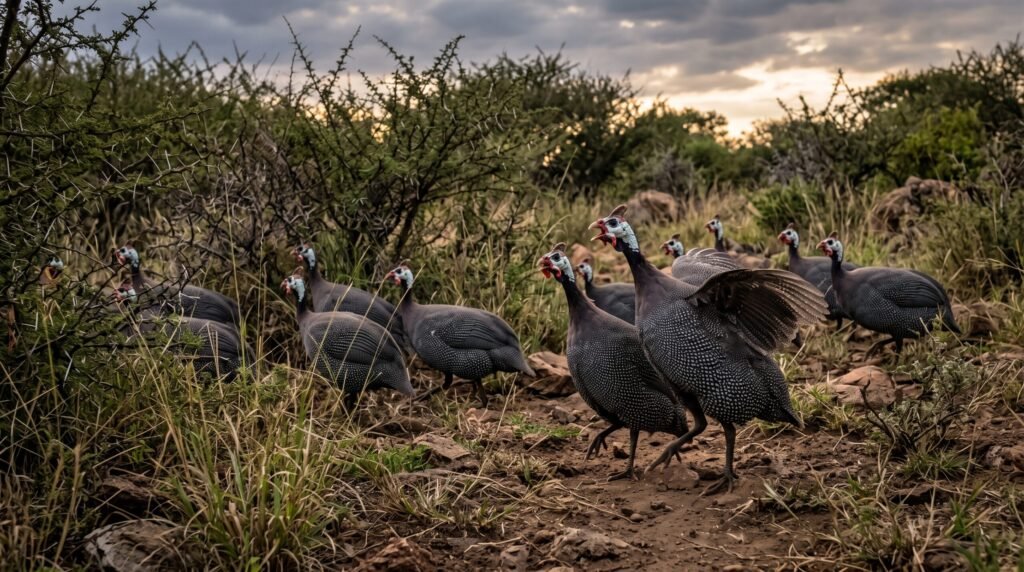
If you keep guinea fowl long enough, you learn their normal noise fast — the constant chatter, the “buck-wheat” call the hens make all day, the general racket that comes with owning them. You tune most of it out. But there’s one sound that’s different, and the first time you hear it, you’ll know instantly something changed.
It’s a fast, rattling, almost mechanical “chi-chi-chi-chi” — sharp, repetitive, and loud enough to carry across a whole property. Guinea keepers sometimes describe it as sounding like a stuck machine gun, or someone shaking a can of spray paint right next to your ear. And it means exactly one thing: they’ve spotted a threat.
I heard it for the first time on a quiet afternoon, out of nowhere. My whole flock went from their usual background chatter to this single, unified alarm, all birds facing the same direction. I ran outside expecting the worst, and found a hawk sitting on my fence line, clearly reconsidering its life choices. The guineas had already won that standoff before I even got there.
What Makes This Sound Different From Everything Else They Do
Guinea fowl are loud all the time — that’s not news to anyone who owns them. But their everyday noise and their alarm call aren’t the same thing, and once you’ve heard the difference, you never confuse them again.
The everyday “buck-wheat, buck-wheat” call is two syllables, made only by hens, and it’s mostly used to locate flockmates or just express general opinions about the state of the world. It’s constant, a little musical, and honestly kind of funny once you get used to it.
The alarm call is completely different. Both males and females can make it, it’s a single, rapid-fire syllable repeated fast, and it can reach volume levels loud enough to rival a power tool. There’s no mistaking it once you’ve heard it — it doesn’t sound like communication, it sounds like an emergency broadcast.
Why Guinea Fowl Are So Good At This
This isn’t random noise-making. Guinea fowl have a real reputation as farmyard alarm systems, and it’s earned. In the wild, they’re a favorite target for predators like wild cats and birds of prey, so sounding off fast and loud isn’t optional for them — it’s survival. Every bird in the flock benefits from one bird spotting danger first, which is exactly why the alarm spreads through the group almost instantly.
There’s actual research behind why the call works so well too. The alarm is built to be hard for a predator to pinpoint, while still being unmistakable to every other bird nearby — a design that makes it genuinely effective at throwing off whatever triggered it in the first place. That’s part of why keepers often report predators giving up and leaving once the guineas start sounding off. The element of surprise is gone, and a hawk or fox that relies on stealth doesn’t have much use for a target that’s already broadcasting its location to the entire yard.
What To Actually Do When You Hear It
The honest answer is: go look. Not every alarm call means a predator is mid-attack, but it’s not a sound worth ignoring either.
A few things I’ve learned from responding to it over the years:
- Check the direction the flock is facing — guineas usually orient toward whatever triggered them
- Look up as much as you look around — hawks and owls set them off just as often as ground predators
- Don’t assume it’s a false alarm just because you don’t see anything right away — guineas often spot threats before a human would
- If the alarm continues even after you’ve checked once, it’s worth a second look
I’ve had guineas sound off over things that turned out to be nothing more than a low-flying turkey vulture, and I’ve had them sound off over an actual fox testing the fence line. You genuinely can’t tell which one it is from the sound alone — the only way to know is to check.
The Sound You Actually Want To Hear More Of
If there’s an upside to owning birds this loud, it’s this: a lot of keepers get guinea fowl specifically because of this alarm call. It’s part of why they’re used as a natural early-warning system on small farms, alongside their reputation for eating ticks and other pests. The same noise that startles new keepers half to death the first time is, longer term, one of the most useful things about having them around.
Once you know what the real alarm sounds like, you stop being unsettled by it and start actually trusting it. It becomes less “why are my birds screaming” and more “okay, something’s out there, let’s go see.”
Have your guineas ever sounded the alarm over something that turned out to be nothing — or something that turned out to be very much not nothing? I’d genuinely like to hear what’s set your flock off.
Hi, I’m Rayyan. I raise guinea fowl and share practical, research-backed guides for backyard keepers and homesteaders. I combine hands-on flock experience with trusted poultry management and university extension resources to help you raise healthier, more productive birds — with confidence, not guesswork.