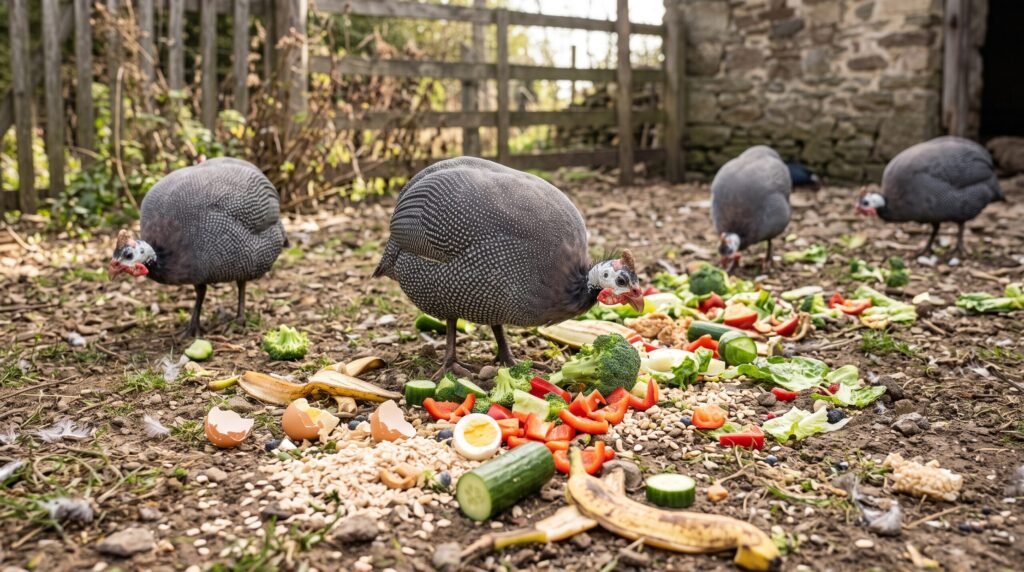
Yes, guinea fowl can eat most kitchen scraps, and mine treat scrap time like the highlight of their day. But “most” is doing some heavy lifting in that sentence, because a handful of common leftovers — raw beans, avocado, chocolate, and anything moldy — can genuinely hurt or kill them.
I started tossing scraps to my flock mostly to cut down on food waste, and it’s turned into one of the easiest ways I supplement their diet without spending extra on feed. But it took a little research (and one nervous phone call to a vet friend after I nearly fed dried kidney beans to my keets) to figure out what’s actually safe. Here’s everything I’ve learned about feeding scraps the right way — what to offer, what to skip entirely, and how much is too much.
Scraps should never make up the bulk of what your guinea fowl eat. Their commercial feed is formulated to cover their protein, calcium, and vitamin needs, and scraps work best as a supplement — not a replacement.
- Generally safe: most vegetables, fruit (minus seeds/pits), cooked grains, cooked meat, cooked eggs, plain cooked beans
- Feed in moderation: starchy leftovers, dairy, fatty meat trimmings, citrus
- Never feed: raw or dried beans, avocado, chocolate, moldy or spoiled food, anything heavily salted, onion and garlic in large amounts
- Rule of thumb: scraps and treats combined should stay under roughly 10% of their daily diet
Why Guinea Fowl Do Well With Kitchen Scraps
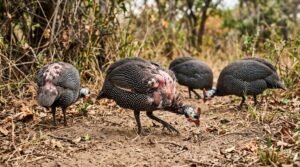
Guinea fowl are omnivores by nature. In the wild and on the homestead, they eat both plant and animal matter, hunting down insects and pests while also foraging for seeds and greens. That flexible gut is exactly why they handle table scraps better than a lot of other backyard birds — they’re built to process a genuinely varied diet.
Practically speaking, scraps are also useful. Many keepers rely on the same high-protein feed for guineas as they do for chickens, especially in winter when foraging opportunities shrink, and kitchen scraps fill in the gaps on the days when bugs and forage are scarce. I’ve noticed mine go straight for anything protein-rich first — leftover scrambled eggs disappear before the vegetable peels even hit the ground.
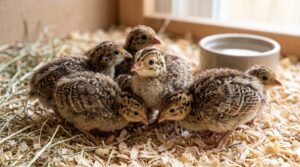
There’s a catch worth knowing about early, though. If you’re brooding young keets, be careful about feeding them garden vegetable scraps, since they can imprint on those as “safe” food and later think your actual garden is fair game. I learned this one the hard way — a guinea that grew up snacking on lettuce trimmings has zero hesitation about raiding a lettuce bed later.
Safe Kitchen Scraps for Guinea Fowl
These are the scraps I reach for most, and they’ve held up well against every credible source I’ve checked.
Vegetables
Guinea fowl handle most vegetable scraps without issue:
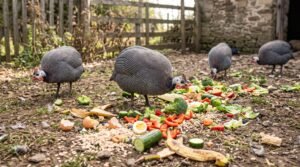
- Lettuce, spinach, and other leafy greens
- Carrots and carrot peelings
- Cooked squash and pumpkin (raw is fine too, just chop it up)
- Cucumber
- Bell peppers
- Cooked sweet potato
- Peas and cooked green beans
Skip raw potato peels, especially any peel with a green tinge — more on that below.
Fruits
Fruit scraps are an easy win, and mine treat them like candy:
- Apple (minus the seeds)
- Berries of any kind
- Melon rinds
- Banana and banana peels
- Grapes, cut in half if you’re worried about whole guineas swallowing them fast
Citrus is fine in small amounts but shouldn’t be a daily habit — the acidity can cause loose droppings if you overdo it.
Grains and Starches
Cooked, plain grains are one of the safest scrap categories there is:
- Cooked rice
- Cooked pasta
- Oatmeal
- Stale bread, in moderation (it has almost no nutritional value, so treat it as filler, not food)
- Cooked corn, off the cob or on it
Protein Scraps
This is where guinea fowl really light up. They’ll eat leftover eggs, chicken, pork, and other meats without hesitation, and I’ve found protein scraps are the fastest way to get a wary bird to trust you at feeding time. Stick to cooked, unseasoned meat and trim off excess fat before it goes in the pen — fatty trimmings can turn rancid fast in warm weather and aren’t doing their waistline any favors either.
Cooked eggs (yes, even guinea fowl eggs) are also a great scrap to offer — they’re basically a protein and calcium boost rolled into one. If you’re curious how guinea eggs stack up nutritionally in the first place, it’s worth a look at how guinea fowl eggs compare to chicken eggs.
Foods to Avoid Feeding Guinea Fowl
This is the section that actually matters most, because a few of these aren’t just “not ideal” — they’re genuinely dangerous.
| Food | Why to Avoid It |
|---|---|
| Raw or dried beans | Contain phytohaemagglutinin, a toxin that can be fatal in very small amounts |
| Avocado (flesh, skin, pit) | Contains persin, toxic to the heart and respiratory system |
| Chocolate and caffeine | Contains theobromine and caffeine, both toxic to birds |
| Moldy or spoiled food | Can carry mycotoxins that damage the liver and immune system |
| Green or sprouting potato skins | Contain solanine, toxic to the nervous and digestive systems |
| Rhubarb and rhubarb leaves | Contains oxalic acid, harmful to the digestive tract and kidneys |
| Onion and garlic in quantity | Can damage red blood cells over time |
| Salty, processed foods | Excess sodium is hard on their kidneys and can be fatal in large amounts |
A couple of these deserve a closer look, because the “why” changes how careful you need to be.
Raw beans are the one I’d flag hardest. Dried lentils and raw beans contain phytohaemagglutinin, a toxin that’s dangerous even in tiny quantities — as few as four beans can be enough to kill a bird, and once it’s eaten there isn’t much you can do. Cooking neutralizes the toxin, so thoroughly cooked beans are fine. Raw, dried, or undercooked beans are not something to gamble on. If you’re not certain a bean dish was cooked all the way through, don’t feed it.
Avocado is the other one people don’t expect. The toxin, persin, is concentrated in the skin and pit but present in the flesh too, and it can cause breathing problems, weakness, and heart issues. I just keep avocado scraps out of the compost bucket I use for the flock entirely — it’s not worth trying to remember which part is “safer.”
Chocolate is a hard no. It contains theobromine, and ingestion can lead to seizures, vomiting, or death. This one rarely comes up by accident, but if you’ve got kids who might toss a candy wrapper’s contents over the fence, it’s worth a heads-up.
Rhubarb is easy to miss if you garden and cook — the oxalic acid in rhubarb can make a bird feel unwell for an extended period and lead to soft-shelled eggs. Keep the trimmings out of the scrap bucket, not just the stalks themselves.
How Much Is Too Much?
Even with fully safe foods, portion matters. Scraps are a supplement, not a diet, and treating them otherwise tends to backfire in three ways I’ve seen firsthand:
- Nutritional gaps. A guinea filling up on bread and rice has less appetite for the balanced feed that actually meets its protein and calcium needs — which shows up later as thinner shells or slower growth.
- Digestive upset. Too much of any one food, even a safe one like fruit, can cause loose droppings.
- Picky eating. Birds that get too used to rich scraps sometimes turn their beaks up at plain feed, which is the opposite of what you want heading into winter when foraging drops off.
A reasonable target is to keep treats and scraps under about 10% of the daily diet, with the rest coming from a quality feed formulated for game birds. If you’re weighing exact feed amounts for your flock size, a feed calculator takes the guesswork out of it. And if store-bought feed isn’t cutting it, it’s worth checking whether chicken feed works as a substitute in a pinch.
How to Introduce Scraps Safely
If you’re just starting to offer scraps, a few habits will save you trouble down the line:
- Chop larger pieces. Guinea fowl don’t have teeth, so anything too big can cause choking, especially in younger birds.
- Introduce one new food at a time. This makes it easy to spot if something doesn’t agree with a particular bird.
- Scatter, don’t dump. Spreading scraps around the run encourages the same foraging behavior that makes guineas such effective tick and pest control in the first place.
- Remove leftovers by evening. Uneaten scraps attract rodents and other pests overnight, which defeats half the purpose of keeping guinea fowl around.
- Watch for leftovers going untouched. If the flock consistently ignores a food, that’s usually a sign to stop offering it rather than a sign to keep trying.
Final Thoughts
Kitchen scraps are one of the easiest, cheapest ways to round out a guinea fowl’s diet, and mine genuinely seem to enjoy the variety — but the short list of dangerous foods is worth memorizing rather than guessing at. Keep raw beans, avocado, chocolate, and anything moldy out of the bucket entirely, feed everything else in moderation, and let your feed — not your leftovers — do the nutritional heavy lifting. This matters even more if you’re just getting your flock started, since good habits early on are a lot easier than correcting bad ones later.
What scraps does your flock go crazy for? I’m always looking for new ideas to keep feeding time interesting, so drop a comment if you’ve found something yours can’t get enough of. And if you’re still dialing in the rest of their diet, my guide on what guinea fowl eat covers the full picture beyond just scraps.
Frequently Asked Questions
Can guinea fowl eat bread?
Yes, in small amounts. Bread has very little nutritional value, so it works better as an occasional filler than a regular part of their diet. Stale bread is fine as long as it isn’t moldy.
Can guinea keets eat kitchen scraps?
Hold off until they’re a bit older and established on a proper starter feed. Young keets need a high-protein diet to develop properly, and scraps can crowd out the nutrition they need most in those first few weeks.
Is it illegal to feed kitchen scraps to poultry?
Rules vary by country and region, and some places restrict feeding food waste to livestock, particularly meat scraps, due to disease control concerns. It’s worth a quick check of your local agricultural regulations if you’re feeding scraps regularly, especially meat.
Can guinea fowl eat moldy food?
No. Moldy or spoiled food can contain mycotoxins that damage the liver and immune system. When in doubt, throw it in the compost pile instead of the scrap bucket.
Do kitchen scraps affect egg taste?
Strong-flavored foods like onion and garlic are sometimes blamed for affecting egg flavor, though evidence on this is mixed. If you’re concerned, it’s simplest to keep those foods to small, occasional amounts rather than a daily habit.
Hi, I’m Rayyan. I raise guinea fowl and share practical, research-backed guides for backyard keepers and homesteaders. I combine hands-on flock experience with trusted poultry management and university extension resources to help you raise healthier, more productive birds — with confidence, not guesswork.