

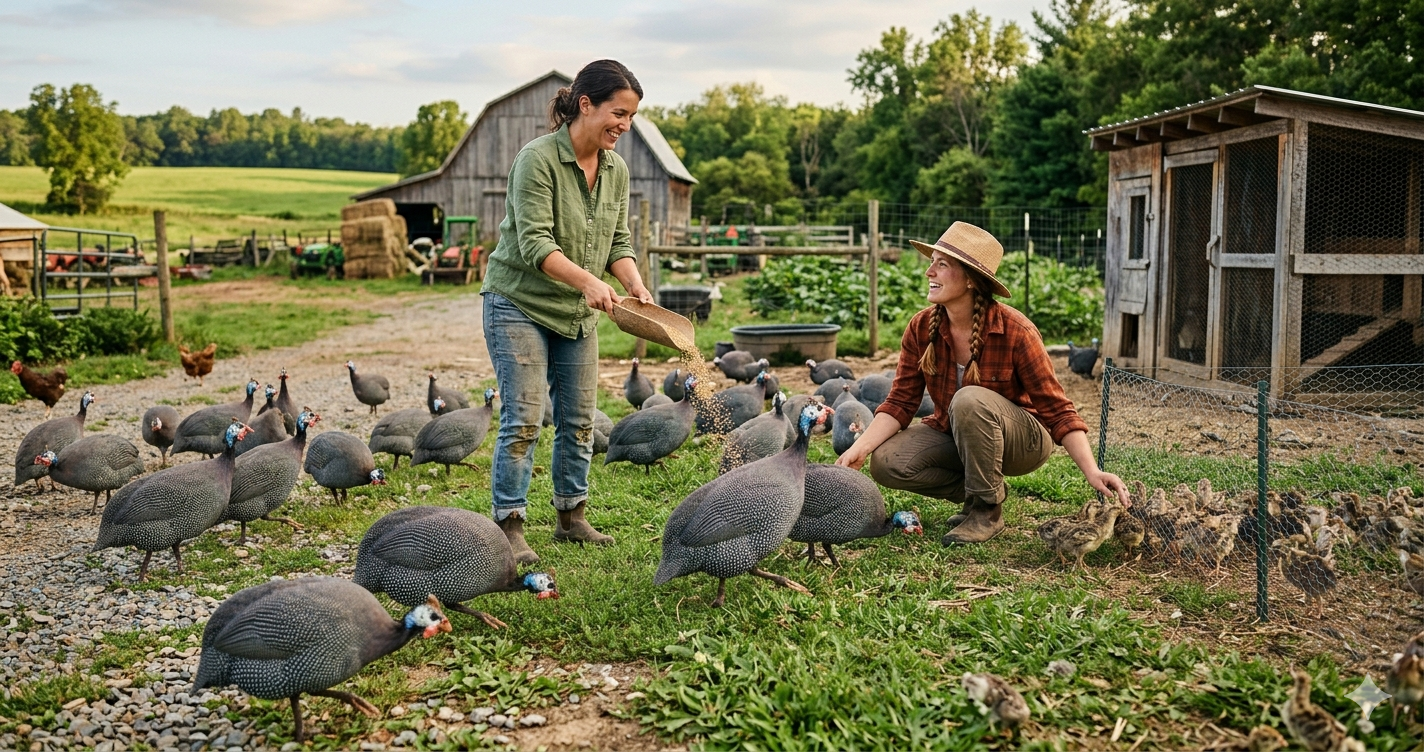
The Helmeted Guineafowl is a hardy, spotted bird that helps with insect hunting, flock protection, and specialty egg production. It suits farmers, homesteaders, and new poultry keepers who want a low-maintenance, free-range bird with strong watchdog behavior.
This guide explains everything in simple language. You do not need bird-care experience to understand it. I’ll walk through the basics, the benefits, the challenges, and the setup steps in a clear, practical way.
What Is a Helmeted Guineafowl?
A Helmeted Guineafowl (Numida meleagris) is a ground-dwelling African bird with a bare head, a helmet-like casque, and white-spotted feathers. It is the most common type of guinea fowl kept in backyard flocks, farmyards, and homestead setups.
People keep this bird for several reasons:
- insect control
- alarm-system behavior
- specialty meat production
- seasonal egg laying
- ornamental flock value
Its strong survival instinct and active foraging habit make it popular in free-range poultry systems.
Are Helmeted Guineafowl Good for Beginners?
Yes, Helmeted Guineafowl can work for beginners, especially in rural settings with open space and secure housing. They are hardy birds, but they are also noisy, active, and less predictable than chickens.
They are a better fit for people who want:
- a practical farm bird
- a free-range flock addition
- a natural pest-hunting bird
- a loud warning bird for property security
They are not the best fit for people who want quiet, cuddly, easy-to-train backyard pets.
Why So Many People Choose Helmeted Guineafowl
Many buyers want a bird that does more than lay eggs. The Helmeted Guineafowl offers several useful farm benefits.
1. Natural alarm-bird behavior
These birds react quickly to movement, strangers, and predators. Their loud call works like a live security system around the home, yard, or pasture.
2. Strong free-range foraging
Helmeted guineafowl spend much of the day searching for insects, seeds, and small food items. This makes them useful in orchard spaces, garden borders, and open-field systems.
3. Specialty egg and meat value
They are also raised for flavorful meat and small, rich eggs. In some markets, guinea products have premium-value appeal.
4. Low-fuss outdoor lifestyle
Compared with some poultry breeds, they prefer independence. They do well with room to roam, a safe night shelter, and a simple feed-and-water routine.
What Does a Helmeted Guineafowl Look Like?
The Helmeted Guineafowl has a very distinctive appearance. It is easy to identify because of its bold feather pattern and bare, colorful head.
Key physical features
- dark gray body with white spots
- horn-like head casque
- blue-red facial skin
- short tail
- upright body shape
- alert, quick-moving posture
This spotted feather pattern is why people often search for terms like speckled guinea bird, helmet guinea fowl, or African guinea hen.
Where Do Helmeted Guineafowl Come From?
Helmeted guineafowl are native to sub-Saharan Africa. They live naturally in:
- savanna grassland
- dry scrubland
- open woodland
- farmland edges
- brushy field zones
They prefer open ground with room to move and nearby cover for safety. Domestic flocks now live in many parts of the world, especially in farm-country and homestead areas.
What Do Helmeted Guineafowl Eat?
Helmeted guineafowl are omnivorous birds. They eat both plant-based and animal-based foods.
Common food sources
- seeds
- grain
- greens
- insects
- beetles
- worms
- snails
- small arthropods
Their insect-hunting habit makes them valuable in free-range systems.
Beginner feeding plan
Here’s a simple step-by-step feeding guide.
Step 1: Start with complete poultry feed
Use a balanced flock feed as the base diet.
Step 2: Add free-range access
Let them forage in a safe outdoor area when possible.
Step 3: Keep fresh water available
Clean water should stay available all day.
Step 4: Offer scratch only as a treat
Scratch grains should support the diet, not replace a balanced feed plan.
This simple feed routine works well for new keepers and small-flock owners.
Do Helmeted Guineafowl Control Ticks?
Helmeted guineafowl do eat ticks and other insects, but they should not be treated as a complete tick-control solution. They can help reduce some insect activity through regular foraging, but they are not a guaranteed pest-management system.
That makes them useful as part of a broader outdoor-management plan, not as the only answer.
How Many Eggs Do Helmeted Guineafowl Lay?
A healthy hen can lay around 100 or more eggs per year in a managed flock, though home-flock production may be lower and more seasonal.
Egg-laying facts
- laying often starts in spring
- production may continue into warm months
- eggs are smaller than chicken eggs
- shells are usually hard and strong
- laying can be seasonal
For buyers who want daily, high-volume egg production, chickens are often the better choice. For buyers who want a multi-purpose farm bird, guinea fowl can still offer excellent value.
Incubation and Hatching Guide
The incubation period for guinea eggs is usually 26 to 28 days.
Step-by-step hatching guide
Step 1: Collect clean eggs
Choose clean, uncracked eggs for incubation.
Step 2: Store eggs properly
Store hatching eggs carefully in a cool place before setting them.
Step 3: Incubate for 26 to 28 days
Keep conditions stable through the full hatch period.

Step 4: Stop turning before hatch
Like many poultry eggs, guinea eggs should not be turned during the final few days.
Step 5: Prepare a brooder box
Once the keets hatch, move them to a warm, draft-free brooder space with clean bedding, chick feed, and water.
Many keepers use incubators because guinea hens are not always reliable mothers in managed flocks.
Are Helmeted Guineafowl Easy to Raise?
Yes, they are easy in some ways and challenging in others.
What makes them easier
- hardy body type
- active foraging habits
- strong outdoor survival instinct
- lower dependence on constant human attention
What makes them harder
- loud vocal behavior
- roaming habit
- nervous flock movement
- weak nesting consistency in some setups
- less coop loyalty than chickens
So, are they simple to keep? Yes, if you have space, patience, and realistic expectations.
Step-by-Step Guide to Raising Helmeted Guineafowl
Step 1: Check your local rules
Look at zoning laws, neighborhood rules, and poultry restrictions before buying birds. Noise is often the biggest issue.
Step 2: Start with young keets
Young birds learn their home base more easily than adult birds. This helps with flock training and return-to-coop habits.
Step 3: Set up a safe brooder area
Keets need warmth, dry bedding, clean water, and starter feed during early growth.
Step 4: Build secure night housing
Use predator-proof coop space or roost shelter for nighttime safety.
Step 5: Give them outdoor room
Helmeted guineafowl do best in open-range or large-yard settings.
Step 6: Expect noise from day one
Their calling habit is part of their value, but it is also their biggest downside for many households.
Step 7: Watch their flock behavior
They prefer group movement. A stable flock setup helps reduce stress and confusion.
Helmeted Guineafowl vs Chickens
Many first-time buyers compare guinea fowl with chickens. Both birds have value, but they serve different purposes.
Choose helmeted guineafowl if you want:
- a louder alarm bird
- a stronger forager
- a more independent free-range bird
- a specialty meat bird
- a distinctive farmyard bird
Choose chickens if you want:
- steadier egg output
- quieter flock behavior
- easier coop management
- better beginner control
- more pet-friendly interaction
This side-by-side comparison helps buyers choose the right poultry option for their property type and care style.
Are Helmeted Guineafowl Worth Buying?
Yes, Helmeted Guineafowl are worth buying for the right owner.
They are a strong match for:
- rural homes
- homestead properties
- orchard systems
- insect-heavy land
- mixed-poultry farms
- free-range bird keepers
They are a weak match for:
- tight suburban yards
- noise-sensitive areas
- highly controlled coop systems
- owners who want calm pet birds
The best buyer is someone who values function, alertness, and outdoor adaptability.
FAQ About Helmeted Guineafowl
Is helmeted guineafowl good for a backyard?
Yes, but only if the backyard is large enough and neighbors can tolerate noise.
Are helmeted guineafowl friendly?
They are usually more independent than affectionate. They are better as working birds than lap birds.
Can helmeted guineafowl live with chickens?
Yes, they can live with chickens in some flock systems, but their behavior is different and they need enough room.
Are they good at free-ranging?
Yes. Free-ranging is one of their biggest strengths.
Do they need special housing?
They need safe, dry, predator-proof night shelter. The setup does not need to be fancy, but it must be secure.
Are they worth it for beginners?
Yes, when the beginner has land, basic housing, and realistic expectations about noise and movement.
Final Verdict
The Helmeted Guineafowl is a practical, eye-catching, hard-working bird for farms, homesteads, and open-space properties. It offers insect-hunting ability, alarm-bird value, and specialty flock benefits in one package.
It is not the right bird for every buyer. But for the right setup, it can become one of the most useful birds in the flock.
If your goal is a quiet, highly social pet, look elsewhere. If your goal is a tough, active, free-range farm bird with real purpose, the Helmeted Guineafowl deserves serious attention.