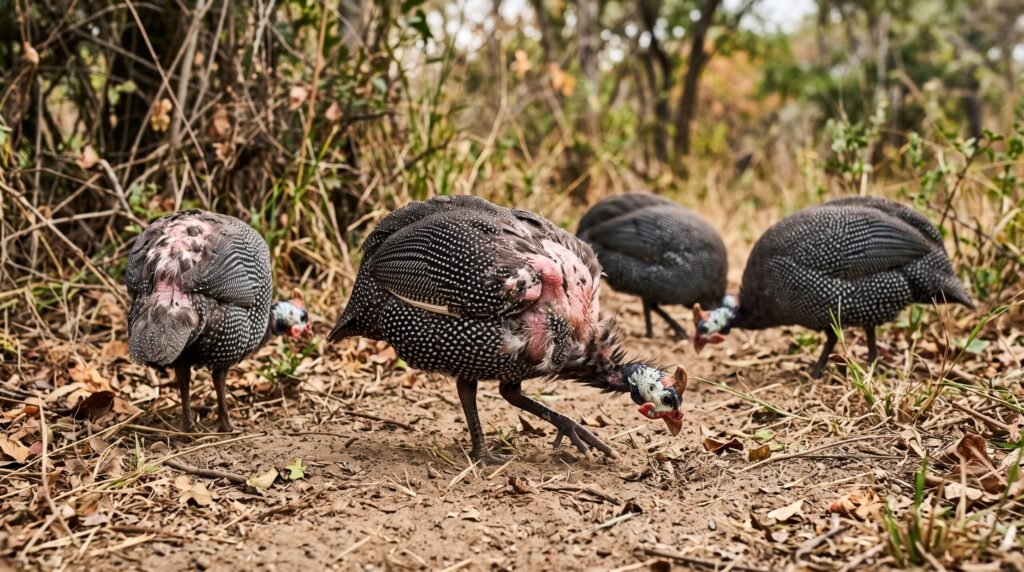
Guinea fowl lose feathers for a handful of reasons — natural molting, mating damage, parasites, feather pecking, or poor nutrition — and the fix depends entirely on which one you’re dealing with. In this guide, I’ll walk you through how to tell them apart and what actually works to get your flock’s feathers back.
I’ve had guineas come through my run looking like they lost a fight, and more than once the cause wasn’t what I expected. Feather loss can look almost identical across completely different problems, so a bit of detective work up front saves you weeks of guessing. By the end of this article, you’ll know exactly where to check on your bird, what each pattern of damage usually means, and how to respond.
Here’s a quick look at the most common causes and how to spot each one before we get into the details.
| Cause | Where feathers go missing | Key sign |
|---|---|---|
| Natural molt | Whole body, gradually | New pin feathers coming in, no skin irritation |
| Mating damage | Back, base of neck, top of wings | Seasonal, mostly on hens, skin looks fine |
| Lice or mites | Vent, under wings, thighs | Nits on feather shafts, scabby or red skin |
| Feather pecking | Back, tail, vent area | Other birds actively pulling, blood-tinged spots |
| Nutritional deficiency | General thinning, poor regrowth | Dull feathers, slow or absent regrowth |
| Predator attack | Sudden, patchy, on the back | Loose feathers scattered in the run, bird otherwise fine |
Is It Molting or a Problem?
Molting is the most common reason a guinea fowl loses feathers, and it’s completely normal. Guineas typically go through their first juvenile molt around three to four months old, then molt annually as adults, usually triggered by the shortening daylight hours in late summer or early fall.
A normal molt has a few tells:
- Feather loss is gradual and spreads across the body rather than concentrating in one spot.
- You’ll see short, waxy-looking pin feathers emerging where old feathers dropped.
- The skin underneath looks healthy — no redness, scabbing, or swelling.
- The bird’s behavior, appetite, and energy stay normal.
If what you’re seeing doesn’t match that pattern — especially if the loss is confined to one area, the skin looks irritated, or the bird seems agitated — it’s worth looking closer, because something else is likely going on.
Common Causes of Feather Loss in Guinea Fowl
Mating and Breeding Damage
During breeding season, male guinea fowl grip a hen’s back, neck, and wings while mating, and repeated mounting can wear feathers down to bare patches. This is one of the most common causes I see on hens in a flock with an active male, and it tends to show up in early spring through summer when breeding activity peaks.
The damage is usually limited to the back, the base of the neck, and the tops of the wings — right where the male’s feet and beak make contact. Skin in the affected area typically stays intact, though repeated mounting on the same spot can eventually cause irritation.
If one hen is clearly taking the brunt of it, keeping a higher ratio of hens to males gives each hen a break between matings. My guide on rooster-to-hen ratios walks through how to work out the right balance for your flock size. You can also separate the most affected hen temporarily so her feathers have a chance to regrow, and keeping an eye on the broader mating season behavior in your flock helps you anticipate when this kind of wear is most likely.
External Parasites
Lice and mites are a leading cause of feather damage in guinea fowl, and they’re often mistaken for something else because the birds themselves cause a lot of the visible harm by picking at their own irritated skin. According to UC Riverside’s poultry entomology extension program, poultry lice feed on skin flakes, feather debris, and dried blood, while the northern fowl mite actually feeds on the bird’s blood and can complete its entire life cycle in under a week.
Signs to check for during a hands-on inspection:
- Small white or grayish clumps (nits) glued to the base of feather shafts, especially around the vent
- Tiny, fast-moving insects when you part the feathers near the thighs, under the wings, or around the vent
- Feathers that look ragged, moth-eaten, or dirty at the base
- Scabbing, redness, or a dark, crusty buildup on the skin
- A general drop in energy, appetite, or egg production in a heavily infested bird
Because both lice and mites hide in feather bases and skin folds, a flashlight and a bit of patience go a long way during inspection — I check under the wings and around the vent first, since that’s where infestations usually show up before spreading. For a closer look at the different pests that affect guineas and how each one presents, my rundown on common guinea fowl parasites covers identification in more depth. If you confirm an infestation, treat every bird in the flock at the same time, not just the ones showing symptoms, since parasites move quickly between birds sharing a coop. A poultry-labeled dust or spray applied according to the product’s instructions is the standard approach, and most treatments need to be repeated after five to seven days to catch newly hatched parasites the first round missed. Clean bedding, a regular coop cleaning routine, and a dust bath area also make it harder for an infestation to take hold again — a dust bath setup is one of the simplest things you can add to help birds manage this themselves.
Feather Pecking
Feather pecking happens when birds peck at and pull out each other’s feathers, and it’s usually a sign of stress, overcrowding, or boredom rather than illness on its own. Guinea fowl kept in tight quarters, or a flock going through a disruption like a new bird being introduced, are more prone to this behavior.
Once a bit of blood shows at a plucked feather’s base, it tends to attract more pecking from other birds, so a minor case can escalate quickly if it’s not caught early. Look for:
- Bald patches, most often on the back, tail, and around the vent
- Blood-tinged skin or feather stubs
- One or a few birds in the flock doing noticeably more pecking than the rest
Giving the flock more space, adding a dust bath, and providing enough feeder and waterer positions so birds aren’t competing all reduce the boredom and crowding that drive this behavior. Reviewing your flock size against your available space is a good place to start if pecking keeps recurring. If a particular bird is being targeted, separating her temporarily lets her heal while you address the underlying stress in the flock — and if you’re introducing new birds around the same time this started, my guide to bringing new guinea fowl into an existing flock covers how to do that without triggering this kind of stress response.
Nutritional Deficiency
Feathers are made up of roughly 80 to 85 percent protein, so a diet that’s short on protein or key amino acids shows up fast in poor feather condition — thin, brittle feathers, slow regrowth after a molt, or feathers that never quite fill back in. This is especially common if a flock is fed too many low-protein treats like scratch grain or table scraps at the expense of a complete feed.
A commercial poultry feed formulated for the bird’s life stage generally covers protein and amino acid needs, but during molting or heavy feather regrowth, bumping protein up temporarily can help. If you suspect diet is the issue, cutting back on treats and making sure a balanced feed makes up the bulk of the diet is the first and most effective change to make — my full breakdown of what guinea fowl should be eating is a good reference for getting the balance right.
Predator Encounters and Stress
Guinea fowl have a defensive trick: when a predator grabs at them, they can shed a mouthful of feathers to escape, leaving loose feathers scattered around the run with the bird otherwise unharmed. If you find a sudden patch of feathers on the ground with no clear pecking or parasite evidence, and the bird seems fine, this is a common explanation — especially if you’ve had hawks, foxes, or other predators nearby.
Stress from any source, including a recent move, a new flock member, or a loud disturbance, can also trigger unusual feather loss on its own, separate from an actual attack. If close calls with predators are a recurring issue in your run, tightening up your setup using my guide on protecting guinea fowl from predators reduces both the physical risk and the background stress on the flock.
How to Diagnose the Cause
Since several of these causes can look alike from a distance, a hands-on check is the most reliable way to narrow things down. Here’s the order I work through when a guinea shows up with missing feathers:
- Check the timing and season. Late summer through fall points toward a normal molt; spring through summer points more toward mating damage.
- Look at where the feathers are missing. Back and neck feathers suggest mating wear; vent and thigh loss suggests parasites; scattered tail and back damage suggests pecking.
- Examine the skin closely. Healthy pink skin with pin feathers coming in is a normal molt. Redness, scabs, or dark crusty patches point to parasites or pecking-related injury.
- Part the feathers and check for nits or insects, particularly around the vent, under the wings, and on the thighs.
- Watch flock behavior for a few minutes. Active pecking at a specific bird is easy to spot once you know to look for it.
- Consider the diet. If regrowth has stalled for weeks after a molt or injury, review how much protein the flock is actually getting.
If you go through this list and nothing quite fits, or the bird seems unwell beyond the feather loss, a vet experienced with poultry can rule out an underlying illness.
When to See a Vet
Most feather loss resolves on its own once you address the cause, but a few signs mean it’s worth involving a vet rather than treating it at home:
- Feather loss paired with lethargy, poor appetite, or weight loss
- Open wounds, spreading scabs, or signs of infection
- No improvement after a few weeks of appropriate treatment
- Feather loss affecting most of the flock at once with no obvious external cause
Frequently Asked Questions
How long does it take for a guinea fowl’s feathers to grow back?
Regrowth typically takes several weeks to a few months, depending on the bird’s age, nutrition, and how large the affected area is. A well-fed bird recovering from a molt or minor mating wear usually shows new pin feathers within a couple of weeks and a full regrowth within two to three months.
Can guinea fowl lose feathers from cold weather alone?
Cold weather on its own doesn’t typically cause feather loss, but a bird going through a molt during a cold snap has reduced insulation and may need extra shelter and bedding until new feathers fill in.
Should I separate a guinea fowl that’s losing feathers?
Separation helps most when another bird is actively pecking or mating with the affected guinea, since it gives the skin a chance to heal without repeated damage. For a normal molt or a parasite issue you’re treating flock-wide, isolation usually isn’t necessary.
Is bald skin on a guinea fowl always a sign of a problem?
Not always — a normal molt and typical mating wear both leave bare skin temporarily without anything being wrong. The distinction is whether the skin looks healthy and whether new feathers are on the way in.
Feather loss almost always has a straightforward explanation once you check the skin, the location, and the season together. Work through that quick inspection the next time you spot a bare patch, and you’ll usually know within a few minutes whether it’s nothing to worry about or something worth treating. And if you’re just getting your flock set up and want to head off some of these issues early, my broader guide to guinea fowl health and disease management is worth a look. Have you dealt with feather loss in your flock — was it molting, mites, or something else? I’d love to hear what worked for you in the comments.
Hi, I’m Rayyan. I raise guinea fowl and share practical, research-backed guides for backyard keepers and homesteaders. I combine hands-on flock experience with trusted poultry management and university extension resources to help you raise healthier, more productive birds — with confidence, not guesswork.