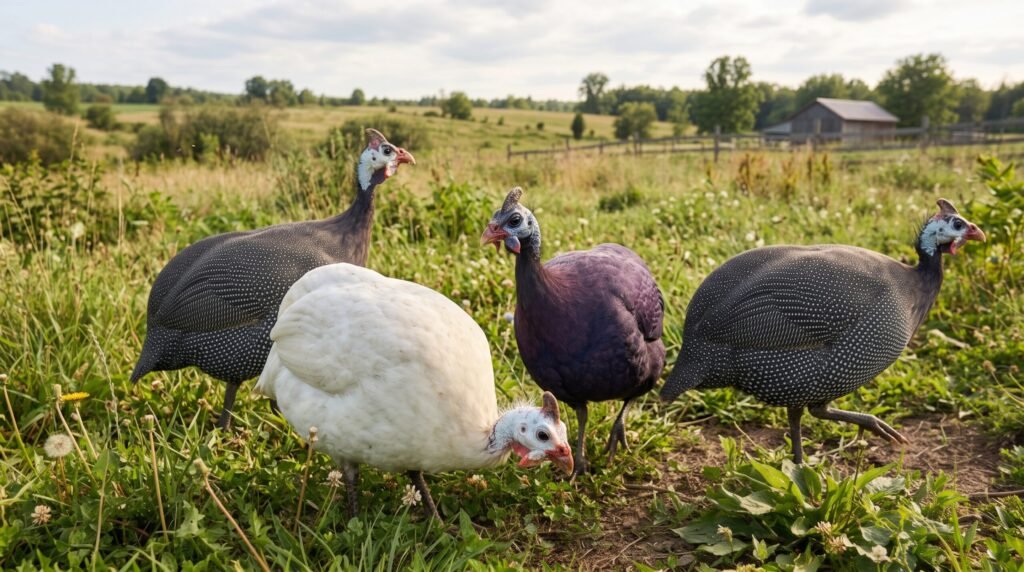
Most backyard keepers do best starting with 6 to 12 guinea fowl, though the right number depends on why you’re keeping them, how much space you have, and how much noise your neighbors will tolerate.
I get this question more than almost any other from new keepers, and it’s a good one to ask before you bring home a single keet. Guinea fowl aren’t like chickens — they’re deeply social, flock-oriented birds that genuinely struggle in isolation or in pairs. Get the number wrong in either direction, and you’ll end up with stressed, noisy, or hard-to-manage birds.
In this guide, I’ll walk you through the minimum flock size, how to scale up based on your goals (pets, pest control, eggs, or meat), how much space each bird actually needs, and the mistakes I see beginners make most often.
A quick overview before we dig in:
| Purpose | Recommended Flock Size |
|---|---|
| Backyard pets / companionship | 3–6 birds |
| Tick and pest control | 3 minimum, plus 3–4 per acre |
| Egg production | 2 hens per person in the household |
| Meat production | 1 male + 4–5 hens per breeding group |
| Natural flock behavior (no isolation stress) | 10–12 birds or more |
Why Guinea Fowl Can’t Be Kept Alone
A single guinea fowl is, in my experience, one of the unhappiest birds you can own. They’re wired to move, forage, and roost as a group, and a lone guinea will spend most of its day calling out in search of company. That’s not just an inconvenience for you — it’s genuine stress for the bird.
Two guineas fare a little better, but you’re still working against their nature. I’ve kept pairs before, and while it can work in a pinch, the birds tend to bond tightly to each other and become anxious the moment they’re separated, even briefly. If one gets sick, injured, or taken by a predator, the survivor often struggles badly.
The general rule I give beginners: never keep fewer than three guinea fowl, and treat three as a bare minimum rather than a target.
Minimum Flock Size by Purpose
The “ideal” number really shifts depending on what you want your guineas to do for you. Here’s how I’d break it down.
Backyard Pets or Companions
If you just want a small, entertaining flock around the yard, 3 to 6 birds is a comfortable range. This is enough for them to establish a pecking order and normal social behavior without overwhelming a smaller property. Keep in mind they’re loud — six guineas sounding off at once is a very different experience than three, so factor in how close your neighbors are before you scale up.
Tick and Insect Control
For pest control, most guides suggest a minimum of three birds, plus roughly three to four more per acre you want them patrolling. Guineas are relentless foragers and will happily work a garden or pasture for ticks, grasshoppers, and other insects, but a small flock can only cover so much ground. If you’re trying to knock down tick populations on a few acres, you’ll want closer to a dozen birds to see a real difference.
Egg Production
Guinea hens lay seasonally, typically from spring through late summer, and a well-managed hen can produce upward of 100 eggs a year. A common rule of thumb is about two hens per person in your household if you’re collecting eggs for the table. So a family of four might keep 8 hens, plus however many males you want for flock behavior and fertility.
Meat Production
For meat, I’d plan around breeding groups rather than a flat number. One male for every four to five hens is the standard ratio recommended in most guinea fowl management guides, and that ratio still produces fertile eggs without the aggression that comes from keeping too many males together. If you want a steady supply of keets to raise for meat, start with two or three of these breeding groups.
Natural Flock Behavior
If your main goal is simply to see guineas behave the way nature intended, 10 to 12 birds is where things really click. At this size, the flock can maintain its own internal structure, spread out their alarm-calling duties, and generally self-regulate in a way smaller groups can’t. Some experienced keepers push this even higher, recommending starter flocks of 14 or more so the birds have a genuine crowd to move with.
How Much Space Do Guinea Fowl Need?
Flock size and space go hand in hand — a flock that’s the “right” size on paper can still struggle if it’s crammed into too little room.
- Coop space: Guineas need roughly 2 to 4 square feet per bird inside the coop for roosting.
- Run space: If they’re confined to a run rather than free-ranging, aim for at least 10 square feet per bird, with 15 to 20 square feet being more comfortable.
- Free-range acreage: Guineas do best with at least an acre or two to roam, and some keepers who free-range successfully allow up to 30 birds per acre.
Overcrowding is one of the fastest ways to turn a healthy flock aggressive. If you notice more squabbling than usual, more feather-pecking, or birds that seem constantly on edge, cramped housing is one of the first things I’d check — before assuming it’s a health or nutrition issue. My own guinea fowl housing guide goes into coop and run design in more detail if you’re planning a new setup.
Signs Your Flock Is Too Small (or Too Big)
You don’t have to get the number exactly right on the first try. Watch your birds for a few weeks and adjust from there.
Signs your flock is too small:
- Constant, anxious calling, especially when birds are separated even briefly
- One or two birds seem to shadow each other everywhere, refusing to be apart
- Noticeably more skittish or flighty behavior than guineas typically show
Signs your flock is too big for your space:
- Frequent fighting or chasing, especially among males
- Birds pacing fence lines or trying to escape the run
- Slower-than-expected egg production or signs of stress like feather loss
If you’re seeing the second set of behaviors, the fix usually isn’t fewer guineas overall — it’s more space, or splitting males into separate groups so they’re not competing over the same hens.
Adding More Guineas to an Existing Flock
Once you’ve settled on a starting number, it’s tempting to just keep adding birds as your setup grows. That’s completely doable, but guineas can be territorial toward newcomers, so a slow, supervised introduction matters more than it does with chickens. I always recommend a barrier period where new birds can see and hear the existing flock before they’re mixed in directly — my guide on introducing new guinea fowl to an existing flock covers the process step by step.
Frequently Asked Questions
Can I keep just two guinea fowl?
You can, but it’s not ideal. Two guineas will bond closely to each other and can become highly stressed if separated, even for a short time. Three is a safer functional minimum.
How many guinea fowl per acre?
For free-ranging birds working on pest control or general foraging, most keepers plan for roughly 3 to 4 birds per acre as a starting guideline, scaling up to as many as 30 per acre in well-managed setups with ample forage.
Do guinea fowl need to be kept in equal numbers of males and females?
No. Unlike some poultry, guineas don’t require a 1:1 ratio to lay fertile eggs. A ratio of one male to four or five females is standard and helps avoid the fighting that comes with keeping too many males in one group.
What’s the smallest flock that will still behave normally?
Three birds is the minimum I’d recommend, but you won’t see the full range of natural guinea fowl flock behavior — shared alarm-calling, group foraging, self-organizing structure — until you’re closer to 10 or more.
Final Thoughts
If you’re just starting out, I’d rather see you begin with 6 birds and add more once you know how much noise, space, and management you’re comfortable with, than jump straight to a dozen and feel overwhelmed. Guinea fowl reward patience — the flock dynamic gets easier to read the longer you watch it.
What’s pulling you toward guinea fowl in the first place — pest control, eggs, or just the novelty of keeping them? That answer alone will usually tell you the number you should start with. And if you’re still working out the basics of daily care, my complete beginner’s guide to guinea fowl farming is a good next stop.
Hi, I’m Rayyan. I raise guinea fowl and share practical, research-backed guides for backyard keepers and homesteaders. I combine hands-on flock experience with trusted poultry management and university extension resources to help you raise healthier, more productive birds — with confidence, not guesswork.