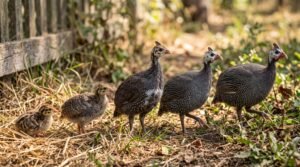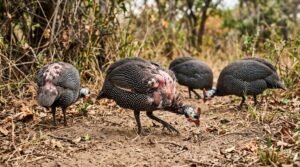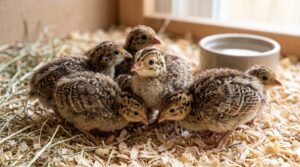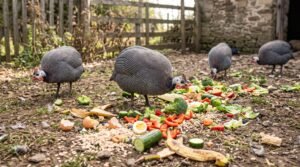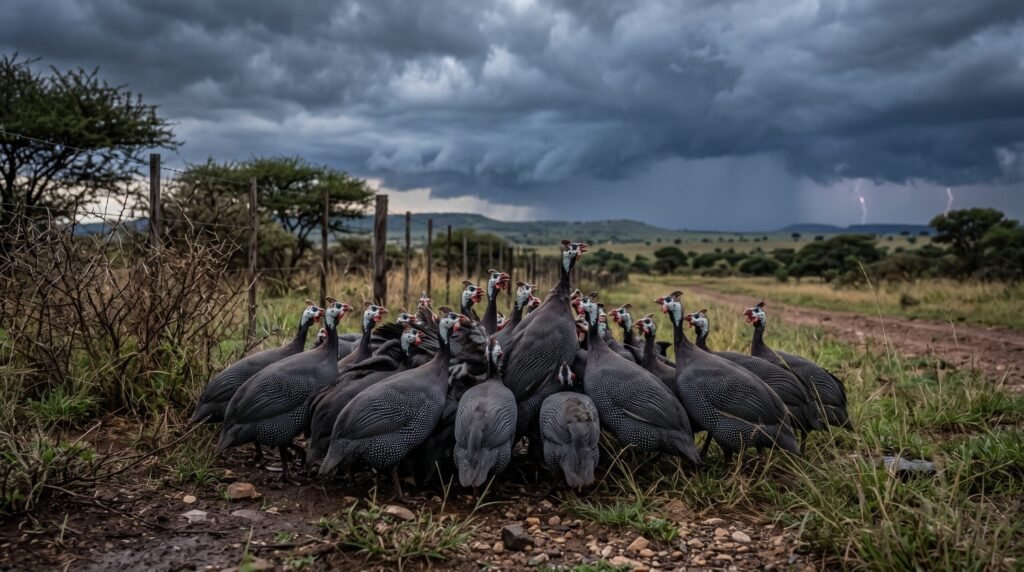
Long before the sky actually looks bad, my guinea fowl already know a storm is coming. They get louder, they get restless, and they start moving toward shelter well ahead of the first raindrop. The first time I really paid attention to it, I checked the radar out of pure curiosity — sure enough, a storm system was still a couple hours out.
It’s not a coincidence, and it’s not just guinea fowl being dramatic, which, to be fair, they’re also very good at. There’s real science behind why birds — including the ones in your backyard — seem to know weather is changing before you do.
The Behavior Itself
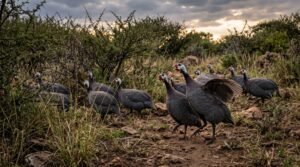
If you watch a flock closely on a day when a storm is building, a pattern usually shows up. Mine tend to get noticeably more vocal than usual, with more of that sharp, repetitive chatter and less of the relaxed background noise. They start bunching closer together instead of spreading out across the yard. And well before it starts raining, they head for the coop or run on their own, without needing to be herded there.
None of this is unique to guinea fowl. Farmers have documented restless, unusually vocal poultry behavior tied to storm systems for generations — it’s one of the oldest pieces of weather folklore there is, and modern observation backs it up more often than not.
Why This Happens: It’s Not Magic, It’s Pressure
The real driver behind most pre-storm bird behavior is barometric pressure. Air pressure drops in a fairly predictable way in the hours before a storm system moves in, and birds are genuinely sensitive to that change in a way most mammals simply aren’t.
Researchers studying wild songbirds found that when they experimentally lowered air pressure in a lab setting — recreating the exact conditions before a storm — the birds ate more and became more active, even with no other storm cues present at all. That means the behavior isn’t birds reacting to dark clouds or wind picking up. Something in their physiology is picking up the pressure shift itself, well before any of the visible signs of a storm show up.
Guinea fowl almost certainly work the same way. They’re not “predicting” a storm the way a meteorologist does — they’re responding to something they can feel in the air that we can’t.
Why Guinea Fowl React So Strongly
Guinea fowl already run on high alert most of the time — it’s part of what makes them such good alarm systems against predators. That same heightened sensitivity to their environment seems to extend to weather changes too.
There’s also a practical survival logic behind the behavior. Storms make it harder to find food, harder to stay warm, and harder to spot danger coming. A bird that starts eating more, sticking closer to the flock, and heading toward shelter before conditions actually get bad is giving itself a real head start on all three problems at once.
For guinea fowl specifically, heading toward the coop early also solves a separate issue: they’re not always great about choosing safe shelter on their own to begin with, and a storm rolling in is exactly the kind of moment where being caught out in the open, in a tree, or scattered across a field becomes a real problem.
What I’ve Learned To Watch For
After a few storm seasons of paying attention, here’s what actually tips me off before I’ve even checked the weather:
- A noticeable jump in noise level, more sharp and repetitive than their usual chatter
- The flock clustering tighter together instead of spread out foraging
- Birds heading toward the coop or run earlier than their normal routine
- A kind of restlessness — more pacing, less settled behavior than usual
None of these are foolproof on their own. But together, especially when they show up on an otherwise ordinary-looking day, they’ve been a more reliable early warning for me than glancing at the sky.
Should You Actually Trust Your Birds Over the Weather App?
Not exactly — but it’s not a bad backup system either. Guinea fowl aren’t going to tell you wind speed or rainfall totals, and they’re reacting to pressure changes, not reading a full forecast. But if your flock suddenly gets loud and starts heading for shelter on a clear afternoon, it’s at least worth pulling up the radar before you assume they’re just being guineas.
Have you noticed your flock doing this before a storm rolled in? I’d be curious how far ahead of the actual weather your birds usually seem to know.
Hi, I’m Rayyan. I raise guinea fowl and share practical, research-backed guides for backyard keepers and homesteaders. I combine hands-on flock experience with trusted poultry management and university extension resources to help you raise healthier, more productive birds — with confidence, not guesswork.