

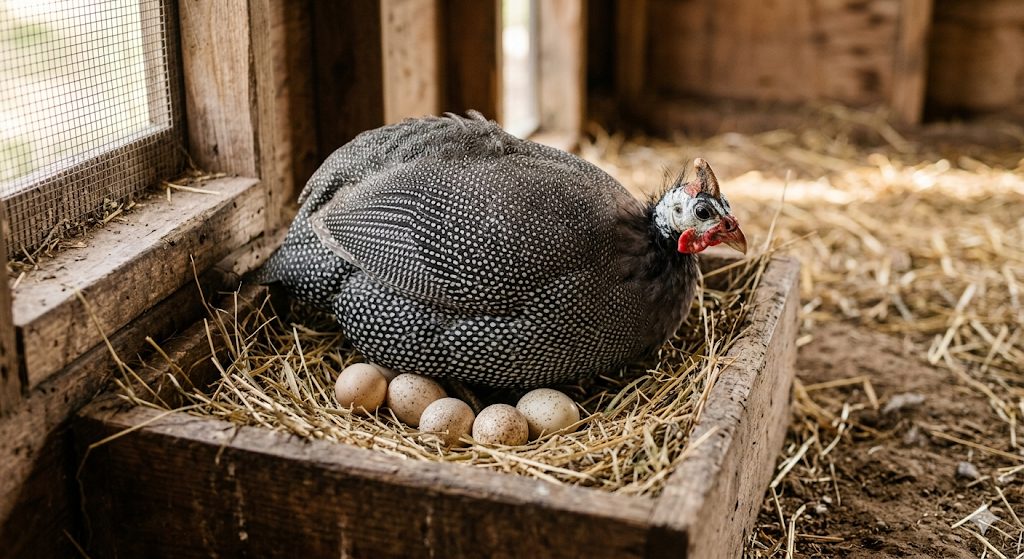
Guinea fowl are fascinating birds — but their egg-laying habits confuse a lot of backyard keepers. If you’ve been wondering how many eggs guinea fowl lay per day, or why your hens suddenly stopped laying, you’re in the right place.
This guide covers everything you need to know about guinea fowl egg production: daily rates, seasonal patterns, breeding behavior, and whether they need a male to lay.
How Many Eggs Do Guinea Fowl Lay Per Day?
A guinea fowl hen lays one egg per day during her active laying season. She does not lay year-round, which surprises many new keepers used to chickens.
Over a full season, a healthy hen can produce 80 to 160 eggs, depending on her age, breed, diet, and environment. According to the University of Kentucky Cooperative Extension, well-managed guinea hens in a commercial setting can reach the higher end of that range.
A few key facts about guinea fowl daily egg production:
- One egg per day is the maximum. Guineas do not “double up” on laying days.
- They often lay in clutches. A hen may lay daily for several weeks, then pause or go broody.
- Egg size is smaller than a chicken egg — roughly half the weight, though the yolk ratio is higher.
- Free-range hens hide their nests. If you’re missing eggs, check dense shrubs, tall grass, or corners of outbuildings.
Guinea Fowl Egg Laying Season: When Do They Lay?
Guinea fowl are strongly seasonal layers. They are triggered by day length (photoperiod), which makes them very different from modern laying hens that produce year-round.
When Does the Season Start?
In the Northern Hemisphere, guinea hens typically begin laying in March or April as days grow longer. The season runs through August or September, then tapers off as days shorten in fall.
| Month | Laying Activity |
|---|---|
| January–February | Little to none |
| March–April | Season begins; increasing production |
| May–July | Peak production |
| August–September | Slowing down |
| October–December | Dormant season |
Guineas in warm, equatorial climates may have a longer or year-round season due to more stable day length.
What Triggers the Laying Season?
The main driver is increasing daylight hours. As the days lengthen past roughly 14 hours of light, the hen’s reproductive system activates. This is why supplemental lighting in winter can extend or restart laying — though I’ve found it adds stress and often shortens the bird’s productive lifespan if used aggressively.
Temperature and nutrition also play a role. Hens that enter spring in poor body condition will start late and produce fewer eggs.
How Often Do Guinea Fowl Lay Eggs? Understanding Their Laying Cycle
Guinea hens lay on a fairly consistent daily schedule during the active season — usually in the late morning to early afternoon, around 10 a.m. to 2 p.m.

However, their cycle is not as rigid as a chicken’s. Here’s what affects how often they lay:
- Broodiness: A guinea hen who goes broody (wants to sit on a nest) will stop laying entirely. She may sit on 20–30 eggs for up to 28 days.
- Stress: Predator pressure, flock changes, or moving to a new space can interrupt laying for days or weeks.
- Health: Internal laying, parasites, or calcium deficiency can reduce frequency.
- Age: Hens in their first or second season are usually the most productive. Older hens lay fewer eggs but the eggs are still fertile.
If your guinea hen suddenly stops laying mid-season, check for hidden nests first. They are skilled at concealing eggs outside.
Can Guinea Fowl Lay Eggs Without a Male?
Yes — guinea hens lay eggs without a male (cock) present. Like chickens, guinea fowl hens ovulate and produce eggs regardless of whether they have been mated.
However, there is an important distinction:
| Condition | Eggs Produced? | Eggs Fertile? |
|---|---|---|
| Hens only, no male | Yes | No |
| One male with hens | Yes | Yes (most eggs) |
| Poor male-to-female ratio | Yes | Partially |
Unfertilized eggs are perfectly fine to eat. Many keepers who want eggs for the kitchen keep hens-only flocks to avoid the noise and aggression of males.
If you want to breed guinea fowl and hatch keets, you need at least one guinea cock. The recommended ratio is one male per four to six hens for reliable fertility.
Guinea Fowl Egg Count: How Many Eggs in a Season?
Over a full laying season, a guinea hen typically produces:

- Low end: 80–100 eggs (older hens, free-range with hidden nests, or birds that go broody early)
- Average: 100–120 eggs (healthy adult hen in good conditions)
- High end: 140–160 eggs (first or second season hen, well-fed, with supplemental light)
These numbers are significantly lower than modern laying chickens, which can produce 250–300 eggs per year. But guinea eggs have a thicker shell, richer yolk, and longer shelf life — traits that many small-scale keepers value highly.
Guinea fowl are not commercial layers. They are dual-purpose birds, kept for pest control (they excel at tick and insect management), meat, and eggs as a secondary benefit.
Breeding Guinea Fowl: What You Need to Know
If your goal is to breed guinea fowl and raise keets, the laying season is your window. Here is how the process works:
Male-to-Female Ratio
Use one cock per four to six hens for strong fertility rates. Too few males = poor fertilization. Too many males = fighting and hen stress.
Egg Incubation
Guinea eggs take 28 days to hatch, whether incubated naturally by a broody guinea or in an artificial incubator. Key incubation parameters:
- Temperature: 99.5°F (37.5°C)
- Humidity: 55–60% for days 1–25; raise to 70% for the final three days
- Turning: Turn eggs at least three times daily until day 25
I’ve had better hatch rates using a broody chicken hen as a surrogate — guinea hens are known to abandon nests, especially if disturbed.

Nest Management
Guinea hens prefer to lay communally in hidden ground nests. If you want to collect eggs for incubation:
- Check perimeter fencing and tall vegetation daily.
- Collect eggs early in the day before the flock congregates.
- Mark any “decoy” eggs you leave behind so you know which to collect.
Frequently Asked Questions
These are real questions guinea fowl keepers ask most often.
How many eggs does a guinea fowl lay per week? During peak season, a guinea hen lays five to seven eggs per week — essentially one per day. In early spring or late fall when the season is tapering, expect three to four per week.
Do guinea fowl lay eggs year-round? No. Guinea fowl are seasonal layers tied to day length. In most of the Northern Hemisphere, they lay from spring through early fall. Supplemental lighting can extend this window but should be used carefully to avoid stressing the birds.
How do I know if my guinea hen has gone broody? A broody guinea hen will sit tightly on a nest, puff up when approached, and return to the nest repeatedly throughout the day. She will stop laying new eggs and may become protective or aggressive. Broodiness can last the full 28-day incubation period.
Why are my guinea fowl not laying eggs? The most common reasons are: it’s outside the laying season, the hen has found a hidden nest outdoors, she has gone broody, or there is a nutritional gap (calcium deficiency is common). Check that your birds are getting a quality layer feed with at least 16% protein and access to oyster shell.
Are guinea fowl eggs good to eat? Yes — guinea fowl eggs are nutritious and flavorful. They have a thicker shell than chicken eggs, a higher yolk-to-white ratio, and are slightly richer in taste. They can be used in any recipe that calls for chicken eggs, adjusting for their smaller size (two guinea eggs ≈ one large chicken egg).

Conclusion
Guinea fowl are seasonal, once-a-day layers that produce 80 to 160 eggs per season without needing a male. Their laying is driven by day length, which means you can expect peak production from late spring through midsummer and a dormant period in fall and winter.
If you want fertile eggs for hatching, add one cock per four to six hens during the season. If you just want eggs for eating, a hens-only flock works perfectly.
The biggest challenge with guinea fowl isn’t their laying rate — it’s finding their eggs. Invest time in tracking your hens’ daily patterns, and you’ll rarely miss a clutch.
Have questions about your own flock’s laying behavior? Drop them in the comments — I’m happy to help you troubleshoot.

Tags: guinea fowl eggs, guinea fowl egg laying season, how many eggs do guinea fowl lay, guinea fowl breeding, guinea hen egg production, guinea fowl vs chicken eggs, backyard poultry, guinea fowl keets, egg-laying birds, seasonal layers
Primary Keyword: guinea fowl egg laying season
Suggested Titles (under 58 characters):
- Guinea Fowl Egg Laying Season: What to Expect (informational)
- How Many Eggs Do Guinea Fowl Lay? Full Guide (question-based)
- Guinea Fowl Eggs: Season, Daily Rate & Breeding (topical)
Meta Description (150 characters): Learn how many eggs guinea fowl lay per day, when their egg laying season starts, and whether they need a male to produce eggs.
Slugs:
- how-many-eggs-do-guinea-fowl-lay
- guinea-fowl-egg-production-guide