

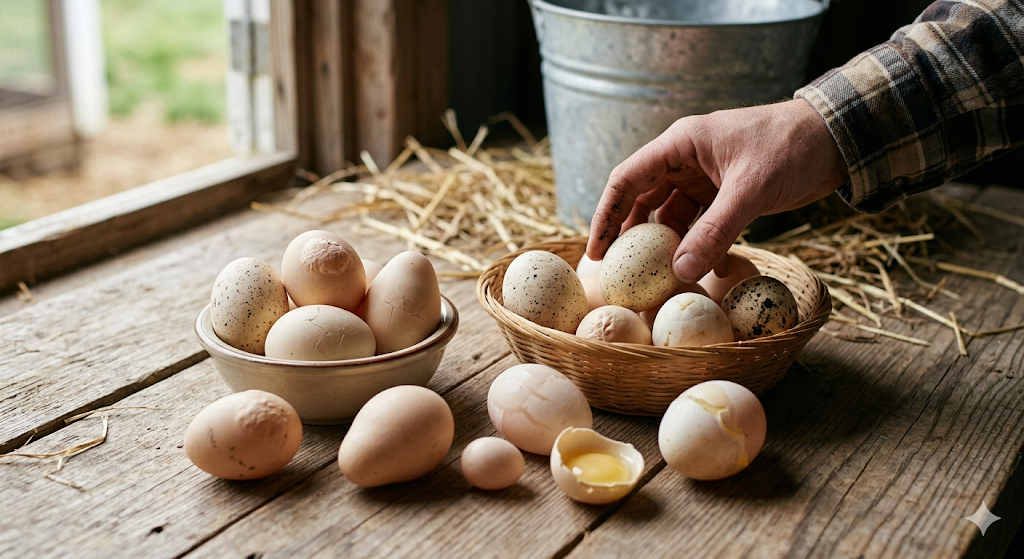
Guinea fowl egg problems are more common than most keepers expect. Whether your birds have suddenly stopped laying, or you keep finding cracked, thin-shelled, or shell-less eggs, something in their environment or diet is usually off.
This guide covers 8 of the most common guinea fowl egg problems, what causes each one, and exactly what to do to fix it. No fluff—just practical answers based on real flock management experience.
1. Guinea Fowl Not Laying Eggs at All
Guinea fowl stop laying eggs for several well-documented reasons. The most common causes are seasonal changes, stress, poor nutrition, or age. Identifying the specific trigger is the first step to solving the problem.
Common reasons guinea fowl stop laying:
- Short daylight hours: Guinea fowl need 14–16 hours of light per day to maintain egg production. In winter or low-light seasons, laying drops significantly or stops entirely.
- Stress from predators or flock changes: New birds, a fox scare, or a change in housing can suppress laying for days or weeks.
- Age: Guinea fowl typically begin laying at 16–20 weeks. Older hens (4+ years) naturally produce fewer eggs.
- Nutritional deficiency: Low protein or calcium intake directly reduces laying. Laying hens need feed with at least 16–18% protein.
- Brooding behavior: A hen sitting on a hidden nest may appear to have stopped laying—she’s just hiding the eggs.
What to do:
- Check daylight hours and add supplemental lighting if under 14 hours.
- Inspect the perimeter of your property for hidden nests.
- Switch to a quality layer feed with 16–18% protein.
- Minimize flock disruptions during the laying season (spring through early fall).
Guinea fowl are seasonal layers. Most hens lay actively from March to October in the Northern Hemisphere, producing 80–160 eggs per year under good conditions.
2. Guinea Fowl Laying Eggs Outside the Coop
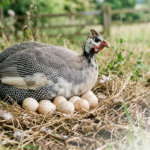
Guinea fowl strongly prefer to lay in hidden, ground-level locations outdoors rather than nest boxes. This behavior is instinctive and can make egg collection difficult or impossible.
Why this happens:
- Guinea fowl dislike confined nest boxes, especially raised ones.
- They prefer dense grass, brush piles, or hedgerows.
- Once a communal nest is established, many hens use the same spot.
How to discourage outside laying:
- Keep guinea fowl confined in the coop until 10–11 AM daily. Most hens lay within the first few hours of daylight.
- Place nest boxes at ground level with dark, private interiors.
- Use fake eggs or golf balls to encourage preferred nesting spots.
- Reduce outdoor cover (tall grass, brush) near the coop perimeter.
If your birds are free-range, inspect fence lines, dense shrubs, and hay bales regularly. A communal nest can accumulate 30–50 eggs quickly—many of which may be old and unsafe to eat.
3. Cracked Guinea Fowl Eggs: Causes and What It Means
Cracked guinea fowl eggs are one of the most frustrating egg problems. A cracked egg in the nest usually means thin shells, rough handling, or overcrowding—not a disease.
Main causes of cracked shells:
| Cause | Explanation |
|---|---|
| Calcium deficiency | Shells form poorly without adequate calcium intake |
| High-stress environment | Stress hormones reduce calcium absorption |
| Overcrowding | Eggs get stepped on or jostled in the nest |
| Nest box design | Hard floors or multiple hens in one box cause cracking |
| Extreme temperatures | Heat stress weakens shell formation |
What cracked guinea fowl eggs mean: A single cracked egg likely means it was stepped on. Consistently cracked eggs across the flock point to a nutritional or management issue. If shells crack easily when handled, calcium deficiency is almost certainly the cause.
Fixes:
- Offer oyster shell or crushed limestone free-choice alongside regular feed.
- Add 1–2 inches of dry straw or shavings to nest boxes.
- Ensure each nest box is used by no more than 4–6 hens.
- Collect eggs at least twice daily to reduce in-nest damage.
4. Thin-Shelled or Soft Guinea Fowl Eggs
Thin or soft-shelled eggs indicate a calcium, phosphorus, or vitamin D3 deficiency. This is a nutritional problem, not a disease, and it responds quickly to dietary correction.
Direct answer: Guinea fowl hens need 3.5–4 grams of calcium per day for proper shell formation. A standard layer ration provides some of this, but free-choice oyster shell is essential for many flocks.
Why shells come out thin or rubbery:
- Layer feed alone is often insufficient for heavy-laying hens.
- Vitamin D3 is required for calcium absorption; hens kept indoors without sunlight may be deficient.
- High phosphorus relative to calcium disrupts shell formation.
- Heat stress during summer reduces calcium uptake.
Steps to fix thin shells:

- Provide free-choice oyster shell in a separate feeder at all times.
- Confirm layer feed contains 3.5–4% calcium.
- If hens are kept indoors, add a vitamin D3 supplement to water (follow label dosing).
- Reduce heat stress with shade, ventilation, and cool water access.
Most flocks show improvement in shell quality within 7–14 days of calcium supplementation.
5. Guinea Fowl Laying Shell-Less Eggs
Shell-less eggs (just membrane, no hard shell) are a sign of severe calcium deficiency or a reproductive tract issue. If this happens once, it is likely nutritional. If it repeats, a veterinary evaluation is warranted.
Possible causes:
- Acute calcium deficiency: The hen’s system runs out of calcium mid-lay cycle.
- Infection (egg peritonitis or salpingitis): Bacterial infection of the oviduct disrupts egg formation.
- Young pullet: First-time layers sometimes produce shell-less eggs as their reproductive cycle regulates.
- Stress or shock: A sudden fright can prematurely trigger egg release before shell formation completes.
What to do:
- If isolated to one hen repeatedly: consult a poultry vet for a physical exam.
- If flock-wide: address calcium and vitamin D3 immediately (see Section 4).
- Separate affected hens to monitor them closely.
Shell-less eggs should never be ignored for more than a few days. Repeated cases in the same hen often signal an underlying oviduct infection
6. Eggs With Blood on the Shell or Bloody Yolk
Blood on the outside of a guinea fowl egg usually comes from a small tear in the hen’s vent tissue. A blood spot inside the yolk is a natural occurrence caused by a ruptured blood vessel during ovulation—it is harmless.
Exterior blood (on shell):

- Caused by a vent tear, often in young or small hens laying large eggs.
- Can also result from lice, mites, or pecking injuries around the vent.
- Inspect the affected hen’s vent area for swelling, injury, or parasites.
Interior blood spots (in yolk or white):
- Common in high-producing hens.
- Not a disease or safety concern—the egg is safe to eat.
- Frequent blood spots may indicate a vitamin K deficiency.
What to do:
- Examine the hen’s vent for injury or parasite infestation.
- Treat lice or mites with an appropriate poultry dust or spray.
- If blood spots are frequent flock-wide, add green leafy feed or vitamin K supplement.
7. Eggs With Rough, Bumpy, or Misshapen Shells
Rough, ridged, or misshapen guinea fowl eggs result from disruptions in the shell gland during egg formation. This is usually harmless but can signal early-stage infectious bronchitis or Newcastle disease in larger flocks.
Common causes of misshapen shells:
- Double-yolk eggs: The oviduct receives two yolks simultaneously, causing abnormal shaping.
- Stress or fright during shell formation: Disrupts normal rotation in the shell gland.
- Infectious bronchitis (IB): A respiratory virus that also damages the reproductive tract, causing wrinkled, rough, or thin shells.
- Nutritional imbalance: Excess calcium or low manganese can distort shell texture.
When to be concerned: If misshapen eggs appear alongside respiratory symptoms (coughing, sneezing, nasal discharge), consult a vet immediately. Infectious bronchitis spreads rapidly in flocks and requires prompt action.
For isolated cases with no other symptoms: monitor, reduce stress, and review feed mineral balance.
8. Guinea Fowl Eggs Not Hatching (Low Fertility or Hatch Rate)
Poor hatch rates in guinea fowl eggs are common and often relate to male-to-female ratio, egg storage conditions, or incubation errors—not egg problems per se, but a closely related concern.

Key facts on guinea fowl fertility:
- The ideal male-to-female ratio is 1 male per 4–5 females.
- Guinea fowl eggs have a harder shell and thicker membrane than chicken eggs, requiring slightly higher humidity during incubation.
- Fertile guinea eggs should be incubated at 99–100°F (37.2–37.8°C) with 45–55% humidity, increasing to 65–70% during lockdown (days 25–28).
Reasons for low hatch rates:
| Factor | Problem | Fix |
|---|---|---|
| Male ratio | Too few males = unfertilized eggs | Add 1 male per 4–5 females |
| Old eggs | Stored over 7 days lose viability fast | Incubate within 7 days of collection |
| Wrong humidity | Too dry = shrink-wrapped chicks | Calibrate with a digital hygrometer |
| Incubator temperature | Even 1°F off impacts hatch rate | Use a reliable thermometer |
| Hen stress | Suppresses sperm retention | Reduce flock stress before breeding season |
Always candle eggs at day 10 to confirm fertility and remove clear (infertile) eggs before they contaminate the clutch.
FAQs About Guinea Fowl Egg Problems
Guinea fowl keepers often have specific questions that go beyond general poultry advice. Here are answers to the most common ones.
Q1: Why did my guinea fowl suddenly stop laying eggs? The most common causes are shortened daylight hours, nutritional deficiency, stress, or the onset of a brooding cycle. Check light exposure first—guinea fowl need 14+ hours to maintain laying. Also inspect for hidden outdoor nests before assuming production has stopped.
Q2: How many eggs should a guinea fowl hen lay per year? A healthy guinea hen lays approximately 80–160 eggs per year, primarily between spring and early fall. Production drops significantly in winter due to reduced daylight. High-producing hens in managed environments with supplemental lighting can exceed this range.
Q3: Are cracked guinea fowl eggs safe to eat? A freshly cracked egg (cracked just before or during collection) is generally safe to eat if cooked promptly. Do not eat cracked eggs that have been sitting in the nest—bacteria enter through the crack quickly. Eggs cracked in the nest should be discarded.
Q4: Can guinea fowl egg problems indicate a disease? Yes. Consistently thin shells, rough textures, or shell-less eggs across a flock can signal infectious bronchitis or Newcastle disease. If egg problems appear alongside respiratory symptoms or sudden mortality, contact a poultry veterinarian immediately.
Q5: Why are my guinea fowl eggs so small? Young hens (under 20 weeks) commonly lay small eggs as their reproductive system matures. Egg size increases with age. Persistent small eggs in mature hens may indicate poor nutrition, particularly low protein intake. Ensure feed contains at least 16–18% protein.
Q6: How do I stop guinea fowl from hiding their eggs outside? Confine hens in the coop until mid-morning (10–11 AM) each day, as most eggs are laid in the early hours. Place ground-level nest boxes with straw in quiet, dark corners. Use golf balls or fake eggs to establish preferred laying spots early in the season.
Conclusion
Most guinea fowl egg problems have a clear, fixable cause—whether it’s a calcium gap in the diet, a hidden nest in the yard, or seasonal light changes affecting production. The key is to observe the flock consistently and act on early signs before small issues become bigger ones.
Thin shells mean add calcium. No eggs mean check light and nutrition. Cracked eggs mean improve the nest box or collect more often. The fixes are rarely complicated.
If egg problems persist despite diet and management corrections, have a poultry vet examine your flock. Early diagnosis of reproductive infections saves hens and prevents flock-wide losses.
Walk your property today and check for hidden nests—then audit your feed’s calcium and protein levels. Those two actions solve the majority of guinea fowl egg problems on most farms.