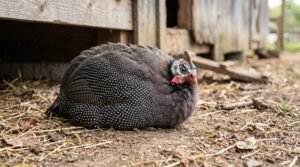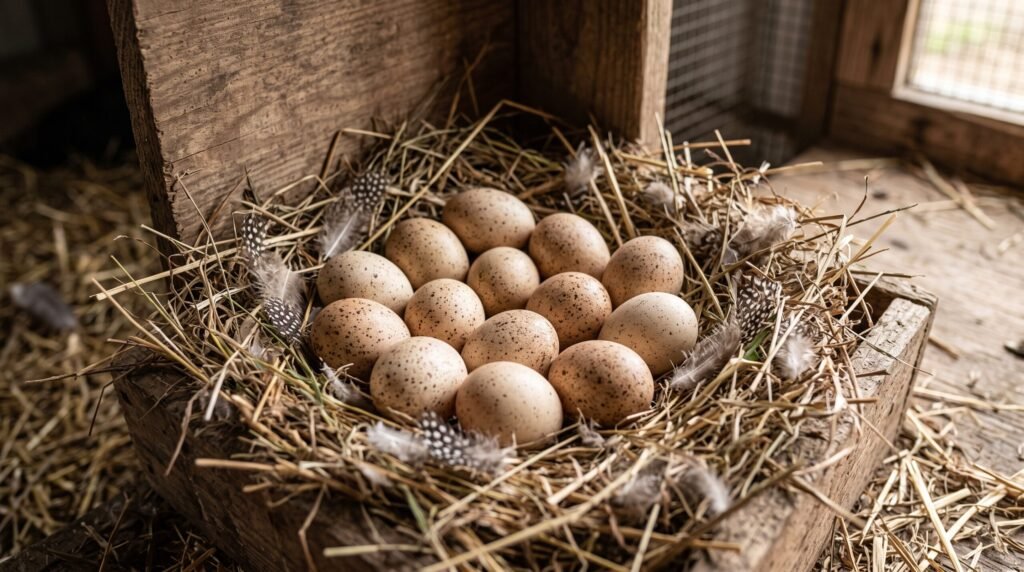
Most guinea hens start laying at around 28 to 32 weeks of age, lay seasonally from spring into early fall, and commonly produce somewhere between 50 and 100 eggs a year. Getting more from your flock comes down to feed, daylight, low stress, and a nest you can actually find.
That last one catches almost everyone out. The first guinea nest I ever found wasn’t in the coop at all. It was a shallow scrape in tall grass at the edge of the pasture, packed with eggs I’d been hunting for all season.
Guinea fowl aren’t chickens. They start later, lay in a tighter window, and guard their nests like secrets. In this guide, I’ll walk you through when to expect the first egg, what the laying season looks like, how to feed and light your flock for production, and what to check when hens seem to have stopped.
Here’s the quick version before we get into the details:
| Factor | What to expect |
|---|---|
| First egg | Around 28 to 32 weeks; some birds take up to 42 |
| Laying season | Spring into early fall, following natural daylight |
| Typical output | About 50 to 100 eggs per hen per year |
| Egg size | Smaller than a typical chicken egg, with a very thick shell |
| Feed | Layer ration around 18% protein, plus free-choice calcium |
| Lighting | Natural daylight, or about 14 to 16 hours total for housed flocks |
When Do Guinea Fowl Start Laying Eggs?
Guinea hens mature more slowly than chickens. Research on domestic guinea fowl puts the first egg at roughly 28 to 32 weeks, while studies of indigenous birds report a wider window of 28 to 42 weeks, depending on breed, feeding, and environment.
Season matters as much as age. Because guineas are seasonal layers, a keet hatched in late spring may reach maturity in autumn and then wait until the following spring to start. Don’t assume something is wrong with a seven-month-old pullet that hasn’t produced yet.
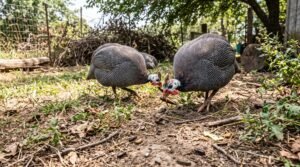
First eggs often come out small. That’s normal, and size improves as the hen settles in. If you’re still sorting hens from males, learn how to tell male and female guinea fowl apart before you start counting eggs, because only the hens lay.
The Guinea Fowl Laying Season
Guinea fowl lay when the days are long. In a free-range study that followed hens through their first three laying seasons, laying began at the turn of March and April and ended in September. Your window will shift with latitude and climate, but the pattern holds: eggs from spring to early fall, and very few in deep winter.
That’s why a hen who laid heavily in June can seem to quit in October. She hasn’t failed you. The season has ended. Courtship and pairing behavior also ramps up as days lengthen, so it helps to understand the timing of the guinea fowl mating season alongside your egg plans.
How Many Eggs Does a Guinea Hen Lay?
A commonly cited average is 50 to 100 eggs per hen per year, well below what a good chicken layer delivers. Output swings with breed, feed, lighting, and climate, and some controlled studies report higher numbers than most backyard flocks see. For a deeper look at realistic annual egg counts, I’ve broken the numbers down in a separate guide.
Age plays a role too. In the research I’ve read, laying intensity tends to fall with each successive season, while eggs get heavier and shells get thicker as hens age. That’s worth knowing if you’re planning when to replace older hens or choosing eggs for hatching.
Finding and Managing Nests
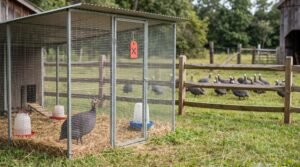
Guinea hens love hidden nests. Several hens will often share one, and they’ll walk past a perfectly good nesting box to lay in a clump of grass. These habits help:
- Keep hens in the coop until late morning. Many keepers find that hens lay where they spend the morning, so a later release steers more eggs indoors.
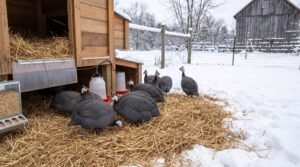
- Offer low, dim, sheltered spots. Guineas can be picky about nesting boxes, so try a few locations and keep them filled with clean straw.
- Leave a dummy egg in the nest you want them to use. A wooden or ceramic egg signals “this one’s safe.”
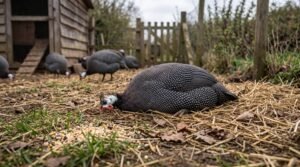
- Search the edges. Walk the fence lines, brush piles, and tall grass every few days during the season.
Feeding for Egg Production
Egg production demands far more from a hen than basic maintenance. A few weeks before the season starts, I move my layers from grower feed to a layer or game bird layer ration. Here’s what matters most:
- Protein: Feeding trials with laying guineas have found that about 18% crude protein works well, which matches most game bird layer feeds. Standard chicken layer feed often runs lower, so check the tag and read up on whether chicken feed is enough for guinea fowl.
- Calcium: Guinea eggs have notably thick shells, and researchers assume laying guineas need more calcium than chickens do. Offer crushed oyster shell in a separate dish so each hen can take what she needs.
- Fresh water: Hens in lay drink more, and a dry waterer can stall production quickly.
For the full picture of a healthy diet, see my breakdown of what guinea fowl eat, and for more levers to pull, check these practical ways to improve guinea fowl egg production.
Daylight and Lighting
Guinea fowl are seasonal breeders, and day length is the main trigger. In a Ghanaian trial on day length and egg size, birds were raised under 12, 14, 16, or 18 hours of light. Hens on the longest days laid their first eggs at around 150 days of age, compared with about 179 days on 12-hour days.
Overall laying rate barely moved, though. Hen-day production sat between roughly 65% and 67% across every group, with no statistically significant difference.
So what does that mean for a backyard flock?
- Lighting can bring the first egg forward, but it isn’t a shortcut to more eggs per hen.
- Free-ranging birds follow natural daylight, and that’s what I rely on.
- If you house birds and want to experiment, a timer-controlled light that brings total day length to about 14 to 16 hours is the usual approach.
- Add the extra light in the morning and keep the schedule consistent, so birds are never caught by sudden darkness at dusk.
Flock Setup: Ratio, Space, and Stress
A hen that feels safe and uncrowded lays better. These factors quietly shape your egg count:
- Male ratio: More males won’t give you more eggs, but they do affect fertility. One study in Togo found a ratio of one male to three females efficient for fertility. For practical guidance, see the ideal male-to-female ratio.
- Space: Crowded birds get stressed and squabble. Make sure your housing meets the indoor and outdoor space requirements.
- Predators and disturbance: One raid on a nest can end laying for weeks. Good predator protection is also egg protection.
Collecting, Storing, and Hatching Eggs
Collect eggs every day during the season. Fresh eggs stay cleaner, and daily gathering discourages hens from building a huge hidden clutch. My guide to collecting guinea fowl eggs safely covers handling in detail.
If you plan to hatch, size matters more than you’d expect. In the Ghanaian trial mentioned above, medium eggs (40 to 42 grams) hatched best, with large eggs performing worst, so don’t automatically set the biggest ones. It was a single trial on indigenous birds, but it’s a useful starting point. When you’re ready, follow the steps to hatch guinea fowl eggs successfully.
Why Aren’t My Guinea Hens Laying?
When eggs dry up, work through this checklist before you worry:
- Too young or out of season: Hens under about 28 weeks, or any bird in late fall and winter, simply may not be ready.
- Hidden nests: They might be laying fine. You just haven’t found the nest yet.
- Low protein or calcium: Switch to a proper layer ration and offer oyster shell.
- Short days: Natural daylight below the season threshold pauses laying.
- Stress: Predator visits, new flock members, or crowding can all shut things down.
- Age or health: Older hens slow down, and illness or parasites can stop laying altogether.
Conclusion
Guinea fowl egg laying follows a clear pattern: first eggs around 28 to 32 weeks, a spring-to-early-fall season, and roughly 50 to 100 eggs per hen per year. Feed a layer ration with plenty of calcium, protect your flock from stress, and treat lighting as a nice extra rather than a cure-all.
Your next step is simple. Before the season starts, switch to layer feed, set up a few sheltered nest spots, and plan your daily egg walk.
Have you ever stumbled onto a hidden guinea nest? Where did you find it? Share your story in the comments, or explore my other egg and meat production guides for your next project.
FAQ
Do guinea hens lay eggs without a male?
Yes. Hens will lay whether or not a male is present, but those eggs won’t be fertile. If you want to hatch, learn how to tell if guinea fowl eggs are fertile before filling your incubator.
How long do guinea hens keep laying?
Hens can lay for several years, but production usually declines each season. Many keepers replace or add birds after the second or third laying season to keep numbers steady.
Can I get guinea hens to lay in winter?
Not reliably. Supplemental light can bring laying forward in housed flocks, but guineas are seasonal layers, and results vary. Give hens their natural off-season rest unless you have a specific reason not to.
How can I tell if a free-range hen is laying?
Watch for a hen that disappears at the same time each day and returns after a while. She may be visiting a hidden nest, so follow her quietly at a distance.
Hi, I’m Rayyan. I raise guinea fowl and share practical, research-backed guides for backyard keepers and homesteaders. I combine hands-on flock experience with trusted poultry management and university extension resources to help you raise healthier, more productive birds — with confidence, not guesswork.