Guinea fowl coop size directly affects flock health, behavior, and egg production. Most keepers underestimate how much space these birds actually need — and the consequences show up fast: fighting, feather pecking, stress, and even death. Getting the numbers right before you build saves you a lot of trouble later.
One guinea fowl needs a minimum of 6–8 square feet of indoor coop space and at least 20–25 square feet of outdoor run space. These aren’t arbitrary figures. Guinea fowl are naturally active, semi-wild birds that travel miles per day in the wild. Confine them too tightly and their behavior deteriorates quickly.
This guide covers the exact space requirements per bird, recommended coop sizes for different flock sizes, and the design factors that matter most. Whether you’re starting with 3 birds or 30, you’ll leave knowing exactly what to build.
How Much Space Does a Guinea Fowl Need?
Guinea fowl (Numida meleagris) are not chickens. They’re larger, louder, faster, and far more territorial. A standard chicken coop setup will almost always leave guinea fowl cramped and stressed. Understanding their natural behavior is the starting point for sizing their housing correctly.
In the wild, guinea fowl roam in groups of 20–30 birds across open grasslands, covering 3–5 miles daily. Domesticated guinea fowl retain this instinct. When confined without enough space, they become aggressive, vocal, and prone to cannibalistic pecking — especially during molt or breeding season.
Their space needs break down into two categories:
- Indoor coop space – where birds sleep, shelter from predators, and lay eggs
- Outdoor run space – where they forage, exercise, and exhibit natural behaviors
Both matter equally. A spacious coop with a tiny run still produces stressed, unhealthy birds.
Recommended Coop Size Per Guinea Fowl
The minimum guinea fowl coop size is 6–8 sq ft indoors and 20–25 sq ft outdoors per bird. These figures reflect the bird’s body size (adults reach 3.5–4 lbs), roosting behavior, and activity level. Below is a breakdown of both spaces.
Indoor Coop Space Requirements
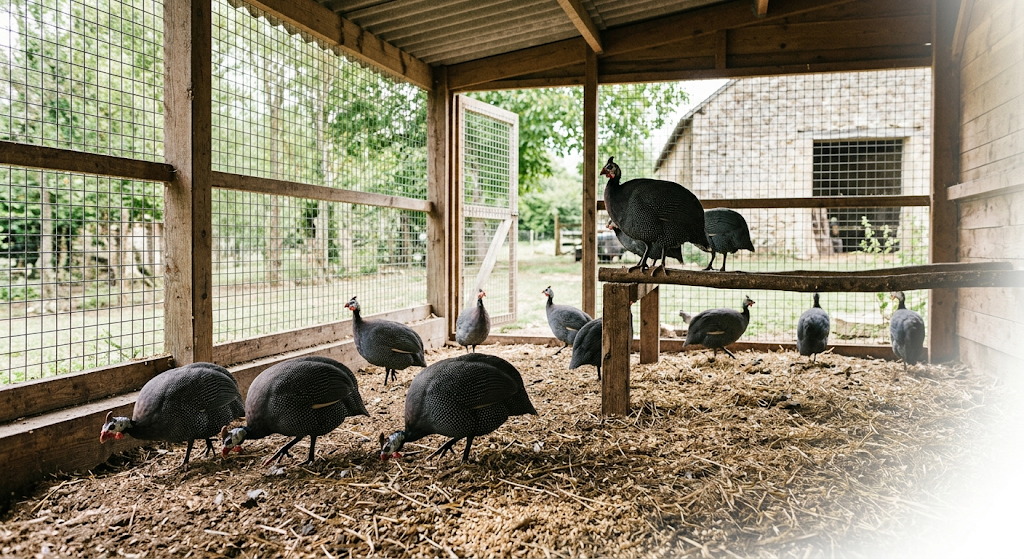
Indoor space is where guinea fowl roost, shelter, and feel secure. Guinea fowl prefer to roost high — they’re natural tree roosters — so vertical space matters as much as floor space.
| Space Type | Minimum Per Bird | Recommended Per Bird |
|---|---|---|
| Floor space | 6 sq ft | 8 sq ft |
| Roost bar length | 12 inches | 18 inches |
| Ceiling height | 5 ft | 6–7 ft |
A few important points:
- Roost bars should be placed at 4–5 feet high, mimicking natural tree-roosting behavior. Lower bars increase ground-level crowding.
- Avoid flat perches. Guinea fowl prefer round dowels or natural branches, around 1.5–2 inches in diameter.
- Nesting boxes are optional — guinea fowl often lay in hidden communal ground nests. If you provide them, one box per 4–5 birds is sufficient.
- Ventilation is critical. Guinea fowl are prone to respiratory issues in damp, poorly ventilated coops. Aim for at least 1 sq ft of ventilation per 10 sq ft of floor space.
I’ve seen keepers build coops that looked generous on paper but had poor vertical layout — all birds were cramped onto two low roosting bars, fighting constantly at dusk. Roost configuration matters as much as square footage.
Outdoor Run Space Requirements
Guinea fowl need significantly more outdoor space than chickens. The minimum is 20 sq ft per bird, but 25–30 sq ft per bird produces noticeably calmer, healthier flocks.
| Flock Size | Minimum Run Size | Recommended Run Size |
|---|---|---|
| 5 birds | 100 sq ft | 125–150 sq ft |
| 10 birds | 200 sq ft | 250–300 sq ft |
| 20 birds | 400 sq ft | 500–600 sq ft |
Key considerations for the outdoor run:
- Free-range is ideal. Guinea fowl are most content when allowed to free-range on 1/4 to 1/2 acre or more. Runs work as a backup or nighttime containment solution.
- Fencing height: Minimum 5 feet, ideally 6 feet. Guinea fowl are strong fliers and will clear lower fences routinely.
- Ground cover: Bare dirt runs stress guinea fowl. Include grass, shrubs, or ground cover plants to encourage natural foraging.
- Shade and shelter: Provide cover from sun and rain within the run. A simple lean-to or covered section works well.
Best Coop Size for Small, Medium, and Large Flocks
Flock size determines total space requirements, but it also changes how you design the layout. Social dynamics shift as flock size grows — dominant birds claim territory, and weaker birds need room to escape. Here’s how to plan for each range.
2–5 Guinea Fowl Setup
A small flock of 2–5 birds is the most manageable starting point. Note that guinea fowl are highly social — never keep fewer than 3. Isolated pairs or lone birds suffer significant stress and are far louder and more anxious.
Recommended coop size: 30–40 sq ft indoors, 75–125 sq ft outdoor run
- A 6×6 or 6×8 ft coop works well for 3–5 birds
- Use two parallel roost bars at staggered heights (4 ft and 5 ft)
- Include a small covered section in the run for shade
At this size, free-ranging part of the day and confining at night is a practical approach. It reduces infrastructure costs while meeting their space instincts.
6–10 Guinea Fowl Setup
Mid-size flocks are where space planning gets critical. Flock hierarchy becomes more complex, and without enough space, dominant birds will injure subordinates — especially males during breeding season.
Recommended coop size: 60–80 sq ft indoors, 200–250 sq ft outdoor run
- A 8×10 or 10×8 ft coop handles 8–10 birds comfortably
- Install 3–4 roost bars at varying heights with 18 inches per bird
- Provide at least two separate entry/exit points in the run to prevent dominant birds from blocking access
I noticed with a flock of 8, removing a second run gate reduced injuries significantly — weaker birds had nowhere to retreat. Small design details at this size have outsized impact.
10+ Guinea Fowl Setup
Large flocks require thoughtful spatial zoning. Beyond 10 birds, consider dividing the run into sections that can be rotated, especially if you’re raising keets (young guinea fowl) alongside adults.
Recommended coop size: 80–100+ sq ft indoors, 300–500+ sq ft outdoor run
- A 10×12 or larger coop with high ceilings (6–7 ft) is the practical baseline
- Plan for multiple roost levels and sections
- For 20+ birds, a run of 600 sq ft or more prevents territory-based aggression
- Consider a separate grow-out area for keets — adults will attack young birds in shared spaces
Important: Adult guinea fowl will kill keets if housed together too soon. Integrate young birds only after they reach at least 12 weeks of age and are close in size to adults.
Key Factors That Affect Space Requirements
Standard space recommendations assume ideal conditions. Several variables increase or decrease the space your flock actually needs.
1. Sex ratio Guinea fowl males (cocks) are territorial and aggressive toward other males. A recommended ratio is 1 male per 4–5 females. In confined spaces, an unbalanced ratio drives up aggression and requires more space per bird.
2. Free-range access Flocks with daily free-range access tolerate smaller coops better. Birds that are permanently confined need the upper end of space recommendations — or more.
3. Climate and season In cold climates, guinea fowl spend more time indoors during winter. Undersized coops that work fine in summer become problematic when birds are confined for months. Plan your indoor space for worst-case confinement periods.
4. Breed and body size The Pearl guinea fowl (most common) averages 3.5 lbs. Lavender and White varieties are similar in size. If you’re raising Helmeted guinea fowl, account for their slightly larger body size in roost spacing.
5. Age of flock Keets (young guinea fowl) need warmer, smaller starter brooders until 6–8 weeks old, then transition to larger grow-out space. Adult space requirements apply from about 12–16 weeks of age.
6. Number of males More males = more fighting. If you’re keeping a flock primarily for pest control and eggs, a higher female-to-male ratio reduces spatial stress significantly.
Coop Design Tips for Guinea Fowl Comfort
Beyond square footage, coop design shapes how comfortably guinea fowl use their space. Here are the most impactful design decisions:
High roost bars Install roost bars at 4–5 ft minimum. Guinea fowl won’t use low perches voluntarily, and forcing them to sleep on the floor increases disease risk from droppings contact.
Secure nighttime latching Guinea fowl are targeted by virtually every predator — foxes, raccoons, hawks, weasels, and dogs. Hardware cloth (not chicken wire) with 1/2-inch mesh is the correct choice for run fencing. Chicken wire gaps are too large.
Dual-door coop entry A small outer door with a larger inner door (airlock design) reduces the chance of birds escaping during morning opening. Guinea fowl are fast and spook easily.
Dust bathing area Include a dust bath section — a shallow box or depression filled with dry soil or sand, about 12–18 inches deep and at least 2×3 ft for a small flock. Guinea fowl use dust baths to control mites and maintain feather condition.
Lighting for winter production If you want year-round egg production, add supplemental lighting in the coop. Guinea fowl need 14–16 hours of light daily to lay consistently. A simple timer-controlled LED bulb works well.
Drainage and bedding Use 4–6 inches of pine shavings, straw, or sand as bedding. Avoid cedar shavings — the aromatic oils cause respiratory irritation. Clean the coop at least weekly; guinea fowl produce heavy droppings that accumulate fast.
Signs Your Guinea Fowl Need More Space
Overcrowding doesn’t always look dramatic at first. These are the early and mid-stage signs to watch for:
Early warning signs:
- Feather pecking or bare patches on backs and necks
- Increased vocalizations, particularly at dusk when roosting
- Subordinate birds avoiding the coop or refusing to enter at night
- Reduced egg production without an obvious dietary cause
Moderate overcrowding signs:
- Visible injuries — cuts, bleeding wounds, especially on heads and vents
- One or more birds consistently isolated from the group
- Droppings buildup accumulating faster than your cleaning schedule allows
- Respiratory symptoms (coughing, wheezing) from ammonia buildup in a poorly ventilated, crowded space
Severe overcrowding:
- Cannibalism, particularly vent pecking
- Death of weaker or younger flock members
- Mass escape attempts — birds constantly testing fencing
If you observe any moderate or severe signs, increase space immediately. Don’t wait for the situation to resolve on its own — it won’t.
FAQs
How much space does one guinea fowl need in a coop? One guinea fowl needs a minimum of 6–8 square feet of indoor coop space and 20–25 square feet of outdoor run space. These minimums assume the bird has daily access to both areas. Birds permanently confined need the upper end of this range. Roost bar allocation should be at least 12–18 inches per bird at a height of 4–5 feet.
Can guinea fowl live in a chicken coop? Yes, guinea fowl can share a chicken coop with chickens, but there are important caveats. Guinea fowl are larger, more active, and tend to bully chickens, especially in confined spaces. They also prefer higher roost bars than most chickens use. If housing them together, ensure the coop is large enough to meet guinea fowl minimums (6–8 sq ft per bird), install high roost bars for the guinea fowl, and monitor for aggression carefully. Many keepers find separate housing is simpler in the long run.
Do guinea fowl need more space than chickens? Yes. A standard chicken requires 3–4 sq ft of indoor space and 8–10 sq ft of outdoor run space. Guinea fowl need roughly double those figures — 6–8 sq ft indoors and 20–25 sq ft outdoors. This reflects their larger body size, higher activity level, and more territorial social structure. Applying chicken coop sizing to guinea fowl is one of the most common mistakes new keepers make.
How many guinea fowl should be kept together? The practical minimum is 3 birds. Guinea fowl are highly social and become visibly stressed in pairs or alone — they vocalize excessively and show anxiety behaviors. Most experienced keepers recommend starting with 6–10 birds. Large flocks of 20–30 are manageable if space is adequate, but flock size beyond 30 in a single run increases aggression and disease transmission risk. For backyard pest control and egg production, a flock of 6–12 is the sweet spot for most properties.
Final Recommendations
Guinea fowl coop size is not a place to cut corners. The minimum per-bird figures — 6–8 sq ft indoors, 20–25 sq ft outdoors — exist because these birds are biologically adapted for open range. Tighter housing leads to predictable problems: aggression, injury, disease, and reduced production.
Plan your coop for the upper end of space recommendations, not the minimum. It’s far easier to build right the first time than to expand an undersized structure after problems emerge. And if full free-range access is possible on your property, it’s always the best supplement to any coop setup.
Use the flock size tables in this guide to calculate your specific needs, factor in the variables like sex ratio and climate, and pay attention to the early warning signs of overcrowding. Your flock’s behavior will tell you clearly when something isn’t working.
Have questions about guinea fowl housing or coop design? Drop them in the comments below — I’m happy to help you work through the specifics for your setup.