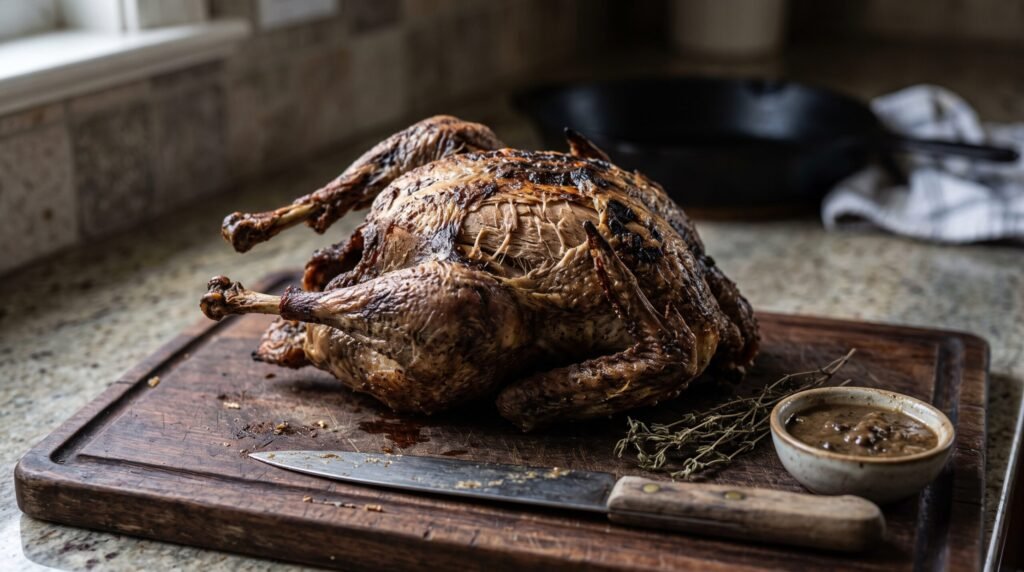
The biggest guinea fowl cooking mistakes almost all come down to one thing: treating it exactly like chicken. Guinea fowl is leaner, cooks faster in some spots and slower in others, and dries out the moment you stop paying attention to it.
I remember the first guinea fowl I ever roasted. I used my usual chicken timing, pulled it out looking golden and perfect, and carved into a breast that was closer to jerky than dinner. It wasn’t the recipe’s fault — it was mine, for assuming a guinea fowl behaves like the birds I’d cooked a hundred times before. Once I understood what makes this bird different, it became one of my favorite things to put on the table.
In this guide, I’ll walk you through the mistakes I see most often (and made myself early on), why they happen, and exactly how to avoid them so you end up with juicy, flavorful meat every time.
Here’s a quick look at the mistakes covered in this guide and the fix for each one.
| Mistake | Why It Hurts the Bird | Quick Fix |
|---|---|---|
| Cooking it like chicken | Guinea fowl has less fat, dries out faster | Lower heat, shorter or gentler cook time, added fat |
| Skipping fat or basting | Lean meat has nothing to protect it from the oven | Bard with bacon or baste with butter |
| Not brining or marinating | Lean muscle fibers lose moisture fast | Brine 2–12 hours before cooking |
| Overcooking past doneness | Meat turns stringy and tough | Pull at the right internal temperature, not by time |
| Ignoring bird age | Older birds need moist heat, not dry roasting | Braise or stew older/larger birds |
| Skipping the rest | Juices run out onto the cutting board | Rest 10–15 minutes before carving |
| Cooking breast and legs the same way | Legs need longer cooking than breast | Cook parts separately or spatchcock |
| Wrong thermometer placement | False readings lead to under- or overcooking | Check thickest part of thigh and breast |
Mistake #1: Treating Guinea Fowl Exactly Like Chicken
This is the mistake behind almost every other one on this list, so it’s worth calling out first.
Guinea fowl looks like a small chicken, and it’s tempting to grab your usual chicken recipe and go. But guinea fowl’s lean meat dries out quickly if you rush it or blast it with high heat without adding any moisture along the way. Guinea fowl is classed as a game bird in culinary terms even though it’s typically farm-raised, and its lower fat content means the margin for error is much smaller than with a broiler chicken.
If you’ve ever wondered whether guinea fowl meat compares differently to chicken beyond just cooking time, the short answer is yes — leaner, firmer, and slightly gamier, which changes how it behaves in the pan.
The fix: Use chicken recipes as a starting point, not a script. Expect to lower your oven temperature slightly, shorten cook times for smaller cuts, and add fat somewhere in the process. I now think of guinea fowl as “chicken that needs a little help staying moist,” and that mindset alone prevents most of the mistakes below.
Mistake #2: Skipping Fat or Basting Altogether
Chicken has enough natural fat under the skin to survive a dry roast. Guinea fowl doesn’t have that luxury.
Because guinea fowl is so lean, most good recipes lean on moist cooking methods, and it helps to generously cover the bird in fat such as bacon, duck fat, or butter and baste it while it roasts. Barding — laying strips of bacon or fatty pork over the breast — is a traditional technique built specifically for lean birds like this one, and sliding a thin pat of butter between the skin and the meat before cooking goes a long way toward keeping it tender.
The fix:
- Bard the breast with bacon or pancetta before roasting.
- Slide softened butter under the skin for extra insurance.
- Baste every 15–20 minutes with pan juices, stock, or melted fat.
- If you’re grilling or pan-searing, brush with oil or butter throughout, not just at the start.
I bard almost every guinea fowl I roast now. It takes an extra two minutes and it’s the single biggest factor in whether the breast comes out juicy or chalky.
Mistake #3: Skipping a Brine or Marinade
Skipping fat is one problem. Skipping moisture from the inside out is another.
Because the muscle fibers in guinea fowl are leaner and tighter than chicken, they hold less natural moisture to begin with. A simple saltwater brine gives the meat something to hold onto before it ever hits the heat, and it’s one of the easiest upgrades you can make with almost no extra effort.
The fix:
- Brine a whole bird for 4–12 hours in a basic saltwater solution (roughly ¼ cup salt per quart of water), refrigerated the whole time.
- For a faster option, a 2-hour buttermilk or yogurt marinade works well and also tenderizes the meat.
- Pat the bird fully dry before roasting so the skin can still crisp.
If you’re short on time, even a 30-minute dry brine (just salting the bird and letting it rest uncovered in the fridge) makes a noticeable difference.
Mistake #4: Overcooking Past the Point of Doneness
This is the mistake that ends the most guinea fowl dinners in disappointment, and it’s usually caused by cooking to a timer instead of a temperature.
Guinea fowl is traditionally eaten while it’s still slightly pink, and it shouldn’t be cooked for too long — but for food safety, doneness should always be confirmed with a thermometer, not color or timing alone. According to the USDA’s food safety guidance, all poultry should be cooked to a safe minimum internal temperature of 165°F, checked in the innermost part of the thigh and wing and the thickest part of the breast. Color alone isn’t a reliable indicator of doneness, since poultry can appear pink even after it’s fully cooked.
Once you’re past 165°F, guinea fowl has very little fat left to protect it, so every extra minute in the oven pulls moisture out fast. That’s the difference between a joint that carves clean and one that shreds into dry strings.
The fix:
- Always use an instant-read thermometer — never rely on juice color or cook time alone.
- Pull the bird as soon as it hits 165°F in the thickest part of the breast and thigh.
- Remember that carryover cooking will raise the temperature another few degrees as it rests, so don’t wait for the thermometer to hit your target while it’s still on the heat.
Mistake #5: Ignoring the Bird’s Age When Choosing a Method
Not every guinea fowl should be cooked the same way, and this is a mistake even experienced cooks make when they don’t know the bird’s history.
Younger birds are more tender, while older birds should be reserved for braising to keep the meat from drying out. If you bought your bird from a farmers market or raised it yourself, you likely know its age. If you bought it from a store without that information, treat it as a guess and choose your method accordingly.
The fix:
- Young, tender birds (under about 14 weeks): roast, grill, or pan-sear.
- Older or larger birds: braise, stew, or slow-cook in liquid to break down the tougher connective tissue.
- When in doubt, braising is the safer bet — it’s very hard to overcook a bird into dryness when it’s sitting in liquid.
This is one of those beginner mistakes that trips up new keepers just as often in the kitchen as it does in the coop — assuming every bird behaves the same regardless of age.
Mistake #6: Skipping the Rest Before Carving
I used to skip this step constantly because I was hungry and impatient. Every time, I paid for it with a puddle of juice on the cutting board instead of in the meat.
Resting lets the muscle fibers relax and reabsorb the juices that got pushed toward the center during cooking. Recipe times are only ever approximate, since the actual time depends on the bird’s size, your oven or grill, and your specific method — which is exactly why checking early and resting properly matters more than trusting the clock.
The fix:
- Tent the bird loosely with foil and let it rest 10–15 minutes for a whole bird, or 5 minutes for individual cuts like breasts or legs.
- Resist carving early, even if it smells incredible. The wait is short and the payoff is real.
- Use the resting time to finish your sides or make a quick pan sauce from the drippings.
Mistake #7: Cooking the Breast and Legs the Same Way
Guinea fowl has the same basic anatomy problem as chicken, just more exaggerated because of the leanness: the breast cooks faster than the legs, but people often treat the whole bird as one uniform piece of meat.
Cooking the parts of the bird separately with different techniques — grilling or pan-searing the breast while roasting, braising, or confiting the legs — is a common approach for exactly this reason. Leg meat has more connective tissue and benefits from longer, gentler cooking, while the breast turns dry and stringy if it’s left on the heat waiting for the legs to catch up.
The fix:
- Spatchcock (butterfly) the bird so it cooks more evenly and the legs get more direct heat exposure.
- Or break the bird down into parts and cook the breast and legs separately, pulling each one at its own ideal temperature.
- If roasting whole, consider tenting the breast with foil partway through so the legs can keep cooking without the breast overcooking.
Mistake #8: Checking Temperature in the Wrong Spot
Even cooks who know to use a thermometer sometimes place it wrong, which defeats the purpose entirely.
The correct spots to check are the innermost part of the thigh and wing, along with the thickest part of the breast — not near the bone, since bone conducts heat differently and gives a falsely high reading.
The fix:
- Insert the thermometer into the thickest part of the thigh, avoiding bone.
- Double-check the thickest part of the breast as well, since the two areas can cook at different rates.
- Check a few minutes before you think the bird is done, then again right before pulling it, so you catch the target temperature instead of overshooting it.
Frequently Asked Questions
Is it normal for guinea fowl to still look pink when fully cooked?
Yes, this can be normal. Poultry can appear pink even when it has reached a safe internal temperature, due to natural pigments in the muscle tissue. Always confirm doneness with a thermometer reading of 165°F rather than judging by color.
Can I cook guinea fowl the same way I cook a whole chicken?
You can use the same general method, but not the same exact timing or heat level. Guinea fowl’s lower fat content means it dries out faster, so plan to bard or baste it, keep an eye on temperature more closely, and consider pulling it slightly earlier in terms of visual browning while still confirming 165°F internally.
Why did my guinea fowl turn out tough instead of dry?
Toughness usually points to an older bird cooked with dry heat, or connective tissue that never had the chance to break down. If this happens, switch that bird to a braise or stew next time rather than roasting it.
How long should I brine a whole guinea fowl?
Somewhere between 4 and 12 hours in the refrigerator works well for a whole bird. Much longer than that and the texture can start to turn spongy, so it’s better to stay within that window.
Guinea fowl rewards a little extra attention, but none of these fixes require special equipment or advanced technique — just a thermometer, a little fat, and a willingness to treat it as its own bird rather than a stand-in for chicken. Next time you cook one, try picking just one or two of these fixes and see how much of a difference it makes.
Have you had a guinea fowl dinner go sideways before? I’d love to hear what happened and what you tried differently the next time — drop a comment below, or check out my guinea fowl meat recipes for a few dishes built around these exact techniques.
Hi, I’m Rayyan. I raise guinea fowl and share practical, research-backed guides for backyard keepers and homesteaders. I combine hands-on flock experience with trusted poultry management and university extension resources to help you raise healthier, more productive birds — with confidence, not guesswork.