A solid guinea fowl farming business plan lays out your startup costs, flock size, sales channels, and projected profit before you spend a single dollar on birds or fencing. In this guide, I’ll walk you through every section a workable plan needs, share real cost ranges, and give you a simple structure you can fill in with your own numbers — whether you’re applying for a small ag loan or just keeping yourself honest.
Free downloadable PDF · 14 pages
Guinea Fowl Farming Business Plan Template
A print-ready, fillable template built from this guide — startup budget, market analysis, financial projections, and risk planning, laid out and ready to hand to a lender or just keep by your coop.
- Startup cost worksheet with real cost ranges
- Financial projections & breakeven calculator sheet
- Risk assessment & market analysis planner
I wrote out my first guinea fowl business plan on a legal pad before I ever built a coop, mostly because I didn’t want to find out three months in that my egg sales couldn’t cover feed costs. That single afternoon of planning saved me from a few expensive mistakes.
Here’s a quick look at what a complete plan should cover:
| Section | What It Answers |
|---|---|
| Executive Summary | What is the business and why will it work? |
| Market & Products | Who buys guinea fowl meat, eggs, or keets, and at what price? |
| Startup Costs | What will housing, birds, and equipment cost upfront? |
| Operations Plan | How will the flock be housed, fed, and managed day to day? |
| Financial Projections | What’s the breakeven point and expected profit? |
| Risk & Mitigation | What could go wrong, and what’s the backup plan? |
Why You Need a Business Plan Before You Buy Birds
If you’re only keeping a handful of guinea fowl in the backyard for tick control and personal egg supply, you probably don’t need a formal plan. But the moment you’re selling meat, eggs, or keets — or applying for any kind of financing — a written plan becomes essential.
A plan forces you to answer questions you’d otherwise skip:
- How many birds can your land and coop actually support?
- What’s your real cost per bird once feed, bedding, and vet care are factored in?
- Who is going to buy what you produce, and at what price?
- How long until the flock pays for itself?
Lenders and investors expect this kind of detail too. Farm loan officers routinely look for land tenure documents, enterprise budgets, and a clear breakeven analysis before approving funding — a guinea fowl operation is no exception, just smaller in scale than a row-crop or dairy application.
If you’re still deciding whether this business makes sense at all, it’s worth reading through what guinea fowl farming actually looks like day to day before committing capital.
Executive Summary: What Goes In It
The executive summary is the first section anyone reads, so write it last — after you’ve worked out the rest of the plan. In two or three short paragraphs, cover:
- What your farm does (meat, eggs, breeding stock, tick-control services, or a mix)
- Your target scale (number of birds, acreage)
- Your primary customers and sales channels
- Your funding need, if you’re seeking a loan or investor
Keep it plain and specific. “We plan to raise 150 guinea fowl annually for the local restaurant and farmers’ market meat trade, targeting $12,000 in first-year revenue” tells a reader far more than a paragraph of general enthusiasm about poultry farming.
Market Analysis: Know Who’s Buying
Guinea fowl occupy a smaller, more specialized market than chicken. That’s actually an advantage if you position correctly, but you need to know your buyer before you scale up production.
Typical guinea fowl markets include:
- Restaurants looking for game-style meat with a distinct flavor profile
- Ethnic grocery stores and specialty butchers, particularly in communities where guinea fowl is a traditional dish
- Farmers’ markets and direct-to-consumer sales for both eggs and dressed birds
- Other keepers buying hatching eggs, keets, or breeding adults
- Homesteaders and small farms interested in guinea fowl for natural tick and pest control rather than meat or eggs
Before finalizing your plan, it’s worth comparing your local demand for guinea fowl against a more familiar bird. I found this side-by-side look at guinea fowl versus chicken profitability useful for setting realistic price and margin expectations.
Products and Pricing
Decide upfront which product lines you’re actually building the business around. Trying to do all of them at once in year one usually spreads a small flock too thin.
Common guinea fowl revenue streams:
- Dressed meat birds (sold whole or as cuts)
- Table eggs
- Hatching eggs and day-old keets
- Started/juvenile birds for other keepers
- Pest-control contracts (guinea fowl leased or sold specifically for tick and insect control on other properties)
If eggs are part of your plan, it helps to know realistic output per bird before you build a sales forecast around it — I break down how many eggs a guinea fowl actually lays in a year so you’re not overestimating production.
Startup Costs: A Realistic Budget
This is the section most new keepers get wrong — usually by underestimating housing and overestimating how fast the flock will start generating income. Based on typical small-scale setups, here’s a rough breakdown for a starter flock of 10 to 20 birds:
| Expense | Typical Range |
|---|---|
| Coop construction | $200 – $1,000 |
| Feeders, waterers, fencing | $100 – $300 |
| Keets (10–20 birds) | $50 – $600 |
| Monthly feed | $20 – $50 |
| Bedding, cleaning, basic vet care (monthly) | $10 – $30 |
| Basic marketing (flyers, simple website, social media) | $50 – $200 |
Altogether, a modest starter operation runs between $500 and $2,000, depending heavily on how much of the housing and fencing you build yourself versus buy pre-made. I’d also set aside 10-15% of your total budget as a contingency fund — something always costs more than the estimate, whether it’s a predator-proofing fix or a feed price jump.
If you’re weighing whether to start with hatching eggs, day-old keets, or adult birds, that choice affects your upfront cost significantly, and this guide on buying your first guinea fowl walks through the tradeoffs of each option.
For a more precise number tailored to your own flock size, run your numbers through the guinea fowl profit calculator rather than relying on generic averages — every setup is different.
Housing, Land, and Equipment Plan
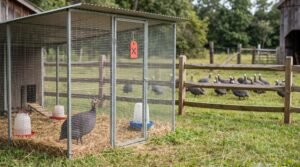
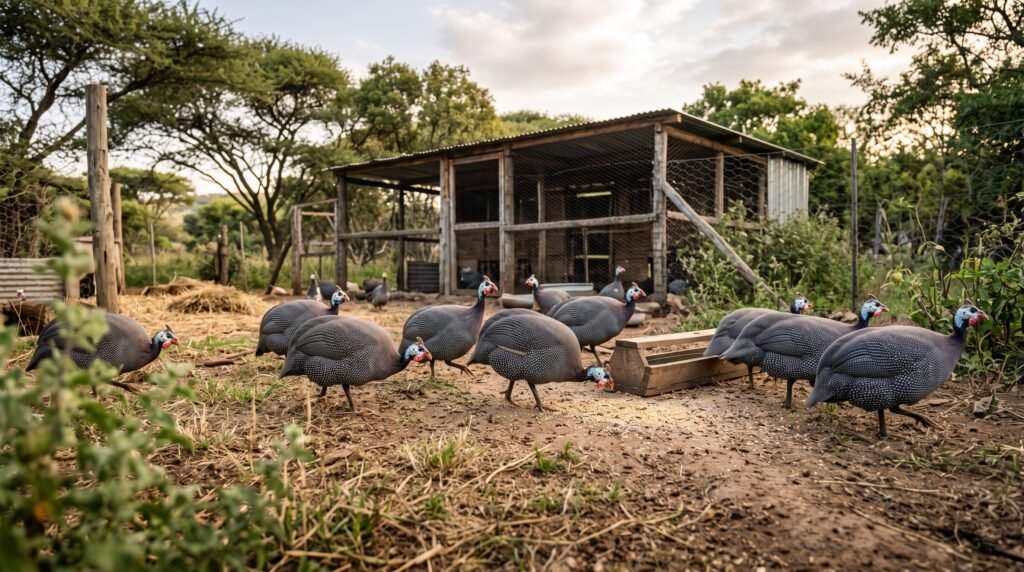
Guinea fowl need less space and simpler housing than chickens, which is one of the reasons the startup cost stays low. But “less” doesn’t mean “none” — you still need secure, weatherproof housing and enough outdoor range for the birds to forage, since foraging is a big part of what keeps their feed bill down.
Your operations section should specify:
- Coop size relative to flock size
- Fencing and predator-proofing plan
- Feed and water system
- Free-range versus confined setup, and why
I lean toward giving mine as much range as the property allows — it cuts feed costs and keeps them calmer — but that only works if predator control is solid. It’s worth reading how to protect guinea fowl from foxes, hawks, and other predators before you finalize your fencing budget, since predator losses can quietly wreck a first-year plan.
Operations Plan: Day-to-Day Management
This section should walk through the practical rhythm of running the flock: feeding schedule, egg collection, health checks, breeding cycle if applicable, and seasonal adjustments. Lenders want to see that you understand the actual workload, not just the financial upside.
At minimum, outline:
- Daily and weekly care routines
- Feed sourcing and cost control
- Health monitoring and vaccination schedule
- Breeding and incubation plan, if you’re producing keets to sell
- Labor needs — is this a one-person operation or will you need help at scale?
If breeding stock or hatching eggs are part of your revenue plan, your operations section needs a realistic incubation timeline built in, since that directly affects how fast you can fill orders.
Financial Projections and Breakeven
This is usually the section that determines whether a plan gets funded or not. At minimum, include:
- Startup costs (from the budget above)
- Monthly operating costs (feed, bedding, utilities, vet care)
- Revenue projections by product line, based on realistic pricing and expected sales volume — not best-case guesses
- Breakeven timeline — how many months before revenue covers ongoing costs
- Year one, two, and three projections, since most lenders want at least a three-year outlook
Keep your projections conservative. It’s tempting to assume every keet survives and every egg sells, but building in a realistic mortality rate and a slower sales ramp in year one makes the plan far more credible — and far more useful to you personally when you’re checking actual performance against it later.
If you’re still unsure whether the numbers work out in your favor at all before you build a full financial model, it’s worth reading through a breakdown of whether guinea fowl farming is actually profitable, including typical cost and profit ranges, before you commit to a scale.
Risk Assessment and Mitigation
Every credible business plan names its risks instead of glossing over them. For guinea fowl specifically, the main risk categories are:
- Predator loss — foxes, hawks, and ground predators can wipe out a chunk of a small flock quickly if housing isn’t secure
- Disease outbreaks — guinea fowl are generally hardy, but no flock is immune, and a plan should note your vaccination and biosecurity approach
- Market limitations — guinea fowl meat and eggs are a niche product; if your local market is small, note your backup sales channels
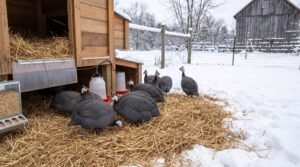
- Weather extremes — both summer heat stress and winter cold require management adjustments that cost time and sometimes money
- Noise complaints — if you’re near neighbors, guinea fowl’s loud calls can become a real zoning or relationship issue worth addressing upfront
I’d recommend checking your local regulations before finalizing your plan too, since some municipalities have specific rules around keeping guinea fowl that can affect flock size or placement. Getting this wrong after you’ve already invested in housing is a costly mistake to walk back.
Free Business Plan Template Structure
Here’s a simple outline you can copy into a document and fill in with your own numbers:
- Executive Summary — business concept, scale, funding need
- Market Analysis — target buyers, local demand, competition
- Products & Pricing — meat, eggs, keets, or pest-control services, with price per unit
- Startup Costs — housing, birds, equipment, contingency fund
- Operations Plan — housing setup, daily care, breeding cycle
- Financial Projections — monthly costs, revenue by product line, breakeven month, 3-year outlook
- Risk Assessment — predators, disease, market, weather, regulatory
- Milestones — specific dates for flock expansion, new sales channels, or equipment upgrades
Work through each section with your actual numbers rather than industry averages wherever possible — your feed costs, local egg prices, and land situation will all shift the math in ways a generic template can’t predict.
Frequently Asked Questions
Do I need a business plan to sell guinea fowl eggs or meat locally?
Not legally, in most cases — but you’ll want one anyway. Even informal, small-scale sales benefit from knowing your real cost per dozen eggs or per dressed bird, so you’re not accidentally selling at a loss.
How much capital do I need to start a small guinea fowl farm?
A modest starter flock of 10 to 20 birds typically runs between $500 and $2,000 in startup costs, covering housing, fencing, birds, and initial feed. Scale and how much labor you do yourself will move that number significantly.
Can I use a guinea fowl business plan to apply for a farm loan?
Yes, though for formal USDA Farm Service Agency financing you’ll likely need to supplement your plan with their specific worksheets, since agricultural lenders typically expect land tenure details and enterprise budgets that a basic plan template doesn’t automatically include.
How long does it take a guinea fowl farm to become profitable?
This varies widely by scale and product mix, but most small operations plan for at least a full year before breaking even, once you’ve accounted for the time it takes keets to mature and the flock to reach full production.
Building a solid guinea fowl business plan doesn’t need to be complicated — it just needs to be honest about your real costs, your real market, and your real timeline. Start with the free template structure above, plug in your own numbers, and revisit it every few months as your flock and your market understanding grow.
Have you already started your guinea fowl business, or are you still working out the numbers? I’d love to hear what your local market looks like — every region prices this a little differently.
If you’re ready to keep building out your plan, the feed calculator and coop size calculator are good next stops for locking down your operational numbers.
Hi, I’m Rayyan. I raise guinea fowl and share practical, research-backed guides for backyard keepers and homesteaders. I combine hands-on flock experience with trusted poultry management and university extension resources to help you raise healthier, more productive birds — with confidence, not guesswork.