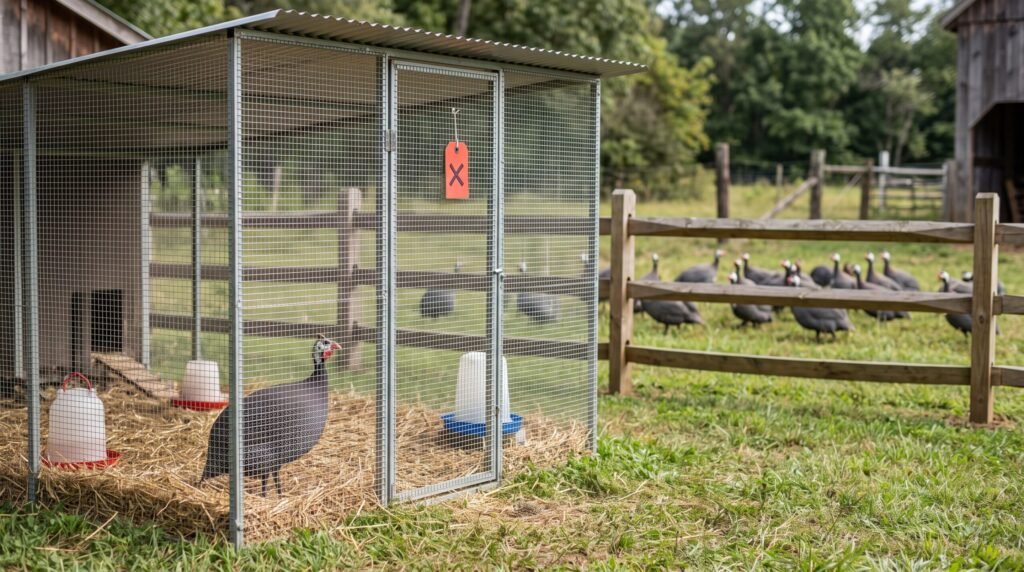
To quarantine guinea fowl, keep new or sick birds in a separate, covered pen at least 33 feet (10 meters) from your main flock, with their own feeders, waterers, and tools. New arrivals need a minimum of 30 days of observation, and sick birds stay apart until they’ve recovered and your vet agrees they’re clear.
When I first started keeping guineas, quarantine felt like overkill. The new birds looked bright and alert, and I wanted them out with the rest of the flock. But a bird can carry disease and look perfectly fine, and the trip to your farm is stressful all by itself. A month of patience costs very little compared to losing a flock.
In this guide, I’ll walk you through when to quarantine, how to build a simple pen, the daily routine I follow, the warning signs to watch for, and how to bring birds back in safely.
Here’s the short version before we get into the details:
| Situation | Minimum time | Key rule |
|---|---|---|
| New guineas you bought or adopted | 30 days | Separate pen, at least 33 feet from your flock |
| Birds back from a show, fair, or sale | 14–30 days | Treat them like new arrivals |
| Birds from several sellers | 30–90 days | Start them together and never add birds mid-quarantine |
| A sick or injured guinea | Until recovered and vet-cleared | Hospital pen away from the flock, and handle it last |
Why Quarantining Guinea Fowl Matters
Quarantine does three jobs at once. It stops a hidden illness from reaching your flock, it gives you time to spot problems, and it lets stressed birds settle in after the move.
That first job is the big one. According to California’s backyard poultry isolation guide, birds can carry and spread disease while looking healthy, and a bird that seemed fine when it left the seller may pick up an infection on the way to you. Guineas have a reputation for being hardy, but they’re still open to guinea fowl diseases and parasites that you simply can’t see on day one.
That’s also why USDA’s Defend the Flock program recommends keeping new birds apart for at least 30 days before they meet your existing flock. Extension services in several states give the same advice.
When You Should Quarantine
You’ll want a quarantine pen more often than you might expect. Use it whenever:
- You bring home new guineas. Adults, growers, and birds from a neighbor you trust all count.
- Birds return from a show, fair, or sale. Treat them exactly like new arrivals.
- A bird has been away from your property for days. Extension guidance covers returning birds, not just new purchases.
- A guinea looks sick or has a wound. Separate it right away.
- You buy new keets. Give them their own brooder instead of mixing them with keets you already have. My buyer’s checklist for healthy keets helps you screen them before they come home.
How to Set Up a Quarantine Pen
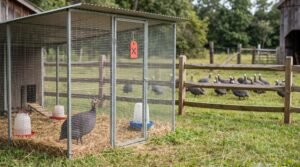
Your quarantine pen doesn’t need to be fancy, but it does need to follow a few rules. Here’s what I look for:
- Distance. Place it at least 33 feet (10 meters) from your main flock. Farther is better, and a separate building is ideal.
- A roof. Guineas are strong fliers for their size, and they can clear low fencing with ease. A covered pen also keeps wild birds out, which matters because wild birds can spread disease to domestic flocks.
- Secure fencing and a latching door. If you need ideas, my notes on fencing and layout for a simple run apply here too.
- Fresh air without drafts. Good ventilation keeps ammonia and dust down.
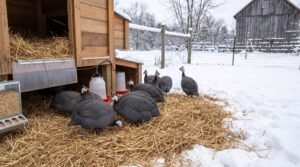
- Clean, dry bedding. It also makes it easier to check droppings, which is one of your best health clues.
- Shade, shelter, and a low roost. Birds that feel secure settle in faster.
- Dedicated gear. Feeders, waterers, buckets, and tools stay in the pen and never travel back to the main flock.
- Company. When you can, quarantine at least two or three birds together. A lone guinea tends to get noisy and stressed, and that doesn’t help it settle.
Your Daily Quarantine Routine
Quarantine only works if your habits protect the main flock. This is the routine I stick to:
- Care for the main flock first. Visit the quarantine pen last, every single time.
- Gear up at the door. Use dedicated boots (or change shoes and clothes) and step through a disinfectant footbath.
- Feed, water, and clean using only the pen’s own equipment. Nothing leaves the pen.
- Look at every bird. Check posture, eyes, nostrils, breathing, appetite, and droppings, ideally twice a day.
- Wash your hands before you leave.
- Keep a short log. A few notes on appetite and droppings make trends obvious and give your vet something concrete to work with.
Keep visitors and other poultry away from the pen, and never let quarantined guineas free-range. If they roam, you’ve defeated the whole point.
How Long Should Quarantine Last?
Thirty days is the standard minimum for new birds. It’s the figure you’ll see from USDA and from extension offices alike, and it’s long enough for many diseases to show themselves.
A few details are worth knowing:
- Fair or show birds. Some guidance allows about two weeks, while Tennessee Extension recommends 30 days for birds returning from shows. When in doubt, take the longer route.
- Birds from different sources. That same California guide suggests extending quarantine to 90 days. It also advises having all birds enter and leave quarantine together, so don’t add a bird partway through.
- If a bird gets sick. In my own routine, I restart the clock for the whole group once the sick bird has recovered, because its pen-mates have all been exposed.
Signs of Illness to Watch For
Birds instinctively hide weakness, and guineas are no exception. You’re looking for small changes, so check for these:
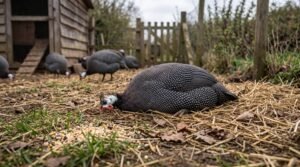
- Fluffed feathers, drooping wings, or a hunched posture
- Standing apart from pen-mates or sitting while the others stay active
- Eating or drinking less than usual
- Runny, foul-smelling, or off-color droppings
- Sneezing, nasal discharge, swollen or watery eyes, or noisy, labored breathing
- Limping or reluctance to stand
- Visible weight loss over a week or two
Don’t panic if a new guinea is subdued for the first day or two, since travel is exhausting. What matters is the trend. If a bird isn’t improving, or it’s getting worse, take it seriously. Sudden deaths or several sick birds at once should be reported to your vet, county extension office, or state animal health authority right away.
How to Quarantine a Sick Guinea Fowl
A sick bird follows the same distance rules as a new arrival, with extra care on top. Here’s how I handle it:
- Catch it calmly. Rough handling adds stress, so catch it as gently as you can.
- Move it to a hospital pen. Pick a quiet, shaded, well-ventilated spot, ideally 33 feet or more from the flock.
- Put food and water within easy reach. Dehydration makes any illness worse, so watch that it’s actually drinking.
- Keep it comfortable. Offer shelter from drafts in cold weather and shade in heat.
- Call a vet early. Many poultry illnesses look alike but need very different treatments, so I don’t guess with medications.
- Handle it last. Wear dedicated boots and wash your hands afterward.
- Watch the rest of the flock. Its closest companions have already been exposed, so check them daily.
One more tip: a bullied bird can look a lot like a sick one, drooping and staying apart from the group. Check for wounds and watch the flock’s behavior before you decide which problem you’re dealing with.
Ending Quarantine and Reintroducing Birds
Birds are ready to leave when they’ve finished the full period with no symptoms, eating well, with normal droppings, clear eyes and nostrils, and steady energy. If you’re unsure, ask your vet whether a parasite check or vaccination plan makes sense before they join the flock.
Then don’t just toss them in. Introducing them gradually lowers the chance of bullying while the pecking order sorts itself out.
Finally, clean and disinfect the pen thoroughly. I keep my quarantine pen for quarantine only, rather than using it as a brooder or general-purpose holding pen.
Common Quarantine Mistakes
Most problems come from shortcuts. Watch out for these:
- Placing the pen right next to the coop. Distance is part of the protection.
- Sharing feeders, waterers, or boots. Germs travel on equipment and shoes.
- Ending early because the birds “look fine.” Healthy-looking birds can still carry disease.
- Adding birds mid-quarantine. It resets the clock for everyone.
- Skipping the roof. Wild birds, predators, and escape artists all benefit.
- Caring for quarantined birds first. Always go to the main flock first.
Conclusion
Good quarantine comes down to distance, dedicated gear, and patience. Keep new birds apart for at least 30 days, move sick birds out right away, and always visit the quarantine pen last.
Your next step is simple: set up a small covered pen with its own feeder and waterer before you need it, so it’s ready the day new birds arrive.
Have you ever had a new bird bring in a surprise illness, or do you have a quarantine setup that works well? Share it in the comments, and browse more tips in health and disease management to keep your flock strong.
FAQ
Can I quarantine guinea fowl in the same coop behind a wire divider?
Not really. A divider stops fighting, but birds still share air, dust, droppings, and insects. For true quarantine, use a separate pen at least 33 feet away.
Do I need to quarantine a guinea that comes back after being missing?
If it was gone for days, especially near other poultry, quarantine is the cautious choice, since extension guidance covers returning birds as well as new ones. For tips on keeping them home, see how to stop guineas from getting lost.
What should I do if a bird gets sick during quarantine?
Separate that bird from its pen-mates if you can, call your vet, and care for the sick bird last. Then treat the whole group as exposed and restart the 30-day count once everyone is healthy.
Hi, I’m Rayyan. I raise guinea fowl and share practical, research-backed guides for backyard keepers and homesteaders. I combine hands-on flock experience with trusted poultry management and university extension resources to help you raise healthier, more productive birds — with confidence, not guesswork.