Guinea fowl frostbite happens when cold, wind, and moisture freeze the thin skin on a bird’s toes, wattles, and bare face. You prevent it with a dry, well-ventilated coop, a wide roost, and drinkers that don’t drip onto wattles. If it does happen, warm the tissue slowly, never rub it, leave blackened areas alone, and call a vet.
Guineas have a reputation as tough, nearly indestructible birds, and mostly they are. Mine will stand around in light snow without a care. But hardy isn’t the same as frostproof, and the winters that catch keepers off guard are usually the damp, windy ones, not the dry deep freezes.
In this guide, I’ll walk through why guinea fowl get frostbite, how to recognize each stage, what to fix in your coop before the cold arrives, and how to care for a bird that’s already been hurt.
Here’s the short version before we get into the details:
- Most at risk: toes and feet, wattles, and the bare skin of the face.
- Main triggers: damp coop air, drafts at roost height, wet wattles, and birds sleeping outside in freezing wind.
- Best prevention: dry bedding, good ventilation, wide roosts, and drinkers that keep wattles dry.
- If it happens: rewarm gradually, don’t rub, don’t peel off dead tissue, and involve a vet.
- Recovery: expect several weeks, not days.
Are Guinea Fowl Prone to Frostbite?
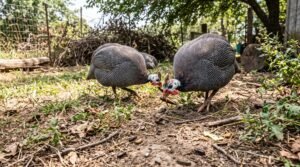
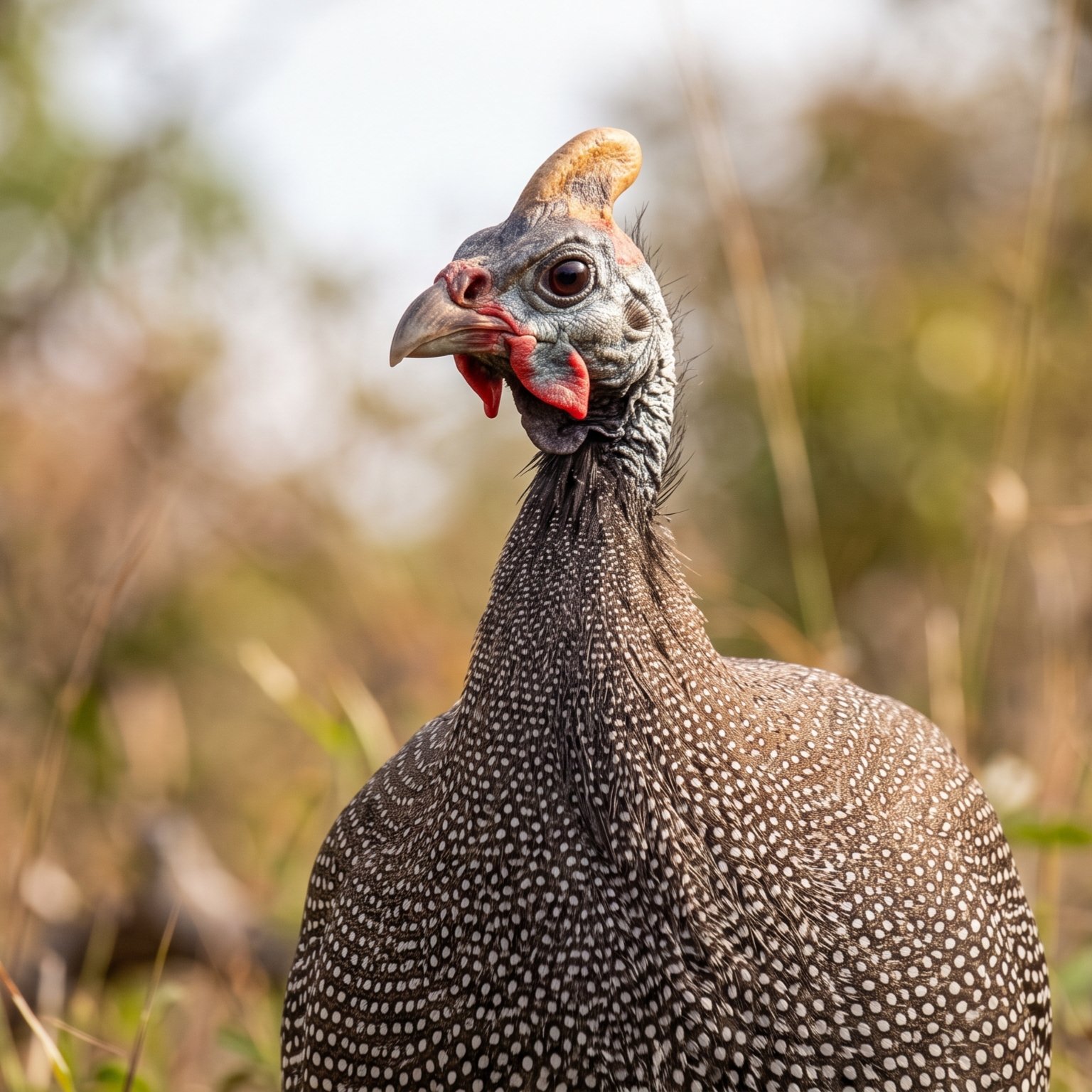
Guinea fowl handle cold better than most people expect, but they aren’t immune. Their heads and necks are bare, so the skin there has no feather insulation, and a wattle hangs on each side of the beak. Adult males usually carry larger wattles and helmets than females (one of the clues keepers use when telling males from females), so they have a bit more skin on show.
Feet are the other weak spot. Guineas spend a lot of time standing on frozen ground, snow, and ice-cold perches, and toes are thin, poorly insulated, and far from the body’s heat.
One honest caveat: nearly all the formal frostbite guidance from universities and veterinarians is written for chickens. The physiology of cold, wet, exposed skin is the same, so I’ve applied that research to guineas alongside what I see in my own flock.
Whether a bird actually gets frostbitten depends on more than the thermometer. Severity is shaped by temperature, wind chill, how long the exposure lasts, whether the cold is wet or dry, and the bird’s age and health.
The most common risk factors include:
- Temperatures below freezing, especially with wind chill
- Humid coop air from wet bedding, droppings, or too many birds
- Drafts that blow across the roost
- Drinking water that drips onto wattles and then freezes
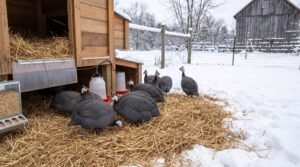
- Sleeping outside in wind, rain, or snow
- Dehydration, which can reduce circulation to the extremities
- Frozen perches and floors
Signs of Frostbite in Guinea Fowl
The early signs are easy to miss, and the worst damage may not show for days. A bird that looks fine after a bitter night can develop dark, dying tissue a week later.
Look closely at the toes (including the undersides), the tips and edges of the wattles, the skin around the face, and the feet and lower legs. This table breaks down what each stage looks like:
| Stage | What you’ll see | What it means |
|---|---|---|
| First degree (frostnip) | Pale, grayish, or off-white skin on wattles and face; slightly red feet | Only the surface skin froze. Often recovers with prompt care. |
| Second degree | Hard, cold skin; possible blisters | The skin froze, but deeper tissue is usually fine. |
| Third and fourth degree | Dark or black, dry, shriveled tissue; swelling; limping | Deep tissue has died. Needs a vet. |
Behavior gives clues too. A guinea that limps, holds a foot up, stands hunched on one leg, or won’t walk to the feeder deserves a closer look.
Frostbite can be confused with other problems. Fowl pox, for example, tends to look raised and scabby rather than flat, dry, and discolored. If you’re unsure what you’re seeing, my overview of common guinea fowl diseases can help you narrow it down, but a vet should confirm.
How to Prevent Frostbite in Guinea Fowl
Prevention is far easier than treatment. Most of it comes down to controlling moisture and protecting the places frostbite strikes first.
Keep the Coop Dry and Ventilated
Moisture matters more than cold. Birds breathe out a surprising amount of water vapor overnight, and in a sealed, stuffy coop that vapor condenses on walls, bedding, and skin. Frostbite is most likely in a cold, poorly ventilated coop with damp bedding.
To keep humidity down:
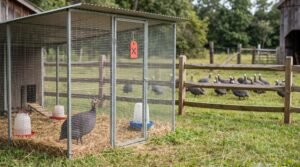
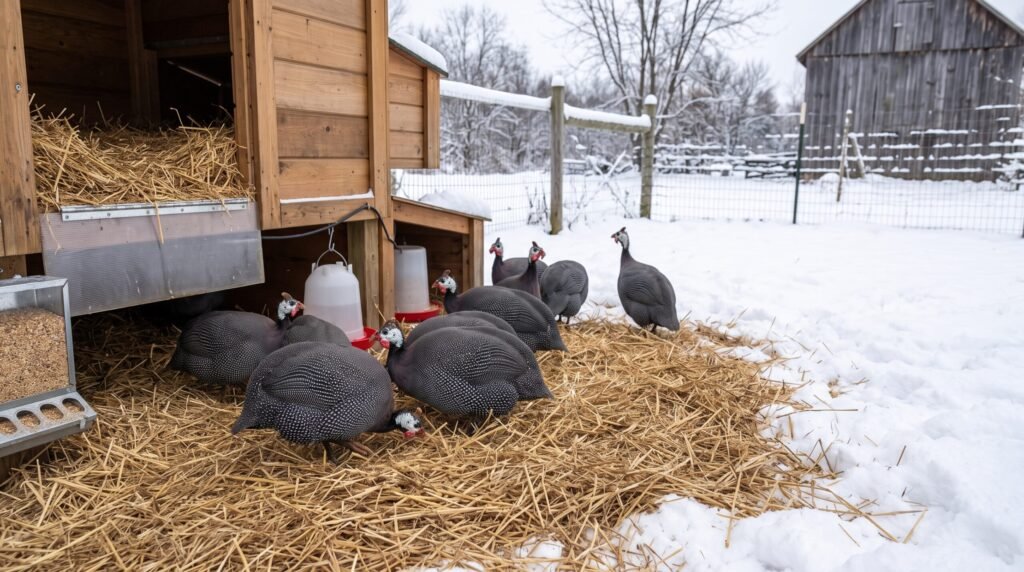
- Provide ventilation openings high on the walls, above roost height, so damp air escapes without blowing across sleeping birds.
- Use deep, dry bedding for guinea fowl and remove wet patches right away.
- Stay on top of coop cleaning, since droppings add a lot of moisture overnight.
- Don’t overcrowd. More birds means more moisture, so stick to sensible space allowances.
If you’re building or upgrading, a solid guinea fowl housing setup should already have ventilation and draft control in mind. For a full seasonal checklist, see my guide to winterizing the coop before the first hard freeze.
Give Them a Roost That Protects Their Toes
A wide, flat roost lets a bird settle down and cover its toes with its belly feathers. A thin round pole or a bare metal pipe forces the feet to grip in open air and pulls heat straight out of them. Make roosts from wood, and keep them away from frosty outer walls and drafts.
Keep Wattles Dry at the Water Station
Every time a bird drinks, water can run off the beak and down the wattles. In freezing weather, those drops turn to ice. Nipple drinkers or narrow cups that don’t require dunking the face reduce the problem, and raising the drinker off the ground keeps it cleaner.
Don’t swing too far the other way, though. Dehydration raises frostbite risk, so birds need constant access to unfrozen water. I check and swap drinkers around midday, when the ice has had a chance to melt. For more on how much they need, see this breakdown of guinea fowl water requirements.
Provide Shelter From Wind and Wet
Wind chill strips heat from exposed skin quickly. A solid windbreak on the windward side of the run, a covered area where birds can stand out of snow, and a closed pop door on the worst nights all help.
Free-ranging birds need extra thought. On days with brutal wind chill, I’d rather keep them in than let them roam. If you’re weighing the trade-offs, free-range versus confined management is worth a read.
Night is the real danger. Guineas love to roost high, and some insist on sleeping in trees or on rooftops, even in sleet. A bird that spends a freezing, windy night outside has far more frostbite risk than one tucked into a dry coop. If yours refuse to go in, working on training them to return to the coop at night is one of the best winter investments you can make.
Petroleum Jelly: Helpful or Not?
Advice here is mixed. Some flock owners coat combs and wattles with a thin layer of petroleum jelly in extreme cold, and eXtension’s poultry team notes that this is a common practice. Others caution against putting skin products on exposed areas at all.
My view: a very thin layer on wattles can be reasonable on a dangerously cold night, but it’s a backup, not a fix. A dry, draft-free coop does far more. And chasing a flighty guinea at dusk to apply ointment can stress the bird more than it helps, so if you must catch one, follow these tips for catching and handling guinea fowl without a panic.
Check Birds After Cold Nights
On the coldest mornings, I do a quick visual sweep of feet and wattles before I do anything else. Look for pale or gray skin, swelling, limping, or a bird standing oddly. Catching frostnip early is the difference between a bird that recovers fully and one that loses tissue. For broader seasonal routines, my winter care guide covers what else to watch.
How to Treat Frostbite in Guinea Fowl
Act as soon as you spot it. Early care gives the tissue its best chance, and mild frostnip often heals fully. I’m not a vet, so treat this as a first-aid framework and bring in a professional for anything beyond mild cases.
Follow these steps in order:
- Move the bird somewhere dry, draft-free, and cool-to-comfortable. A garage, mudroom, or large crate indoors works. Avoid a hot room, and if you can, keep a flockmate nearby, since guineas are social and stress easily.
- Rewarm slowly, but only if the tissue is still frozen and there’s no chance of refreezing. Hold a cloth soaked in lukewarm water against wattles, or let feet rest in lukewarm water. Thawing and then refreezing causes even more damage.
- Never rub, massage, or squeeze the area. Physical force damages already injured tissue.
- Skip direct heat. Veterinary guidance from PoultryDVM specifically warns against heat lamps, hair dryers, and heating pads for rewarming.
- Keep the area clean and dry, and leave blackened tissue alone. Dead tissue acts as a protective cover. Removing it can expose the healthy tissue beneath and invite infection.
- Limit walking on injured feet. Provide soft, clean bedding in a small recovery space.
- Call a vet. Frostbite is painful for birds, and a vet can prescribe pain relief and antibiotics to prevent infection.
What Recovery Looks Like
Healing can take four to six weeks. Over that time, damaged tissue may turn dark, dry out, and eventually separate from healthy tissue. A line forms between the two, and that can take anywhere from a few weeks to six weeks to appear. Once it does, a vet may remove the dead tissue if it hasn’t dropped off on its own.
Keep the bird indoors until it has healed and the weather is safe. Tissue that has been frostbitten is more vulnerable to cold injury in the future, so it will need extra protection next winter.
Some birds adapt well after losing a toe tip or two. Severe foot damage is a different story, and your vet can help you decide what’s best for the bird.
Conclusion
Guinea fowl frostbite is mostly a moisture and shelter problem. Dry bedding, ventilation above the roost, a wide perch, wattle-friendly drinkers, and a bird that sleeps indoors will prevent the vast majority of cases. When it does happen, warm slowly, don’t rub, don’t remove dead tissue, and get a vet involved.
Your next step is simple: before the next cold snap, go into the coop at night, put your hand where the birds sleep, and feel for drafts and dampness. Then check feet and wattles the next morning.
Have you ever dealt with frostbite in your flock, and what did you change afterward? Share your experience in the comments, and browse the rest of my seasonal care articles to get your flock ready for the cold months.
Frequently Asked Questions
At what temperature do guinea fowl get frostbite?
There’s no single number. Risk rises when temperatures fall below freezing (32°F or 0°C), and wind chill, dampness, and long exposure make it worse. A still, dry night at 15°F is easier on a bird than a windy, wet night at 28°F.
Do guinea fowl need a heater in winter?
Many healthy adult guineas get through winter without added heat as long as the coop is dry and draft-free. In very cold climates, a thermostat-controlled panel heater is safer than a heat lamp, which is a well-known fire hazard.
Can guinea fowl lose toes to frostbite?
Yes, in severe cases. Frozen toes can turn black and dry, and the dead tissue may eventually fall away over several weeks. If you see dark, shriveled toes or a bird that’s limping, call a vet quickly. Frostbite is painful, and pain relief matters.
Can a frostbitten guinea fowl go back outside?
Not until the tissue has healed and the weather is safe. Putting a recovering bird back out risks re-injury, so keep it in a dry, draft-free space and ask your vet when it’s ready to rejoin the flock.
Hi, I’m Rayyan. I raise guinea fowl and share practical, research-backed guides for backyard keepers and homesteaders. I combine hands-on flock experience with trusted poultry management and university extension resources to help you raise healthier, more productive birds — with confidence, not guesswork.