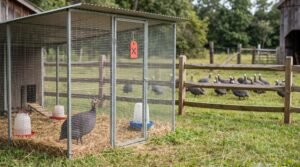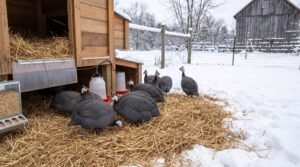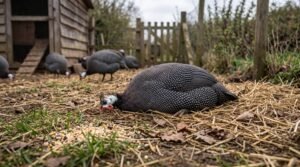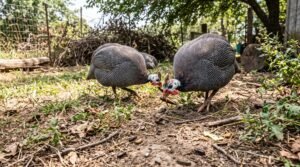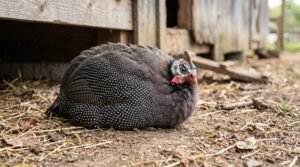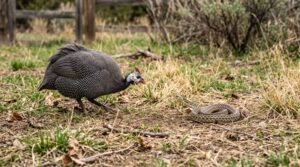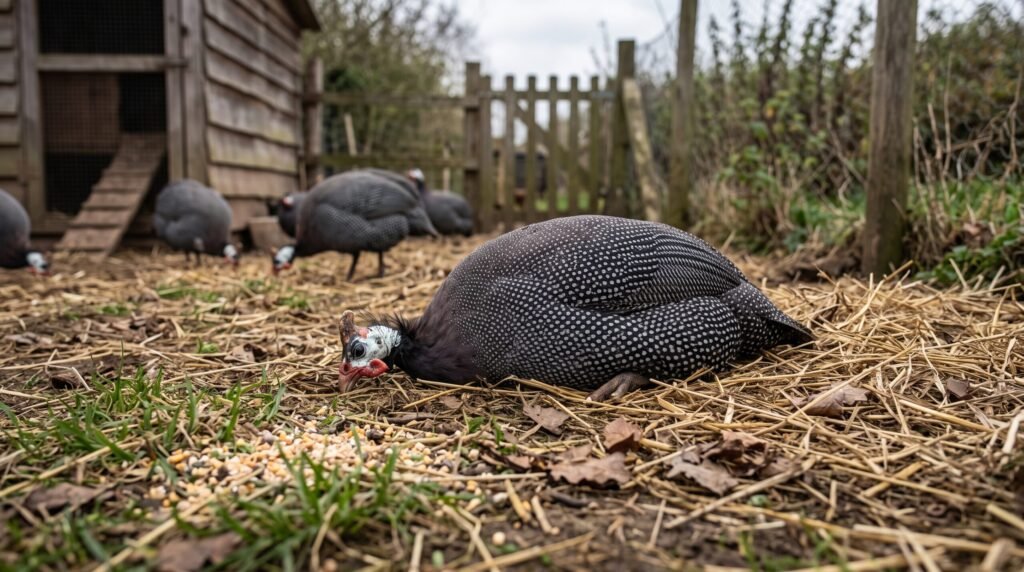
A guinea fowl that dies suddenly usually falls into one of a few buckets: a predator or accident, heat or cold stress, poisoning, a feed problem, or an infectious disease such as fowl cholera or avian influenza. You can’t know for sure without a necropsy, but the scene, the bird’s age, and any recent changes will narrow the list quickly.
I know how that morning feels. You walk out to feed the flock, and a bird that looked perfectly fine yesterday is lying still in the run. No wounds. No warning. Like most poultry, guinea fowl tend to hide illness until they’re very sick, so a sudden death is often the first sign that anything was wrong.
In this guide, I’ll walk you through what to check first, the most common causes, how a bird’s age changes the odds, when a necropsy is worth it, and how to lower the risk of losing another one.
Here’s a quick look at the most likely causes and the clues that usually point to each one.
| Likely cause | Clues to look for | First step |
|---|---|---|
| Predator or night attack | Missing birds, scattered feathers, neck or head wounds | Check coop and run for gaps; lock birds in at night |
| Heat stress | Hot weather, panting, no shade or water | Add shade, airflow, and cool water |
| Poisoning or moldy feed | Several birds sick, tremors, new bait or damp feed | Remove suspect feed and bait; call a vet |
| Choking or accident | Food stuck in the throat, broken neck, trapped in fencing | Examine the body; fix the hazard |
| Bacterial or viral disease | More than one bird affected, lethargy, swelling, diarrhea | Separate sick birds; call a vet or state lab |
| Parasites and gut disease | Young birds, loose or bloody droppings, poor condition | Fecal test; clean housing |
| Feed or metabolic problems | Wrong feed for age, lots of treats | Review the diet |
Start With the Scene, Not the Bird
Before you do anything else, take two minutes to look around. The details you notice now are the best clues you’ll get. Wear gloves, and wash your hands afterward.
Ask yourself:
- Where was the bird found? On the roost, near the waterer, by the fence, or out in tall grass each point in a different direction.
- Are there wounds or missing feathers? Torn skin, a missing head, or a chewed crop suggest a predator.
- How do the other birds look? Hunched, sluggish, or sneezing birds suggest illness rather than an accident.
- What do feed and water look like? Check for an empty waterer, damp feed, or anything unusual in the run.
- What changed recently? A heat wave, a storm, new feed, new birds, or fresh rodent bait all matter.
I keep a small notebook by the coop for exactly this reason. When something goes wrong, a few lines about weather, feed, and behavior from the past week can be more useful than anything I remember in the moment.
The Most Common Causes of Sudden Death in Guinea Fowl
Predators and Night Attacks
Guinea fowl love to roost up high, and plenty of them refuse to go inside at dusk. That leaves them exposed to owls, raccoons, foxes, and neighborhood dogs after dark. Hens sitting on hidden ground nests are especially vulnerable.
Missing heads, torn crops, scattered feathers, or a bird that simply vanishes all point to a predator. A body with no wounds usually points elsewhere, although a badly frightened bird can injure itself while panicking.
If you suspect a predator, start with better predator-proofing for your flock. Then work on habits that get birds under cover each evening, such as training them to return to the coop at night.
Heat Stress and Cold Exposure
Guinea fowl have a reputation for hardiness, but extreme weather can still kill them. In summer, the usual culprits are a poorly ventilated coop, no shade, and not enough water. Watch for open-mouth panting, wings held away from the body, and birds crowding around the waterer.
My rule: on hot days, I check water twice as often as I think I need to. Even a few hours without it can turn a warm day dangerous. Our guide to preventing heat stress in summer covers the setup in more detail, and it’s worth knowing how much water your birds actually need.
Cold is less often the direct cause, but wet, drafty housing in freezing weather is a real risk. So are fuel-burning heaters in a poorly vented space, which can produce carbon monoxide. If you’re heading into the colder months, a cold-weather care routine helps you avoid these problems before they start.
Poisoning and Moldy Feed
Guinea fowl are enthusiastic foragers, which means they sample things you’d rather they didn’t. Common hazards include:
- Rodent bait, or rodents that have eaten bait
- Treated seed and garden chemicals
- Antifreeze and old paint chips
- Moldy or damp feed
- Toxic plants growing in the run
Kitchen scraps deserve a mention too. Onions, avocado, and anything moldy can cause trouble, so check the list of safe and unsafe kitchen scraps before sharing leftovers.
The clue that matters most here is timing. If several birds get sick or die soon after a new feed, a new bait station, or a spill in the yard, treat poisoning as a serious possibility and call your vet.
Choking, Panic, and Accidents
Large chunks of vegetables can lodge in the throat. Guinea fowl also panic easily, and a bird that bolts into a fence, gets caught in netting, or is chased hard can break its neck. Deep waterers, buckets, and pond edges are another hazard, since guinea fowl are not swimmers.
Accidents usually leave physical evidence: a limp neck, a trapped leg, or food visible in the mouth. If you find that, look for the hazard and fix it before it takes another bird.
Infectious Diseases
Some infections can kill with very little warning.
- Fowl cholera is a bacterial disease that can cause rapid death with minimal signs.
- Salmonella infections can kill young birds in particular and are confirmed by lab testing.
- Avian influenza can cause sudden deaths in a flock, sometimes alongside lethargy, swelling of the head or face, and a drop in egg production.
- Adenovirus-associated disease: researchers in Italy described outbreaks of a hemorrhagic illness in guinea fowl two to five months old, where sudden deaths were the main sign. It’s rare, but it shows that young growers aren’t automatically safe.
If more than one bird dies quickly, or you see any of the signs above, contact your veterinarian or your state agriculture department right away. Reporting rules for unexplained poultry deaths differ by location, so ask what applies to you. For a broader look at warning signs, see our overview of guinea fowl diseases. Whether vaccination makes sense for your situation is a good question for your vet, and I cover the basics in the vaccination guide.
Parasites and Gut Disease
Coccidiosis is a leading threat to young birds, and guinea fowl have their own species of Eimeria. Heavy worm loads can also wear birds down until a minor stress finishes the job. In mixed flocks, blackhead disease is another possibility. Guinea fowl contract it less often than turkeys, but they are not immune.
Loose or bloody droppings, a hunched posture, and poor growth in young birds are the usual warnings. A fecal test is cheap, and it’s the best way to know what you’re dealing with. For prevention and treatment basics, start with this guide to common guinea fowl parasites.
One caution: if you use a medicated starter, read the label carefully. Some medicated feeds carry warnings against use in guinea fowl.
Feed and Metabolic Problems
The wrong diet can quietly set a bird up for failure. Keets need a high-protein starter, commonly recommended at around 24 to 28 percent, so plain chicken starter often falls short. Adults can run into trouble when treats and scratch grains crowd out balanced feed. Poultry vets list fatty liver and kidney failure among the causes of sudden death in birds generally. Laying hens can also face reproductive problems such as egg binding.
If you’re feeding what the chickens eat, it’s worth understanding where chicken feed works and where it doesn’t for guinea fowl.
Why Keets Die Suddenly
Keets are fragile, and their causes of death look different from an adult’s. The usual suspects are chilling, wrong or low-protein feed, drowning in a deep waterer, coccidiosis, and bacterial infection. One published outbreak report from Brazil described Pullorum disease (Salmonella Pullorum) killing a group of 290 keets within their first two weeks.
If your losses are in the brooder, our guide to why guinea fowl keets die is a better place to start.
Should You Get a Necropsy?
If you’ve lost more than one bird, or the death is truly unexplained, yes. A necropsy is a post-mortem exam, and it’s the only reliable way to confirm the cause.
Timing matters. The Western University poultry health necropsy basics fact sheet notes that birds dead for more than several hours aren’t ideal specimens, because decomposition creates changes that can be mistaken for disease. If you want a necropsy, keep the body cool and call your vet or your state veterinary diagnostic lab as soon as possible. Your local extension office can usually point you to the right lab.
Basic results often come back in a few days. Keep in mind that if the lab finds a reportable disease such as avian influenza, officials may be notified.
What to Do Right After a Sudden Death
Once you’ve looked over the scene, work through these steps:
- Remove the body safely. Wear gloves, bag it, and wash your hands. Don’t feed it to pets or compost it.
- Keep it cool if you want a necropsy. Refrigerate it rather than freezing it, and call the lab promptly.
- Check for hazards. Look at feed, water, bait, plants, fencing, and ventilation.
- Watch the rest of the flock. Look for lethargy, swelling, diarrhea, or reduced appetite over the next several days.
- Clean waterers and feeders. If disease is possible, a thorough coop cleaning routine is important.
- Write it down. Note the age, weather, feed, and anything unusual, since it will help if you speak with a vet.
How to Lower the Risk of It Happening Again
You can’t prevent every loss, but a few habits cover most of the common causes:
- Lock birds in a secure shelter at night, even if it takes time to train them.
- Provide clean, fresh water at all times, especially in hot weather.
- Feed an age-appropriate, balanced diet and keep treats modest.
- Store feed in a dry place and keep bait out of the birds’ reach.
- Quarantine new birds before mixing them with your flock.
- Limit contact with wild birds and standing water they may use.
- Spend a few minutes each day just watching your flock. Small changes in posture, appetite, and droppings are often the earliest warning.
Final Thoughts
Sudden deaths in guinea fowl rarely have a single, obvious answer, but they do have patterns. Predators, weather, poisoning, feed, and infection account for most of what keepers see, and the details of the scene usually tell you which direction to investigate.
Your next step is simple: look at what happened, secure the body if you want answers, and fix any hazard you can find today. If more than one bird is affected, call a vet or diagnostic lab right away.
Have you ever solved a mystery loss in your own flock? I’d love to hear what you found in the comments. And if you’d like to dig deeper, browse the rest of our health and disease management articles for more ways to keep your flock healthy.
FAQ
Can guinea fowl die from stress alone?
Stress can be the trigger, especially after a predator scare or rough handling. But a vet will usually still look for an underlying problem, such as heat, illness, or injury, that made the bird vulnerable.
Should I worry about avian influenza if one bird dies?
One death with an obvious cause, like a predator or accident, is rarely a flu concern. Unexplained deaths, several birds dying in a short time, or swelling of the head and face are different. In those cases, call your vet or state agriculture office promptly.
Can I eat or sell a guinea fowl that died suddenly?
No. If you don’t know why a bird died, don’t eat it, sell it, or feed it to other animals. Only birds that were healthy and slaughtered properly belong in the food chain.
Will the rest of my flock get sick?
It depends on the cause. If it was an accident, predator, or heat, the other birds are probably fine once the hazard is fixed. If it was infectious, other birds may show signs within days, so watch them closely and isolate any that look unwell.
Hi, I’m Rayyan. I raise guinea fowl and share practical, research-backed guides for backyard keepers and homesteaders. I combine hands-on flock experience with trusted poultry management and university extension resources to help you raise healthier, more productive birds — with confidence, not guesswork.