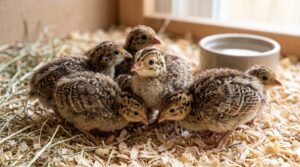
Guinea keets need a brooder temperature of 95°F for their first week of life, dropped by about 5°F each week after that until they’re fully feathered around week 6 to 8. Get this wrong in the first few days and you won’t get a second chance — keets chill faster than chicks and don’t recover the way chicks sometimes do.
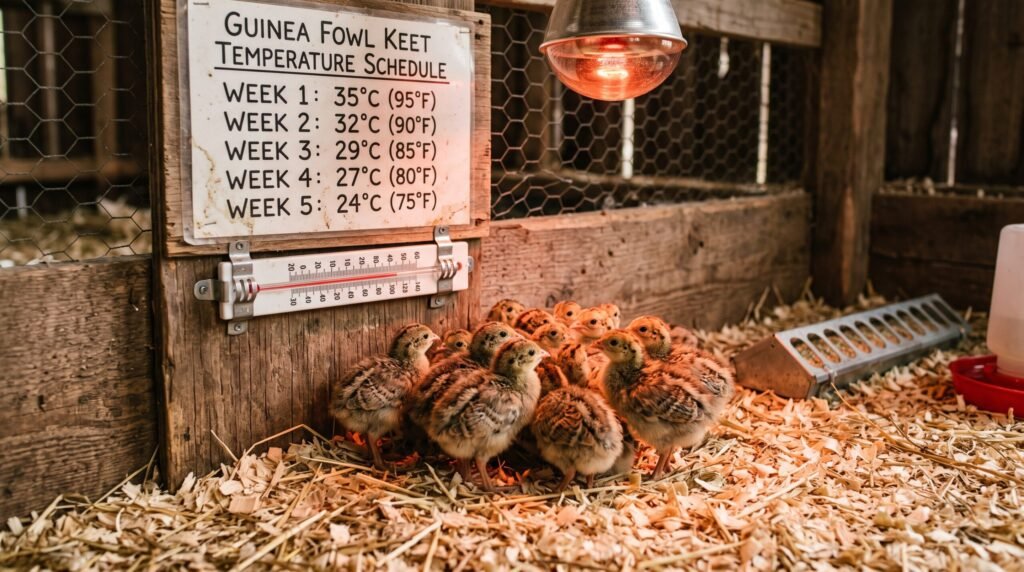
I learned that the hard way with my first batch. I’d raised chickens for years and assumed a guinea brooder would behave the same as a chick brooder. It doesn’t. My keets huddled and cheeped all night under a lamp that would have been perfectly fine for chicks, and I lost two before I figured out what was going on. Since then I’ve kept a written temperature schedule taped to the wall next to every brooder I run, and I haven’t lost a keet to cold since.
Guinea keets are more heat-sensitive than chicks during their first two weeks, need a slower step-down in temperature, and rely on your reading of their behavior just as much as any number on a thermometer.
Here’s the exact week-by-week chart I use, plus how to tell if your keets agree with the thermometer.
Guinea Keet Brooder Temperature Chart
| Keet Age | Brooder Temperature | Notes |
|---|---|---|
| Days 1–7 | 95°F (35°C) | Measure at keet height, directly under the heat source |
| Week 2 | 90°F | Some keepers hold at 95°F through week 2 — see note below |
| Week 3 | 85°F | Down feathers should be thickening |
| Week 4 | 80°F | First juvenile feathers typically emerging |
| Week 5 | 75°F | Can often skip supplemental heat during the day |
| Week 6 | 70°F | Heat lamp may only be needed overnight |
| Week 7–8 | Ambient / off | Fully feathered keets no longer need added heat |
A quick note on week 2: most sources agree on 95°F for week one and a 5°F weekly step-down after that, but a few experienced keepers hold keets at 95°F for the full first two weeks rather than dropping at day 7, since guinea keets mature a bit more slowly than chicks in those early days. Either approach works — what matters more than the exact number on any given day is watching how your keets respond, which I’ll cover below.
Why Guinea Keets Need More Heat Discipline Than Chicks
Guinea keets and chicks look like they should brood the same way, and for the first day or two, they basically do. The difference shows up in how they handle a mistake.
A chick that gets a little too cold for an hour usually bounces back once it’s warm again. A guinea keet in the same situation is more likely to go downhill fast, and in my experience the smallest keets in a batch are the first to show it. I now treat the first 72 hours as the highest-risk window and check the brooder more often than I think I need to.
Part of this comes down to size. Keets hatch smaller than most chicks, with less body mass to hold onto heat, so they lose warmth faster in a drafty or under-heated brooder. If you’re just getting your setup together, my guide to raising guinea fowl keets week by week walks through the full brooding period, not just temperature, and is worth reading before your keets arrive.
How to Set Up Your Heat Source Correctly
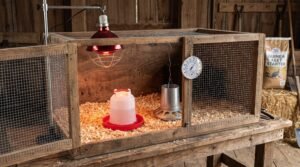
The chart above assumes you’re measuring temperature the right way — at keet height, not at the ceiling of the brooder or on a shelf across the room.
- Measure 1–2 inches above the bedding, directly under the heat lamp or plate. This is where the keets actually spend their time, and it can run 15–20°F cooler than the air near the top of a brooder box.
- Use a lamp with a dimmer or adjustable height rather than trying to hit an exact number with a fixed-position bulb. Raising or lowering the lamp by a few inches makes a bigger difference than you’d expect.
- Give keets room to move away from the heat. A brooder that’s uniformly 95°F with nowhere cooler to retreat to is just as much of a problem as one that’s too cold, since keets can’t self-regulate if there’s no gradient to choose from.
- Check morning and night, since ambient temperature in a garage, barn, or coop swings more than most people expect between a summer afternoon and an overnight low.
A basic infrared or probe thermometer is worth the ten dollars. Guessing by hand is how most brooders end up too cool without anyone noticing.
Reading Keet Behavior: The Real Temperature Gauge
Numbers on a chart are a starting point, not a guarantee. Every brooder is a little different, so the keets themselves are the best indicator of whether the setup is actually working.
- Huddled in a tight pile directly under the lamp, peeping sharply and constantly: too cold. Lower the lamp or bump up the temperature.
- Spread out evenly, moving freely in and out of the warm zone, soft occasional peeping: just right. This is what you want to see.
- Pressed against the far edges of the brooder, panting, wings held slightly away from the body: too hot. Raise the lamp or reduce the wattage.
- Sudden loud, distressed peeping that doesn’t settle: stop and check immediately — this can mean cold, but it can also mean overcrowding, a draft, or a keet that’s trapped or injured.
I check on new keets every couple of hours for the first two days, then taper off to a few times a day once they’ve settled into a rhythm. It sounds like overkill, but it’s the fastest way to catch a heat lamp that’s slipped or a bulb that’s about to burn out before it becomes a real problem.
Common Heat Mistakes That Cost Keets
A few mistakes come up again and again with new keepers, and most of them are easy to avoid once you know to watch for them.
- Dropping temperature too fast. Following a schedule exactly by the calendar without checking behavior can leave keets under-heated if your brooder runs cooler than expected.
- Ignoring drafts. A brooder can read 95°F on the thermometer and still chill keets if cold air is moving across the floor. Solid-sided brooders beat wire cages for the first couple of weeks for this reason.
- Overcrowding the warm zone. Too many keets packed under one small heat source means the ones on the outside never actually reach a comfortable temperature, even if the reading under the lamp looks correct.
- Forgetting nighttime dips. Daytime temperatures can be comfortable while overnight lows in an unheated coop or garage swing low enough to stress keets that seemed fine that afternoon.
- Skipping the thermometer entirely. “It feels warm enough” is not a heat management plan. A five-degree miscalculation matters far more to a keet than it would to an adult bird.
If you’ve had keets die of unclear causes in the first week, guinea fowl diseases and their symptoms is worth a look, since chilling can sometimes be mistaken for illness or the two can compound each other.
When to Stop Supplemental Heat
Full feathering is the real marker for when keets no longer need added warmth, not a specific week number. Most keets are fully feathered somewhere between 6 and 8 weeks old, but this varies with breed, brooder conditions, and time of year.
Before you cut the heat completely:
- Check that keets have their full set of flight and body feathers, not just the first juvenile down replacing their natal fluff.
- Wean gradually by turning the heat off during the day first, keeping it available overnight for another week or two.
- Factor in your climate. Keets feathering out during a cold snap need a longer weaning period than keets hitting 6 weeks in the middle of summer.
- Keep an eye on nighttime behavior for a few nights after removing heat entirely, since huddling can return if temperatures drop further than expected.
Once keets are fully feathered and weaned off heat, they’re ready to transition toward their permanent housing. My guinea fowl housing guide covers what that setup should look like, including the space and security keets need as they move from brooder to coop.
Quick Reference: Signs Your Brooder Temperature Is Off
| Behavior | Likely Cause | Fix |
|---|---|---|
| Tight huddle, sharp peeping | Too cold | Lower lamp / raise temperature |
| Even spread, quiet peeping | Comfortable | No change needed |
| Spread to edges, panting | Too hot | Raise lamp / lower temperature |
| Huddled to one side only | Draft | Block airflow, reposition brooder |
| Loud distress that won’t settle | Multiple possible causes | Check temperature, crowding, and injury immediately |
Final Thoughts
Guinea keets aren’t fragile, but they are unforgiving of heat mistakes in a way chicks generally aren’t, especially in that first week. Start at 95°F, step the temperature down by about 5°F a week, and let the keets themselves confirm whether the number on your thermometer is actually working for them.
If you’re setting up your first brooder, write the schedule down and stick it where you’ll see it — it’s a small habit that’s saved me from more than one late-night temperature guess. Have you found your keets prefer running a little warmer or cooler than the standard chart? I’d genuinely like to know what’s worked in your setup, especially if you’re brooding through a tough climate.
Frequently Asked Questions
Do guinea keets need a different temperature than chicks?
Guinea keets start at the same 95°F as chicks, but they’re less tolerant of temperature drops and cold drafts in the first two weeks. Many keepers step the temperature down more cautiously for keets than they would for chicks, watching behavior closely rather than sticking to a rigid schedule.
Can I brood guinea keets and chicks together?
It’s generally better to brood them separately, at least for the first couple of weeks. Chicks tend to be larger and more active early on, which can lead to keets getting trampled or outcompeted for space near the heat source.
What happens if my keets get too cold overnight?
Cold keets will huddle tightly, peep sharply, and can go downhill within hours rather than days. If you find chilled keets, warm them gradually rather than suddenly, and separate any that seem weak or unresponsive from the rest of the group until they recover.
How do I know when keets are fully feathered?
Fully feathered keets have replaced their natal down with a complete set of body and flight feathers, with no bare or fluffy patches remaining. This typically happens between 6 and 8 weeks, though it’s worth checking visually rather than going by age alone.
Hi, I’m Rayyan. I raise guinea fowl and share practical, research-backed guides for backyard keepers and homesteaders. I combine hands-on flock experience with trusted poultry management and university extension resources to help you raise healthier, more productive birds — with confidence, not guesswork.