Guinea fowl are hardy birds, but “hardy” doesn’t mean “immune.” The most common problems you’ll run into are coccidiosis, intestinal worms, Newcastle disease, fowl pox, blackhead disease, and infectious coryza — and each one has its own tells if you know where to look.
I’ve lost keets to problems I didn’t catch in time, and I’ve also caught outbreaks early enough that a full flock walked away fine. The difference almost always came down to knowing what “normal” looks like for guinea fowl specifically, since they mask illness far better than chickens do. This guide covers what causes each disease, the symptoms that should stop you in your tracks, and what treatment actually looks like on a working homestead.
| Disease | Type | Key Symptoms | Most At Risk |
|---|---|---|---|
| Coccidiosis | Parasitic (protozoa) | Bloody or watery droppings, lethargy, ruffled feathers | Keets, birds on damp litter |
| Worms (roundworm, cecal worm) | Parasitic | Weight loss, poor feathering, reduced laying | Free-range adults, older birds |
| Newcastle disease | Viral | Respiratory distress, twisted neck, drop in egg production | Unvaccinated flocks, all ages |
| Fowl pox | Viral | Wart-like lesions on comb/wattles, mouth lesions | Birds exposed to mosquitoes |
| Blackhead disease (histomoniasis) | Protozoal | Sulfur-yellow droppings, drooping wings, lethargy | Birds housed with turkeys |
| Infectious coryza | Bacterial | Facial swelling, nasal discharge, labored breathing | Crowded or poorly ventilated coops |
Why Guinea Fowl Hide Illness So Well
Guinea fowl are flock animals with a strong instinct to blend in — a visibly sick bird in the wild is the one a predator picks off first — so they mask symptoms until they genuinely can’t anymore.
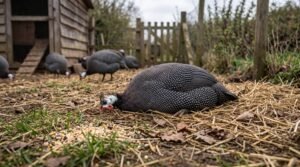
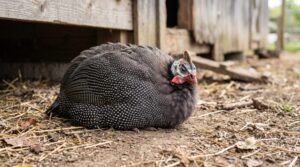
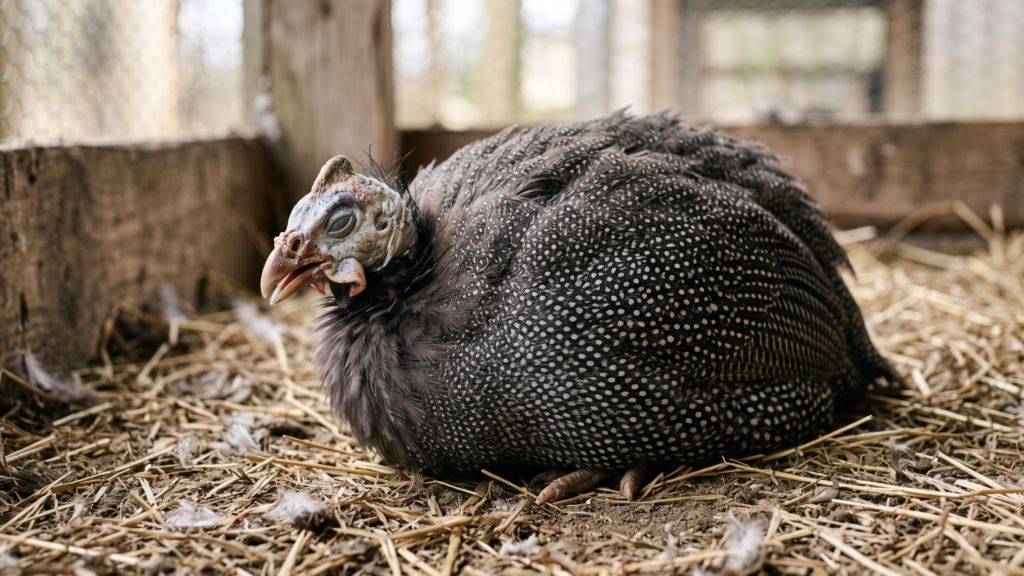
In my experience, the earliest sign is almost never a symptom you’d find in a textbook. It’s a behavior change: a bird that’s usually first to the feeder hanging back, or one guinea standing apart from the group instead of moving with it. By the time you see obvious symptoms like discharge or diarrhea, the illness has usually had a few days’ head start.
Watch for these early warning signs during your normal chores:
- A bird that separates itself from the flock or stops moving with the group
- Reduced appetite or a bird that isn’t drinking normally
- Fluffed-up, hunched posture when it isn’t cold out
- Dull or half-closed eyes
- A noticeable drop in egg production
- Watery, bloody, or unusually foul-smelling droppings
If you’re still dialing in your setup, our guide to starting guinea fowl farming covers the housing and management basics that make disease prevention easier from day one.
Coccidiosis
Coccidiosis is the disease I get asked about most, and it’s usually the first serious health scare new keepers face — especially with keets.
Cause: Coccidiosis is caused by Eimeria protozoa, microscopic parasites that damage the intestinal lining. Guinea fowl are susceptible alongside geese, ducks, turkeys, and pheasants, though it tends to hit them less severely than it hits chickens. Birds pick it up by ingesting oocysts from contaminated droppings, damp litter, or dirty water.
Symptoms:
- Watery or blood-tinged droppings
- Lethargy and a hunched, fluffed appearance
- Loss of appetite
- Pale comb and wattles
- Sudden death in severe keet cases
Treatment: Amprolium, given in drinking water, is the standard treatment. It blocks the parasite’s ability to absorb thiamine, stopping it from reproducing without harming the bird. Think of it as a coccidiostat rather than a cure-all: it brings the parasite load down rather than wiping it out, and recovered birds typically build some immunity while still shedding a low level of oocysts. Isolate any bird with severe symptoms for supportive care — clean water, warmth, and rest — away from feeder competition.
Prevention: This one’s far easier to prevent than treat. Keep litter dry, since damp bedding is where oocysts thrive. Avoid overcrowding, clean waterers daily, and consider a medicated starter feed for keets during their first few weeks. I’ve found that dry bedding alone prevents more coccidiosis than anything I’ve ever put in the water.
Intestinal Worms
Worms don’t usually kill guinea fowl outright, but they quietly drain condition, egg production, and growth — which is why keepers often miss them until a bird looks noticeably thin.
Cause: The most common offenders are roundworms (Ascaridia) and cecal worms (Heterakis gallinarum). Birds pick up worm eggs while foraging in contaminated soil, and free-ranging guineas — which is most of them — are more exposed than confined birds. According to the Merck Veterinary Manual’s overview of poultry helminths, guinea fowl are unusually efficient hosts for cecal worm eggs, producing more per worm ingested than chickens do — second only to ring-necked pheasants.
Symptoms:
- Gradual weight loss despite normal appetite
- Dull, rough-looking feathers
- Reduced or irregular egg laying
- Pale, anemic-looking comb in heavy infestations
- Diarrhea in severe cases
Treatment: A dewormer like fenbendazole (Safe-Guard or Panacur) is typical, given orally or mixed into feed, with a repeat dose 7–10 days later to catch newly hatched worms the first round missed. I always deworm at night when the birds are easiest to catch off the roost — chasing a guinea fowl at 2 p.m. is a losing battle.
Prevention: Rotate range areas when you can, keep the coop and run free of accumulated droppings, and treat deworming as routine maintenance on a twice-yearly schedule rather than a reaction to symptoms. This ties into your feeding setup — our guinea fowl feeding guide has more on keeping foraging areas and feed stations clean.
Newcastle Disease
Newcastle disease worries me most, because it’s viral, highly contagious, and there’s no cure once a bird is infected.
Cause: A paramyxovirus spread through contact with infected birds, contaminated equipment, or airborne particles over short distances. Guinea fowl aren’t naturally immune, and vaccination is generally recommended, especially in mixed-species flocks kept alongside chickens or other poultry.
Symptoms:
- Labored or open-mouth breathing
- Twisted neck or other signs of nervous system involvement
- Greenish, watery diarrhea
- Sharp drop in egg production
- Sudden deaths within the flock
Treatment: There’s no antiviral treatment for Newcastle disease. Care is limited to supportive measures — warmth, hydration, isolation — while antibiotics may control secondary bacterial infections in a weakened bird. In a serious outbreak, contact your state veterinarian or extension office right away; Newcastle disease is reportable in many regions.
Prevention: Vaccination is the real answer, especially with a history of outbreaks nearby or guineas kept near other poultry. Our guide to guinea fowl vaccination schedules walks through timing. Beyond that, basic biosecurity does a lot of the work — limit visitor contact, quarantine new arrivals for at least two weeks, and disinfect shared equipment.
Fowl Pox
Fowl pox looks alarming the first time you see it, but it’s usually more nuisance than killer in guinea fowl.
Cause: A slow-spreading virus transmitted mainly by mosquitoes, though it can also spread through skin wounds and direct contact. There’s no direct treatment once a bird is infected, but the virus moves slowly through a flock, which gives vaccination a real chance to stop an outbreak.
Symptoms:
- Wart-like, crusty lesions on the comb, wattles, and around the eyes
- Yellowish lesions inside the mouth and throat in the wet form
- Difficulty eating or breathing if lesions affect the mouth or airway
- Mild lethargy
Treatment: There’s no direct cure — the virus runs its course over two to four weeks. Supportive care matters most: soft, easy-to-eat feed if mouth lesions make eating difficult, and clean water at all times. Secondary infections in open lesions sometimes call for antibiotics, so a vet check is worthwhile if lesions look infected rather than just healing over.
Prevention: Mosquito control is your best defense — eliminate standing water around the coop and run. A fowl pox vaccine is available and worth considering if you’ve had outbreaks before or live somewhere mosquitoes are relentless. Our guinea fowl housing guide covers ventilation and site selection that also help cut down on mosquito breeding spots.
Blackhead Disease (Histomoniasis)
Blackhead disease is one guinea keepers need to know about mainly because of what it does to turkeys — but guineas aren’t off the hook either.
Cause: The protozoan parasite Histomonas meleagridis, carried inside the eggs of the cecal worm Heterakis gallinarum. Guinea fowl generally develop a milder form of the disease than turkeys, but the risk climbs if guineas share ground with turkeys, since turkeys are far more susceptible and cecal worm eggs shed by other species can go on to infect them. The Merck Veterinary Manual’s histomoniasis overview is worth a read if you keep multiple poultry species together.
Symptoms:
- Sulfur-yellow, foul-smelling droppings
- Drooping wings and head
- Lethargy and standing apart from the flock
- Weight loss over several days
Treatment: This is one of the harder diseases to manage, since there’s currently no approved vaccine or direct treatment. Supportive care — warmth, hydration, isolation — is about all you can offer while hoping the milder guinea fowl form runs its course.
Prevention: Since the disease travels through cecal worm eggs, controlling worms is your main lever. Regular deworming with a benzimidazole product cuts down exposure at the source. If you keep turkeys, house and range them separately from guineas and chickens, and avoid reusing litter between species.
Infectious Coryza
Infectious coryza shows up most often in flocks that are a little too crowded or a little too damp — a genuinely management-driven disease.
Cause: A bacterial infection, most often Avibacterium paragallinarum, spread through direct contact, contaminated water, and airborne droplets. It’s especially common where housing spacing is tight and humidity runs high — exactly the kind of coop setup that also breeds a dozen other problems.
Symptoms:
- Swelling around the face and eyes
- Watery or thick nasal discharge
- Sneezing and labored breathing
- Reduced appetite and activity
Treatment: Mild cases often improve once the underlying exposure is corrected, and antibiotics help when started early — coryza sometimes responds well to erythromycin, streptomycin, or sulfonamide drugs, according to poultry disease guidance from the University of Florida’s IFAS Extension. A vet visit is worth it, since dosing and drug choice matter for a bacterial infection like this one.
Prevention: Improve ventilation, reduce stocking density, and keep the coop dry. Coryza flare-ups almost always trace back to a stretch of wet weather combined with a coop that’s a little too small for the flock — so if you’re on the fence about upgrading housing, this is often the disease that makes the decision for you.
When to Call a Veterinarian
Most mild cases can be managed at home with isolation, clean water, and the treatments above. But some situations call for professional help without delay:
- Multiple birds show symptoms at once, suggesting something is moving through the flock
- A bird is having obvious difficulty breathing
- You’re seeing sudden, unexplained deaths
- Symptoms don’t improve within a few days of starting treatment
- You suspect a reportable disease like Newcastle disease or avian influenza
Don’t wait too long to make that call — a vet visit is a lot cheaper than losing half a flock to something treatable.
Building a Disease Prevention Routine
Treating disease after it shows up is stressful and often too late for the worst-hit birds. A few habits that have kept my own flock healthy year after year:
- Keep bedding dry. Damp litter is the single biggest driver of coccidiosis and respiratory disease.
- Don’t overcrowd. Guinea fowl need real space to avoid the stress and close contact that spread illness fast.
- Quarantine new birds. Two weeks minimum before introducing anyone to the main flock.
- Clean water and feeders daily. Contaminated water is a shortcut for nearly every disease on this list.
- Watch behavior, not just symptoms. Catching a quiet, withdrawn bird early beats catching an obviously sick one late.
- Deworm on a schedule. Twice a year is a reasonable baseline for free-ranging flocks.
Our guides on protecting guinea fowl from predators and seasonal care both tie into disease prevention — stressed, exposed birds get sick more easily than calm, well-housed ones.
Final Thoughts
Guinea fowl really do earn their reputation as tough, low-maintenance birds. But “hardy” only pays off if you’re paying attention — the birds that survive an outbreak are almost always the ones whose keeper caught the first quiet sign instead of waiting for the obvious one. Keep bedding dry, quarantine new arrivals, and get to know what normal behavior looks like for your flock, and you’ll catch trouble long before it becomes a crisis.
Have you dealt with an outbreak in your own flock? I’d love to hear what worked for you — and if you’re weighing whether guinea fowl are the right fit for your place at all, our breakdown of guinea fowl pros and cons is a good next stop.
FAQ
Are guinea fowl more disease-resistant than chickens? Generally, yes — guinea fowl tend to shrug off many common poultry diseases better than chickens do, though they’re not immune, and keets are especially vulnerable in their first few weeks.
Can guinea fowl and chickens share a coop safely? They can, but mixed housing raises the risk of certain diseases, particularly Newcastle disease and infectious coryza, spreading between species. If you mix flocks, vaccination and good ventilation matter even more.
How often should I deworm my guinea fowl? Twice a year is a reasonable starting point for free-ranging birds, though flocks on heavily used ground may need more frequent treatment. Fecal testing through a vet can confirm whether you’re on the right schedule.
What’s the fastest way to tell if a guinea fowl is sick? Watch behavior before symptoms. A bird that separates from the flock, stops foraging normally, or goes unusually quiet is often your earliest and most reliable warning sign.
Hi, I’m Rayyan. I raise guinea fowl and share practical, research-backed guides for backyard keepers and homesteaders. I combine hands-on flock experience with trusted poultry management and university extension resources to help you raise healthier, more productive birds — with confidence, not guesswork.