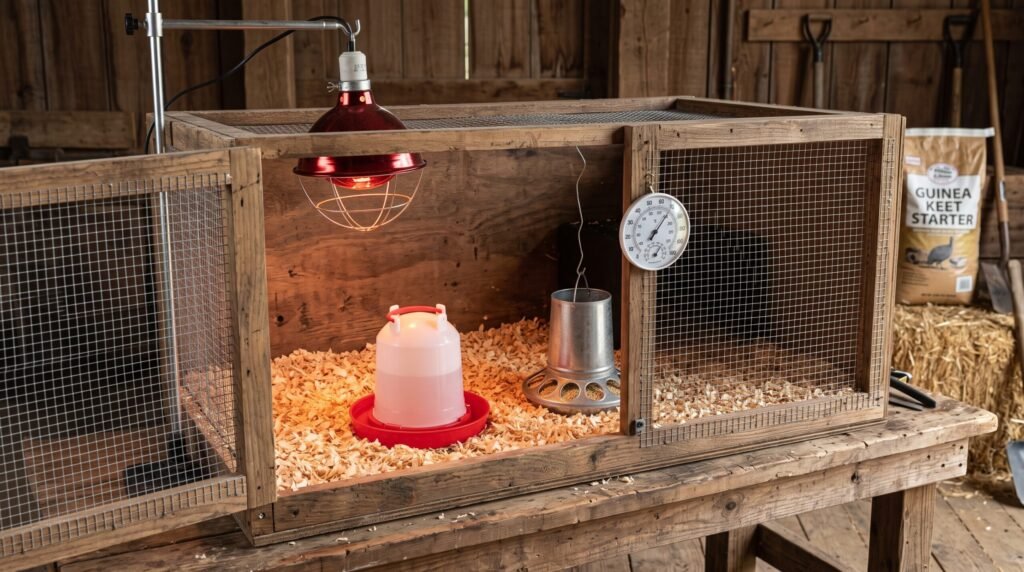
A good guinea fowl brooder needs four things nailed down before keets ever arrive: a heat source that starts at 95°F, non-slip bedding, a fully covered enclosure, and roughly half a square foot of floor space per keet. Get those right and the first six weeks go smoothly. Get any one of them wrong, and you’ll find out the hard way.
I remember my first batch of keets a little too well. I’d raised chicks for years and figured a guinea brooder would be more or less the same setup with a different label on the feed bag. It wasn’t. Keets are faster, flightier, more heat-sensitive, and far more likely to panic and pile into a corner than chicks ever were. I lost two keets in the first three days to a drafty gap I didn’t think twice about with chickens. That mistake is exactly why this guide exists — so you can set your brooder up right the first time instead of learning the same lesson I did.
Below, I’ll walk through the equipment you actually need, the bedding that keeps legs healthy, the heat schedule week by week, and how much space to give your keets as they grow.
Here’s the setup at a glance before we get into the details:
| Brooder Element | Recommendation |
|---|---|
| Heat source | Radiant heat plate or heat lamp, starting at 95°F |
| Bedding (days 1–3) | Paper towels or rough paper for traction |
| Bedding (after day 3) | 2–3 inches of large-flake pine shavings or fine sand |
| Cover | Hardware cloth, ½-inch openings, fully enclosed |
| Space per keet | About 0.5 square feet, increasing as they grow |
| Brooding duration | 6–8 weeks, until fully feathered |
| Feed | 26–30% protein game bird or guinea starter |
Essential Brooder Equipment
You don’t need anything fancy to brood keets successfully, but you do need the right pieces, and a few of them differ from a standard chick setup.
- A draft-free container. A large plastic tote, a stock tank, or a wooden brooder box all work. Whatever you choose, it needs solid sides — no gaps, no mesh at keet height — because keets chill fast and a stray draft at floor level can undo everything else you’ve set up right.
- A secure, gap-free cover. This is the one piece people skip with chicks and regret skipping with keets. Guinea keets start test-flying within their first couple of weeks, and they can squeeze through openings a chick never would. Half-inch hardware cloth over the top keeps them in and keeps hawks, cats, and curious dogs out.
- A reliable heat source. A radiant heat plate or a heat lamp with a porcelain, fire-rated socket both work well. Radiant plates run a little more upfront but remove the fire risk that comes with a lamp knocked loose by a keet that’s already flying at ten days old.
- A shallow waterer. Standard chick founts work, but drop a few clean marbles or pebbles into the base for the first several days. Keets are small enough to climb in and drown, and that one habit prevents it.
- A shallow feeder. Look for one with small enough openings that keets can’t stand in it and foul the feed. A flat feeder tray or an egg carton lid works fine for the first couple of days if you don’t have anything else on hand. If you’re still working out what to put in that feeder, my feeding guide covering what guinea fowl eat at every life stage is worth a look before the keets arrive.
- A thermometer at keet height. Don’t guess the temperature from air a foot above the bedding — measure it where the keets actually are, right under the heat source.
Bedding
Bedding matters more for keets than it does for chicks, mainly because keets are more prone to spraddle leg, a permanent leg deformity that starts when a chick or keet can’t get traction on a slick surface. Avoid newspaper and any smooth cardboard for this reason — the slip risk isn’t worth it.
For the first two to three days, plain paper towels or rough kraft paper give keets the grip they need while they’re still wobbly. It also lets you keep an eye on droppings, which is a useful early signal if something’s off with digestion.
After the first few days, once keets have found their feed and water and gotten steadier on their feet, you can switch to:
- Large-flake pine shavings — the most widely used option, absorbent and easy to source at any feed store.
- Fine sand — holds heat well, stays dry, and doubles as grit if keets peck at it.
- Chopped straw or pine straw — a reasonable alternative if shavings aren’t available.
Skip cedar shavings entirely. The aromatic oils are toxic to young poultry, keets included. And keep an eye on shavings in the first week regardless of type — keets will peck at just about anything, and fine or small-flake shavings are more likely to end up eaten than pecked once and ignored.
Keep the bedding dry. Damp litter breeds bacteria fast, and a soggy brooder is one of the quickest ways to end up with sick keets. Spot-clean daily and do a full bedding change any time it looks or smells damp — the same discipline that carries over once you’re doing regular coop cleaning after the birds move outdoors.
Heat
Guinea keets are noticeably more heat-sensitive than chicks during their first two weeks, and that early window is where most temperature-related losses happen. University of Kentucky Cooperative Extension recommends starting hovers at 95°F for the first two weeks, then lowering the temperature by 5°F per week after that.
Here’s the schedule that reflects what most experienced keepers and extension guidance both point to:
| Keet Age | Brooder Temperature |
|---|---|
| Week 1–2 | 95°F |
| Week 3 | 90°F |
| Week 4 | 85°F |
| Week 5 | 80°F |
| Week 6 | 75°F |
| Week 7–8 | 70°F, then off heat once fully feathered |
A few notes that make this schedule easier to follow in practice:
- Measure at keet level, not at lamp height. Temperatures swing fast in the first few inches above the bedding, and that’s the only reading that matters.
- Watch behavior, not just the thermometer. Keets huddled tightly together and peeping sharply are too cold. Keets sprawled flat well away from the heat, panting, are too warm. Keets spread comfortably around the edge of the warm zone, moving in and out freely, are right where they should be.
- Don’t rush the transition off heat. Keets go through several rounds of juvenile feathers before they’re actually fully feathered, usually around six to eight weeks. Don’t assume they’re ready just because the first fuzzy coat is gone.
- Expect to need more heat at night than during the day, even within the same week — a pattern that holds right up until they’re weaned off supplemental heat entirely.
If you’re moving keets from a shipping box straight into the brooder, have the space fully warmed before they arrive. Keets that arrive stressed and chilled need heat immediately, not fifteen minutes from now while the lamp warms up. This same cold-sensitivity is part of why winter care looks so different for guineas than it does for chickens, even well past the brooder stage.
Space Requirements as Keets Grow
Overcrowding in a guinea brooder causes more problems than it does with chicks, because keets panic more easily and are more prone to piling into corners when startled — a habit that can crush or suffocate keets at the bottom of the pile.
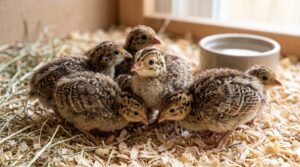
As a starting guideline, aim for about 450 square centimeters — roughly half a square foot, or a 6.7-inch square — per keet during the first couple of weeks. From there:
- Increase space as keets grow and become more active, rather than waiting until the brooder feels crowded.
- Watch for feather-picking, which often shows up when keets are bored or short on room, and usually eases once you give them more space.
- Plan on keets outgrowing the brooder by six to eight weeks, right around when they’re fully feathered and ready to transition toward outdoor housing. That’s also close to the point where it’s worth reading up on how to train guinea fowl to return to the coop at night, since the habits they form in those first weeks outside tend to stick.
If you’re setting up housing for the stretch after brooding, my guide to guinea fowl housing space requirements breaks down how much room adults need indoors and out, which is considerably more than what keets need at brooder stage.
Putting the Brooder Together
Once you have your equipment, bedding, heat source, and space sorted, setup itself is straightforward:
- Line the container with paper towels and confirm the space is fully draft-free.
- Position the heat source at one end only, leaving the other end cooler so keets can self-regulate.
- Warm the brooder to 95°F before keets arrive — don’t wait until they’re already inside.
- Place feeders and waterers away from the direct heat zone so water doesn’t overheat and feed doesn’t dry out.
- Secure the cover completely before introducing the keets.
From there, it’s mostly observation for the first few days: watching how the keets distribute themselves around the heat, making sure they’re finding food and water, and adjusting temperature based on their behavior rather than the calendar alone.
Frequently Asked Questions
Can I brood guinea keets with chicks in the same brooder?
You can, but I’d think twice before doing it. Keets are smaller and more easily trampled by faster-growing chicks, and they need a higher-protein starter feed than chicks do. If you do combine them, keep a close eye on feed access and size differences as the weeks go on. The same caution applies later on too — see my notes on whether guinea fowl can live alongside chickens, ducks, and turkeys once they’re grown.
How do I know if my keets are too cold?
Cold keets huddle tightly under the heat source and give off a sharp, distressed peep rather than their normal contented chirping. If you see that behavior, check your thermometer reading at keet level and raise the temperature before the huddling gets worse.
What happens if keets get spraddle leg?
Spraddle leg in keets doesn’t resolve as reliably as it sometimes does in chicks, which is exactly why non-slip bedding from day one matters so much. If you catch it early, hobbling the legs together with a soft brace can help, but prevention through proper bedding is by far the better route.
When can I stop watching the brooder closely?
Once keets are fully feathered, typically around six to eight weeks, and holding steady body temperature without supplemental heat, you can start easing off the close monitoring — though I’d still check in daily through the transition to outdoor housing.
Getting the brooder right is really the foundation for everything that comes after — healthy keets at eight weeks make for a much easier transition to the coop. If you’re gearing up for that next stage, my guide on raising guinea fowl keets week by week picks up right where this one leaves off. What’s tripped you up most in your own brooder setup? I’d like to hear how it went.
Hi, I’m Rayyan. I raise guinea fowl and share practical, research-backed guides for backyard keepers and homesteaders. I combine hands-on flock experience with trusted poultry management and university extension resources to help you raise healthier, more productive birds — with confidence, not guesswork.