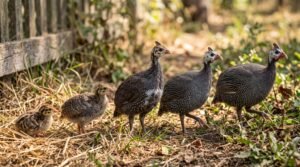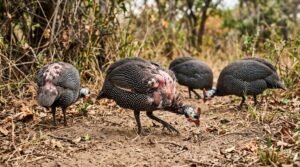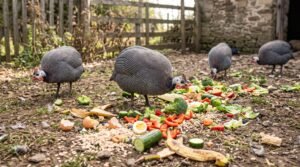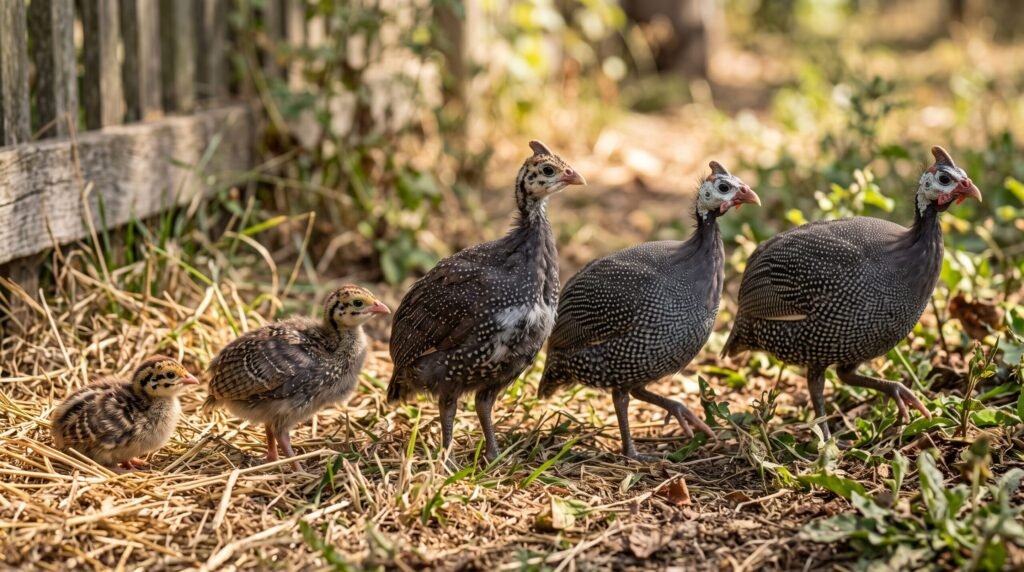
Guinea fowl grow fast for the first three months of life, gaining weight almost daily before their growth rate levels off, and most birds reach full adult size by around 16 weeks, though they won’t start laying eggs until closer to 24-28 weeks old.
I remember weighing my first batch of keets every Sunday morning just to convince myself they were actually thriving, and honestly, the speed of it still catches me off guard every hatching season. One week they’re fragile little puffballs that fit in your palm, and a month later they’re gangly, loud, and already testing the fence line. If you’re raising keets for the first time, knowing what “normal” growth looks like at each stage takes a lot of the guesswork out of it. Below, I’ll walk you through exactly how guinea fowl grow from hatch to maturity, what affects their growth rate, and how to tell if your flock is on track.
Here’s a quick look at how the stages break down before we get into the details:
| Age | Stage | Approx. Weight | Key Milestones |
|---|---|---|---|
| Day 1 | Newly hatched keet | 20-25 g | Covered in down, needs 95°F heat |
| Week 1-2 | Early keet | Doubles from hatch weight | Most vulnerable period, high mortality risk |
| Week 3-4 | Growing keet | 150-250 g | Pin feathers emerge, heat needs drop |
| Week 6-7 | Fully feathered keet | 300-500 g | Heat lamp no longer needed |
| Week 8-12 | Juvenile (“young guinea”) | 1-1.8 kg (2-4 lbs) | Near market weight, moved outdoors |
| Week 16-20 | Growing adult | 1.2-1.5 kg | Growth rate slows, feed switches to grower/layer |
| Week 24-28 | Sexual maturity | 1.5-1.9 kg (3-4 lbs) | Hens begin laying |
How Guinea Fowl Growth Works, Stage by Stage
Unlike chickens, guinea fowl start life smaller and more fragile, but they make up for it with a surprisingly fast early growth spurt once they clear the first couple of weeks. Here’s what to expect at each phase.
Day-Old Keets (Hatch to Week 1)
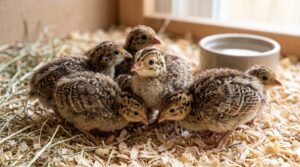
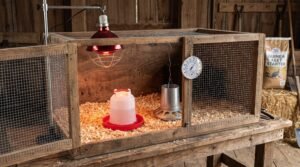
A newly hatched keet typically weighs around half what a day-old chick weighs, usually somewhere in the 20-25 gram range. They’re covered in soft brown-and-black striped down, wobbly on their feet, and need to be kept at roughly 95°F for that first week. I always tell new keepers not to panic if keets seem to do more sleeping than eating in the first 24 to 48 hours — they’re still living off the yolk they absorbed just before hatching, so that quiet period is completely normal.
This is also, unfortunately, the riskiest window in a guinea fowl’s life. Chilling, dampness, and poor footing in the brooder cause more keet losses in week one than almost anything else. If you want a deeper walkthrough of brooder setup and heat requirements during this stage, I’ve covered it in detail in my guinea fowl brooder setup guide.
Weeks 2-4: Rapid Early Growth
This is where things get fast. Keets can gain roughly 2 to 3 grams a day during this window, which means a healthy keet’s weight can climb noticeably every single day rather than every week. By two weeks old, most keets have already doubled or tripled their hatch weight, and pin feathers start replacing that fluffy down along the wings and back.
Temperature needs drop steadily through this stage too — as a general rule, you can lower the brooder temperature by about 5°F each week as the keets feather out and generate more of their own body heat. I keep a keet temperature chart taped to my brooder wall every spring because it’s easy to lose track of exactly where you should be by week three or four.
Nutrition matters enormously here. A high-protein starter feed (around 24-28%) supports this growth spurt, and skimping on protein during weeks 2-4 is one of the fastest ways to end up with stunted, uneven keets later on.
Weeks 5-7: Feathering Out
By five to six weeks, most keets are largely feathered on the body, though the head and neck often still carry down for another week or so. This is the stage where they genuinely start looking like small guinea fowl instead of chicks. Weight during this window typically lands somewhere between 300 and 500 grams, though this varies a fair bit depending on genetics, feed quality, and whether they’re on pasture or confined.
Full feathering, usually complete by six to seven weeks, is the real turning point: once keets are fully feathered, they can regulate their own body temperature and the heat lamp can come off for good. I always do a visual check rather than going strictly by the calendar — some keets feather faster than others even within the same hatch.
Weeks 8-12: The Juvenile Stage
From about eight weeks onward, keets are technically still called keets until 12 weeks, but most keepers start calling them “young guineas” once they’re off heat and out of the brooder. Growth is still fast here, though it starts to taper slightly compared to the explosive gains of weeks 2-4.
Research on guinea fowl growth backs this up directly — one long-term feeding trial tracked keets fed a standard broiler starter ration through 8 weeks and a growing ration through 20 weeks, recording average weights of about 1.04 lbs at 8 weeks, 1.98 lbs at 12 weeks, and 2.27 lbs at 14 weeks. That’s a useful benchmark if you’re weighing your own birds and wondering whether they’re tracking normally.
If you’re raising a meat strain like French guineas specifically for the table, growth tends to run even faster. Commercial Pearl guinea keets fed a game-bird starter and broiler ration commonly reach around 4 pounds by 12 weeks, which is why most processors target birds somewhere between 11 and 13 weeks old. Feed conversion is reasonably efficient at this age too, with birds typically needing around 3.7 pounds of feed per pound of live weight gained.
This is also the stage where housing needs change fast. Birds this size need real floor space, not a brooder box, so it’s worth planning the move to a coop or run before they outgrow their current setup. My guide to building a guinea fowl run walks through sizing this correctly for a growing flock.
Weeks 16-20: Growth Slows Down
Somewhere around 10 to 11 weeks, the relative rate of growth (weight gained as a percentage of body weight) starts declining noticeably, even though total weight keeps climbing. One farm study measuring this found that relative growth rate stayed highest, in the 14-17% range, up to 10 weeks of age, then gradually dropped to between 4.3% and 13.4% from 11 weeks onward. In plain terms: a 12-week-old keet is still gaining weight, just not at the breakneck pace of a three-week-old.
By 16 to 20 weeks, birds are approaching adult frame size, and this is the point most keepers switch from a grower ration to a lower-protein layer or maintenance feed, especially if the flock includes future breeding hens. Weight gain slows further, and the bird’s energy starts shifting toward developing reproductively rather than adding mass.
Weeks 24-28+: Reaching Maturity
Full skeletal and reproductive maturity in guinea fowl comes later than most backyard keepers expect. While birds look essentially “adult-sized” by 16 weeks, sexual maturity — meaning hens are physically ready to lay — generally isn’t reached until much later. According to poultry experts at Cooperative Extension, sexual maturity in guinea hens tends to occur around 27 to 28 weeks of age, though some reports show egg production starting as early as 21 weeks. A separate hatchability study recorded guinea fowl beginning to lay at 24 weeks of age with a mean body weight of about 1.88 kg, which lines up closely with that range.
Adult body weight at maturity generally settles between 3 and 4 pounds, with males typically running a bit heavier than females. If you want the full breakdown of what to expect once hens start laying — including how egg production ramps up over the following weeks — my article on how many eggs guinea fowl lay per year covers that transition in more depth.
What Affects How Fast Guinea Fowl Grow
Growth rate isn’t identical from flock to flock, and a few factors make a real difference:
- Genetics and strain: Commercial meat strains like French Pearl guineas are bred to grow noticeably faster than unimproved local or heritage lines. One review of indigenous African guinea fowl populations found 12-week weights of only around 530 grams in unimproved local birds, compared to roughly 1,200 grams in exotic or improved stock at the same age — a difference that’s almost entirely genetic rather than environmental.
- Feed protein levels: Starter feed protein (24-28%) drives the fastest early gains; dropping protein too early can visibly slow growth.
- Rearing system: Birds raised in confinement with controlled feeding often gain weight slightly faster and more consistently early on than free-range birds, though free-range guineas typically catch up as they mature and start foraging heavily for insects.
- Hatch timing and egg size: Keets hatched from larger eggs tend to hatch out heavier and hold a modest weight advantage in the first few weeks, though this gap usually narrows with age.
- Health and parasite load: Coccidiosis and internal parasites are two of the most common reasons a keet’s growth suddenly stalls or reverses; if a bird that’s been tracking normally suddenly stops gaining, it’s worth checking for both. My guide on preventing keet deaths covers the warning signs in more depth.
- Flock density and stress: Overcrowded brooders or runs cause stress-related growth slowdowns, even when feed and temperature are otherwise correct.
How to Track Your Keets’ Growth
I always recommend weighing keets on a consistent schedule rather than eyeballing it, since guineas can look deceptively similar in size while hiding a real weight difference underneath all that feathering. A digital kitchen scale works fine for this. Weigh a few keets from the batch weekly starting around week one, and jot the numbers down somewhere — a simple notebook is enough. If one bird consistently lags well behind its hatch-mates by more than a week’s worth of growth, that’s usually your first sign something needs attention, whether it’s pecking order competition at the feeder or an early health issue.
Starting with strong, healthy keets in the first place makes a noticeable difference to how evenly a batch grows. If you’re still sourcing your first flock, my buyer’s checklist for choosing healthy keets is worth a look before you commit.
Frequently Asked Questions
How much should a guinea keet weigh at 4 weeks old?
Most healthy keets weigh somewhere between 150 and 250 grams by four weeks, though this varies with strain and feed. If your keets are tracking well below this range and eating normally, it’s worth double-checking brooder temperature and protein content in the starter feed before assuming anything’s wrong.
At what age are guinea fowl full grown?
Guinea fowl reach close to their full adult frame size by around 16 weeks, but they aren’t fully mature in the reproductive sense until roughly 24 to 28 weeks, which is also when hens typically begin laying.
Why is my keet not growing as fast as the others?
Uneven growth within a batch is common and usually comes down to competition at the feeder, minor illness, or a slightly lower hatch weight to begin with. Separate slow growers into a smaller group with easy feed access for a week or two and watch whether they catch up before assuming a more serious health issue is behind it.
Do guinea fowl grow faster than chickens?
Early on, guinea keets actually start smaller and grow a bit slower than chicks in the first week or two, but they pick up speed through weeks 2-8. Overall, meat-strain chickens raised for broilers still outpace guinea fowl to market weight, since broilers are bred specifically for rapid growth.
Tracking your keets’ growth week by week is one of the simplest habits that pays off all season — it catches problems early and gives you a real sense of when your flock is ready for its next stage, whether that’s moving outdoors, switching feed, or waiting on those first eggs. If you’re just getting started, I’d also recommend reading through my week-by-week keet care guide for the full care picture alongside these growth benchmarks. How is your current batch tracking so far — right on schedule, or are you seeing some surprises?
Hi, I’m Rayyan. I raise guinea fowl and share practical, research-backed guides for backyard keepers and homesteaders. I combine hands-on flock experience with trusted poultry management and university extension resources to help you raise healthier, more productive birds — with confidence, not guesswork.