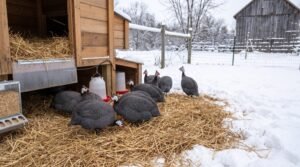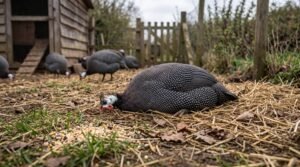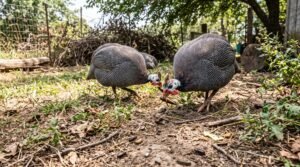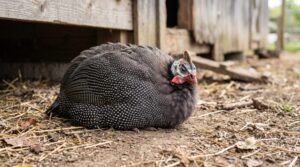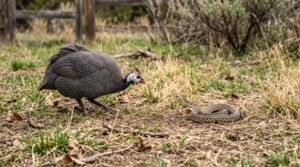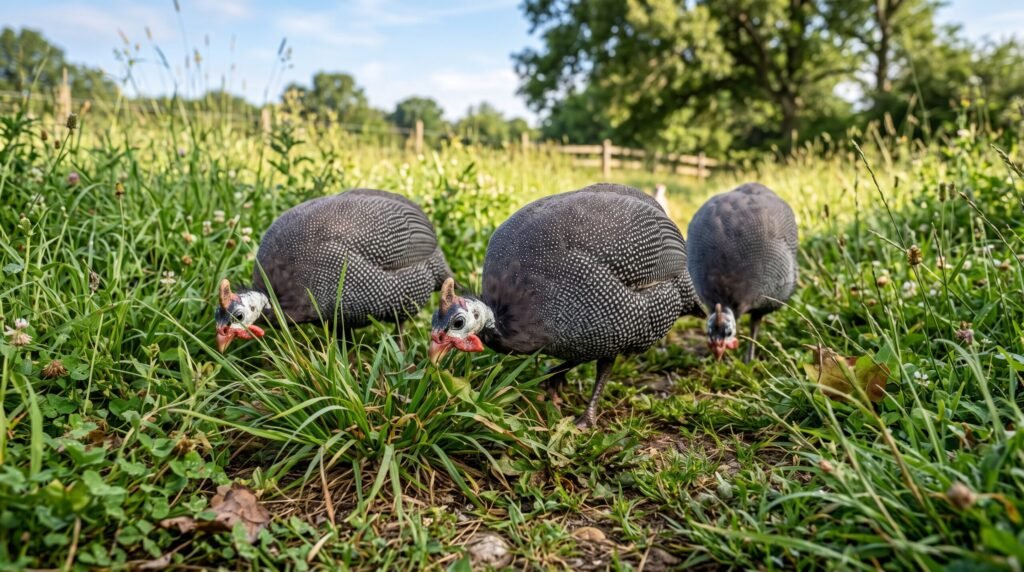
Guinea fowl do eat ticks, but research shows they’re not a standalone tick control solution — they reduce tick encounters in open areas they actively patrol, without eliminating tick populations or breaking the tick life cycle on their own.
I get asked about this constantly, usually by someone who just pulled a tick off their kid for the third time this month and saw a video online promising guinea fowl would fix it. I understand the appeal. But after keeping guineas myself and digging into what the actual research says, I want to give you the real picture — not the social media version.
The short answer: guineas help. They don’t work miracles.
Here’s what the evidence actually shows, and how to set realistic expectations if you’re considering guinea fowl as part of your tick management plan. If pest control is your main reason for wanting a flock, it’s also worth weighing the full picture in my guinea fowl pros and cons breakdown before you commit.
Before we get into the details, here’s the quick version for anyone short on time.
| Question | Answer |
|---|---|
| Do guinea fowl eat ticks? | Yes, confirmed by multiple studies |
| Do they reduce adult tick populations? | Sometimes, in open/managed areas |
| Do they reduce nymph populations? | No — studies found no significant effect |
| Can they eliminate ticks completely? | No |
| Best use case | One part of an integrated tick management plan |
| Ideal terrain | Open lawns, pastures, garden edges |
| Weak spot | Dense brush, leaf litter, wooded edges |
What the Research Actually Says
The “guineas eat thousands of ticks a day” claim has been floating around for decades, and it traces back to a small, often-misquoted study. Let’s separate what’s been tested from what’s just repeated online.
The Original Deer Tick Study
The most-cited research comes from botanist David Cameron Duffy, who studied helmeted guinea fowl and blacklegged (deer) ticks in New York in the early 1990s. His work found that free-ranging guinea fowl predation reduced the presence of ticks and other arthropods in the areas the birds patrolled.
That’s the good news, and it’s the study most tick-control articles point back to. But Duffy’s own conclusion is usually left out: guinea fowl alone shouldn’t be relied on for complete tick control, and they work best paired with other measures like repellents and habitat management.
The Lone Star Tick Study
A more recent study published in the Journal of Medical Entomology tested guinea fowl against lone star ticks specifically, using penned, excluded, and free-range treatment groups to measure how many ticks the birds actually removed. The results were less encouraging. The researchers turned up no proof that guinea fowl meaningfully control lone star tick numbers or lower the risk of tick-borne disease, and they also documented guinea fowl carrying lone star nymphs themselves.
That second part matters — a bird that’s supposed to be eating ticks was also carrying them.
What Penn State Extension Says
If you want the most balanced summary of the research, Penn State Extension’s entomology team put it plainly: guinea fowl and chickens both feed on ticks, but they don’t eat enough of them to meaningfully decrease tick populations. Their review of three North American studies found guinea fowl do consume adult ticks, and two of the three studies reported that this feeding reduced adult tick numbers.
The catch is nymphs — the smaller, harder-to-spot life stage responsible for most Lyme disease transmission. Two studies specifically looked at nymphal ticks and found guinea fowl had no measurable effect on that population. Worse, the birds served as hosts for nymphal ticks, which may actually help sustain tick numbers in an area rather than reduce them.
So the pattern that emerges across the research is consistent: guineas eat adult ticks they encounter in open ground, but nymphs — the ones you’re most likely to miss on your skin — pass through largely unaffected.
Why Guinea Fowl Help Anyway
None of this means guineas are useless for ticks. It means the internet oversold them.
On my own place, I’ve noticed the difference is real in the areas my flock actually works — the open yard, the paths between the coop and the garden, the mowed edges. Fewer ticks on my jeans after walking through those spots. Fewer of the “surprise” ticks behind the knee that used to be a daily nuisance in early summer.
A few things make guineas genuinely useful additions to a tick management plan:
- They forage as a coordinated group. Guineas line up and move across open ground together, flushing insects as they go, which makes them more thorough foragers than a single bird working alone.
- They cover more ground than chickens. Chickens tend to stick close to home and scratch a small area intensively. Guineas roam farther and patrol larger open spaces.
- They target more than ticks. Grasshoppers, beetles, small snakes, and other yard pests are all fair game, so foraging supplements much of what guinea fowl eat beyond their regular feed, and the pest-control benefit isn’t limited to one insect.
- They’re low-impact on gardens. Unlike chickens, guineas don’t scratch aggressively, so they’re less likely to tear up your landscaping while they work.
Where Guinea Fowl Fall Short
The same research and real-world reports point to consistent limitations, and being upfront about these will save you disappointment.
- They avoid dense cover. Guineas prefer open sky and clear sightlines. Thick brush, leaf litter, and wooded edges — exactly where ticks thrive — are places guineas tend to avoid.
- Nymphs slip through. As the extension research shows, the tick life stage most responsible for disease transmission isn’t meaningfully reduced by guinea foraging.
- Coverage depends on flock size and space. A couple of guineas on several wooded acres won’t make a dent. Homesteaders and hobby farmers online report wildly different results, and property layout is usually the deciding factor.
- They can host ticks too. Guineas aren’t immune to ticks landing on them, which means they can carry ticks around your property rather than only removing them.
- Daytime roaming has its own risks. Birds covering open ground for hours are also exposed to hawks and other predators, so it’s worth reading up on protecting guinea fowl from predators before you let a flock range freely.
How Many Guinea Fowl Do You Need?
This is the question I get the most, and the honest answer is: it depends heavily on your terrain, not just your acreage. Recommendations across keepers and small-farm sources vary widely, from roughly one bird per acre for basic coverage up to a bird per quarter-acre for more intensive patrol of open pasture. Wooded, uneven, or heavily brushy land will always need a larger flock — or more realistic expectations — than a flat, mowed yard of the same size.
A few practical guidelines:
- Start with at least 4–6 birds. Guineas are social and don’t do well alone, and a small starting flock also gives you a buffer against predator losses.
- Scale up for open acreage. For a few acres of mowed lawn, pasture, or garden edge, a flock in the 8–15 range is a reasonable working range for meaningful coverage.
- Don’t expect coverage in the woods. If your problem area is wooded or brushy, plan on guineas handling only the open perimeter, and address the rest with mowing, habitat clearing, or other methods.
- Give them a season to establish routine. New guineas typically take time to settle into a consistent foraging pattern across your property, so don’t judge results in the first few weeks.
If you’re just getting your flock going, my week-by-week guide to raising guinea keets walks through the early weeks that set up a strong, well-imprinted patrol flock later on.
Guinea Fowl as Part of an Integrated Approach
The research is consistent on one point: guinea fowl work best as one layer of tick management, not the whole strategy. Pairing them with habitat changes tends to produce far better results than birds alone.
Some measures that complement what your flock is already doing:
- Keep grass mowed short in high-traffic areas, since ticks struggle to climb onto hosts from short grass the way they can from tall vegetation.
- Clear leaf litter and brush along walkways and yard edges — the same areas guineas tend to avoid.
- Create a mulch or gravel barrier between wooded areas and lawns to reduce tick migration into spaces your flock patrols.
- Check pets and family members regularly during peak tick season regardless of how well your flock seems to be working.
- Consider your broader flock setup. If you’re weighing guineas against chickens for your property, my guinea fowl vs. chicken comparison covers more of the practical trade-offs beyond pest control alone.
Frequently Asked Questions
Do guinea fowl eat more ticks than chickens? Guineas tend to cover more ground since they roam and forage in groups across open areas, while chickens work smaller zones more intensively closer to the coop. Neither has been shown in controlled studies to eliminate tick populations on its own.
Will guinea fowl protect me from Lyme disease? Not reliably. Since the ticks most responsible for spreading Lyme disease are typically nymphs, and research hasn’t shown guinea foraging meaningfully reduces nymph numbers, guineas shouldn’t be treated as a stand-alone Lyme prevention method.
How long does it take to notice a difference after getting guinea fowl? Most keepers report needing at least one full season, sometimes two, before seeing a consistent drop in tick encounters in the areas their flock actively patrols.
Can too few guinea fowl actually be pointless for tick control? Yes. A pair of guineas on several acres of mixed terrain is unlikely to make a noticeable dent. Coverage depends on having enough birds relative to the open ground you want patrolled.
Guinea fowl are a genuinely useful piece of a tick management plan, especially if you have open pasture or yard space they can patrol daily — but they’re not a fence against ticks, and the research backs that up. If you’re dealing with a serious tick problem, treat your flock as one tool among several rather than the whole solution.
Have you kept guineas for tick control? I’d love to hear whether your experience matched what the studies show, especially if your property has a mix of open and wooded ground — drop a comment and let me know what’s worked for you.
Hi, I’m Rayyan. I raise guinea fowl and share practical, research-backed guides for backyard keepers and homesteaders. I combine hands-on flock experience with trusted poultry management and university extension resources to help you raise healthier, more productive birds — with confidence, not guesswork.