Raising guinea fowl for the first time means preparing for a bird that behaves nothing like a chicken: louder, more independent, and far better at pest control. This guide covers what guinea fowl need in terms of housing, feed, health care, and daily management, along with the early decisions that determine whether a first flock succeeds or struggles.
Guinea fowl (Numida meleagris) are domesticated game birds valued for tick and insect control, alarm-calling against predators, and lean meat production. Unlike chickens, they retain strong flocking and foraging instincts even after generations of domestication, which shapes nearly every part of how they’re housed, fed, and handled.
Guinea Fowl Care at a Glance
The table below summarizes the core requirements covered in this guide, useful as a quick reference before diving into each topic in detail.
| Category | Key Requirement |
|---|---|
| Brooder temperature | 95°F (35°C) for week one, reduced 5°F per week until fully feathered |
| Time to full feathering | 6–8 weeks |
| Starter feed protein | 24–26% game bird or turkey starter for the first 5 weeks |
| Space per bird (coop) | 3–4 square feet minimum |
| Incubation period | 26–28 days |
| Age at first lay | 16–17 weeks (typically spring of the following year) |
| Flock size minimum | 3–4 birds (guineas are highly social and stress in isolation) |
| Noise level | Significantly louder than chickens; a factor in zoning and neighbor relations |
| Lifespan | 10–15 years with predator protection |
Deciding Whether Guinea Fowl Fit Your Property
Guinea fowl thrive on properties with open space for foraging, tolerance for loud alarm calls, and either rural zoning or neighbors who won’t mind the noise. They are a poor fit for small suburban lots, properties with strict HOA noise covenants, or households wanting a quiet, contained bird.
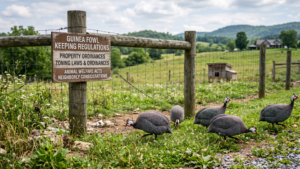
The single most important early decision is whether your specific property supports free-ranging. Guinea fowl kept permanently confined lose much of their value as insect and tick controllers, and confinement stress can increase aggression and health problems in the flock. Before acquiring birds, check local ordinances and any HOA restrictions, since some municipalities classify guinea fowl separately from backyard chickens due to their noise output. A detailed breakdown of zoning classifications and permit requirements can help confirm whether guineas are legal on your property before you buy anything.
Guinea fowl also don’t integrate with every existing flock. They’re more aggressive foragers than chickens and can out-compete slower breeds for food, though they generally coexist peacefully with chickens once established together as keets. Reviewing the full list of benefits guinea fowl offer homesteaders alongside the trade-offs of keeping a flock gives a more complete picture before committing.
Choosing How to Start Your Flock
First-time keepers can start with hatching eggs, day-old keets, or adult birds, and each path carries different cost, timeline, and difficulty trade-offs. Hatching eggs are the cheapest entry point but require an incubator and carry the lowest hatch success rate for beginners, since guinea eggs have unusually hard shells that complicate candling and moisture management. Day-old keets are the most common starting point because they bond to their environment and handlers from an early age. Adult birds skip the fragile keet stage entirely but are harder to source, more expensive per bird, and slower to bond to a new property, sometimes attempting to return to their original location if free-ranged too soon after relocation.
A side-by-side comparison of startup cost, timeline to maturity, and difficulty level for each acquisition method is useful for matching the decision to your available time and budget.
Minimum Flock Size
Guinea fowl are flock-dependent birds that show elevated stress and higher predation risk when kept alone or in pairs. A minimum starting flock of 3–4 birds is recommended for a stable social group. Sex ratios matter for breeding purposes: one male can service 4–5 females in a free-range setting, or up to 6–8 in closer confinement.
Brooding Keets: The First 8 Weeks
Newly hatched keets require a brooder temperature of 95°F (35°C) for the first one to two weeks, reduced by 5°F each subsequent week until the birds are fully feathered, typically around 6–8 weeks of age. Guinea keets are more sensitive to dampness and chilling than chicken chicks during their first two weeks, and cold stress during this window is a leading cause of early keet mortality.
Behavioral cues indicate whether brooder temperature is correctly calibrated: keets huddled directly under the heat source are too cold, keets pushed to the brooder’s edges are too hot, and keets spread evenly throughout the space indicate correct temperature. A brooder guard or draft shield around the heat source prevents keets from wandering into cold corners during the first week.
Feeding Keets
Guinea keets need a higher-protein starter than chicken chicks. A 24–26% protein game bird or turkey starter is recommended for the first 5 weeks, after which keets can transition to a standard 18–20% chick starter. A 16% layer ration is appropriate once birds reach 12 weeks of age. Medicated starter feed is commonly used in humid climates, where coccidia organisms proliferate more readily and young keets have limited natural resistance.
Moving Keets Outdoors
Keets can typically leave the brooder and move to outdoor housing between 6 and 8 weeks of age, once fully feathered and able to regulate their own body temperature. Nighttime temperatures below 59°F (15°C) call for an additional two weeks of supplemental heat before keets are moved outside full-time. Early outdoor trips should use a covered run, since keets panic easily and will attempt to fly over low fencing if startled.
Housing and Coop Requirements
Guinea fowl need secure, predator-proof housing with roosting space, since adult guineas naturally prefer to roost as high as possible rather than nesting on the ground like chickens. A minimum of 3–4 square feet of interior coop space per bird prevents overcrowding-related pecking and stress, though guineas that free-range during the day need less indoor space than birds kept in continuous confinement.
Roosting bars should be placed higher than chicken roosts where possible, since guinea fowl instinctively seek elevated perches and will attempt to roost in trees if the coop doesn’t offer sufficient height. Predator-proofing matters more for guineas than for many chicken breeds, since guineas rely on flight and alarm-calling rather than aggression to evade predators, leaving them vulnerable during confinement hours if fencing or hardware cloth has gaps.
For specifics on coop dimensions, fencing materials, and predator-proofing techniques, see the housing and equipment resources covering structural requirements for guinea fowl specifically, which differ from standard chicken coop plans in roost height and run coverage.
Feeding Adult Guinea Fowl
Free-ranging adult guinea fowl consume a significant portion of their diet through foraging, including ticks, grasshoppers, beetles, and other insects, which reduces supplemental feed costs compared to fully confined poultry. A 16% protein layer ration is standard for adults not actively breeding, with intake naturally dropping during peak insect season and rising again in colder months when foraging yields less food.
Grit should always be available alongside feed, since guinea fowl lack teeth and rely on grit in their gizzard to mechanically break down both feed and foraged insects. Clean water must be accessible at all times, particularly during hot weather when guineas are most active and foraging most heavily.
Full budgeting details, including monthly and annual feed cost estimates, are covered in the cost breakdown for keeping guinea fowl, which separates startup expenses from ongoing annual costs.
Guinea Fowl Behavior: Noise, Free-Ranging, and Flock Dynamics
Guinea fowl are considerably louder than chickens, and their alarm calls, triggered by anything from predators to unfamiliar vehicles, can carry significant distances. This single trait is the most common reason first-time keepers reconsider guinea fowl after their first season, and it’s worth weighing seriously before acquiring birds on a property with close neighbors.
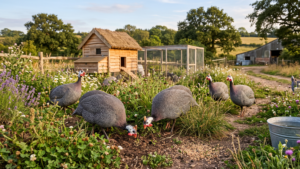
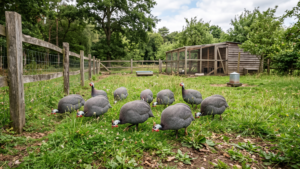
On the benefit side, that same alarm-calling instinct makes guinea fowl effective early-warning systems for predators approaching chicken coops, gardens, or livestock enclosures. Free-ranging guinea fowl also cover far more ground than chickens, often ranging several acres per day in search of insects, which makes them notably effective for tick control on larger rural properties.
Training guineas to return to the coop at dusk takes more patience than training chickens, since the flocking instinct is strong but the domestication-driven “homing” behavior is weaker. Consistent evening feeding at the same location and time, starting from the keet stage, is the most reliable method for establishing a reliable return-to-coop habit.
Breeding, Egg Production, and Incubation
Guinea hens typically begin laying between 16 and 17 weeks of age, with laying concentrated in a defined spring-through-fall season rather than year-round production. A hen from a well-managed flock can produce 100 or more eggs per year, laid in clutches rather than a steady daily pattern. Hens that are allowed to go broody after accumulating roughly 30 eggs will pause laying to incubate rather than continuing to produce.
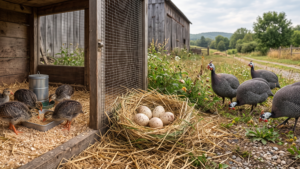
Guinea eggs have unusually hard, thick shells compared to chicken eggs, which complicates both candling for fertility checks and artificial incubation timing. Incubation runs 26–28 days, longer than a chicken’s 21-day period, and eggs need to be turned regularly for roughly the first 23–25 days before being left undisturbed through hatch. Guinea hens themselves aren’t always reliable brooders, so many keepers use a broody chicken hen or an incubator instead to improve hatch consistency.
Health, Predators, and Common First-Year Problems
Guinea fowl are generally hardier and more disease-resistant than chickens once past the vulnerable keet stage, but they aren’t immune to poultry health issues. Coccidiosis remains the most common early-life threat, particularly in humid conditions, which is why medicated starter feed is widely used for the first several weeks. Beyond the brooder stage, routine health monitoring should watch for lethargy, reduced foraging activity, and changes in droppings, any of which can signal parasites or infection.
Predator losses are typically higher for guinea fowl than for chickens confined to a run, since free-ranging birds spend more unsupervised time exposed to hawks, foxes, and other predators. Secure nighttime housing addresses the largest share of predator risk, since most losses occur when birds fail to return to a protected coop before dusk.
A number of avoidable errors account for most early flock losses and setbacks, from releasing keets outdoors too early to underestimating fencing needs. The common first-time mistakes guide covers these pitfalls in detail, alongside how to avoid each one.
Choosing a Breed or Variety
Guinea fowl come in multiple color varieties, including Pearl, Lavender, White, Royal Purple, and Buff Dundotte, among others, though all varieties share the same core care requirements. Color variety is largely a matter of preference rather than a factor affecting temperament, egg production, or hardiness, though some hatcheries note subtle differences in visibility to predators between lighter and darker varieties in open pasture settings. A closer look at available breeds and color varieties can help with selecting keets or hatching eggs based on appearance and source availability.
Frequently Asked Questions
How many guinea fowl should a beginner start with?
A minimum of 3–4 birds is recommended for a first flock, since guinea fowl are highly social and show elevated stress when kept alone or in pairs. Starting with a slightly larger group, such as 6–8 birds, also provides a buffer against the higher predator losses common in the first year of free-ranging.
Do guinea fowl need a coop, or can they roost outside?
Guinea fowl need secure, predator-proof housing at night even if they free-range during the day. Their preference for high roosting makes coops with elevated perches more effective than standard ground-level chicken housing, and birds without secure housing face significantly higher predator losses.
How long does it take for guinea keets to mature?
Keets reach full feathering and can move outdoors around 6–8 weeks of age, reach roughly 1.5 kg of body weight by 16 weeks, and begin laying eggs starting around 16–17 weeks old. Full adult size and behavior typically stabilize by 6 months.
Can guinea fowl be raised alongside chickens?
Guinea fowl and chickens can share a coop and run, particularly when raised together from the keet stage so both species become accustomed to each other. Guineas tend to be more assertive foragers, so feed access and space should be monitored to prevent chickens from being consistently out-competed.
Why are guinea fowl so loud, and can the noise be reduced?
Guinea fowl use loud alarm calls as their primary predator-defense mechanism, triggered by unfamiliar sounds, movement, or approaching animals. The noise level can’t be trained away, since it’s an instinctive response, which makes property size and neighbor proximity important factors to evaluate before acquiring birds.
What do guinea fowl eat besides commercial feed?
Free-ranging guinea fowl consume large quantities of ticks, grasshoppers, beetles, and other insects, which reduces their reliance on commercial feed compared to confined poultry. Supplemental grit should always be available alongside whatever feed ration is used, since guineas need it to digest both feed and foraged food.