Helmeted guinea fowl are hardy, ground-dwelling birds known for their speckled slate-grey feathers, bony head casque, and loud alarm calls, and they thrive on a mostly foraged diet supplemented with a higher-protein feed than chickens need. If you’ve ever watched a flock of them tearing across a yard in a tight little mob, you already know they’re not quite like any other poultry you’ve raised.
I still remember the first time my guineas spotted a hawk circling over the pasture. The racket was unbelievable — that harsh, rattling alarm call bouncing off the barn walls — and every bird in the flock froze at once. That’s the moment I understood these birds weren’t just “weird chickens.” They’re something else entirely, built by evolution to survive on the open savanna, and that history shapes almost everything about how you need to feed, house, and care for them.
This guide walks through what makes helmeted guinea fowl unique, what they actually need to eat, and how to set up housing that keeps them safe without fighting their instincts. By the end, you’ll know whether these birds are a fit for your place and exactly how to get started.
Here’s a quick overview of the core traits and needs covered in this guide.
| Category | Key facts |
|---|---|
| Origin | Native to sub-Saharan Africa; domesticated helmeted guinea fowl (Numida meleagris) |
| Appearance | Slate-grey, white-speckled feathers; bare blue-and-red head; bony casque on top of the skull |
| Lifespan | Roughly 10–15 years with good care |
| Egg production | Around 90–130 eggs per year, laid seasonally from spring through fall |
| Adult protein needs | About 16–20% protein, higher than a standard chicken layer ration |
| Keet (chick) protein needs | 24–26% protein for the first four weeks |
| Housing space | Minimum 4 sq ft per bird in the coop; 10+ sq ft per bird in an outdoor run |
| Temperament | Alert, social, loud, prone to roaming and roosting in trees |
What Is a Helmeted Guinea Fowl?
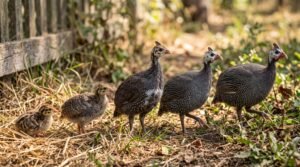
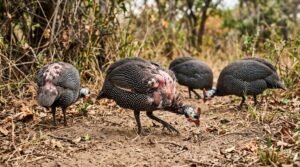
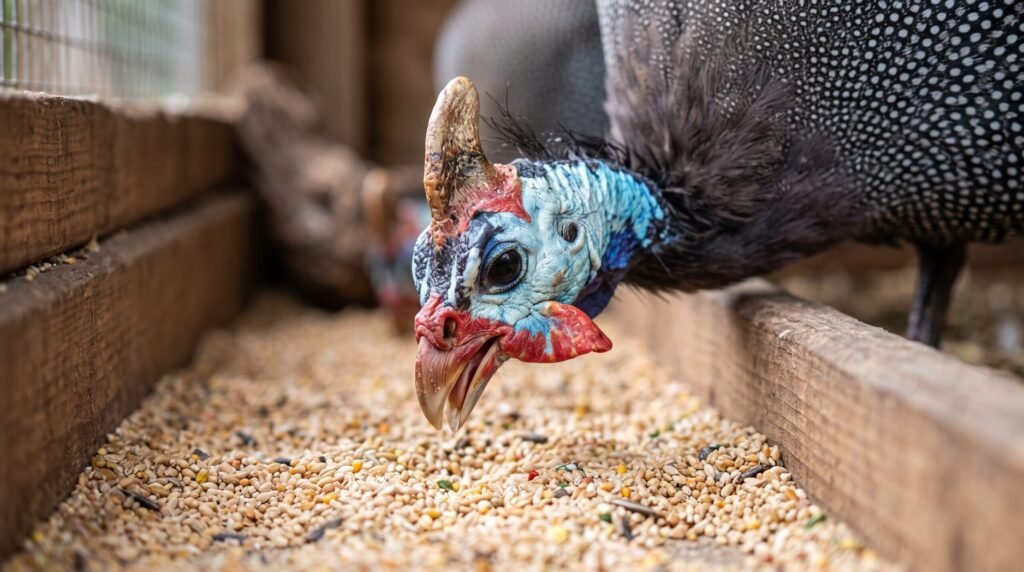
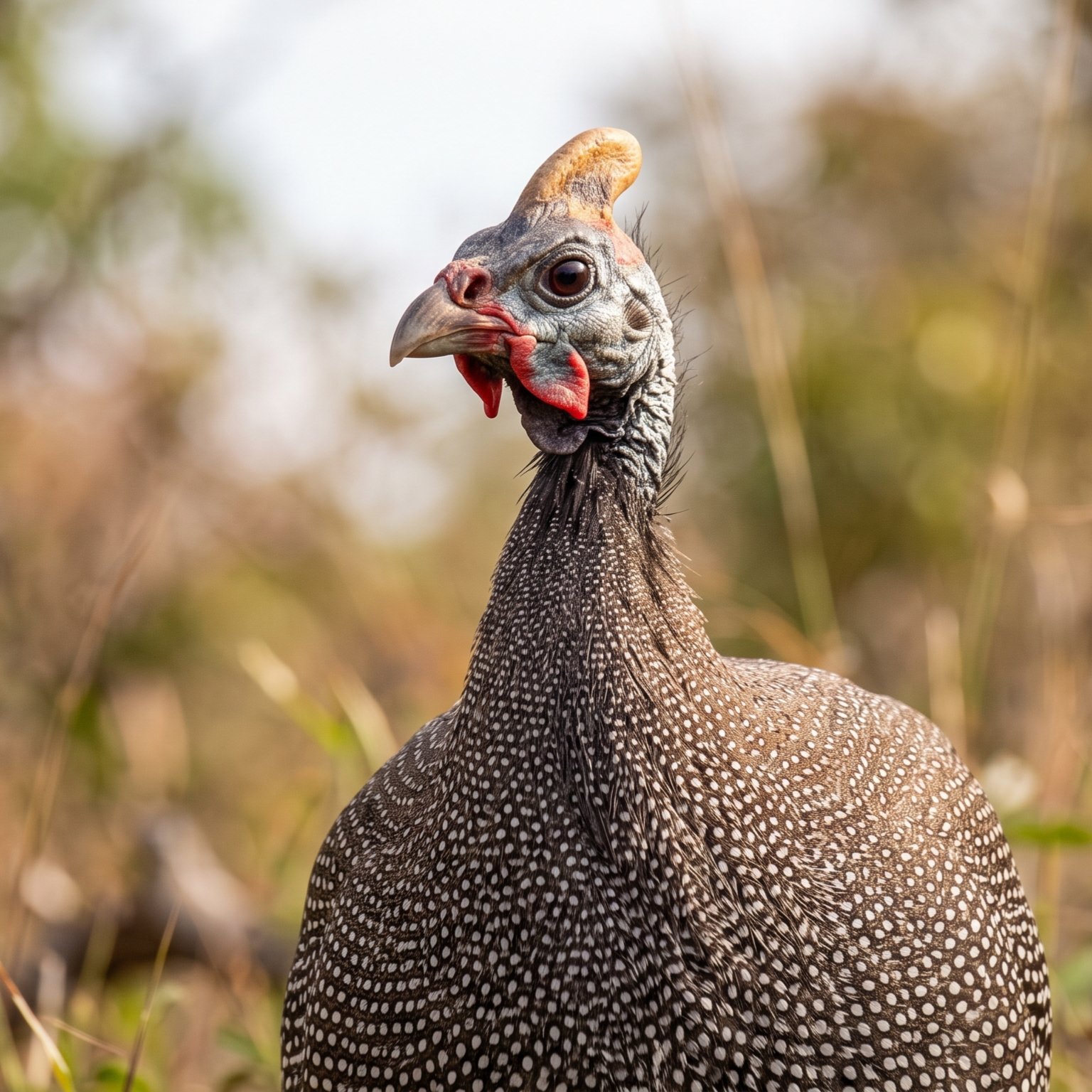
The helmeted guinea fowl gets its name from the hard, bony “helmet,” or casque, sitting on top of its skull — a feature both males and females carry, though it tends to run larger on males. Underneath that casque is a face of bare, warty skin in shades of blue, white, or red, framed by small red wattles.
The body itself looks almost humpbacked, covered in slate-grey feathers scattered with hundreds of uniform white spots. It’s a distinctive look, and it’s the reason “pearl” is the most common variety name you’ll see at hatcheries — the spotting resembles strings of pearls across dark fabric.
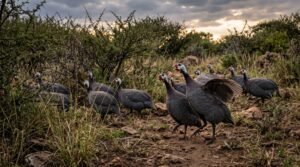
In the wild, these birds range across most of sub-Saharan Africa, favoring open grassland and scrub where they can forage and keep a clear line of sight for predators. That heritage explains a lot about their behavior today: guineas are runners first, fliers second, and they’d rather cover ground on foot than take to the air unless something’s chasing them.
Key Traits of Helmeted Guinea Fowl
Before you bring guineas home, it helps to understand the traits that set them apart from chickens, ducks, or turkeys. These aren’t minor quirks — they shape your fencing, your coop design, and your daily routine.
- Loud and vocal. Guineas are famous for their harsh, repetitive alarm calls, which is exactly why many people keep them as a living security system against hawks, foxes, and even snakes. If the noise is becoming an issue in your situation, I’ve written about why guineas get so noisy and what you can realistically do about it.
- Strong fliers for a ground bird. Despite preferring to run, guineas can fly well and will readily use that ability to escape a pen or roost up in trees at night.
- Highly social flock birds. They rarely thrive alone; guineas do best in groups and will pace fence lines calling for flockmates if separated.
- Excellent foragers. A guinea’s day revolves around walking — often several miles — while hunting insects, seeds, and greens, which is part of why they’re so effective at tick and pest control.
- Cold-hardy but snow-averse. These birds tolerate freezing temperatures reasonably well but often refuse to walk through snow, so they need dry ground or bedding to move around on in winter.
- Not naturally coop-trained. Unlike chickens, guineas don’t have a strong instinct to return to a henhouse at night, so early training is essential if you want them roosting somewhere predator-safe.
What Do Guinea Fowl Eat?
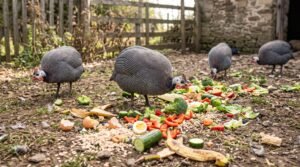
Guinea fowl are omnivores with a genuine appetite for insects, and that appetite is part of why so many keepers add them to a property — a single flock can make a real dent in the tick and grasshopper population over a season. But foraging alone won’t meet their nutritional needs, especially for growing keets or laying hens, so a formulated feed still matters. If you want the full breakdown by age and season, I go into a lot more depth in my complete feeding guide.
Protein needs by life stage
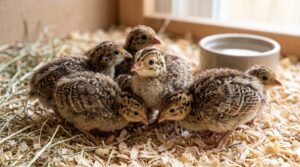
Guinea fowl need noticeably more protein than chickens at every stage of life. According to Kentucky Cooperative Extension’s guinea fowl publication, keets require a starter ration of roughly 24 to 26 percent protein, dropping to 18–20 percent from about the fifth to eighth week, before transitioning to a standard 16 percent layer feed. Peer-reviewed feeding research backs up a similar pattern, recommending protein levels stepping down from the mid-20s in the first month to around 16 percent by 8–12 weeks.
- Keets (0–4 weeks): 24–26% protein starter, unmedicated
- Growing keets (5–8 weeks): 18–20% protein
- Adult layers/non-breeders: roughly 16–20% protein, depending on the source
- Breeding stock: commonly formulated around 17–19% protein with adjusted calcium and energy levels
I feed my own keets a game bird or turkey starter for the first several weeks rather than standard chick starter, since most chick feeds don’t come close to that protein target. It’s a small switch, but it makes a visible difference in how quickly the keets feather out.
Feed form and supplements
Extension guidance is consistent on one point: guinea fowl should be fed mash or crumbles rather than pellets, which they tend to handle poorly compared to other poultry. Grit should always be available once birds are eating plant material, since guineas — like all gallinaceous birds — need it to grind food in the gizzard. Laying hens also benefit from a calcium source such as oyster shell if their base feed isn’t already balanced for egg production.
Guineas that free-range will supplement a huge portion of their diet on their own — bugs, weed seeds, tender greens, even small frogs or lizards if given the chance. If your flock has generous range access, you can often ease back slightly on how much commercial feed you’re offering, though I’d still keep feed available at all times rather than rationing it, especially heading into egg-laying season. Not sure how much to buy each month? My feed calculator can give you a rough estimate based on flock size and age.
Guinea Fowl Housing and Coop Requirements
Housing is where guinea fowl differ from chickens most dramatically, and it’s the area where new keepers run into the most frustration. These birds are strong, motivated flyers, and a coop designed for chickens often isn’t secure enough to hold them. I cover coop setup step by step in my guinea fowl housing guide if you want the full walkthrough — here’s the short version.
Space requirements
Recommendations vary a bit by source, but the consensus lands in a similar range:
- Coop floor space: a minimum of about 4 square feet per bird when guineas are shut in overnight or during bad weather, based on figures from the Guinea Fowl Breeders Association and multiple extension sources.
- Outdoor run space: at least 10 square feet per bird if the run is the birds’ only outdoor access, with many experienced keepers recommending 15–20 square feet per bird to reduce stress and pacing behavior.
- Fencing height: guineas can clear low fences easily, so runs need to be at least 6 feet tall, and fully covered runs are common for keepers who don’t want their flock roosting in nearby trees.
If you’re still sketching out your layout, plugging your flock size into my coop size calculator is an easy way to land on square footage before you start building. And if you want inspiration for the actual structure, I’ve rounded up several coop design ideas that work well for guineas specifically.
Roosting, ventilation, and predator-proofing
Guineas strongly prefer roosting up high, so plan for roosting bars set at multiple heights rather than a single low perch. Good ventilation matters just as much as space — moisture buildup in a coop encourages mold and respiratory problems, so cross-breezes near the roofline (without direct drafts on the roosts) go a long way.
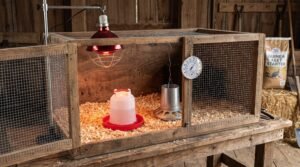
Because guineas don’t automatically head for a coop at dusk the way chickens do, training is part of the housing plan, not separate from it. Brooding keets in the space you eventually want them to roost in is one of the more reliable ways to get adult birds to treat that structure as home. I’ve had the best luck keeping young keets confined to the coop and attached run for several weeks before ever giving them full range — by the time they’re loose, the coop already feels like theirs.
For bedding, wood shavings, chopped straw, or hay all work well as absorbent litter, and if you keep it dry, it can often go months between full changes with light spot-cleaning in between.
General Care Tips
Beyond feeding and housing, a few care basics keep a guinea flock healthy and manageable:
- Keep a flock of at least six birds. Guineas are deeply social and don’t do well isolated; small groups reduce stress-related issues and predator vulnerability.
- Provide fresh water at all times, especially during hot weather when active foraging birds can dehydrate quickly.
- Watch keets closely for the first few weeks. Young guineas are notably sensitive to damp conditions, and chilling in wet grass is a leading cause of early keet losses.
- Expect seasonal egg laying. Hens typically lay from spring through fall and stop as daylight shortens, so don’t expect winter production — I break down realistic yearly totals in how many eggs guinea fowl actually lay.
- Talk to neighbors before free-ranging. Guineas don’t recognize property lines, and their volume carries — a heads-up avoids surprises.
Frequently Asked Questions
How long do helmeted guinea fowl live?
With reasonable care, helmeted guinea fowl commonly live between 10 and 15 years, though egg production tends to slow noticeably after their first two to three productive seasons.
Can guinea fowl live with chickens?
Yes, guinea fowl generally coexist with chickens, ducks, and other poultry without major issues, though roosters and guinea cocks can sometimes clash. Many keepers house mixed flocks successfully as long as there’s enough space for guineas to move and roost the way they prefer.
Do guinea fowl need a special coop, or will a chicken coop work?
A standard chicken coop can work as a starting point, but it usually needs modifications — taller fencing, a fully covered run, and higher roosting bars — to account for how well guineas fly and how strongly they prefer height.
Why are my guinea fowl so loud?
Loud, repetitive calling is largely instinctive alarm behavior tied to their wild heritage as prey animals on open ground, and it ramps up around perceived threats, breeding season, or simply flock excitement.
Guinea fowl aren’t a low-maintenance version of chickens — they’re their own animal, with their own instincts, appetite, and volume. But once you feed them right and give them housing that respects how they actually behave, they tend to reward you with fewer pests, tougher constitutions, and a lot of character. If you’re weighing whether they’re the right addition to your flock, my guide on guinea fowl pros and cons is a good next stop, and if you’re ready to get started, I’d also recommend working through a complete beginner’s guide to guinea fowl farming before your first keets arrive.
Have you kept guineas before, or are you considering your first flock? I’d love to hear what’s pulling you toward — or holding you back from — adding them to your place.
Hi, I’m Rayyan. I raise guinea fowl and share practical, research-backed guides for backyard keepers and homesteaders. I combine hands-on flock experience with trusted poultry management and university extension resources to help you raise healthier, more productive birds — with confidence, not guesswork.