If you’re new to guinea fowl, the biggest mistake you can make is treating them like feathered chickens. They’re not. Guinea fowl are louder, more independent, more prone to wandering, and far less forgiving of shortcuts in housing, flock size, and training than most beginners expect.
I made a few of these mistakes myself in my first year, and I’ve heard from enough other keepers to know they’re not rare. The good news is that almost every one of them is preventable once you know what to watch for.
Here are the ten mistakes I see beginners make most often, and what to do instead. If you haven’t started your flock yet, it’s worth reading through how to start guinea fowl farming first, since a lot of these mistakes trace back to decisions made in week one.
1. Expecting Them to Act Like Chickens
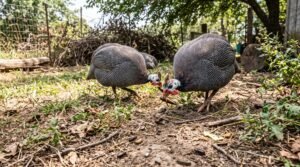
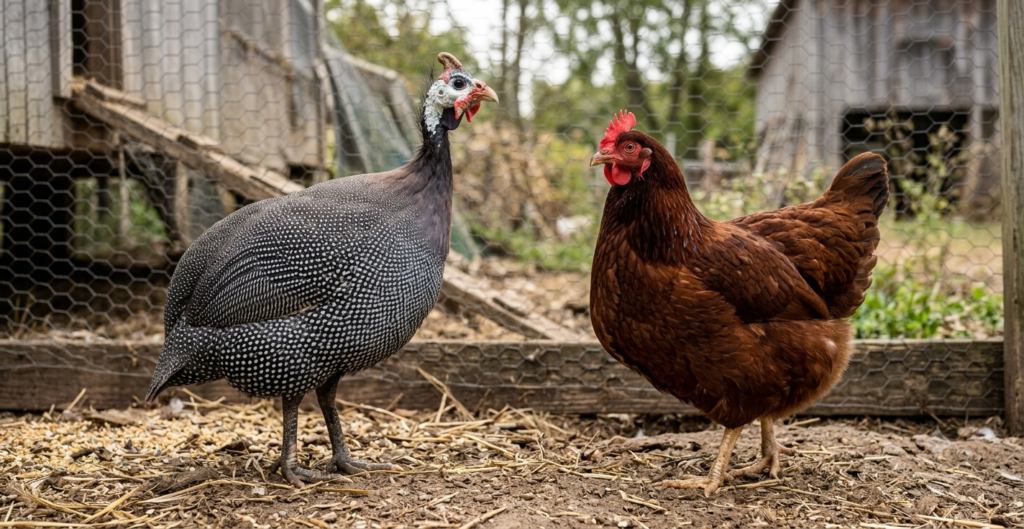
This is the root mistake almost everyone makes, because guinea fowl look like they should behave like backyard chickens. They don’t. Guineas are more independent, considerably noisier, and much harder to herd or contain once they’ve made up their mind about something.
Chickens tend to settle into domesticity fairly easily. Guineas retain a lot of wild instinct even after generations of domestication, and they’ll remind you of that the first time you try to pick one up.
The fix: Go in with different expectations from day one. Read up on natural guinea behavior before you bring birds home, and resist comparing their habits to your chicken flock. Once you stop expecting chicken-like behavior, most of what guineas do stops feeling like a problem and starts feeling like, well, just what guineas do.
2. Underestimating the Noise
Guinea fowl are loud. Not “occasionally loud,” but capable of sustained, piercing alarm calls that carry across a neighborhood. Beginners often don’t grasp this until their first flock spots a delivery truck, a stray cat, or a shadow that looks vaguely predator-shaped.
That vigilance is exactly why people keep guineas in the first place — they make excellent early-warning systems against predators. But if you have close neighbors or live under noise ordinances, this is worth thinking through before you buy keets, not after.
The fix: Talk to your neighbors ahead of time, check local noise regulations, and if quiet is essential, consider a smaller flock or a different breed direction entirely. For a deeper look at what drives the noise and how to manage it, see why guinea fowl are so noisy.
3. Keeping Too Few Birds
A single guinea fowl, or even a pair, is a recipe for a stressed, restless bird. Guineas are strongly flock-oriented; in the wild they move in groups of around 30, and that social instinct doesn’t disappear in a backyard setting.
Keepers often report that a lone guinea won’t settle and will call constantly, searching for company. Beginners regularly start with two or three birds thinking that’s plenty, only to find the birds anxious and difficult to manage.
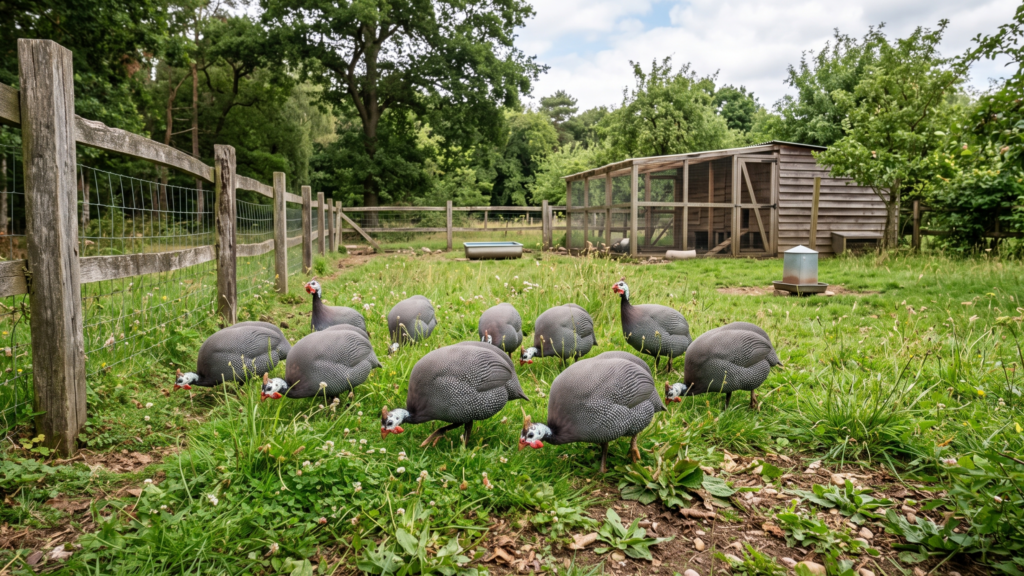
The fix: Most experienced keepers recommend starting with at least six to ten birds if you can manage the space, and never fewer than three. Larger numbers actually make guineas easier to keep, since the flock’s natural instincts get directed at each other rather than at your chickens or you.
4. Skipping the Confinement Period
This might be the single most common — and most costly — beginner mistake. New keepers get keets, watch them grow, and want to let them free-range as soon as possible. But guinea fowl need a genuine confinement period before they’re allowed to roam, or they simply won’t come home.
Young guineas imprint on their environment. Keep them in their coop and attached run for six to eight weeks, and they’ll treat that spot as home for life. Skip that step, and you risk birds that roost in trees, wander onto neighboring properties, or never return at all. University of Kentucky’s poultry extension program recommends confining new guineas for at least a week or two before releasing even one bird at a time, since a lone guinea won’t wander far and gradually learns the layout of its new home.
The fix: Be patient. Keep keets confined to the coop and an attached grow-out pen for at least six weeks, ideally eight, before opening the door. My own flock’s first “escape” happened because I let them out two weeks early — half of them roosted in a neighbor’s pine tree that night, and it took a week of coaxing with feed to get them back into a routine.
5. Housing Them Like Chickens
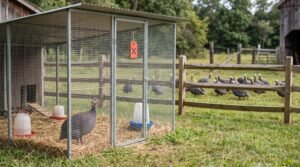
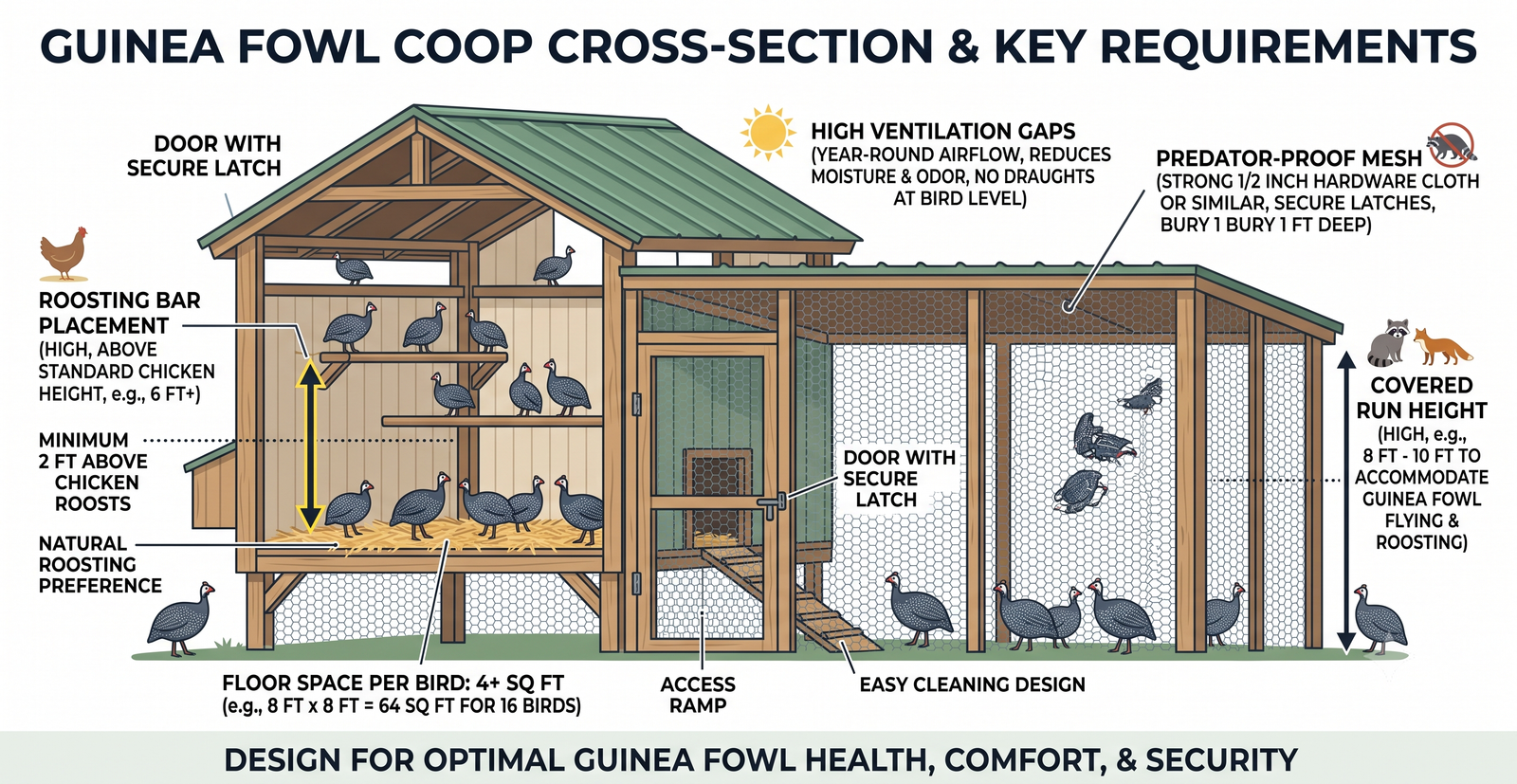
Guinea fowl housing looks similar to a chicken coop at first glance, but a few differences matter enormously. Guineas are strong fliers, capable of covering hundreds of feet in a single flight, so open-topped runs that work fine for chickens won’t contain them. They also prefer to roost higher than chickens do, and a poorly ventilated or undersized coop leads to stress, disease, and pecking problems.
The fix: Cover the run completely, not just fence it. Confined guineas need roughly 2 to 3 square feet of floor space per bird, according to extension guidance from the University of Kentucky’s poultry program, and unheated shelters are best left uninsulated, since trapped moisture causes more respiratory problems than cold air does. Install roosting bars set higher than you would for a standard chicken coop. For full specifications, see the guinea fowl housing guide.
6. Assuming They Don’t Need Extra Protein
Guinea fowl forage aggressively and can meet a good portion of their own nutrition once they’re free-ranging adults, which leads some beginners to under-feed them or assume a standard layer feed is enough. Keets in particular need considerably more protein than chicks do to support their faster early growth.
The fix: Start keets on a game bird starter feed with a higher protein percentage than standard chick starter. Kentucky’s extension guidance puts keet starter feed at 24 to 26 percent protein, stepping down to 18 to 20 percent by the fifth to eighth week, before moving to a standard layer ration after that. Keep grit and calcium sources like crushed oyster shell available once they’re laying. For the full breakdown by age and season, see what guinea fowl eat.
7. Not Predator-Proofing Early Enough
Guinea fowl are excellent at spotting predators as adults, but keets and even young adults are vulnerable, and a poorly secured coop is one of the fastest ways to lose birds in the first few months. Beginners sometimes assume the birds’ natural alertness is enough protection on its own — it isn’t, especially at night or during the vulnerable keet stage.
The fix: Predator-proof the coop and run before your birds ever arrive, not after the first loss. That means buried or apron-style fencing to stop digging predators, secure latches that raccoons can’t open, and a fully covered top to block aerial threats like hawks. Walk through the details in how to protect guinea fowl from predators.
8. Mixing Genders Without a Plan
New keepers often buy a straight run of keets without thinking about the eventual male-to-female ratio, and end up with too many males in a small flock. Excess males can lead to fighting, stress, and excessive noise, particularly during breeding season.
The fix: If you can, sex your birds once they’re old enough to vocalize distinctly, and aim for a ratio of roughly one male to every three or four females in a mixed flock. If you’re not raising for breeding, an all-female or heavily female-skewed flock is often calmer.
9. Ignoring Seasonal Care Needs
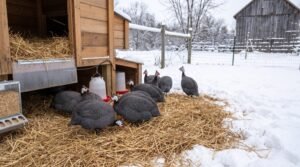
Guinea fowl are hardy, but they’re originally an African species and don’t handle wet, cold conditions as gracefully as some cold-adapted chicken breeds. Beginners in colder climates sometimes assume their guineas will be fine with the same winter setup as their chickens, and end up dealing with frostbitten wattles or reluctant, stressed birds during snow.
The fix: Give them a dry, draft-free space to retreat to in winter, and don’t force them outside in snow, since guineas generally avoid it on their own if given the choice. Summer brings its own risks, particularly heat stress during free-ranging hours. For season-specific guidance, see guinea fowl winter care and guinea fowl summer care.
10. Underestimating Egg-Laying Habits
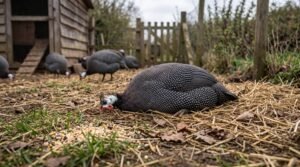
Guinea hens don’t reliably use nest boxes the way chickens do. Many beginners set up a coop expecting tidy nest-box collection, only to discover their hens have been laying in a hidden nest somewhere out in the field for weeks. It’s a common surprise, and one that can mean losing a whole clutch of eggs to weather or predators before you even know it exists.
The fix: Expect to do some searching during laying season, especially if your flock free-ranges. Guinea hens tend to favor hidden, sheltered spots over open nest boxes, so a little scouting around brush piles or tall grass often pays off. For the full picture on their laying patterns, see how many eggs guinea fowl lay per year.
Final Thoughts
Almost every mistake on this list comes down to the same root cause: treating guinea fowl like small, weird chickens instead of the distinct species they are. Once you adjust your expectations around their noise, their independence, their flock size needs, and that crucial early confinement period, guineas turn into one of the lowest-maintenance, most useful birds you can keep on a homestead.
Start with patience during those first eight weeks, keep the flock big enough to satisfy their social instincts, and predator-proof before you need to, not after. Do that, and most of these mistakes never happen in the first place.
Which of these caught you off guard when you started? I’d love to hear what you’d add to this list from your own experience — drop a comment below, or take a look at buying your first guinea fowl if you’re still in the planning stage.
FAQ
How long should I keep guinea keets confined before letting them free-range?
Plan on a minimum of six weeks, with eight weeks being safer for imprinting them fully on your coop as home. Rushing this step is the single biggest reason guineas fail to return home once they’re allowed to roam.
What’s the minimum number of guinea fowl I should start with?
Most experienced keepers suggest at least three as an absolute minimum, but six to ten is a better starting point if your space allows it. Guineas are strongly social, and small groups tend to be more stressed and vocal.
Can guinea fowl live with chickens?
Yes, many keepers house them together successfully, though it’s worth understanding their behavioral differences first. See guinea fowl living with chickens, ducks, and turkeys for a closer look at compatibility.
Do guinea fowl need a different coop than chickens?
Not necessarily a different coop, but definitely different specifications — a fully covered run, higher roosting bars, and more attention to ventilation and space per bird than a standard chicken setup.
Hi, I’m Rayyan. I raise guinea fowl and share practical, research-backed guides for backyard keepers and homesteaders. I combine hands-on flock experience with trusted poultry management and university extension resources to help you raise healthier, more productive birds — with confidence, not guesswork.