Choosing between keets, adult guinea fowl, or hatching eggs comes down to your timeline, your equipment, and how much risk you’re willing to take on early losses. Each starting point carries a different cost, a different waiting period, and a different chance of success for someone new to the birds. This guide breaks down what each option actually involves so you can match it to your setup before you buy anything.
Starting Options at a Glance
| Starting Point | Time to Maturity | Upfront Cost | Difficulty | Best For |
|---|---|---|---|---|
| Hatching Eggs | 26–28 days incubation + 8 weeks to juvenile | Lowest per bird | Highest (requires incubator, low hatch rates) | Keepers who already own an incubator or want to select specific bloodlines |
| Keets (day-old to a few weeks) | 6–8 weeks to feather out, 16 weeks to maturity | Moderate | Moderate (needs a brooder, high early mortality risk) | Most first-time keepers with a controlled brooding space |
| Adults (6+ months) | Ready to free-range or lay immediately | Highest per bird | Lowest (no brooding stage) | Keepers who want eggs or pest control right away, or who lack brooder setup |
Starting With Hatching Eggs
Hatching eggs are the least expensive way to start a flock, but they demand the most equipment and patience before you have a single live bird. Guinea fowl eggs need 26 to 28 days in an incubator with consistent temperature and humidity, which is several days longer than a standard chicken egg. Hatch rates for guinea eggs also run lower than chicken eggs, often landing between 50% and 70% even under ideal conditions, because the shells are notably harder and humidity requirements are less forgiving.
This route makes the most sense if you already own or plan to buy a reliable incubator, since a cheap or inconsistent unit is the most common reason first hatches fail. It also appeals to keepers who want to source eggs from a specific breeder to control color variety or bloodline traits, something that’s harder to guarantee when buying started keets. Anyone weighing this path against the full cost of keeping guinea fowl should factor in the incubator itself, since that upfront purchase often outweighs the savings on the eggs.
The tradeoff is time and risk stacked on top of each other. You’re waiting nearly a month before anything hatches, then facing the same brooding challenges as day-old keets once they do, with no guarantee the eggs will hatch at all. First-time keepers who choose this option should expect some hatch failures and plan to buy a few extra dozen eggs beyond their target flock size.
Starting With Keets
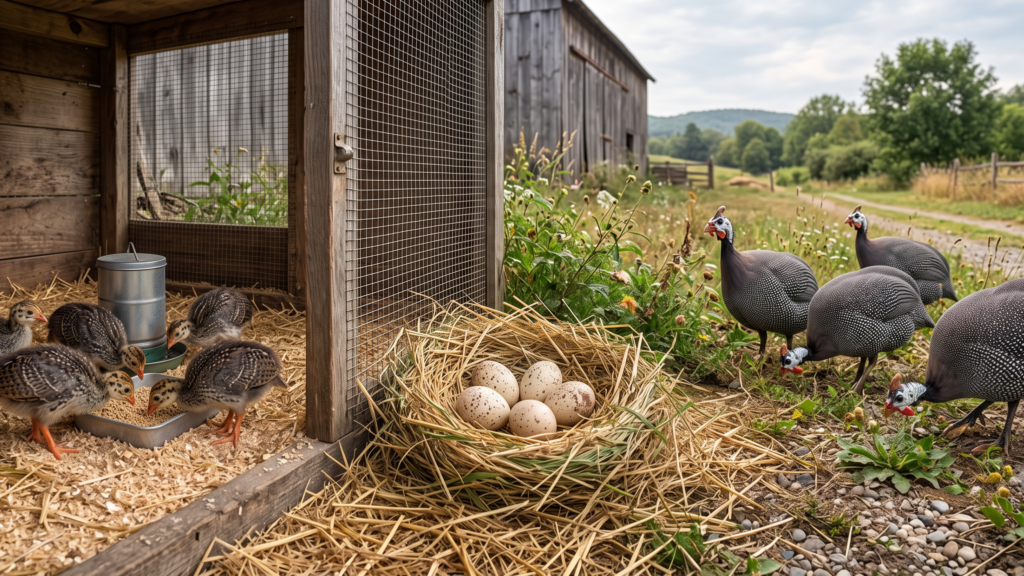
Keets are the middle-ground option, and they’re what most hatcheries and farm stores sell as “starting stock.” Day-old keets require a brooder with supplemental heat, typically kept between 95°F and 100°F for the first week and reduced by about 5 degrees each week after, since guinea keets are more sensitive to cold and damp conditions than chicks. Mortality in the first two to three weeks is the biggest risk factor, and losses of 10% to 20% aren’t unusual even in well-managed brooders, largely because keets are prone to pasty butt and are easily startled into pile-ups that can suffocate weaker birds.
By 6 to 8 weeks, keets are feathered out and can typically move to an outdoor coop, assuming nighttime temperatures are mild enough. Full maturity, including the start of egg-laying in females, generally arrives around 16 to 28 weeks depending on the season they were hatched in. This gives keepers a bird that’s still young enough to imprint somewhat on its home territory, which matters for guinea fowl since adults free-ranged from a young age tend to return to the coop more reliably than adults introduced later.
Buying keets also gives you more flexibility on flock size and timing than adult purchases, since hatcheries often sell in smaller minimums and ship on a schedule that fits your brooder setup. If you haven’t reviewed the space, fencing, and predator-proofing a brooder and young flock need, it’s worth checking your local legal rules for keeping guinea fowl before birds arrive, since some municipalities have setback or enclosure requirements that affect brooder placement.
Starting With Adult Guinea Fowl
Adult guinea fowl skip the brooding stage entirely, which removes the highest-mortality period of raising the birds. An adult purchased at 6 months or older is past the fragile keet stage, can typically free-range with minimal supervision, and if female, may already be laying or close to it. This makes adults the fastest route to eggs, pest control, or a working flock, and it’s often the better choice for keepers without a dedicated brooder space or heat lamp setup.
The tradeoffs show up in cost and behavior. Adult guineas usually cost two to three times more per bird than keets, since the seller has already absorbed the feed and labor costs of raising them past the vulnerable stage. Adults are also harder to relocate successfully, because guinea fowl imprint on their home territory early, and birds moved as adults are more prone to wandering off or trying to return to their original location, especially in the first few weeks after the move.
Sourcing adults can be less predictable than ordering keets from a hatchery, since availability often depends on local breeders or homesteaders thinning their flocks rather than a standing catalog. Buyers should ask about the flock’s health history and whether the birds were pasture-raised or coop-confined, since that affects how well they’ll adapt to free-ranging on a new property.
Matching Your Starting Point to Your Situation
The right choice depends less on which option is “best” and more on what you’re set up to handle. A keeper with a heat-lamp brooder, time to check on keets multiple times a day for the first few weeks, and a full season ahead has the most flexibility and the lowest cost per bird. Someone who wants eggs or tick control within weeks, not months, and can afford the higher per-bird price is usually better served by adults.
Hatching eggs suit a narrower group: keepers who already run an incubator for other poultry or who specifically want to hatch from a chosen breeder line. For most people buying their very first flock, keets offer the most balanced tradeoff between cost, availability, and the ability to raise birds that settle into a new property well. Reviewing common first-time guinea fowl mistakes before your birds arrive, regardless of which stage you start at, helps avoid the errors that account for most early losses.
Frequently Asked Questions
Is it easier to raise guinea fowl from keets or buy adults?
Adults are easier for a first-time keeper in terms of day-to-day care, since they skip the brooding stage where most losses occur. Keets require more hands-on management, including heat regulation and protection from drafts and dampness, but they cost less and adapt better to a new property long-term.
How many guinea keets should a beginner start with?
Most hatcheries set a minimum order of 15 to 25 keets, partly because guinea fowl are a flock species that does poorly in very small groups and partly to offset expected early losses. Beginners planning a small backyard flock should generally start with a few more birds than their target number to account for typical mortality.
Can you hatch guinea fowl eggs in the same incubator as chicken eggs?
Guinea fowl eggs can be incubated alongside chicken eggs if the incubator allows for staggered removal, but the two need different timelines since guinea eggs take about 26 to 28 days compared to 21 days for chickens. Running both at once requires either two incubators or careful planning to lockdown and hatch each batch separately.
At what age do guinea fowl start laying eggs?
Female guinea fowl typically begin laying between 16 and 28 weeks of age, with birds hatched in early spring often starting earlier than those hatched later in the season. Laying is also seasonal, generally running from spring through late summer regardless of the bird’s age.
Do adult guinea fowl bond with a new property as well as keets do?
Adult guinea fowl bond to a new property less reliably than keets, since much of their sense of “home” forms in the first several weeks of life. Keepers introducing adults usually need to confine them to the coop and run for two to four weeks before allowing free-range access, to reduce the chance of them attempting to return to their original location.
Hi, I’m Rayyan. I raise guinea fowl and share practical, research-backed guides for backyard keepers and homesteaders. I combine hands-on flock experience with trusted poultry management and university extension resources to help you raise healthier, more productive birds — with confidence, not guesswork.