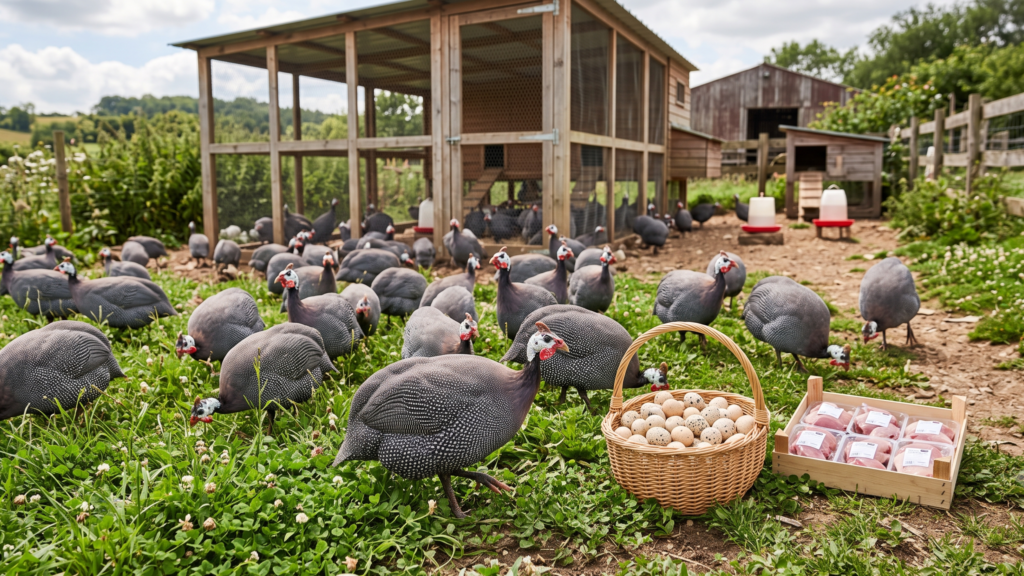
Guinea fowl farming can be profitable, but the margins are usually modest for small backyard flocks and much stronger for producers who sell keets, eggs, or meat at scale. Whether you end up in the black depends less on the birds themselves and more on how you sell what they produce.
I get asked this question constantly, usually by someone who’s already fallen for how low-maintenance guineas are and is now wondering if that hobby flock could pay for itself — or even turn a real profit. I’ve raised guineas for both, so I want to walk you through the actual numbers: what it costs to start, what it costs to keep a flock running, where the income comes from, and what kind of profit you can realistically expect.
Quick Summary: Startup Costs vs. Annual Costs vs. Income
| Category | Typical Range |
|---|---|
| Startup costs (housing, fencing, brooder, starter flock) | $460 – $1,690 |
| Annual keeping costs (feed, bedding, maintenance) | $225 – $550 |
| Keets (per bird) | $3 – $15 |
| Sexed adults (per bird) | $20 – $40 |
| Adult feed cost | ~$1.60/bird/month |
| Live adult sale price | $10 – $25/bird |
| Processed meat | $8 – $10/lb |
| Eating eggs | ~$2/dozen |
| Hatching eggs | $1 – $4/egg |
These numbers set the stage for everything below. Your actual profit depends heavily on whether you’re selling live birds, dressed meat, eggs, or breeding stock — and each of those has a very different margin.
Startup Costs: What You’ll Spend Before Your First Sale
Every guinea fowl operation starts the same way: money out, before any money comes in. I remember totaling up my first season’s receipts and being a little surprised how much of it went to housing and fencing rather than the birds themselves — that’s true for almost everyone starting out.
Housing and fencing
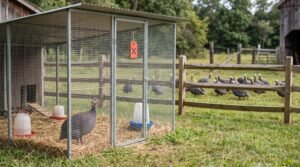
Housing is typically the single biggest startup expense. A converted shed can run as little as $200, while a purpose-built coop with proper ventilation and predator-proofing can climb toward $800 or more. Guinea fowl need roughly 2–3 square feet of coop space per bird, plus roosting bars set higher than what you’d use for chickens, since guineas strongly prefer to roost off the ground.
Fencing and feeders add another $100–$300, depending on how large an area you’re enclosing and whether you’re building fencing tall enough to slow down a bird that really wants to fly out.
Brooder setup
If you’re starting with day-old keets rather than adults, budget $50–$120 for a brooder setup: a heat source, a brooder box or large tote, a chick-safe waterer, and a starter feeder. Keets need supplemental heat until about six weeks old, and skipping this step is one of the most common — and costly — beginner mistakes, since it usually means replacing dead keets a few weeks in.
Starter flock
This is where your choice between keets and adults matters most for your budget:
- Keets typically cost $3–$15 each depending on breed and hatchery, so a starter flock of 6–10 keets runs $60–$150.
- Sexed adults cost more per bird, usually $20–$40, putting the same flock size at $150–$400.
Keets are cheaper upfront, but they come with brooder costs and a higher mortality risk in the first six weeks. Adults cost more per bird but skip the riskiest stage entirely — you’re paying for that certainty.
Put together, a small backyard flock’s total startup investment usually lands between $460 and $1,690, with housing and fencing making up the largest share for most first-time keepers. If you want a full line-item breakdown by category, I’ve put together a detailed cost guide for keeping guinea fowl that goes deeper into each expense.
Annual Costs: What It Takes to Keep a Flock Running
Once your setup is in place, ongoing costs drop significantly — this is part of why guineas have a reputation as a low-maintenance bird. Most established small flocks run $225–$550 per year, and feed is by far the largest recurring expense.
Feed costs by life stage
Guinea fowl need a higher-protein diet than chickens, especially in the first several weeks of life:
| Age | Protein Needed | Feed Cost |
|---|---|---|
| 0–5 weeks (keets) | 28% game bird starter | $30–$35 per 50 lb bag |
| 5–8 weeks | ~20% grower | $18–$20 per 50 lb bag |
| 8+ weeks (adults) | 16% layer/maintenance | $16–$18 per 50 lb bag |
An adult guinea eats roughly 5.5 pounds of 16% feed per month, which works out to about $1.60 per bird per month, or roughly $19 per bird per year if fed entirely on purchased feed. Raising a keet from hatch to adult size takes about 25 pounds of feed, costing $8–$10 per bird before it’s fully grown.
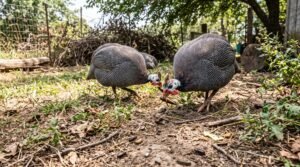
That per-bird number drops fast if your flock free-ranges. As University of Maine Cooperative Extension notes, guinea fowl are natural grazers that hunt ticks, beetles, slugs, and weed seeds on their own, so even a small starter flock will cover a meaningful share of its own diet when allowed to range. I feed noticeably less in the warmer months when mine are out hunting all day, and it shows on my feed bill.
Other recurring costs
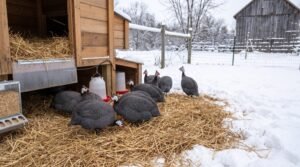
Bedding, minor coop repairs, replacement waterers or feeders, and occasional losses to predators or illness round out the rest of your annual budget. Guinea fowl are hardy birds with fewer disease issues than many other poultry, which helps keep veterinary costs low for most keepers — though it’s still worth budgeting a small buffer for the unexpected.
Where the Income Comes From
Guinea fowl farming income breaks down into a few distinct streams, and most profitable operations lean on more than one.
Selling live birds
Live adult guineas typically sell for $10–$25 per bird, with prices climbing in spring when demand for breeding stock is highest and dropping after the fall hatch when supply floods local markets. Keets sell for less — often $3–$8 each locally — since the buyer is taking on the mortality risk of raising them past six weeks.
Selling meat
Guinea fowl meat is lean, flavorful, and often marketed as a game-bird alternative to chicken, which lets it command a premium. Processed, USDA-inspected guinea meat can sell for $8–$10 per pound, though a dressed bird is small — usually only 2–2.5 pounds — since guineas are typically processed young, between 12 and 16 weeks, before the meat turns tough and gamey. Keep in mind that USDA inspection is required if you’re selling meat commercially rather than live birds, and that adds its own cost and logistics on top of raising the flock.
Selling eggs
Guinea hens lay for roughly six months of the year rather than nearly year-round like chickens, which caps how much egg income you can count on. Eating eggs typically sell for about the same as chicken eggs, around $2 per dozen, while hatching eggs command a real premium — commonly $1 to $4 per egg, and up to $6 for rare color varieties. If egg income is a priority for you, it’s worth reading through how many eggs guinea fowl actually lay per year before you build a business plan around it.
Auction and wholesale pricing
It’s worth knowing that commercial auction prices can look very different from backyard retail prices. USDA Market News auction reports from a regional livestock auction in Atlanta have recorded guinea fowl selling in the $8.00–$10.00 per pound range at wholesale, with guinea keets moving for as little as $1.25–$1.75 each in that same market — a useful reality check if you’re planning to sell in bulk rather than one bird at a time to backyard buyers.
Realistic Profit Example: A Small Flock
Let’s put real numbers against a modest flock of 10 birds, sold as live adults, since that’s the most common path for a beginner.
Startup investment:
- Housing and fencing: $500
- Brooder setup: $80
- 10 keets at $6 each: $60
- Total startup: $640
Annual costs (Year 2 onward, established flock):
- Feed (partial free-range): ~$150
- Bedding, maintenance, misc.: $75
- Total annual: $225
Annual income (selling 10 adult birds at $18 average):
- Total revenue: $180
On paper, that single flock barely breaks even in its first full year of sales, and startup costs mean the first year overall runs at a loss. This tracks with published research: a resource-efficiency study of guinea fowl producers in Ghana’s Savelegu-Nanton district reported an average profit margin around 30% and an average return on investment near 17% across the farms surveyed — solid, but not the kind of return that replaces a day job on a small scale.
The math changes once you scale up or diversify income streams. A keeper who hatches their own eggs, sells surplus keets alongside adult birds, and processes a portion for meat is running three revenue streams off the same base flock and fixed costs, and that’s where the real profit shows up. Selling breeding stock and hatching eggs in spring — when demand and prices peak — also does more for your margin than selling live birds alone.
Factors That Make or Break Your Profit Margin
A few variables matter more than any other for whether your flock turns a profit:
- Mortality rate. High keet mortality is one of the most commonly cited challenges among guinea fowl producers, and every bird lost before sale is a direct hit to your margin.
- Free-range access. Birds that forage for a meaningful share of their diet cost noticeably less to feed than fully confined flocks.
- Local demand and pricing. Guinea fowl prices vary a lot by region — auction and wholesale prices are often lower per bird than what a backyard buyer will pay directly.
- Diversified income. Producers selling meat, eggs, and live birds from the same flock spread their fixed costs across more revenue, improving overall margin.
- Flock size. Larger flocks benefit from lower per-bird costs on housing and bulk feed purchases, which is part of why commercial-scale operations post stronger returns than hobby flocks.
If you want to model your own numbers before committing, our guinea fowl profit calculator lets you plug in your local prices and flock size to see where you’d land.
Guinea Fowl vs. Chicken: Which Pencils Out Better?
If profitability is your main goal, it’s worth comparing guineas against the bird most people already know. Chickens lay more consistently, have a faster path to market weight, and enjoy a much bigger retail market — but guinea fowl need less feed supplementation when free-ranged, face fewer disease issues, and their meat and hatching eggs command a real premium that plain chicken can’t match. I break down the full comparison, including margins for each, in guinea fowl vs. chicken profitability if you’re weighing the two side by side.
FAQ
How many guinea fowl do I need to make a profit? Most backyard keepers with fewer than 10–15 birds should expect to break even or turn a small profit rather than replace meaningful income. Profitability improves noticeably once you’re managing 50+ birds and selling across multiple channels — meat, eggs, and live birds.
Is guinea fowl meat actually profitable to sell? It can be, since guinea meat sells at a premium to chicken, but the birds dress out small (2–2.5 lbs), and commercial sales require USDA inspection, which adds cost. It works best as one income stream alongside live-bird and egg sales rather than the sole focus.
Do guinea fowl cost more to raise than chickens? Not significantly, and often less if they’re free-ranging, since guineas forage aggressively for insects and weed seeds. Their biggest added cost versus chickens is the higher-protein starter feed keets need in their first five weeks.
What’s the fastest way to improve my guinea fowl farm’s profit margin? Diversify your income. A flock that produces hatching eggs, surplus keets, and meat, instead of just live adult sales, spreads your fixed costs across more revenue and usually improves your margin the fastest.
Final Thoughts
Guinea fowl farming can absolutely be profitable, but treat it like any other livestock venture: know your startup costs, keep your annual expenses realistic, and don’t rely on a single income stream to carry the whole operation. Start small, track your actual numbers instead of guessing, and expand once you know what your birds and your local market can really support.
If you’re still deciding whether to start at all, my complete beginner’s guide to guinea fowl farming walks through the basics before you spend a dollar, and our guinea fowl farming business plan template can help you turn these numbers into an actual plan.
What’s held you back from starting — the startup cost, the noise, or just not knowing if the numbers would work? I’d love to hear where you’re at in the comments.
Hi, I’m Rayyan. I raise guinea fowl and share practical, research-backed guides for backyard keepers and homesteaders. I combine hands-on flock experience with trusted poultry management and university extension resources to help you raise healthier, more productive birds — with confidence, not guesswork.