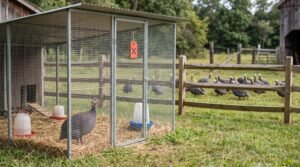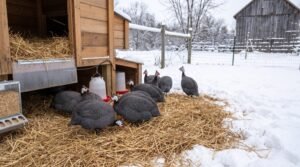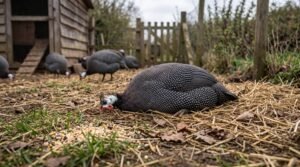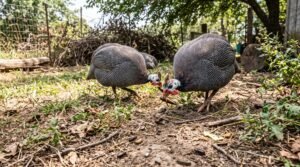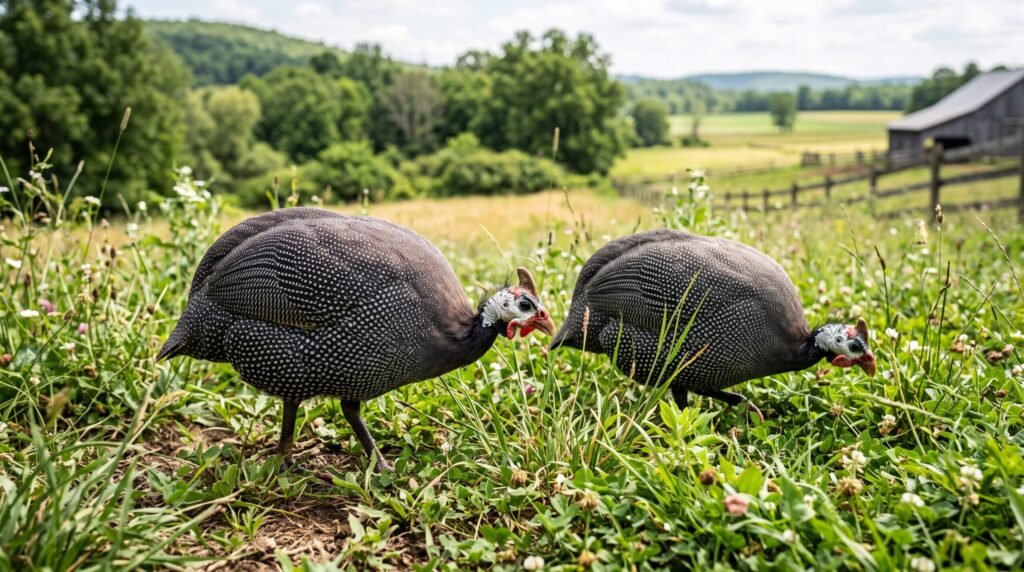
Free-range is the better setup for most keepers because guinea fowl are naturally wild, active foragers that get stressed, noisy, and aggressive when kept penned up full-time — but confinement still has its place if you’re managing egg production, protecting a garden, or working with a small property. The right answer really comes down to how much space you have and what you’re keeping guineas for.
I’ve run my flock both ways over the years, and the difference in their behavior is night and day. Guineas that get to roam are calmer, quieter (relatively speaking), and noticeably healthier. Guineas kept penned up tend to pace, squabble, and holler at everything that moves. That said, confinement isn’t automatically the wrong choice — it just comes with trade-offs you need to plan around.
In this guide, I’ll walk through what changes for your birds under each setup, the real pros and cons of both, and how to figure out which one actually fits your property and your goals.
Free-range guineas forage most of their own diet, control pests, and behave more naturally, but they’re harder to contain and their eggs are tough to find. Confined guineas are easier to manage and their eggs are easy to collect, but they need more floor space than most keepers expect, cost more to feed, and are more prone to stress-related behavior if the pen is too tight.
Free-Range Guinea Fowl: What to Expect
The Upsides
Letting guineas roam is closer to how they’d live in the wild, and it shows in their behavior and their usefulness around the property.
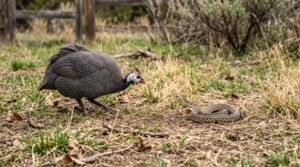
- Serious pest control. Free-ranging guineas hunt down ticks, grasshoppers, spiders, small snakes, and even rodents without any effort on your part. According to Mother Earth News, guineas that free-range can forage as much as 90% of their own diet, which is a big part of why their pest control comes at such low effort and low cost to the keeper.
- Lower feed bills. Because they’re finding so much of their own food, you’ll go through far less commercial feed than you would with a confined flock.
- Better mental and physical health. Roaming gives them room to exercise, dust bathe, and act like guineas instead of pacing a pen.
- Garden-friendlier than chickens. Unlike chickens, guineas generally don’t scratch up beds while they forage, so they can patrol a vegetable garden without wrecking it.
- Natural grit intake. Birds that forage pick up their own grit as they go, so you’re not stuck supplementing it.
The Downsides
None of this comes free. Free-ranging guineas bring their own headaches.
- They don’t respect boundaries. Guineas fly well and wander far — a couple of acres is a more realistic minimum than a small backyard.
- Eggs are hard to find. Hens hide their nests in brush and tall grass, so you’ll be hunting for eggs instead of collecting them from a box.
- Predator exposure. Birds roaming and roosting outside a secured coop are more vulnerable to hawks, foxes, and other predators.
- They wander into places you’d rather they didn’t. Flower beds, neighboring properties, and the occasional dust bath in your garden path are all fair game.
I’ve watched mine take down a toad without hesitating, and that same relentlessness is exactly what makes them such good tick control — but it also means they’ll investigate anything and everything, loudly, the second they notice it.
Guinea keepers who are still deciding whether free-ranging fits their setup often find it helpful to work through what to plant along the way — our guide to the best plants and grasses for a free-range flock covers what holds up well to their foraging habits.
Confined Guinea Fowl: What to Expect
The Upsides
Confinement isn’t the enemy — it’s the right call in specific situations.
- Predictable, collectible eggs. You’ll know where the nest is, which matters if egg production is part of why you’re keeping guineas.
- Easier to manage. No chasing birds out of the neighbor’s yard, no guessing where they roosted last night.
- Better fit for smaller properties. If you don’t have a couple of acres to spare, a secure run lets you keep guineas without the property size that free-ranging demands.
- More control over predator risk, provided the pen is properly secured with a covered top — guineas fly, so an open-air run isn’t enough.
The Downsides
The catch is that guineas weren’t really built for pen life, and it shows if the setup isn’t generous.
- They need more space than people expect. University extension guidance from the University of Kentucky’s guide to raising guinea fowl recommends at least 2–3 square feet per bird if you’re confining a flock, and other sources put the ideal closer to 4 square feet per bird for extended indoor stretches, such as through winter. Skimping on space is the single most common mistake keepers make.
- Feed costs go up. With no bugs or forage to supplement their diet, you’re covering 100% of their nutrition.
- Stress and feather-pecking. Birds kept in tight quarters are prone to feather pecking and chronic stress, both of which drag down productivity and lifespan over time.
- More noise, not less. It seems counterintuitive, but penned guineas are often louder and more agitated than free-ranged ones — boredom and crowding wind them up.
- Lower fertility. Fertility tends to drop when guineas are kept confined, so breeding flocks generally do better with at least some free-range access.
If confinement is the direction you’re leaning, it’s worth reading through our guinea fowl housing guide before you build anything — coop design changes quite a bit once you know the birds will be spending most of their time inside it rather than just roosting there overnight.
Free-Range vs Confined: Quick Comparison
| Factor | Free-Range | Confined |
|---|---|---|
| Space needed | 1–2+ acres ideal | 3–4 sq. ft. per bird minimum |
| Feed cost | Low (birds forage most of their diet) | Higher (you supply all nutrition) |
| Pest control | Excellent | None |
| Egg collection | Difficult — hidden nests | Easy — known nest location |
| Predator risk | Higher (roaming, outdoor roosting) | Lower, if pen is secure and covered |
| Noise level | Loud, but purposeful (alerting) | Often louder — boredom and crowding |
| Fertility | Generally better | Can decline with tight confinement |
| Best suited for | Larger properties, pest control priority | Small properties, controlled egg production |
Can You Do a Hybrid Approach?
Most experienced keepers land somewhere in the middle, and honestly, that’s what I’d recommend if your property allows it. Keep guineas in a secure, appropriately sized coop overnight and during bad weather, then let them out to free-range for most of the day. This gets you the pest control, lower feed costs, and better bird health that come with roaming, while still giving you a safe, known location to lock them up against predators at night.
New birds should stay confined for a week or two after you bring them home regardless of your long-term plan — this teaches them where “home” is, so they’ll actually return to the coop once you start letting them out. Releasing them too early is one of the most common reasons keepers lose birds to wandering.
If you’re just getting your setup figured out, our space requirements guide breaks down both indoor and outdoor square footage so you can plan a coop that works whether you go hybrid, full free-range, or full confinement.
Which Setup Is Right for You?
A few questions can point you toward the right answer:
- How much land do you have? Under an acre generally favors confinement or a small, secured run; a couple of acres or more opens up real free-ranging.
- Why are you keeping guineas? Pest control and low feed costs point toward free-range. Reliable egg collection points toward confinement.
- How much predator pressure do you have? Heavy hawk or fox activity may tip the balance toward a secure, covered pen — or at least a hybrid setup with a locked coop at night.
- Do your neighbors have a high tolerance for noise and wandering birds? Free-ranging guineas don’t recognize property lines, and that can matter more than it seems like it should.
There’s no universally “better” option here — there’s only the option that fits your land, your goals, and how much wandering, noise, and hidden eggs you’re willing to put up with.
Frequently Asked Questions
Can guinea fowl be kept fully confined long-term? Yes, but only if you give them generous space — 4 square feet or more per bird — and accept the trade-offs in feed cost and fertility. A cramped pen is where most confinement problems start.
Do confined guinea fowl still need outdoor access? It helps. Even a securely fenced and covered outdoor run, separate from a fully caged setup, gives them room to move and reduces stress compared to keeping them indoors around the clock.
Will free-range guinea fowl come back on their own? Once they’re trained to see the coop as home — usually after a week or two of initial confinement and a consistent feeding routine — most guineas will return to roost each evening on their own.
Do free-range guinea fowl still need supplemental feed? Yes. Foraging can cover a large share of their diet, but they still need a consistent feed source, especially for protein and during winter when insects are scarce.
Whichever setup you land on, the birds will let you know pretty quickly if it’s working — a calm, quiet flock is a good sign, and constant fence-testing or nonstop alarm calls usually mean something needs to change. Have you tried both approaches with your flock? I’d love to hear what tipped the balance for you, and if you’re still working out the logistics, our guinea fowl pros and cons guide is a good next stop before you commit to a setup.
Hi, I’m Rayyan. I raise guinea fowl and share practical, research-backed guides for backyard keepers and homesteaders. I combine hands-on flock experience with trusted poultry management and university extension resources to help you raise healthier, more productive birds — with confidence, not guesswork.