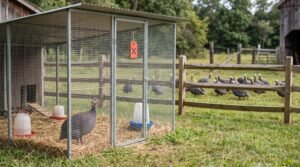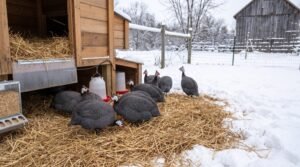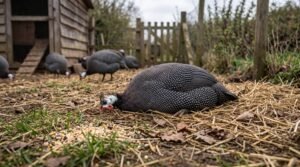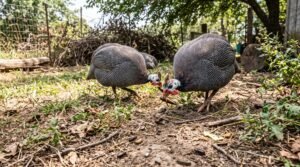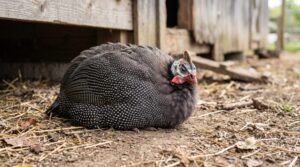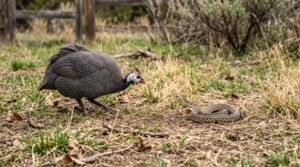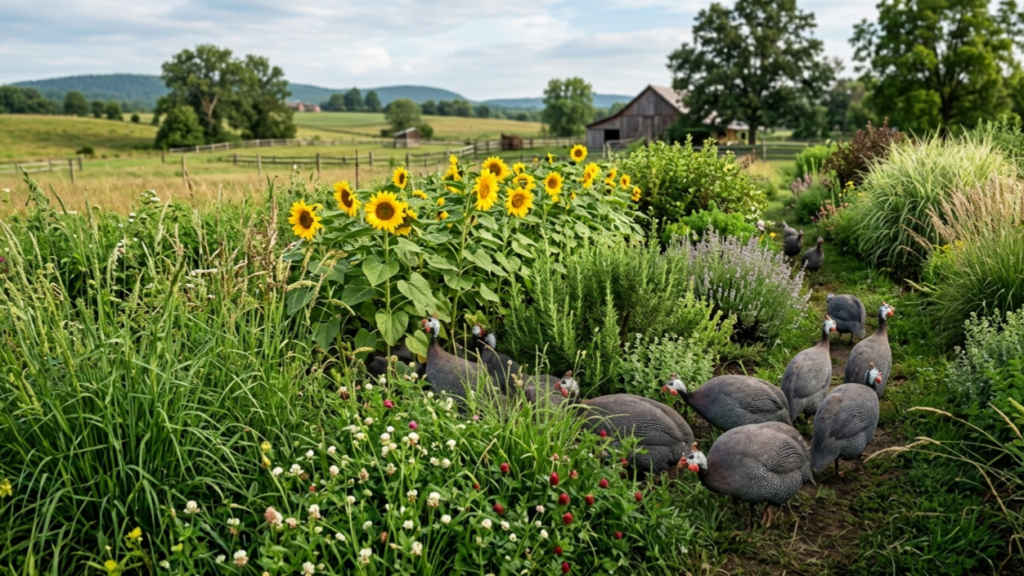
The best forage for free-range guinea fowl combines short, tender pasture grasses like orchard grass and Kentucky bluegrass with protein-rich legumes such as white clover and alfalfa, plus a few wild volunteers like dandelion and chickweed that guineas will hunt down on their own. Together, these plants give your flock the fiber, protein, and micronutrients that a bag of feed alone can’t fully replicate.
I’ve watched my own flock work a pasture from one end to the other, and it’s obvious they’re not eating at random. They target certain plants first and ignore others completely. Once you know what they’re after, you can shape your yard or pasture to make free-ranging more productive — better forage means lower feed costs, and a flock that spends its day digging for greens tends to be a healthier flock overall.
In this guide, I’ll walk through the grasses and legumes worth planting, the wild plants guineas naturally seek out, what to avoid, and how to set up a pasture that keeps producing through the season.
Quick Reference: What to Plant and What to Avoid
Here’s a quick look at the categories before we get into detail on each one.
| Category | Examples | Why It Works |
|---|---|---|
| Cool-season grasses | Orchard grass, Kentucky bluegrass, fescue | Tender leaf blades, tolerate foot traffic and pecking |
| Legumes | White clover, red clover, alfalfa | High in protein, calcium, and fiber |
| Herbs/forbs | Chicory, plantain | Deep roots pull up minerals, stay green in dry spells |
| Wild volunteers | Dandelion, chickweed, clover | Guineas seek these out on their own, no seeding needed |
| Avoid planting | Foxglove, bracken fern, nightshades, buttercup | Toxic to poultry in enough quantity |
Why Pasture Plants Matter for Guinea Fowl
Guinea fowl are some of the most enthusiastic foragers in the poultry world. If you’ve raised them, you already know this — mine spend nearly the entire day moving through the yard, heads down, picking through the grass line by line. They need more protein than chickens do, and that’s a big part of why they forage so hard for bugs, slugs, worms, and even small rodents. But it’s not just about protein from insects. Guineas also work steadily through grass, weeds, and general vegetation, which helps keep their digestion running the way it should.
That combination — insects for protein, greens for fiber and vitamins — is exactly what good pasture is supposed to provide. A guinea fowl that free-ranges over a diverse patch of ground is essentially assembling its own balanced diet, one peck at a time. Your job as the keeper is just to make sure that patch of ground has the right plants growing in it, and none of the wrong ones.
If you’re just getting your flock set up to free-range in the first place, it’s worth reading through free-range vs. confined guinea fowl first, since the payoff from good pasture only really shows up once your birds have room to roam.
Best Grasses for Guinea Fowl Pasture
Guinea fowl aren’t grazers the way sheep or cattle are — they can’t break down a lot of tough fiber, so short, tender grasses work far better than tall, coarse ones. A few cool-season options stand out:
- Orchard grass – broad-leafed and tender, and often the first green thing up in spring, giving your flock something to work on before anything else greens up.
- Kentucky bluegrass – a dense, low-growing perennial with solid protein content that holds up well to birds walking and scratching over it day after day.
- Fescue – tolerant of a wide range of soils and climates, though it’s best kept mowed short since guineas prefer young, leafy growth over anything that’s gone to seed.
Cereal grasses are worth mentioning too. Oats seeded in spring grow quickly and can be seeded again in midsummer for late-summer and fall forage, while rye, wheat, and barley seeded in fall can carry a flock through winter and into spring. I’ve had good luck overseeding a section of run with winter rye specifically so there’s still something green out there when everything else has gone dormant.
One habit worth knowing: guineas peck rather than graze, and that plucking action actually encourages grasses to tiller and put out more stems — meaning a pasture that gets worked by your flock regularly tends to thicken up over time rather than thin out, as long as you’re not overstocked.
[Visual suggestion: Side-by-side comparison images or a simple graphic showing orchard grass, Kentucky bluegrass, and fescue for easy identification.]
Best Legumes and Herbs for Protein and Minerals
If grass gives your flock fiber, legumes are where the real protein and calcium come from. Legumes such as alfalfa, ladino and white clover, red clover, lespedeza, and vetches all run higher in protein, fiber, calcium, and carotene than grasses do, which makes them some of the most valuable plants you can add to a guinea fowl run.
- White clover – low-growing and tolerant of foot traffic, and one of the first plants my flock beelines for every morning.
- Red clover – slightly taller and higher in protein, good in a mixed sward rather than as a monoculture.
- Alfalfa – a perennial that comes back reliably year after year, so once it’s established you’re not reseeding constantly.
- Vetch – a solid cool-season option, particularly if you’re overseeding for fall and winter forage.
Beyond the classic legumes, chicory and plantain (the broadleaf herb, not the banana relative) are worth adding to a pasture mix too. Research on herb-and-clover pasture mixes has found that combining chicory, plantain, red clover, and white clover produces about the same total growth as a standard grass-and-clover pasture, but with a different rhythm — more production through summer and fall, and generally higher feed quality overall. That matters for guinea fowl because it means less of a forage gap during the hottest, driest stretch of the year, when plain grass pastures often slow down.
Both plantain and chicory also send roots down deep enough to pull up minerals that shallow-rooted grasses can’t reach, and they tend to stay green when everything around them is browning off — a small thing, but it adds up over a full season of free-ranging.
Wild Plants Guinea Fowl Seek Out on Their Own
You don’t have to plant everything your flock eats. A lot of the best forage shows up on its own, and guineas are good at finding it.
- Dandelion – leaves and flowers are both fair game, and I’ve genuinely never seen my flock leave a patch standing once they find it.
- Chickweed – low, spreading, and tender, this one gets hit early and hit hard whenever it comes up.
- Volunteer clover – clover and the various trefoils aren’t toxic, and poultry generally do well on clover-rich pasture, so there’s no need to pull it if it shows up uninvited.
- General weeds and seed heads – guinea fowl will work through most soft-bodied weeds and vegetation as part of their normal foraging pattern, not just the plants I’d call “forage” on purpose.
I’ve noticed my own flock doesn’t treat every wild plant the same — dandelion and chickweed get cleaned out fast, while coarser weeds mostly get ignored unless there’s genuinely nothing better around. That’s a useful thing to watch for in your own yard: if a plant keeps getting passed over, it’s probably not worth worrying about either way.
If your interest in pasture is more about pest control than plant variety, it’s worth checking out how guinea fowl handle ticks, since the same foraging drive that clears out weeds is what makes them useful against ticks too.
[YouTube embed suggestion: A short video showing free-range guinea fowl actively foraging through pasture, ideally with visible dandelion, clover, or grass — placed here to reinforce what “seeking out” wild forage actually looks like.]
Plants to Avoid in a Guinea Fowl Pasture or Run
Free-ranging birds are generally pretty good at leaving toxic plants alone, especially when there’s plenty of good forage around to distract them. Still, it’s worth knowing what to keep out of the run, particularly if pasture options are limited and a bored or hungry bird might sample something it normally wouldn’t.
A few of the more commonly flagged plants for poultry include:
- Foxglove – every part of the plant, including the seeds, flowers, stems, and leaves, carries toxicity, and it reseeds aggressively enough that it can take over a corner of pasture if left unchecked.
- Bracken fern – eating enough of this fern over time has been linked to anemia, weight loss, and muscle tremors in poultry, though it typically takes a significant amount to cause problems.
- Nightshade-family plants – this family contains alkaloids that can cause appetite loss, excess salivation, a weakened heart rate, and breathing trouble, and it includes some garden plants you might not expect, like tomato and pepper foliage.
- Buttercup – frequently listed among the more toxic plants for backyard poultry, though birds tend to avoid it unless forage is scarce.
- Death camas and certain wild mushrooms – these are extremely toxic to poultry and many other animals, and they’re worth learning to identify if you free-range near wild or wooded areas.
The reassuring part is that actual poultry deaths from toxic plants are genuinely uncommon, and a well-fed, free-ranging bird tends to avoid most of these on its own. The real risk shows up more in birds with little else to eat — another reason a well-stocked pasture matters as much for safety as it does for nutrition.
Setting Up a Pasture That Keeps Producing
A little bit of planning goes a long way toward keeping your flock in good forage all season rather than just for a few weeks in spring.
- Mix grasses and legumes rather than planting either alone. A blend gives you the fiber-and-protein balance guineas actually need, and it tends to hold up to grazing pressure better than a single species would.
- Overseed for the season ahead. Cool-season grasses and legumes carry you through spring and fall, while a cereal grass like oats or winter rye fills in the gaps at the edges of the season.
- Rotate sections if you have the space. Letting one area rest while your flock works another gives plants time to regrow instead of getting pecked down to bare dirt.
- Walk your pasture occasionally and pull anything you don’t recognize. You don’t need to eliminate every mildly toxic plant on the list above, but it’s worth knowing what’s actually growing where your flock spends its day.
- Don’t rely on pasture alone. Even the best forage won’t fully replace a balanced feed, especially during winter or in setups where free-ranging isn’t possible — that’s when a good commercial feed picks up the slack.
[Visual suggestion: A simple seasonal planting calendar graphic showing when to seed cool-season grasses, legumes, and cereal grains.]
If you’re still working out how forage fits into your flock’s overall diet, what guinea fowl eat covers the feed side of that balance in more depth.
FAQ
Do guinea fowl eat grass? Yes. Grass is one of the most commonly reported staples in a free-ranging guinea fowl’s diet, particularly young, tender growth rather than tall or seeded-out grass.
Can guinea fowl damage my lawn or garden by foraging? It’s possible in a small or heavily stocked area, since repeated pecking tends to make grass thicken and tiller rather than simply strip it bare — but in a larger space with rotation, the effect usually looks more like light grazing than damage.
Will guinea fowl eat toxic plants if better forage is available? Generally not. Free-ranging birds with abundant, varied forage tend to steer clear of anything unpalatable, and problems are far more likely in birds with limited options.
Do I need to plant clover, or will it show up on its own? Often it shows up on its own once an area is under regular poultry traffic, but seeding it directly gets you a head start and a denser stand sooner.
Final Thoughts
Good pasture isn’t complicated to build — a mix of tender grasses, a legume or two, and a bit of patience while things establish will do most of the work. What I’ve found is that the birds themselves are the best guide: watch where they spend their time, and you’ll quickly see which plants are actually earning their keep in your yard.
Have you noticed your own flock favoring certain plants over others? I’d love to hear what’s working in your pasture — and if you’re still building out your setup, take a look at guinea fowl housing requirements to make sure the rest of your setup supports all that foraging.
Hi, I’m Rayyan. I raise guinea fowl and share practical, research-backed guides for backyard keepers and homesteaders. I combine hands-on flock experience with trusted poultry management and university extension resources to help you raise healthier, more productive birds — with confidence, not guesswork.