Right now, while the days are still warm enough to fool you, experienced guinea fowl keepers are already getting ready for molting season, shrinking daylight, and the first real cold snap. If you’re not doing the same, your flock could hit winter unprepared — and that’s when losses happen.
I learned this one the hard way. My first fall with guinea fowl, I kept treating September like an extension of summer. By the time I noticed feathers scattered across the run and eggs slowing to almost nothing, I was already behind. Now I start prepping in early-to-mid September every year, and it’s made a noticeable difference in how smoothly my flock moves into winter.
Here’s what’s actually worth doing right now, not “later this fall.”
Before we get into detail, here’s the quick version of what to have on your radar this month:
- Molt is starting or about to start — expect feather loss and an egg slowdown
- Protein needs go up while birds rebuild feathers
- Coop and run need a pre-winter check — drafts, damp bedding, weak fencing
- Predator pressure increases as wild food sources thin out
- Daylight is shrinking, which affects laying and roosting behavior
- Water and feeder setups need a plan before freezing temps arrive
Why Right Now Matters
Shorter days are the trigger. As daylight hours drop, it signals guinea fowl — like most poultry — to begin their annual molt and slow egg production. Shrinking daylight is generally what sets this whole process in motion in late summer and fall, with most birds going through their first full molt somewhere around a year and a half old. This isn’t sudden; it creeps in over a few weeks, which is exactly why keepers who wait until they see the problem are already a step behind.
What to Expect: The Molt
If you start noticing feathers on the ground before you notice anything else, that’s normal. It’s not illness, and it’s not something going wrong with your flock — it’s their body doing scheduled maintenance before winter.
A few things I watch for every year:
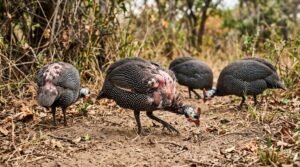
- Patchy, rough-looking birds — guineas can look almost scruffy mid-molt, which catches new keepers off guard
- A drop in egg-laying, sometimes a near-total pause for several weeks
- Increased quietness or reduced activity, since molting takes real energy
That egg slowdown isn’t a coincidence. Molting is energy-expensive, and a bird’s body will redirect resources away from egg production and into growing new feathers until the process wraps up. Guinea hens follow the same pattern. If your egg basket suddenly feels empty this month, check for feathers before you assume something’s wrong.
Bump Up Protein Now, Not After
This is the single biggest thing I do differently in September. Feathers are almost pure protein, so a flock that’s regrowing plumage needs more of it than your regular feed provides.
What’s worked well for my flock during molt:
- Switching to a higher-protein feed (18–20% range) for the season
- Offering dried mealworms or black soldier fly larvae as a supplement
- Adding a bit of alfalfa hay for extra nutrients and something to forage through
Extra protein during molt — whether from a richer feed, mealworms, soldier fly larvae, or alfalfa — gives birds the raw material they need to rebuild feathers faster and with less strain on their bodies. I’ve found guineas recover their condition noticeably faster on a boosted diet versus birds left on standard summer feed.
If you’re not sure how your current feed compares, it’s worth reviewing what you’re already feeding using a feeding schedule based on age and season before assuming your birds are getting enough protein for this stretch.
Give the Coop a Real Pre-Winter Check
Guinea fowl are hardier than people expect, but a coop that was “good enough” all summer can turn into a real problem once temperatures drop and wind picks up. I walk the whole setup every September looking for:
| What to Check | Why It Matters Now |
|---|---|
| Drafts at bird height | Guineas tolerate cold better than damp, drafty conditions |
| Damp or compacted bedding | Wet bedding loses insulating value and invites bacteria |
| Roost height and condition | Guineas like to roost high — confirm perches are solid |
| Gaps in fencing or hardware cloth | Predators test weak points more in fall |
| Ventilation | Needs airflow without direct drafts on roosting birds |
According to guinea fowl guidance from the University of Kentucky’s poultry extension program, birds trained to roost inside a secure shelter at night consistently outlive those left to roost in trees, since far more guineas are lost to predators than to old age. If your flock still prefers tree-roosting, early fall — before it’s freezing and before predator pressure peaks — is the easier time to retrain that habit.
If your setup needs work before the cold really sets in, this rundown of coop design options is a good place to compare what’s realistic for your space.
Predator Pressure Doesn’t Take a Fall Break
This part surprises a lot of new keepers: predator activity often goes up in fall, not down. As natural food sources start thinning out, predators get bolder and start testing coops and runs they normally wouldn’t bother with in summer.
A few things I tighten up every year around this time:
- Check for burrowing or digging attempts along the run’s perimeter
- Make sure gates latch securely — don’t rely on gravity or simple hooks
- Clear brush or tall grass near the coop that gives predators cover
- Confirm birds are actually locking themselves in at dusk, not lingering outside
Guinea fowl are alert birds and genuinely good at sounding an alarm when something’s wrong, but that only helps if they’re not caught outside a secure shelter after dark. If you want a deeper look at hardening your setup against specific predators, this guide to predator-proofing a flock covers it in more depth.
Watch the Water Situation Before You Need To
It’s easy to forget about winter water access while it’s still warm out. But once temperatures start dropping overnight, waterers can freeze faster than you’d expect, especially metal ones left outside.
Worth sorting out now, before it’s urgent:
- Whether you’ll need a heated waterer base or need to swap waterers by hand daily
- Where the closest unfrozen water source will be if pipes or hoses freeze
- Backup containers in case your main waterer fails on a cold morning
None of this takes long to set up in September. It takes a lot longer to deal with once you’re doing it during a cold snap with frustrated, thirsty birds. For a broader look at what changes once temperatures really drop, my winter care guide walks through the season in more detail.
A Quick Gut-Check for This Week
If you want a fast way to see where you stand, ask yourself:
- Have I noticed any feathers on the ground yet?
- Is my feed protein level actually appropriate for molting birds?
- Would my coop hold up to a hard frost tonight?
- Are all my birds locking into shelter at dusk, or are some still roosting outside?
- Do I have a real plan for water once it starts freezing?
If you answered “not yet” to more than one of these, you’re not behind — but this is the week to start closing that gap.
Final Thoughts
Guinea fowl are tougher than a lot of poultry, but that toughness only holds up if the basics are handled before the weather forces the issue. Molt, protein, shelter, predators, and water — that’s the real fall checklist, and every part of it is easier to manage now than it will be in six weeks.
Have you noticed your flock starting to molt yet, or are your birds still holding onto full plumage? I’d genuinely like to know where other keepers are seeing this play out this year — feel free to share in the comments, and if you haven’t already, take a walk around your coop this week with fresh eyes.
Frequently Asked Questions
How long does guinea fowl molting usually last?
Molting typically spans several weeks, often longer for older or larger-bodied birds. Expect gradual feather loss and regrowth rather than a sudden, short event, and don’t be alarmed if it stretches into early winter for some birds.
Will my guinea hens stop laying completely during molt?
Many hens pause laying almost entirely during a heavy molt, since their body prioritizes feather regrowth over egg production. Laying typically picks back up once the molt finishes and daylight patterns stabilize.
Do guinea fowl need extra heat in winter?
Healthy adult guinea fowl generally don’t need supplemental heat and tolerate cold well, as long as they have a dry, draft-free, predator-proof shelter to roost in overnight.
Hi, I’m Rayyan. I raise guinea fowl and share practical, research-backed guides for backyard keepers and homesteaders. I combine hands-on flock experience with trusted poultry management and university extension resources to help you raise healthier, more productive birds — with confidence, not guesswork.