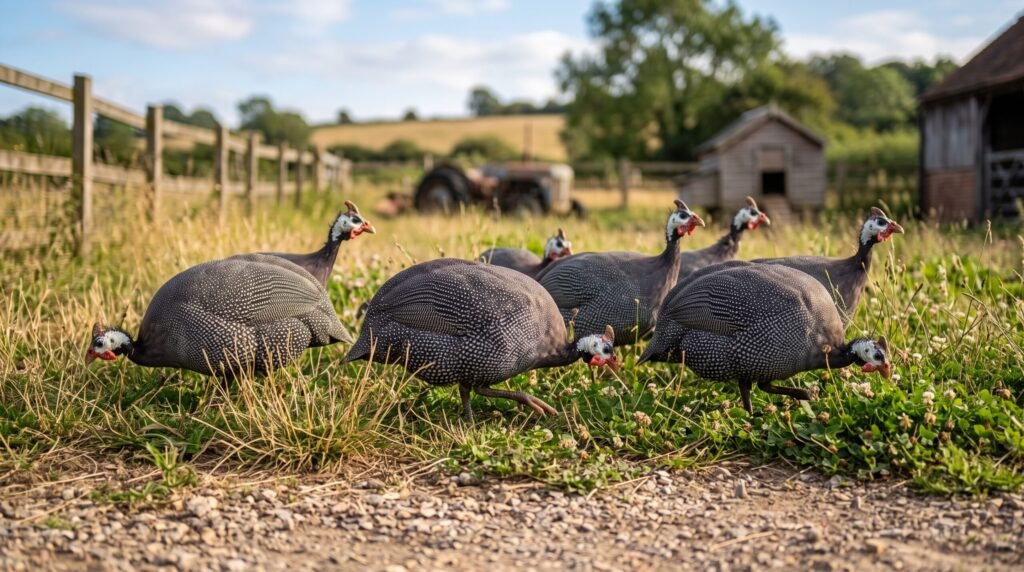
Selling guinea fowl comes down to matching what you’re raising — keets, breeding adults, eggs, or dressed meat — to the buyers who actually want it, then pricing and marketing accordingly. That might mean listing keets on a hatching-and-livestock swap page, calling the chef at a farm-to-table restaurant, or setting up a folding table at Saturday’s farmers market.
I’ve sold guinea fowl through nearly every one of those channels over the years, and the biggest lesson I’ve learned is that guineas don’t sell themselves the way chicken or duck does. Most people have never eaten one, never kept one, and don’t know what to do with a bird that sounds like a rusty gate hinge. Your job isn’t just to find buyers — it’s to explain what they’re buying.
This guide walks through where to find buyers for keets, adults, eggs, and meat, how to price each one fairly, and how to market your flock so the right customers find you instead of the other way around.
- Know your product first. Keets, breeding pairs, hatching eggs, table eggs, and dressed meat each attract a different buyer — price and market them separately.
- Local marketplaces move live birds fastest. Facebook groups, Craigslist, and poultry swap sites reach far more guinea buyers than a general classified ad ever will.
- Restaurants pay the most for meat. Chefs looking for something beyond chicken will often pay $8–9 per pound direct, well above retail chicken prices.
- Know your state’s poultry laws before you sell meat. Most states let small producers sell a limited number of birds direct to consumers without full USDA inspection, but the rules vary.
- Marketing is mostly storytelling. Photos of the flock, a farm name, and a little education about what makes guinea meat and eggs different do more work than any coupon.
Start by Deciding What You’re Actually Selling
Before you post a single ad, get specific about what you have to offer. “Guinea fowl” isn’t one product — it’s at least five, and each one has its own buyer, price range, and sales pitch.
- Day-old to a few-weeks-old keets — bought by people starting or expanding a flock, often for pest control or as watch birds. If you’re new to hatching your own, it helps to walk through raising guinea fowl keets week by week before you start advertising them for sale.
- Juvenile or adult breeding stock — bought by keepers who want birds already past the fragile keet stage, or who want proven layers.
- Hatching eggs — bought by people with their own incubator or a broody hen, usually at a premium over table eggs.
- Table eggs — bought by local customers who’ve heard guinea eggs are richer and want to try them.
- Dressed meat — bought by home cooks looking for something different, or by chefs after a lean, gamey alternative to chicken.
Once you know which of these you’re selling, the rest of this guide gets a lot easier to apply, since finding buyers for ten-day-old keets looks nothing like finding buyers for oven-ready birds. It’s also worth running the numbers on your own setup using a guinea fowl profit calculator so your prices actually cover your costs before you start selling.
Finding Buyers for Live Guinea Fowl
Live birds — keets, juveniles, and adults — are usually the easiest guinea product to sell, mostly because the buyer pool is anyone already interested in backyard poultry, not just people looking for a meal.
Local Classifieds and Livestock Swap Sites
Facebook Marketplace and local “buy, sell, trade” poultry groups tend to outperform general classifieds by a wide margin, since the people scrolling those groups are already primed to buy birds. Dedicated poultry sale boards work the same way — sellers on these sites commonly move keets in the $8–10 range and adult pairs anywhere from $15 to $60, depending on color variety and whether the pair is already laying.
Craigslist still gets traffic too, but I’ve had better luck with poultry-specific groups where buyers already know what a “straight run” listing means and won’t be caught off guard by the usual challenge of trying to tell if a guinea fowl is male or female at a young age.
When you post, include:
- Age and approximate sex ratio (most keets are sold unsexed, since guinea fowl are notoriously hard to tell apart before they’re several months old)
- Color variety — pearl, lavender, royal purple, white, and pied guineas often sell for more than standard pearl gray
- Whether they’re vaccinated, and against what
- Pickup location and any minimum order
Local Hatcheries, Feed Stores, and Swaps
If you’re hatching more keets than you can place yourself, some local hatcheries and feed stores will take consignment birds, especially in spring. It’s worth a phone call even if they say no — staff often know which regular customers have been asking about guineas, and a personal referral beats any ad.
Regional poultry swaps and small-animal auctions are also one of the most reliable places to sell adult guineas, particularly in rural areas where these events draw a steady crowd of small-flock keepers. Grown guineas at these auctions commonly sell in the $7–10 range per bird, with unusual colors pulling a bit more. Bring more birds than you think you’ll sell — swap traffic is unpredictable, and a slow morning can turn into a rush right before closing.
Breed Clubs and Online Forums
Poultry forums and breed-specific Facebook groups are worth joining even if you never post a sale there, because these communities are where buyers ask “does anyone have lavender guineas near me?” Answering that kind of post directly is often the fastest sale you’ll make all season.
Finding Buyers for Guinea Eggs
Guinea eggs split into two very different markets — hatching eggs and table eggs — and mixing up who you’re marketing to will cost you sales.
Hatching Eggs
Hatching-egg buyers are almost always other keepers, either people without a rooster-and-hen pair of their own or people trying to bring in new bloodlines. List clutch size, parent stock color, and how recently the eggs were collected, since fertility drops the longer eggs sit before incubation. Local poultry swap sites and breed forums are your best audience here, and buyers researching how to tell if guinea fowl eggs are fertile before they commit to a dozen tend to ask good questions and take good care of what they buy.
Table Eggs
Selling guinea eggs for eating is a smaller, more local market, since most people have never tried one. That actually works in your favor — a lot of my regular customers started as curious first-timers who bought a half dozen just to see what the fuss was about, and came back once they realized the yolks are richer and the shells last longer in the fridge.
Because guineas only lay heavily for part of the year, expect seasonal supply to shape your sales rhythm. Some keepers price table eggs at a modest premium over chicken eggs to reflect that scarcity, then let regular customers know when a slowdown is coming so nobody’s caught off guard.
Farmers markets, a small honesty stand at the end of your driveway, and word of mouth through local parents’ groups or community boards tend to move table eggs faster than online listings, since freshness and proximity matter more to that buyer than to someone shopping for hatching stock. If customers ask why guinea eggs look and taste different, it’s worth pointing them toward the differences between guinea fowl eggs and chicken eggs rather than trying to explain it all on the spot.
Finding Buyers for Guinea Fowl Meat
This is where the real money is, and also where you need to do your homework before you sell a single bird.
Know the Rules Before You Sell Meat
In the U.S., poultry sold across state lines generally has to be processed at a USDA-inspected facility. The Poultry Products Inspection Act specifically covers guinea fowl alongside chickens, turkeys, ducks, and geese, and it includes exemptions that let small producers slaughter and sell a limited number of farm-raised birds without full federal inspection, according to guidance published by Alabama Extension. Several exemption categories exist depending on how many birds you process and who you sell to, and some states extend a version of this exemption to farmers markets and even restaurant sales, while others require state-licensed processing for anything beyond on-farm, direct sales.
The specifics vary enough by state that it’s worth checking with your state department of agriculture before you advertise a single pound of guinea meat for sale — exemption limits, labeling requirements, and which venues you’re allowed to sell through all differ. That one phone call can save you from a fine or a shut-down table at your first farmers market.
Restaurants and Chefs
Restaurants are consistently the highest-paying market for guinea meat. Farm-to-table chefs looking for a lean, flavorful alternative to chicken have reportedly paid $8–9 per pound direct from small producers, compared to $3.50–5 per pound for locally raised chicken — guinea’s gamey, slightly darker meat gives it a niche that chefs are often willing to pay a premium for. The catch is that most chefs have never cooked with guinea fowl and need to be shown, not just told, why it’s worth trying.
If you’re weighing whether meat sales are worth the extra regulatory legwork, it helps to look at the bigger picture of whether guinea fowl farming is profitable at the scale you’re working with before you invest in processing equipment.
A few things that help close that first sale:
- Bring a sample bird (or a few) rather than just a price sheet
- Explain the flavor comparison — closer to a cross between chicken and pheasant than to standard poultry
- Offer consistent, predictable delivery windows, since restaurants plan menus around reliable supply
- Start with one or two dishes on a seasonal or specials menu before pitching a permanent addition
Farmers Markets and Specialty Grocers
If restaurant sales feel like a bigger step than you’re ready for, farmers markets let you sell frozen, vacuum-sealed guinea meat directly to home cooks who are already primed to try something unusual. Processed and frozen guinea has sold online in the $25–30 range for a whole bird, and fresh, locally sold birds can often command a similar or higher price once you account for shipping savings. A simple table sign explaining what guinea fowl is, how it tastes, and a suggested cooking method (it roasts and braises well, similar to a small, lean chicken or pheasant) turns a lot of curious lookers into first-time buyers.
It’s also worth checking specialty grocers in your area — guinea fowl is a familiar, sought-after meat in West African, Caribbean, and parts of European cuisine, and grocers serving those communities are sometimes underserved by mainstream poultry suppliers. A visit with a sample and a price sheet can open a steady wholesale relationship, even if it takes a few conversations before they commit to regular orders.
Pricing Your Guinea Fowl Fairly
Guinea fowl pricing varies more than chicken pricing because supply is thinner and demand is regional, but a few rough benchmarks can help you land somewhere reasonable:
| Product | Typical Price Range | Notes |
|---|---|---|
| Day-old to young keets | $4–10 each | Straight run (unsexed); rare colors trend higher |
| Adult breeding pairs | $15–60 per pair | Price rises with proven laying history and color |
| Hatching eggs | $2–5 per egg | Priced above table eggs due to fertility value |
| Table eggs | Slight premium over chicken eggs | Varies with local demand and seasonal supply |
| Dressed/frozen meat | $8–10 per pound direct to consumer or restaurant | Restaurant sales tend to land at the higher end |
These numbers move with your region, so it’s worth checking a few local listings and asking around at your nearest swap or market before settling on your own prices. Undercutting the local market by a lot can actually hurt you — buyers sometimes read a suspiciously low price on livestock as a red flag about the bird’s health.
Marketing Your Flock: Getting Found by the Right Buyers
Finding buyers and marketing your birds are really the same job looked at from two directions. Here’s what’s worked for me.
Build a Simple Online Presence
You don’t need a full website to start, but a Facebook page or Instagram account for your farm gives buyers somewhere to check you out before they drive out to see your birds. Post photos of healthy, active guineas and — this matters more than people expect — keets at different ages, since a lot of buyers have never seen what a two-week-old keet looks like next to a mature bird. Posting consistently matters more than posting often; a page that goes quiet for months looks abandoned.
Tell People What Guinea Fowl Actually Is
This might be the single most useful thing you can do. Most potential buyers have questions before they have a shopping list: Are guineas noisy? Do they get along with chickens? What do they taste like? Answering these up front — in your listings, on a farm sign, or in conversation at a market table — converts more browsers than any discount.
If you keep guineas partly for pest control, mention it. A lot of buyers come to guinea fowl specifically because they’ve heard about their reputation for tick control, and hearing that from someone who’s actually seen the results carries more weight than a hatchery’s product description. Small local groups and even conversations at your kids’ school or your own workplace have sold me more birds over the years than any paid ad, since people trust a recommendation from someone they already know.
If big-box stores or large hatcheries serve your area, compete on what they can’t offer: local pickup, a chance to see the parent stock, health records, and the ability to ask questions directly. Many buyers are specifically trying to avoid a long-distance shipped order, since shipping stresses young birds and sometimes results in losses.
Time Your Marketing to the Season
Most keet sales happen in spring and early summer, when people are setting up new flocks. Meat and egg sales can run more steadily through the year, though egg supply naturally drops when guineas slow their laying. Planning your posts and outreach around these cycles — pushing keet ads hard in March and April, meat sales in fall when birds reach processing weight — gets your marketing in front of buyers exactly when they’re ready to act.
Frequently Asked Questions
How much can I realistically sell guinea fowl for?
It depends heavily on the product and your region. Keets commonly sell for $4–10 each, adult pairs for $15–60, and dressed meat for $8–10 per pound sold direct to consumers or restaurants. Rare colors and proven layers push prices toward the higher end of these ranges.
Do I need a license to sell guinea fowl meat?
In most cases, yes, in the sense that you need to operate within an exemption or licensing category set by your state. Many states allow small producers to sell a limited number of farm-raised, farm-processed birds directly to consumers without full USDA inspection, but the exact rules, bird limits, and allowed sales venues vary by state. Check with your state department of agriculture before advertising meat for sale.
Where do most people sell live guinea fowl?
Local Facebook groups, poultry-specific classified sites, and regional poultry swaps or small-animal auctions tend to move live birds fastest, since the audience is already looking for poultry rather than browsing general classifieds.
Why don’t guinea eggs sell as easily as chicken eggs?
Mostly because fewer people have tried them. Guinea eggs also come with thicker shells and a shorter laying season than chicken eggs, which can make supply less predictable. Educating buyers about the flavor and richness — rather than assuming they already know — tends to convert more first-time customers.
Selling guinea fowl well isn’t really about finding some hidden pool of buyers — it’s about matching each product you raise to the customer who already wants it, pricing it fairly, and being the one who takes the time to explain what makes these birds worth trying. Start with whichever channel fits what you have right now, whether that’s a local swap group or a conversation with a nearby chef, and build outward from there.
Have you found a buyer or a sales channel for your guineas that worked better than you expected? I’d love to hear about it — and if you’re just getting your flock started, it’s worth reading up on buying your first guinea fowl so you know what you’re working with before you start planning your first sale.
Hi, I’m Rayyan. I raise guinea fowl and share practical, research-backed guides for backyard keepers and homesteaders. I combine hands-on flock experience with trusted poultry management and university extension resources to help you raise healthier, more productive birds — with confidence, not guesswork.