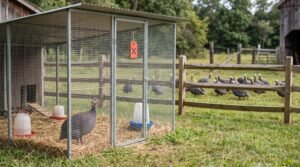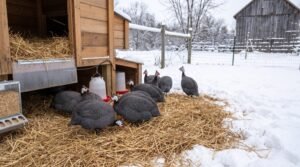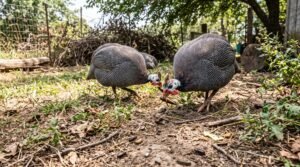
Guinea fowl eat a mix of commercial poultry feed, foraged insects and plants, grains, and calcium-rich grit, with young keets needing much higher protein (24–26%) than adult birds (16–18%). Getting this balance right is one of the simplest ways to keep a flock healthy, productive, and doing what guinea fowl do best: eating ticks by the thousand.
When I brought home my first flock, I assumed they’d eat exactly what my chickens ate. They didn’t complain, but their keets grew slower than they should have, and it took me a season of research (and a few calls to my local extension office) to figure out why. Guineas have their own nutritional rhythm — different protein needs at different ages, a strong preference for foraging over feeder food, and a handful of things they should never touch. This guide covers exactly what to feed guinea fowl at every stage, how much, and what to keep out of reach.
- Keets (0–5 weeks): 24–26% protein game bird or turkey starter
- Growers (5–12 weeks): 18–20% protein grower feed
- Adults (12+ weeks): 16–18% protein layer or flock feed, plus free-range foraging
- Daily intake: roughly 0.25–0.5 lb of feed per adult bird, less if they’re free-ranging heavily
- Avoid: chocolate, avocado, onions, salty or sugary scraps, and moldy feed
What Guinea Fowl Eat in the Wild
Guinea fowl are originally from Africa, where the wild helmeted guinea fowl (Numida meleagris) spends most of its day walking and pecking across open ground. That foraging instinct never really left them, even after generations of domestication. According to poultry extension guidance on backyard guinea flocks, adult guinea fowl that are allowed to roam freely can meet most of their nutritional requirements on their own, picking up a steady mix of insects and arachnids — mosquitoes, ticks, beetles, slugs, worms, and caterpillars — along with weed seeds, grass, dandelions, and other vegetation as they go.
This is the part that surprises a lot of new keepers: your guineas aren’t just nibbling at bugs for fun. In the wild, insects and greens are the diet. Everything you feed them in a coop or run is really just filling the gap that foraging would otherwise cover — which is why free-ranged birds typically need far less supplemental feed than confined ones.
Guinea Fowl Feeding by Life Stage
Protein is the single most important number to track, and it drops sharply as your birds mature. Feeding an adult ration to keets — or a keet-strength starter to grown birds — is one of the more common mistakes beginners make.
| Age | Feed Type | Protein Level |
|---|---|---|
| 0–5 weeks | Game bird or turkey starter | 24–26% |
| 5–12 weeks | Grower feed | 18–20% |
| 12+ weeks (adult) | Layer or all-flock feed | 16–18% |
Feeding Keets (0–5 Weeks)
Keets grow fast, and that growth is fueled almost entirely by protein. Most poultry extension guidance puts their starter ration at 24–26% protein — noticeably higher than what a chick starter provides, which is one reason guinea keets tend to outgrow chicks fed the same feed. Look for a game bird or turkey starter instead; most feed stores carry one even if they don’t stock anything labeled specifically for guineas.
If you’re caught without the right feed, standard chick starter can work as a short-term stopgap if you supplement it with mealworms or scrambled, mashed egg to bump up the protein until you can get the proper starter. I’ve done this myself during a feed-store run gone wrong, and the keets did fine for the few days it took to sort out — just don’t make it a long-term plan.
A couple of practical notes from raising my own keets: use a drown-proof waterer for the first few weeks (they’re clumsier than they look), and keep the starter feed dust-free — soggy, caked feed in the brooder is a fast track to a mess nobody wants to clean twice a day.
Feeding Growers (5–12 Weeks)
Protein needs ease off a bit here, typically down to an 18–20% grower ration for weeks five through eight. This is a gradual transition, not a hard switch — mixing the new grower feed into the remaining starter over a few days helps avoid digestive upset and gets picky eaters used to the change.
This stage is also when keets start actively foraging alongside their feed if you let them, which is worth encouraging early. Guineas that learn to forage as youngsters tend to stick closer to home as adults, since they’ve already mapped their territory — one of the reasons most keepers recommend starting a flock from keets rather than adult birds if you plan to let them range freely.
Feeding Adult Guinea Fowl (12+ Weeks)
By around eight to twelve weeks, most keepers move birds onto a 16% layer mash, and many simply keep them on it through adulthood whether or not they’re actively laying, since it covers general maintenance needs well. If you’re raising guineas specifically for meat rather than eggs, a slightly higher-protein all-flock or game bird ration can support better weight gain.
Adult guineas that free-range extensively will often eat noticeably less commercial feed, since they’re supplementing heavily with insects and greens. As a rough baseline, guinea fowl need at least a quarter to a half pound of food per day, whether that comes from feed and forage combined, or from feed alone for birds kept confined. If you’re trying to work out exact quantities for your flock size, our guinea fowl feed calculator can help you estimate monthly feed costs based on how many birds you’re keeping and how much they free-range.
Foods Guinea Fowl Love to Forage
Letting guineas free-range isn’t just cheaper — it’s closer to how they’d naturally eat, and it’s a big part of why people keep them in the first place (ask anyone who’s had a tick problem disappear after a season with a confusion of guineas on the property).
Guineas will happily forage for:
- Insects and arachnids — ticks, beetles, mosquitoes, grasshoppers, spiders
- Slugs, snails, and worms
- Weed seeds and grass
- Dandelions and other leafy weeds
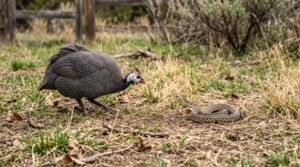
- Small reptiles and amphibians, occasionally
Greens matter more than people expect — guineas rely on them for healthy digestion, not just variety. If your setup doesn’t allow full free-ranging, tossing in fresh-cut grass, dandelion greens, or garden scraps a few times a week helps fill that same role. For keepers curious about which specific plants hold up best under guinea foraging pressure, our guide to the best plants and grasses for free-range guinea fowl goes into more detail on what to plant.
Grains, Scratch, and Treats
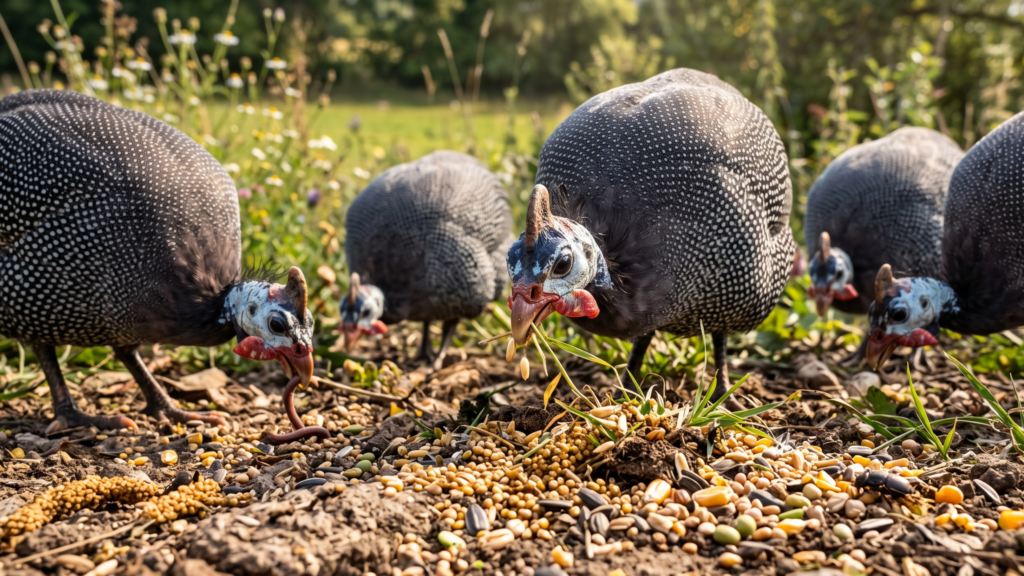
Beyond their main feed, guineas enjoy scratch grains — especially as a way to keep them occupied and returning to the coop in the evening. Wheat, sorghum, and millet tend to be the favorites; whole corn, on the other hand, often gets ignored entirely. That last part trips people up constantly — it’s a common myth that corn is a guinea staple, but most flocks will pick around it and leave it sitting in the run.
Good occasional treats include:
- Mealworms (a favorite, and useful for luring guineas back into a pen)
- Sprouted grains
- Grated or mashed boiled egg, especially useful during molting
- Leafy greens like lettuce or spinach
- Fruit, in small amounts
Treats should stay a minor part of the diet — think of them as seasoning, not a meal replacement. Overdoing high-calorie treats is one of the more overlooked causes of overweight guineas, which in turn can affect fertility and egg-laying later on.
Grit and Calcium: The Overlooked Essentials
It’s easy to focus entirely on protein and forget the two things every guinea needs regardless of age or diet: grit and calcium.
Like other gallinaceous birds, guineas need access to both indigestible grit, which helps the gizzard grind up whole seeds and grains, and a digestible calcium source such as crushed oyster shell or limestone, particularly once hens start laying — a point the Merck Veterinary Manual’s nutrition guidance for gallinaceous birds backs up in more clinical detail. Free-ranging birds usually pick up enough small stones on their own, but confined guineas need it offered separately in a dish.
Calcium needs shift with age and laying status, and this is a place where more isn’t automatically better. Growing, non-laying birds only need a modest amount of calcium in their diet — pushing high-calcium layer rations onto young birds too early can actually strain their kidneys over time. So keep the oyster shell dish reserved for laying-age hens, not the whole flock indiscriminately.
Foods to Avoid
Guineas are hardy, adaptable eaters, but a handful of foods genuinely don’t belong anywhere near their feeder. Chocolate contains theobromine, which can trigger vomiting, diarrhea, and even heart problems in birds. Onions and other alliums contain compounds that damage red blood cells, and avocado — flesh, pit, and leaves alike — carries a toxin called persin that’s dangerous to most birds, guineas included.
Keep guineas away from:
- Chocolate and caffeine
- Onions and members of the allium family
- Avocado (flesh, pit, and leaves)
- Moldy, spoiled, or rancid feed
- Excessive bread, salty snacks, or sugary treats
- Pesticide-treated seeds or produce
One less obvious hazard: certain medicated feeds. Monensin, a coccidiostat commonly added to some poultry feeds to control parasites, is toxic to guinea fowl specifically — so it’s worth reading labels carefully if you’re sharing feed between species or buying medicated starter from a store that stocks mainly chicken products. It’s also worth learning the symptoms of illness in guinea fowl so you can catch a problem early if a bird does get into something it shouldn’t have.
Frequently Asked Questions
Can guinea fowl eat the same feed as chickens? Mostly, yes, with one catch — guineas generally need higher protein than chickens at every life stage, so a straight chicken starter or layer feed may fall short unless the birds are also foraging heavily to make up the difference.
Do guinea fowl need a separate feeder from chickens? Not strictly, but guineas can be pushed off feed by more assertive chickens in a mixed flock. If you notice guineas losing weight or looking thin despite plenty of feed being available, adding a second feeding station usually solves it.
How often should I feed adult guinea fowl? Free-ranging adults typically do well with feed offered once or twice a day, morning and evening, as a supplement to foraging. Confined birds may need feed available throughout the day.
Will guinea fowl stop eating pests if I feed them too much? It can happen. Some keepers who raise guineas specifically for tick and pest control deliberately limit daytime feed, encouraging the birds to forage more actively before offering a fuller ration in the evening.
Feeding guinea fowl well really comes down to matching the ration to the bird’s age and letting their natural foraging instinct do a lot of the heavy lifting. Start keets on a proper high-protein starter, step the protein down as they grow, keep grit and calcium available, and skip the handful of foods that are genuinely risky — the rest is closer to poultry-keeping common sense. If you’re just getting your flock started, our beginner’s guide to guinea fowl farming is a good next stop for setting up housing and daily routines alongside feeding. What does your flock’s daily feeding routine look like — are they mostly free-ranging, or on a set feed schedule? I’d love to hear what’s worked for you.
Hi, I’m Rayyan. I raise guinea fowl and share practical, research-backed guides for backyard keepers and homesteaders. I combine hands-on flock experience with trusted poultry management and university extension resources to help you raise healthier, more productive birds — with confidence, not guesswork.