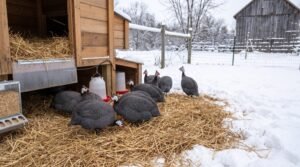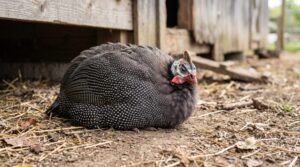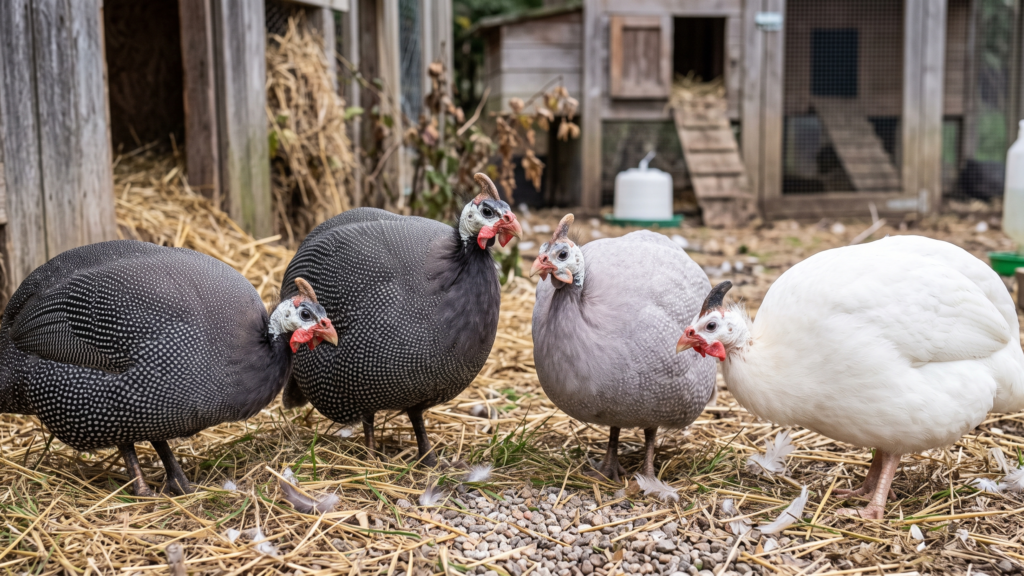
Pearl, French, and Lavender guinea fowl are the best choices for meat and egg production, with French guineas leading on meat yield and Pearl guineas offering the best balance of hardiness and steady laying. Which one fits your homestead depends on whether you’re prioritizing a bigger bird on the table or a reliable egg basket through the season.
I get asked about this constantly from people just getting into guineas: “Which variety should I actually buy?” It’s a fair question, because unlike chickens, guinea fowl don’t have dozens of distinct breeds — they have color varieties of essentially one species, plus a couple of meaningful genetic lines bred specifically for production. Once you understand the real differences between them, the decision gets a lot easier.
In this guide, I’ll walk you through the main varieties raised for meat and eggs in the US, what actually sets them apart in growth rate, egg output, and temperament, and how to pick the right one for your goals.
Here’s a quick side-by-side before we get into the details.
| Variety | Best For | Mature Weight (approx.) | Egg Production | Temperament |
|---|---|---|---|---|
| Pearl (African) | All-around meat + eggs | Hens 3–4 lbs, cocks 4–5 lbs | 60–100 eggs/year | Alert, flighty, hardy |
| French Pearl | Meat production | Hens ~3–3.5 lbs, cocks ~3.5–4 lbs+ (up to ~2 lbs heavier than African) | Similar or slightly higher, earlier start | Slightly calmer, faster growing |
| Lavender | Eggs + gentler flock dynamic | Comparable to Pearl, around 3–4 lbs | 60–100 eggs/year | Calmer, more laid-back |
| White | Meat with lighter carcass appearance | Comparable to Pearl | 60–100 eggs/year | Similar to Pearl |
Why Variety Selection Matters More Than “Breed”
Unlike chickens, where you’re choosing between genuinely distinct breeds like Rhode Island Reds or Leghorns, virtually all domestic guinea fowl in the US descend from the same species, the helmeted guinea fowl (Numida meleagris), as Oklahoma State University’s breed database notes. What you’re really choosing between is a color variety and, in one important case, a genetic line bred specifically for meat.
That distinction matters because it changes what you should actually expect. A White guinea and a Pearl guinea will perform almost identically in the field — the difference is cosmetic. A French guinea, on the other hand, is a genuinely different proposition for meat production because of selective breeding, not just color.
I raised standard Pearl guineas for years before trying a French line, and the difference in growth rate was the first thing I noticed — noticeably heavier birds by butchering age, without any change to how I fed or housed them.
Pearl Guinea Fowl
Pearl is the variety most people picture when they hear “guinea fowl” — dark gray-black plumage dotted with small white spots, a bare blue-gray head, and that unmistakable helmet-shaped knob on top. It’s the most popular of the three main varieties raised in the US, and the one most people recognize on sight.
Why it works for meat and eggs:
- Hens typically mature to 3–4 pounds and cocks to 4–5 pounds, based on hatchery and extension data on African-type guineas.
- According to backyard poultry guidance from Cooperative Extension’s poultry program, the meat from young guineas is tender with a flavor closer to wild game than chicken, and it’s lean with a good amino acid profile — a strong selling point if you’re marketing birds locally.
- Adult hens (a year or older) typically lay about one egg a day through the laying season, giving you a dependable supply if you collect daily.
- They’re hardy, adapt well to free-range or confined setups, and tend to be excellent foragers — which keeps feed costs down if you’re not raising them purely in confinement.
The trade-off is temperament. Pearls are alert and can be flighty, which is actually a feature if you’re using them for pest control or as a predator alarm, but it means they’re not the calmest bird to handle. If you’re brand new to guinea keeping, my beginner’s guide to starting a guinea fowl flock walks through what to expect in those first few months.
French Guinea Fowl (French Pearl)
If meat production is your main goal, French guineas are worth a serious look. They started out as African Pearl guineas, then were selectively bred in France specifically as meat birds, and they still look nearly identical to standard Pearls — you’d only notice the difference standing side by side.
What sets them apart:
- At maturity, French guineas typically outweigh African-type guineas by about two pounds, which is a meaningful difference when you’re calculating carcass yield.
- Their meat tends to be finer in texture, compared with the slightly gamier flavor of standard African guineas — some cooks prefer one, some the other.
- French guinea fowl grow faster and hens tend to begin laying sooner than African guinea hens — birds started early in the season often lay by the end of summer, while African-type hens may not start until the following spring.
- French keets hatch somewhat larger than standard African keets, which tends to make them a bit less delicate during the brooding stage.
One thing worth knowing before you order: French guinea stock from major hatcheries is often produced as a hybrid cross, so don’t count on these birds reliably reproducing true-to-type on their own if you’re planning to breed replacements yourself. If breeding your own flock is part of your long-term plan, that’s worth factoring in before you commit to French stock exclusively — my guide on hatching guinea fowl eggs successfully covers what natural and incubator hatching actually involves.
For anyone weighing the economics of a meat-focused flock, it’s also worth running the numbers against your setup — I built a guinea fowl profit calculator that can help with that.
Lavender Guinea Fowl
Lavender guineas carry a soft blue-gray plumage instead of Pearl’s darker gray, dotted with the same white speckling. Performance-wise, they’re very close to Pearls — same general weight range, same egg output — but keepers consistently describe them as the calmer of the varieties.
Why keepers choose Lavender:
- Comparable egg production to Pearl guineas, generally in the 60–100 eggs per year range during a good laying season.
- A steadier, more laid-back temperament, which can make flock management a little easier if you’re also running chickens or ducks alongside them.
- Solid dual-purpose performance — they’re not a specialized meat line like French guineas, but they hold their own for both meat and eggs.
If you’re planning to keep guineas alongside other poultry, it’s worth reading through how guinea fowl get along with chickens, ducks, and turkeys before you commit to a mixed flock, since temperament differences between varieties can actually influence how smoothly that integration goes.
White Guinea Fowl
White guineas are the least common of the three main varieties, valued partly for their appearance and partly for a lighter-colored carcass that some people prefer for meat production. They’re an all-white, less common variety, kept both for decorative purposes and for meat.
In terms of production numbers — egg output, growth rate, mature weight — Whites track closely with Pearls. The main reason to choose them over a Pearl is aesthetic or a preference for a lighter-skinned carcass at processing time, not a meaningful performance advantage.
Meat vs. Egg Production: What Actually Changes Your Choice
Rather than fixating on which single variety is “best,” it helps to separate the two goals.
If meat is your priority:
- French guineas are the clear standout for faster growth and a larger finished bird.
- Most keepers process guinea fowl for meat between 12 and 20 weeks of age — wait much longer than that and the meat tends to turn tough and chewy.
- Standard Pearl or Lavender guineas still work fine for meat if you’re not chasing maximum size, and their gamier flavor is actually preferred by some cooks.
If eggs are your priority:
- Pearl and Lavender are both solid, dependable layers, and the difference between varieties here is minor.
- Under good management, guinea hens can lay 100 or more eggs a year. The eggs run smaller than chicken eggs, but the shells are notably hard and hold up well to handling.
- Free-range systems tend to suit meat production well, but if egg collection is your focus, a more confined setup makes nests far easier to find and manage — guineas are notorious for hiding their nests in tall grass otherwise.
If you’re trying to nail down exactly how many eggs to expect from your specific setup and flock size, I go into much more depth in how many eggs guinea fowl actually lay per year.
Practical Tips for Choosing Your Variety
- Start with your goal, not the prettiest bird. It’s tempting to pick based on color, but decide whether meat, eggs, or pest control matters most first.
- Factor in feed and foraging setup. All varieties are strong foragers, but confinement changes your feed costs significantly — my guide to what guinea fowl eat breaks down what to budget for either system.
- Don’t overlook housing needs. Whatever variety you choose, guineas need adequate roosting space and protection from predators, especially as keets. My guinea fowl housing guide covers coop setup basics that apply across all varieties.
- Consider starting mixed. Many keepers, myself included, started with an assorted straight-run batch to see which variety’s temperament and productivity fit their operation before committing to one type at scale.
- Plan for the kitchen, too. If meat production is the endgame, it helps to know what you’re working toward — our recipes and cooking section has ideas for putting that lean, flavorful meat to good use.
Frequently Asked Questions
Is French guinea fowl a separate species from Pearl guinea fowl? No. French guineas are the same species as African Pearl guineas — they’re a line selectively bred in France for larger size and faster growth as meat birds, not a distinct species.
Which guinea fowl variety lays the most eggs? There’s no dramatic difference in egg output between Pearl, Lavender, White, or French varieties. All can produce 60–100+ eggs a year under good management; French hens simply tend to start laying earlier in their first year.
Can I raise guinea fowl for both meat and eggs from the same flock? Yes. Most backyard keepers do exactly this — collecting eggs through the laying season while processing surplus cockerels or older birds for meat. Pearl and Lavender varieties are especially well suited to this dual-purpose approach.
Do guinea fowl breeds differ in temperament? Somewhat. Lavender guineas are generally described as calmer and more laid-back, while Pearl and French varieties tend to be more alert and vocal. All guinea fowl remain more independent than chickens regardless of variety.
Whichever variety you land on, the fundamentals of good feeding, housing, and predator protection matter more to your results than the color of the feathers. Have you raised more than one variety side by side? I’d love to hear how the differences played out in your own flock — drop your experience in the comments, or dig into our guide on guinea fowl pros and cons if you’re still weighing whether guineas are the right fit for your homestead at all.
Hi, I’m Rayyan. I raise guinea fowl and share practical, research-backed guides for backyard keepers and homesteaders. I combine hands-on flock experience with trusted poultry management and university extension resources to help you raise healthier, more productive birds — with confidence, not guesswork.