The safest way to introduce new guinea fowl to an existing flock is a 2–4 week quarantine, followed by a slow, side-by-side introduction where the birds can see and hear each other before they ever share space. Rush that process and you’re asking for pecking injuries, stressed-out hens, and sometimes a sick flock.
I learned this the hard way with my first attempt at expanding my flock. I picked up three young guineas from a keeper two towns over, walked them straight into my run with my established birds, and spent the next two days separating fights. Nobody got seriously hurt, but it was a stressful, avoidable mess. Since then I’ve integrated new birds a half-dozen times using the method below, and it’s never gone sideways again.
Here’s what actually matters when you’re merging guinea fowl groups, why guineas are trickier than chickens in this regard, and how to get your new birds accepted with the least amount of drama.
A few things make the difference between a smooth introduction and a rough one:
- Quarantine new birds for at least two to four weeks before they’re anywhere near your existing flock.
- Let them see each other before they touch — side-by-side pens beat a cold introduction every time.
- Match age and size as closely as you can; keets and adults should never be combined directly.
- Introduce during free-range time or in a large, low-stress space rather than a cramped coop.
- Add extra feeders and waterers so lower-ranking birds aren’t shut out.
- Watch closely for the first one to two weeks and be ready to separate an injured or bullied bird.
Why Guinea Fowl Are Harder to Introduce Than Chickens
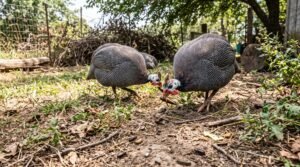
Guineas aren’t chickens, and treating an introduction like you would with hens is where a lot of keepers run into trouble. Guinea fowl tend to form close bonds with one another, especially when they’re raised together from a young age, and pairs can stay bonded for years. That tight social structure is a strength once it’s established, but it also means an existing flock can be genuinely suspicious of outsiders.
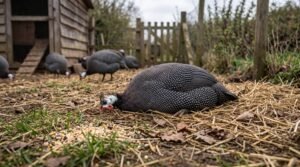
They can also be rougher than chickens when they don’t like what they see. Guineas can be bullies toward other poultry and won’t always tolerate newcomers gracefully, and a bird that’s been singled out can end up on the receiving end of persistent pecking. In my experience, a guinea that gets targeted will often get chased away from the feeder repeatedly rather than attacked outright — which is its own problem if it means that bird isn’t eating or drinking enough.
If you’re newer to guineas in general, it’s worth reading through our beginner’s guide to guinea fowl farming before you start adding to your flock, since a lot of introduction problems trace back to housing or space that was already too tight.
Step 1: Quarantine Before You Do Anything Else
Before your new birds get anywhere near your existing flock, they need their own space, completely separate, for a minimum of two weeks. New birds can carry disease into a flock even when they show no outward signs of illness — a bird can look perfectly healthy while still being a carrier, according to poultry biosecurity guidance from the University of Kentucky. That’s true whether you bought adults from a breeder, picked up birds at a swap, or brought some home from a show.
How long you quarantine depends on how cautious you want to be:
- Two weeks is the minimum most keepers recommend, and it’s long enough to catch obvious problems like mites, lice, or respiratory symptoms.
- Thirty days is the standard many university extension programs recommend for backyard flocks, since it gives more diseases time to show symptoms before exposure.
Multiple extension sources back the longer window. The University of Maryland Extension’s biosecurity guidance recommends quarantining newly arrived birds for at least 30 days before mixing them with an existing flock, and California’s Department of Food and Agriculture gives the same recommendation, noting that isolating new birds for 30 days measurably reduces the risk of introducing disease into the original flock. If you have the space and patience for it, I’d lean toward the full month, especially if the birds came from a swap meet, auction, or anywhere with mixed flocks passing through.
During quarantine:
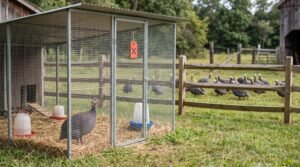
- Keep the new birds in a separate structure, not just a divided section of the same coop.
- Use separate feeders, waterers, and tools, or disinfect shared equipment between uses.
- Work with your existing flock first each day, then the quarantined birds, and wash your hands in between.
- Watch daily for lethargy, odd droppings, discharge, or labored breathing.
If a bird shows any signs of illness during this window, don’t add it to the flock. Continue isolating it and consider reaching out to a vet experienced with poultry. Our guide to common guinea fowl diseases is a useful reference if you notice anything that doesn’t look right.
Step 2: Match Birds by Age and Size
Guinea keets and full-grown adults should never go straight into the same space. Adding young keets to an adult flock generally doesn’t go well, since the smaller birds simply don’t have the size or ability to defend themselves. If you’re raising keets, keep them in their own brooder until they’re closer to adult size before even starting the introduction process.
If you’re working with hatched keets from your own flock, our guide on raising guinea keets week-by-week walks through when they’re actually ready for more independence. When you’re bringing in adult birds instead, try to source ones close in size to your current flock — a big size gap tends to invite bullying even between grown birds.
Step 3: Let Them See Each Other First
Once quarantine is done and everyone’s healthy, don’t just open a gate and hope for the best. The birds need to get used to each other visually before they’re expected to share space.
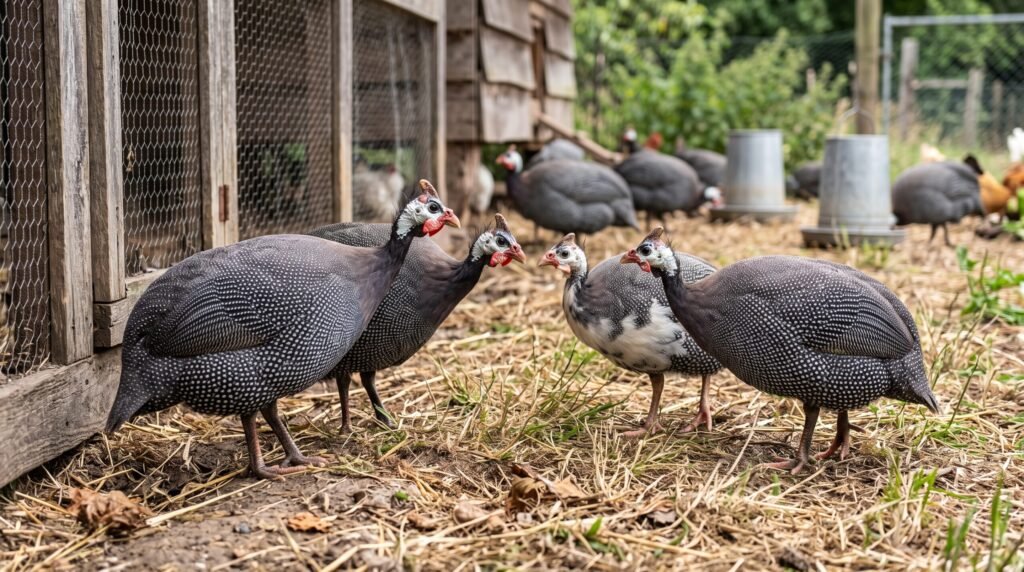
Set up adjoining pens or runs, divided by wire fencing the birds can see and hear through but not get at each other across. Keeping the new guineas in an enclosure right next to the existing run for several days lets both groups get familiar with each other’s presence, scent, and sounds without any risk of a direct confrontation. I usually give this stage a full week minimum — guineas are naturally more high-strung than chickens, and rushing this step is where most bad introductions start.
Watch for these signs during the side-by-side phase:
- Birds calmly standing near the shared fence line rather than pacing or alarm-calling constantly
- Reduced alarm calling over time as the presence of the new birds becomes routine
- Curious approach behavior instead of aggressive posturing at the fence
If your birds are still in a near-constant state of agitation after a week or two, give it more time before moving to direct contact.
Step 4: Introduce Them on Neutral, Open Ground
When you’re ready for the birds to actually meet, choose your setting carefully. A cramped coop is the worst place to do this — there’s nowhere for a targeted bird to retreat to, and guineas that feel cornered get more aggressive, not less.
A large run or free-range time works better. One trick experienced keepers use is letting the new group out to free-range first, then bringing the existing flock out afterward — it shifts everyone’s focus toward exploring new surroundings rather than fixating on the new arrivals. That trick has worked well for me — birds that are busy foraging and exploring tend to have less energy left over for confrontation.
A few practical setup tips for this stage:
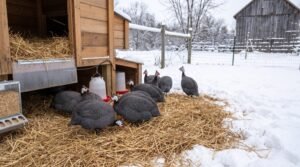
- Add extra feeders and waterers spaced well apart so no single bird can guard all the resources.
- Provide places to hide or duck out of sight — a low shrub, a stack of pallets, or the underside of a shelter all work.
- Do the first introduction in the morning so you have all day to observe and intervene if needed.
- If you keep guineas alongside chickens or other poultry, know that guinea fowl tend to be more territorial than chickens and may act aggressively toward other species if they feel their space has been invaded, so mixed-species introductions deserve extra caution and space.
If you’re planning ahead for this stage, it’s worth checking that your setup gives everyone enough room in the first place — our guinea fowl space requirements guide breaks down how much room indoor and outdoor areas actually need per bird.
Step 5: Supervise Closely for the First One to Two Weeks
Don’t consider the introduction finished just because the birds made it through day one without a fight. Keep a close eye on the flock for at least the first week, ideally two.
What to watch for:
- Repeated targeting of one bird — occasional pecking to sort out a pecking order is normal, but one bird getting chased away from food and water over and over is not.
- A bird that won’t approach feeders or waterers even when you’ve added extras.
- Visible injuries, especially around the head, neck, or back.
- Isolation — a new bird that’s consistently kept away from the rest of the group even after a week or two probably needs to be pulled and reintroduced more slowly.
If you do see a bird getting singled out badly, separate it, let things settle, and try the introduction again more gradually — sometimes going back to the side-by-side stage for another week solves it. This happened with one of my own hens years ago; she went back behind the fence for ten more days and integrated without issue on the second attempt.
Quick Reference: Introduction Timeline
Here’s a rough timeline you can adapt based on how your birds are behaving:
| Stage | Typical Duration | What Happens |
|---|---|---|
| Quarantine | 2–4 weeks | New birds fully separated, monitored for illness |
| Side-by-side | 3–7+ days | Adjoining pens, visual and audio contact only |
| Supervised free-range | 1–3 days | Groups share open space, closely watched |
| Full integration | Ongoing | Birds share coop and run, occasional monitoring |
Treat this table as a starting point, not a rulebook — some flocks settle in days, others need weeks, and guineas in particular tend to reward patience over speed.
Final Thoughts
Introducing new guinea fowl to an existing flock really comes down to slowing everything down: quarantine long enough to rule out illness, let the birds get used to each other through a fence before they share space, and give them room to sort out a pecking order without anyone getting cornered. It’s not a fast process, but it’s a lot less stressful — for you and the birds — than trying to shortcut it.
Have you had a smooth integration, or a rough one? I’d love to hear what worked for your flock in the comments. And if you’re still building out your setup, take a look at our guide to common mistakes beginners make with guinea fowl — a good number of them trace right back to rushed introductions.
FAQ
How long should I quarantine new guinea fowl before adding them to my flock? At least two weeks, though many university extension programs recommend a full 30 days for backyard flocks. The longer window gives more diseases time to surface before the birds are exposed to your existing flock.
Can I introduce guinea keets directly to an adult flock? No. Keets don’t have the size or ability to defend themselves against adult birds. Raise them separately until they’re closer to adult size, and follow the same side-by-side introduction process from there.
Will my guinea fowl ever fully accept new birds? Usually, yes, given enough time. Most flocks settle into a new pecking order within a couple of weeks of full integration. Some individual birds bond faster than others, and a little ongoing pecking to establish rank is normal as long as it doesn’t turn into sustained bullying.
Is it easier to introduce guinea fowl in pairs or groups rather than one at a time? Generally, yes. A single new bird has no allies and tends to draw more focused aggression. Introducing two or more new birds together gives them some safety in numbers during the adjustment period.
Hi, I’m Rayyan. I raise guinea fowl and share practical, research-backed guides for backyard keepers and homesteaders. I combine hands-on flock experience with trusted poultry management and university extension resources to help you raise healthier, more productive birds — with confidence, not guesswork.