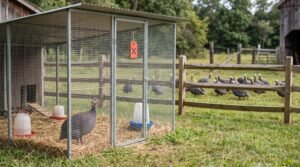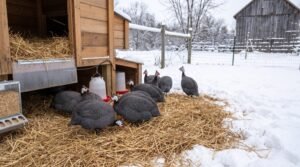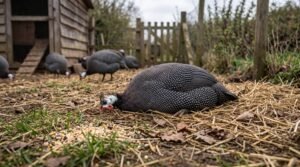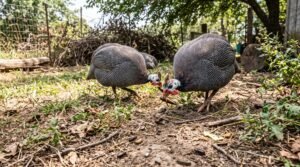
Adult guinea fowl need a minimum of 3 to 4 square feet of indoor coop space per bird, plus at least 10 square feet of outdoor run space if they’re not free-ranging. Keets need far less to start — around 1 square foot per bird in the brooder — but that number climbs fast as they grow.
I learned the hard way that guinea fowl don’t scale the same way chickens do. My first coop was sized using chicken math, and within a few months I had birds pacing the fence line, picking at each other’s feathers, and refusing to go inside at dusk. Guineas are more high-strung than chickens, and cramped quarters make that worse, not better. Get the space right from the start and you’ll skip most of the headaches that come with a stressed flock.
Here’s exactly how much room your guineas need at every stage, indoors and out, and how to calculate it for your own flock size.
Guinea fowl space needs change a lot as they grow, so here’s the quick version before we get into the details:
| Life Stage | Indoor / Brooder Space | Outdoor Run Space |
|---|---|---|
| Keets (0–8 weeks) | 1–2 sq. ft. per bird | N/A (kept indoors) |
| Adults, coop only | 3–4 sq. ft. per bird | — |
| Adults, coop + run | 3–4 sq. ft. per bird | 10+ sq. ft. per bird |
| Adults, free-range | 3–4 sq. ft. per bird (night shelter) | Up to 30 birds per acre |
Why Space Requirements Matter for Guinea Fowl
Guinea fowl aren’t just noisier chickens. They’re a separate species with a different temperament, and that temperament is the whole reason space matters so much.
Guineas are flock-oriented to an extreme degree. They panic more easily than chickens, they pile into corners when startled, and they don’t have the same pecking-order tolerance for close quarters. Cramped conditions at any age tend to bring on stress, bullying, feather pulling, and a higher chance of losing birds altogether. I’ve seen this firsthand — a too-small run turned my normally chill flock into a bickering mess within a week, and it took nearly a month of extra space and enrichment to settle them back down.
The other piece is that guineas genuinely prefer more room than most backyard keepers expect. They’re active foragers by instinct, even when fully domesticated, and a cramped enclosure fights against that instinct all day, every day.
Indoor Space Requirements by Age
Keets (0–8 Weeks): Brooder Space
Newly hatched keets don’t need much room on day one, but they outgrow their starting space quickly, and that’s where most beginners get caught off guard.
- Week 1–2: A small fraction of a square foot per keet is plenty at first, since they’re tiny and huddling for warmth.
- Week 3–8: Space needs climb to roughly a full square foot per keet, and some keepers push closer to two square feet as feathering finishes out.
- By week 8: Keets are fully feathered and ready to move into their permanent coop and run.
I always plan for the week-8 numbers from day one, even though it feels like overkill at first. Keets grow unbelievably fast, and resizing a crowded brooder mid-way is more disruptive than starting a size up. If your brooder runs a little large early on, it’s not wasted — it just gives you room to skip a resize.
One thing that’s easy to overlook: guinea keets are more panic-prone than chicken chicks, and a startled batch can pile on top of each other hard enough to cause real injury when space is tight. That’s the real reason brooder space recommendations for guineas run more generous than standard chick guides.
Adult Guinea Fowl: Coop Space
Once your flock is grown, the range you’ll see across most sources lands between 2 and 4 square feet per bird for coop floor space, with the right number depending on how the birds are managed.
- For birds that free-range by day and shelter at night: plan on roughly 4 square feet per bird as a comfortable minimum for that overnight shelter.
- General confined-housing floor: 2 to 3 square feet per bird is about as low as you’d want to go, and stress drops noticeably with any room beyond that.
- For birds confined longer, such as during winter storms: 4 square feet is the number breeder associations tend to recommend once birds are stuck inside for days at a stretch.
In my experience, 4 square feet per bird is the target worth building toward even if you technically could get away with less. Guineas that free-range most of the day only really need the coop for sleeping and bad-weather refuge, but the first ice storm or heat wave that keeps them inside for 48 hours straight will test whether your space was actually adequate.
Don’t forget that feeders, waterers, and roosting bars eat into your usable floor space. A coop that measures 4 square feet per bird on paper might only offer closer to 3 once the equipment is accounted for, so it’s worth measuring your actual open floor rather than just the building’s footprint.
Roosting Space
Guineas would rather sleep up high than in a nest box, and giving them proper perch space cuts down on a lot of nighttime squabbling.
- Aim for 8 to 10 inches of roosting bar space per bird as a minimum, with 12 inches being noticeably more comfortable for the flock.
- Mount roosts at least 2 to 4 feet off the ground, though guineas will happily use — and often prefer — perches set 4 to 6 feet up, since they like roosting high.
- Build your coop’s wall height around that preference. Six feet is a reasonable minimum for adult housing, and eight feet gives you more flexibility if you’re running a larger flock.
My guineas ignored the low roost I first installed entirely and slept piled in a corner instead — not ideal for droppings management or flock harmony. Once I raised the bar closer to head height for me, they took to it within a couple of nights.
Outdoor Space Requirements
Enclosed Runs
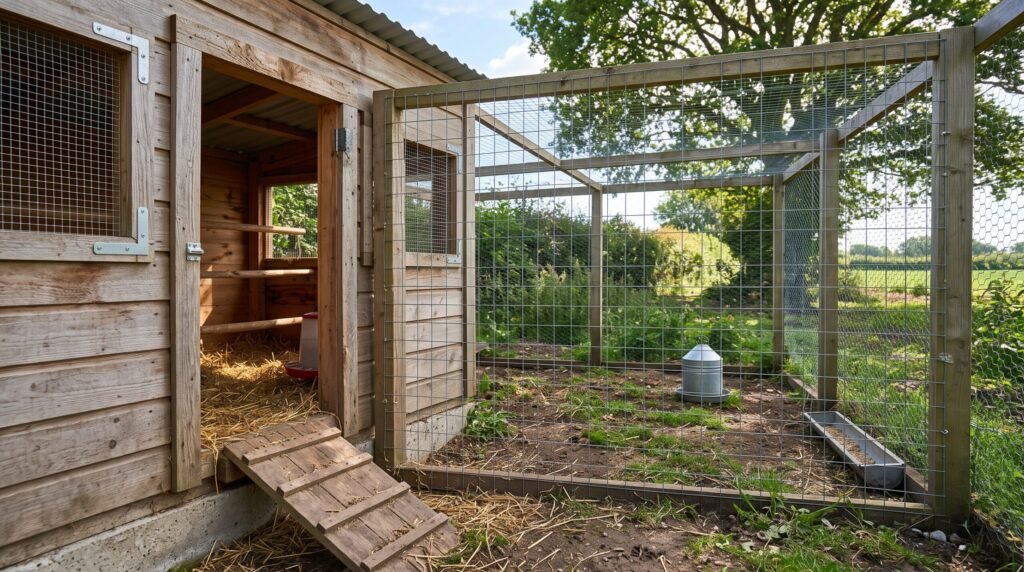
If your guineas aren’t free-ranging, the run needs considerably more square footage than the coop itself.
- Minimum: at least 10 square feet per bird, which gives enough room for foraging and dust bathing without birds crowding each other.
- Better: many experienced keepers push closer to 25 square feet per bird when they have the space to spare.
- Working range: for a dedicated run meant to support real foraging behavior, somewhere between 10 and 20 square feet per bird is a reasonable target.
Fencing matters as much as square footage here. Guinea fowl are strong, low fliers who will clear a standard chicken fence without much effort, so the run needs a fully enclosed top using hardware cloth or sturdy poultry netting, and side walls at least 6 feet high to discourage escape attempts. I’d add: don’t cut corners on the mesh gauge either, since standard chicken wire wears through faster than guineas can wear down your patience trying to keep them contained.
Free-Range Flocks
If your birds get to roam, the math shifts from square feet to acreage, and the numbers get a lot more generous.
- A commonly cited stocking guideline caps free-ranging flocks at around 30 birds per acre.
- Even with acres of range, guineas still need a secure night shelter. A simple three-sided shed facing away from prevailing wind, with a solid perch toward the back and roughly seven inches of roosting space per bird, is often all that’s needed once daytime range is unlimited.
- Group size still matters even on open range. Keepers generally recommend at least three birds as a starting flock, and capping things around 30 per acre, so guineas don’t feel unsafe in too small a group or start fighting from overcrowding.
Free-ranging solves most space problems on its own, but it introduces a predator-management problem instead. If you’re planning to let your flock roam, it’s worth pairing your space plan with a solid predator-proofing strategy before you open that coop door for the first time.
How to Calculate Space for Your Flock Size
The fastest way to avoid an under-built coop is to run the numbers before you build anything, not after.
- Coop floor space: multiply your adult bird count by 3–4 square feet.
- Run space: multiply your adult bird count by 10–25 square feet, depending on how much room you can offer.
- Roosting bar length: multiply your bird count by 8–10 inches, then divide by 12 to get the total feet of bar needed.
- Brooder space (keets): multiply keet count by 1–2 square feet, sized for their week-8 headcount rather than day-one size.
For example, a flock of 10 adult guineas would need roughly 30–40 square feet of coop space, 100–250 square feet of run space, and about 7–8 feet of total roosting bar. If you’d rather not do the math by hand every time your flock grows, our coop size calculator will run these numbers for you based on your exact bird count.
Signs Your Guinea Fowl Don’t Have Enough Space
Guineas tend to tell you pretty clearly when their housing is too tight, if you know what to watch for.
- Feather pecking or increased aggression between birds that normally get along
- Birds pacing along fence lines or refusing to settle at dusk
- Crowding into corners rather than spreading out across the coop or run
- Noticeably louder, more agitated calling than usual
- Slower growth or drops in egg-laying without an obvious health cause
If you notice several of these at once, space is one of the first things worth checking before you assume it’s a health or disease issue. I’ve mistaken stress pacing for illness before, and the fix turned out to be as simple as opening up the run instead of reaching for a vet visit.
Final Thoughts
Guinea fowl are more space-sensitive than most people expect going in, but the numbers aren’t complicated once you have them: 3–4 square feet per adult indoors, 10 or more square feet per bird in an outdoor run, and generous room for keets that scales up as they feather out. Build toward the higher end of these ranges where you can, and your flock will pay you back with calmer, healthier birds.
If you’re still mapping out your setup, our full housing and coop setup guide walks through building materials, flooring, and layout in more depth, and our coop design ideas are worth a look if you haven’t settled on a floor plan yet. How much space are your guineas working with right now — coop only, a run, or full free-range? I’d love to hear what’s worked for your setup.
FAQ
How much space do 6 guinea fowl need? Six adult guineas need roughly 18–24 square feet of coop floor space and at least 60 square feet of run space if they’re not free-ranging, plus around 4–5 feet of roosting bar.
Can guinea fowl be kept in a small backyard? Yes, as long as you meet the minimum indoor and run square footage per bird and keep group size modest. Six to eight guineas with only one male tends to work well in a confined backyard setup.
Do guinea fowl need more space than chickens? Generally yes, especially in the run. Guineas are more active foragers and more prone to stress-driven aggression in tight quarters, so keepers typically size guinea runs larger than they would for an equivalent number of chickens.
How much space do guinea keets need in the brooder? Start with about 1 square foot per keet and plan for that to increase as they approach 8 weeks old, since keets grow fast and overcrowding in the brooder raises the risk of pile-ups and injury.
Hi, I’m Rayyan. I raise guinea fowl and share practical, research-backed guides for backyard keepers and homesteaders. I combine hands-on flock experience with trusted poultry management and university extension resources to help you raise healthier, more productive birds — with confidence, not guesswork.