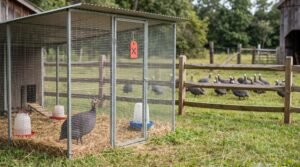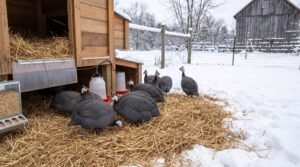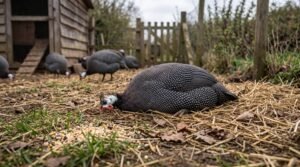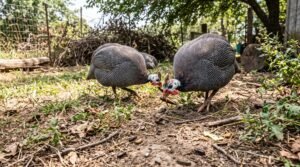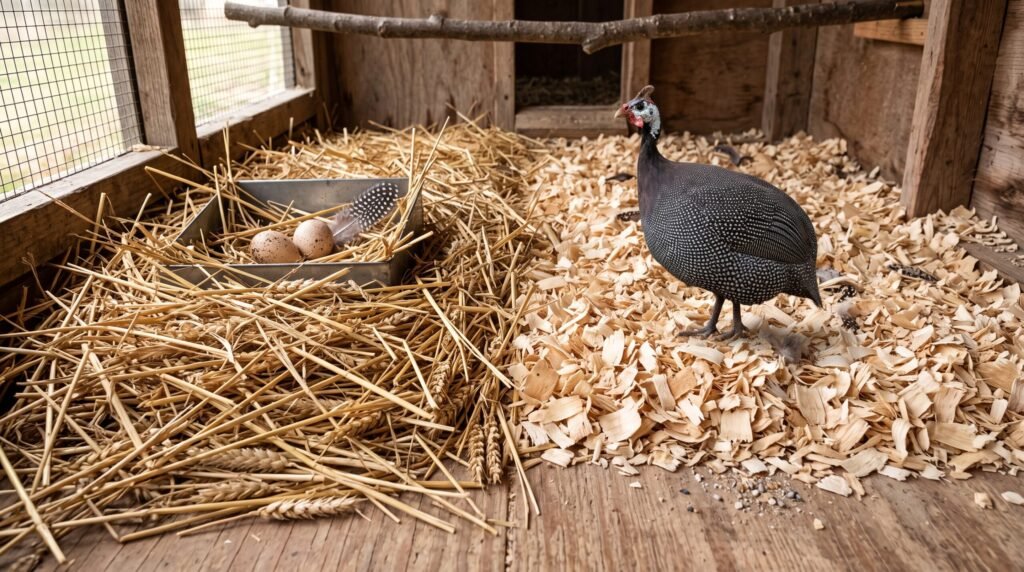
The best bedding for guinea fowl is pine wood shavings or chopped straw, used at least 4-6 inches deep and kept dry — both absorb moisture well, control odor, and give your birds a soft surface to roost and dust bathe on. Sand and hemp bedding are strong alternatives depending on your climate and budget, while cedar shavings and hay should be avoided altogether.
I’ve cycled through most of these options in my own coop over the years, and I can tell you that the “best” bedding really depends on your setup, your climate, and how much time you want to spend cleaning. Here’s everything I’ve learned about what works, what doesn’t, and why.
Guinea fowl aren’t quite as messy as ducks, but they still produce a fair amount of droppings, kick up dust during their dust baths, and need something soft underfoot in the coop and nest boxes. The wrong bedding can lead to ammonia buildup, respiratory issues, parasites, and even foot problems — so this isn’t a decision to make lightly.
By the end of this guide, you’ll know exactly which bedding fits your coop, how deep to layer it, and how to keep it from turning into a smelly mess.
| Bedding Type | Absorbency | Cost | Best For | Watch Out For |
|---|---|---|---|---|
| Pine wood shavings | High | Moderate | Most coops, nest boxes | Can get dusty if fine-grade |
| Chopped straw | Moderate-High | Low | Cold climates, nest boxes | Mats down, molds if damp |
| Sand | Low absorbency, high drainage | Moderate-High | Hot, dry climates | Not insulating, no compost value |
| Hemp bedding | Very high | High | Keepers wanting less frequent cleanouts | Higher upfront cost |
| Cedar shavings | High | Moderate | Not recommended | Aromatic oils harmful to respiratory health |
| Hay | Low | Low | Not recommended as bedding | Molds fast, encourages nutrient imbalance if eaten |
Pine Wood Shavings: The All-Around Favorite
Pine shavings are what I reach for most often, and they’re the standard bedding choice across the poultry industry for good reason. They’re absorbent, relatively low-dust when you buy a coarse “flake” grade rather than fine sawdust, and they compost down nicely once you clean them out.
Why they work well for guinea fowl:
- They soak up moisture from droppings quickly, which helps keep ammonia levels down.
- The texture is soft enough for nest boxes but sturdy enough that it doesn’t compact into a solid mat as fast as straw does.
- They’re widely available at farm stores, so you’re not stuck hunting for a specialty product.
- They work well in the deep litter method, letting beneficial bacteria build up and reduce how often you need a full coop clean-out.
The one rule I never break: no cedar. Cedar shavings smell great to us, but the aromatic oils that give cedar its scent can irritate a bird’s respiratory system over time. Stick to pine, and make sure it’s kiln-dried rather than green or freshly cut, since green shavings hold more moisture and mold faster.
For a standard coop floor, I aim for at least 4 inches of pine shavings, and closer to 6-8 inches if I’m using the deep litter method through winter. Thin layers just don’t have the capacity to absorb moisture before it starts to smell, and going shallow is one of the more common beginner mistakes I see with new keepers.
Chopped Straw: Budget-Friendly and Warm
Straw is the traditional bedding choice, and it still has a place in a lot of coops — especially in colder regions where its insulating properties really shine.
Strengths:
- It’s usually the cheapest option per bale, especially if you have a local source.
- It provides excellent insulation, which guinea fowl appreciate during winter since they’re more cold-sensitive than chickens in some respects.
- Chopped or “cut” straw handles better than long-stem straw, since it doesn’t tangle around legs and feet the way whole straw can.
Where it falls short:
- Straw doesn’t absorb moisture as efficiently as wood shavings, so wet spots near waterers can turn into damp, matted clumps faster.
- It’s more prone to mold if it isn’t kept dry, and moldy bedding is a real respiratory hazard.
- Over time it packs down into a dense layer that needs regular fluffing or replacing to stay effective.
If you go with straw, buy the chopped variety rather than whole bales, keep waterers positioned away from the bedding, and check it regularly for damp or musty patches. I’ve found straw works best as a nest box liner or as a top layer over a base of shavings, rather than as the sole bedding across an entire coop floor.
Sand: The Low-Odor, High-Drainage Option
Sand has become popular among backyard poultry keepers, and it does offer some real advantages — but it’s not automatically the right fit for guinea fowl.
What sand does well:
- Droppings sit on top rather than being absorbed, so you can scoop them out like a litter box, which cuts down on odor.
- It drains well, which makes it a strong choice for covered outdoor runs in wetter climates.
- It doesn’t harbor mold the way organic bedding can.
What gives me pause:
- Sand offers essentially no insulation, so it’s a poor choice in cold climates unless your coop is otherwise well-insulated.
- Coarse construction sand is the only type that should ever go in a coop — fine “play sand” can be inhaled as dust and may cause respiratory problems if birds ingest much of it.
- It has no compost value the way carbon-based bedding does, so you can’t fold it into the deep litter method.
- It’s heavier to haul and replace than shavings or straw, which matters if you’re doing this solo.
I use sand in my covered run rather than inside the coop itself, which gives me the drainage benefits without giving up the insulation I want where the birds actually roost overnight.
Hemp Bedding: Pricier but Low-Maintenance
Hemp bedding is the newer option on this list, and after trying it in one of my coops, I understand why it’s gaining fans. It’s made from the woody core of the hemp plant and is remarkably absorbent — commonly cited at up to four times its weight in moisture, noticeably outperforming shavings or straw.
Advantages:
- Extremely low dust, which is a genuine plus if you or your birds are sensitive to airborne particles.
- Because it holds so much moisture, you can typically stretch out the time between full clean-outs.
- It composts faster and breaks down more completely than wood shavings.
- It’s a solid match for the deep litter method, since its absorbency helps keep the surface layer dry even as material builds up underneath.
The tradeoff: cost. Hemp bedding runs noticeably more expensive per bag than pine shavings or straw, which adds up fast if you’re bedding a large coop. I think of it as worth the splurge for a brooder or a smaller coop where the extra absorbency really pays off, but it’s a harder sell for a large flock on a tight budget.
Bedding Options to Avoid
A few materials get recommended online that I’d steer clear of for guinea fowl:
- Cedar shavings — the volatile oils can irritate the respiratory tract with prolonged exposure. Not worth the risk when pine is just as available.
- Hay — unlike straw, hay is closer to a feed product than a bedding product. It molds quickly, and guinea fowl will pick at and eat damp, moldy hay, which can cause digestive upset and interfere with what should be a balanced diet.
- Fine sawdust — too dusty, and it compacts into a dense, airless layer that traps moisture against the coop floor.
- Newspaper alone — it isn’t absorbent and gets slick when wet, which isn’t good footing for roosting birds.
How Deep Should Bedding Be?
This is one of those details that’s easy to underestimate. A thin scattering of bedding looks tidy for about a day and then stops doing its job.
- Standard coop floor: 4-6 inches of pine shavings or chopped straw.
- Deep litter method: build up to 8-12 inches over the cold season, adding a fresh layer on top every week or two rather than digging out the whole thing.
- Nest boxes: 2-3 inches is usually enough, refreshed weekly or whenever it looks soiled.
- Sand in outdoor runs: 2-4 inches is plenty, since you’re relying on drainage rather than absorption.
Whatever material you choose, watch for the smell test. If you catch a whiff of ammonia when you open the coop door, the litter is already past the point where it’s protecting your birds’ respiratory health, and it’s time to add fresh bedding or do a full clean-out.
Keeping Bedding Dry and Healthy
A few habits make a bigger difference than the bedding type itself:
- Position waterers away from bedding-heavy areas, or set them on a wire stand, to cut down on spillage soaking into the litter.
- Make sure your coop has adequate ventilation near the roofline so moisture and ammonia can escape rather than settling into the bedding.
- Stir or turn the top layer occasionally to keep air moving through it, especially if you’re running a deep litter system.
- Remove caked or visibly wet patches promptly rather than waiting for a full clean-out — localized damp spots are where ammonia and mold problems usually start.
Final Thoughts
For most backyard setups, pine wood shavings hit the best balance of cost, absorbency, and availability, with chopped straw as a solid budget alternative in colder climates. If you want to spend less time cleaning and don’t mind the higher price tag, hemp bedding is worth trying. Sand earns its place in covered runs rather than the coop itself.
Whichever you choose, the real key is depth and dryness — a generous layer that you’re willing to maintain will always outperform a thin layer of even the “best” material on paper. What’s working in your coop right now? I’d love to hear what bedding combination you’ve settled on, especially if you’ve found a good regional source for chopped straw or hemp.
FAQ
Can I mix different types of bedding together?
Yes, and I do this often. A base layer of pine shavings topped with a thinner layer of chopped straw in nest boxes gives you the absorbency of shavings with the softer feel of straw where it matters most.
How often should I fully replace guinea fowl bedding?
For a standard coop without the deep litter method, plan on a full clean-out every 2-4 weeks, with spot cleaning in between. Deep litter systems can go several months between full replacements as long as you’re topping it off regularly and it isn’t developing a smell.
Is pine bedding safe for guinea keets?
Yes, kiln-dried pine shavings are a common choice for a brooder setup. Just avoid fine sawdust or very small particles in the brooder, since young keets can peck at and accidentally ingest loose material.
Do guinea fowl need bedding in their outdoor run?
Not necessarily the same way they do inside the coop. A covered run benefits from a layer of sand or wood chips for drainage, but an open, uncovered run usually does fine with bare ground or natural vegetation.
Hi, I’m Rayyan. I raise guinea fowl and share practical, research-backed guides for backyard keepers and homesteaders. I combine hands-on flock experience with trusted poultry management and university extension resources to help you raise healthier, more productive birds — with confidence, not guesswork.