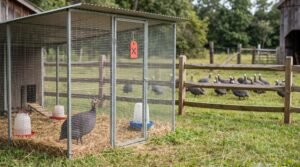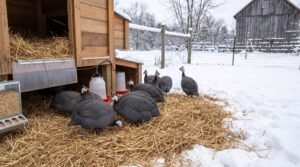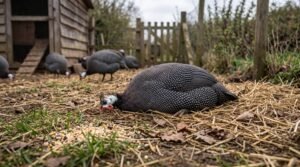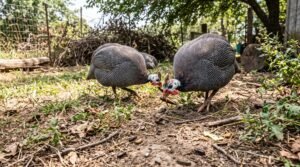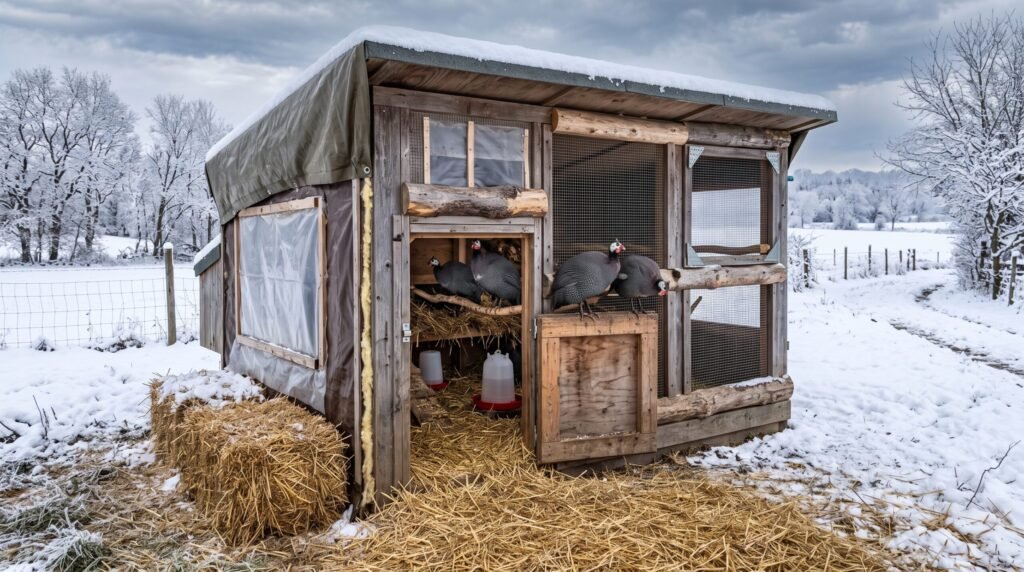
Winterizing your guinea fowl coop means sealing out drafts while keeping airflow intact, deepening the bedding, protecting your water supply from freezing, and closing up any gaps that would let cold air or predators in. Get this done before the first hard freeze, and your flock will handle winter with far less stress.
I still remember my first real cold snap with guinea fowl. I’d assumed that because they’re tougher than chickens, they wouldn’t need much from me. Then a wind-driven freeze rolled through, and I found two of my birds huddled in a corner with the beginnings of frostbite on their wattles. That was the last winter I ever treated coop prep as optional. Guinea fowl are genuinely hardy birds, but hardy doesn’t mean hands-off, and there’s a real difference between a coop that merely keeps the weather out and one that actually sets your flock up to thrive until spring.
This guide walks through everything I do to get my coop ready before the cold sets in, from balancing ventilation and draft control to setting up bedding, water, and feed for the season ahead.
Here’s a quick rundown of the essentials before we get into detail:
- Seal drafts, not airflow — block wind at bird level while keeping vents open near the roofline.
- Deepen the bedding — build up several inches of dry litter to insulate the floor and add gentle warmth as it composts.
- Protect water sources — use a heated base or swap frozen founts multiple times a day.
- Check roosts and roof — guinea fowl roost high, so drafts and roof leaks up there matter most.
- Weatherproof the run — give birds a dry, wind-sheltered outdoor space so they aren’t stuck inside all day.
- Guard combs and feet — watch for frostbite risk on cold, still nights, especially below freezing.
Start With Ventilation, Not Just Insulation
It’s tempting to think of winterizing as “sealing everything up,” but that’s the mistake that causes more problems than the cold itself. A coop that’s airtight traps moisture from droppings and from the birds’ own breath, and damp air is far more dangerous to guinea fowl than dry cold ever is. Moist, stagnant air is what actually causes frostbite, since damp tissue freezes much faster than dry tissue.
The goal is a coop that’s draft-free at bird level but still ventilated up high. Guineas roost several feet off the ground, often higher than chickens will, so you need airflow that exits above their heads rather than blowing straight across the roost.
A few practical ways to strike that balance:
- Keep or add vents near the roofline or under the eaves, positioned above where the birds sleep.
- Seal gaps and cracks at ground level and around the lower walls, where cold wind actually reaches the birds.
- Avoid single-window ventilation. Cross-ventilation, with openings on two sides, moves stale air out without creating a wind tunnel.
- On the coldest, windiest nights, you can partially cover an intake vent, but never block ventilation completely.
If you ever catch a whiff of ammonia when you walk into the coop, that’s your sign that ventilation isn’t keeping up, and it’s worth addressing before cold weather makes the space harder to work in.
Seal Drafts Without Sealing Off Airflow
Once ventilation is sorted, go around the coop and find the gaps that let cold air in at floor and roost level. These are usually the easiest fixes and make one of the biggest differences.
Walk the perimeter and check for:
- Gaps around doors, windows, and where walls meet the floor or roofline
- Knot holes or warped boards in the siding
- Loose or missing weatherstripping around the coop door
- Openings around any electrical cords or plumbing that runs into the coop
Seal these with caulk, weatherstripping, or expanding foam, the same materials you’d use to draft-proof a shed or garage. If your coop has a dirt floor, check that the base is solid enough that wind isn’t sneaking in underneath, since guinea fowl spend most of their time closer to ground level than chickens realize, and that’s where ammonia and cold air both tend to concentrate.
Build Up Bedding With the Deep Litter Method
Adding a thick layer of bedding does two jobs at once: it insulates the coop floor and, if managed as a deep litter system, it generates a small amount of natural warmth as it composts.
To set this up:
- Start with a clean, dry coop floor before the season’s first hard freeze.
- Lay down pine shavings, straw, or dried leaves several inches deep.
- Add a fresh layer on top every week or so as droppings accumulate, rather than removing the whole layer.
- Stir or rake the litter occasionally, especially in corners and under the roost, to keep it from matting down.
- Let the litter build to somewhere around 8 to 12 inches deep over the course of the winter.
Done properly, this turns into a slow, contained composting process. The beneficial microbes that build up help keep harmful pathogens in check, and the decomposition itself adds gentle warmth and insulation to the coop floor. Done poorly, it just becomes a wet, ammonia-heavy mess, so keep an eye on moisture. If the litter feels soggy or you notice odor, that usually means you need more ventilation, more dry bedding, or both.
One note specific to guinea fowl: because they’re flightier and more easily startled than chickens, avoid piling bedding so high that it changes the height or footing around the roost. A sudden change to a space they know well can spook them more than you’d expect. If you’re not already on a regular cleaning rhythm, it’s worth reading up on how often to clean a guinea fowl coop so the deep litter method doesn’t quietly turn into neglect.
Keep Water From Freezing
Guinea fowl actually drink less as temperatures drop, but they still need consistent access to water, and dehydration makes them far more vulnerable to frostbite because good hydration is part of what keeps blood flowing to their combs and wattles. A frozen fount does nothing for them.
Options that work well through winter:
- A heated waterer base, which is the lowest-maintenance long-term fix if you have power to the coop
- Swapping out founts with fresh, unfrozen water two or three times a day if you don’t have a heated option
- Using a small heated dog bowl as a backup water station in particularly harsh cold
- Insulating any hoses or pipes that feed water to the coop area
I’d also suggest checking water at dusk specifically, since a fount that’s fine at midday can be solid ice by the time the birds go to roost.
Adjust Feed for Cold Weather
Guinea fowl burn more energy staying warm once temperatures drop, so their feed intake naturally increases in winter. Make sure feeders are kept fuller than you might in warmer months, and consider offering a handful of scratch grain in the late afternoon. Digesting grain generates body heat overnight, which is genuinely useful on the coldest nights, though scratch should stay a supplement rather than a replacement for a balanced feed.
If your guineas free-range for part of the day, keep in mind that foraging slows down significantly once the ground freezes or snow covers it, so their reliance on the feeder will go up even if you don’t see them at it as often. If you’re unsure how much to budget for this seasonal increase, my complete feeding guide breaks down what a balanced diet looks like across the year.
Weatherproof the Outdoor Run
Guinea fowl don’t love being cooped up, and giving them a dry, sheltered outdoor space keeps them from spending all day cramped inside, which itself can raise moisture and stress levels in the coop.
A few additions that make a real difference:
- A windbreak along the side that takes the worst of the prevailing wind
- A covered section of the run, even a simple tarp or roofing panel, to keep snow and rain off part of the ground
- Straw or shavings scattered over frozen or muddy ground so the birds have dry footing
- Low perches, stumps, or pallets in the run so they can get up off frozen or wet ground
Guinea fowl can be genuinely uneasy around snow, especially if it’s their first winter. Don’t be surprised if they refuse to step onto it at first. Clearing even a narrow path through snow in the run tends to help them regain confidence about going outside. If your run or coop layout still needs work before winter arrives, browsing a few coop design ideas now can save you from a rushed build later.
Watch for Frostbite Risk
Guinea fowl generally handle cold, snow, and ice better than many chicken breeds and don’t need a heated coop in most climates. That said, they don’t have quite the same natural adaptations for keeping their feet warm, and in regions where temperatures stay below freezing for extended stretches, frostbite on the toes, comb, or wattles is a real risk.
Watch for these early warning signs:
- Pale, gray, or white patches on the comb or wattles
- Reluctance to walk, or favoring one foot
- Toes that look unusually pale or cold to the touch
To reduce the risk, make sure roosting areas are draft-free, keep bedding dry, and provide dry, elevated surfaces like pallets or logs in the run so feet aren’t sitting directly on frozen ground. If you know a particularly brutal cold snap is coming, some keepers apply a thin layer of petroleum jelly to combs and wattles as extra protection, though this is more relevant for birds with larger combs than the typical guinea fowl’s small helmet and wattles.
If a bird does end up with mild frostbite, keep it separated from the flock in a dry, draft-free space, avoid rapid rewarming, and reach out to a vet or experienced poultry keeper if it seems to be worsening or if you see signs of infection. For a deeper look at cold-weather care beyond just the coop structure, my cold weather guide for guinea fowl covers day-to-day flock management once temperatures drop.
Predator-Proof Before the Ground Freezes
Cold weather pushes rodents and other predators to look for warm, sheltered places to hole up, and a coop is exactly the kind of spot they target. Before the ground freezes and digging becomes harder to do properly, walk the coop perimeter and check for:
- Gaps under walls or around the foundation large enough for rodents to squeeze through
- Weak points in fencing around the run
- Secure, predator-proof latches on all doors
Doing this now, rather than after you’ve noticed a problem, is much easier than trying to dig a trench for hardware cloth once the ground is frozen solid. For a fuller walkthrough of securing your flock against foxes, hawks, and other predators, it’s worth reading alongside your winter prep, since protecting guinea fowl from predators is an ongoing job that doesn’t stop once the season turns cold.
Quick Pre-Winter Coop Checklist
Once you’ve worked through everything above, it helps to run down a final list before the first freeze hits:
| Task | Why It Matters |
|---|---|
| Vents open above roost height | Removes moisture without chilling the birds |
| Drafts sealed at floor and wall level | Blocks the wind that actually causes cold stress |
| Bedding built up 8–12 inches | Insulates the floor and adds gentle composting warmth |
| Water source freeze-proofed | Prevents dehydration, which worsens frostbite risk |
| Feeders kept fuller | Meets higher energy needs from cold-weather metabolism |
| Run has windbreak and dry footing | Encourages healthy outdoor activity |
| Perimeter checked for predator gaps | Rodents and predators seek shelter as it gets colder |
Final Thoughts
Winterizing a guinea fowl coop isn’t about turning it into a heated, sealed box. It’s about giving your flock a dry, draft-free, well-ventilated space, keeping their water and food dialed in for the season, and staying alert to the small warning signs, like a pale wattle or a soggy patch of bedding, before they become bigger problems. Do this work now, while the weather’s still mild enough to make repairs comfortably, and you’ll spend a lot less time worrying once the temperature actually drops.
Have you dealt with a guinea fowl winter that caught you off guard? I’d love to hear what worked, or didn’t, for your flock in the comments. And if you’re still finalizing your setup, my guide to guinea fowl housing is a good next stop for getting the coop itself right before winter arrives.
Frequently Asked Questions
Do guinea fowl need a heated coop in winter?
Most guinea fowl do fine without supplemental heat, even in fairly cold climates, as long as the coop is dry and draft-free. Some keepers do add a securely mounted heat source for birds in especially harsh, prolonged cold, but it’s not a requirement for most backyard setups.
How cold is too cold for guinea fowl?
Guinea fowl can tolerate temperatures well below freezing without issue, but frostbite becomes a real risk once temperatures drop into the single digits Fahrenheit or lower, especially if there’s wind or dampness involved. Watch your birds’ behavior and check combs and feet during extended cold snaps rather than relying on a single temperature cutoff.
Can guinea fowl free-range in winter?
Yes, and it’s actually good for them, but expect less foraging once the ground freezes or snow covers it. Clear a path or provide a sheltered, bedded outdoor area so they still have somewhere dry to move around.
Will my guinea fowl still lay eggs in winter?
Egg production typically drops or stops in winter regardless of coop conditions, since guinea fowl are seasonal layers responding to shorter daylight hours. This is normal and isn’t a sign that anything in your winterizing setup went wrong.
Hi, I’m Rayyan. I raise guinea fowl and share practical, research-backed guides for backyard keepers and homesteaders. I combine hands-on flock experience with trusted poultry management and university extension resources to help you raise healthier, more productive birds — with confidence, not guesswork.