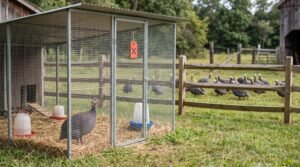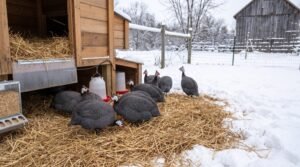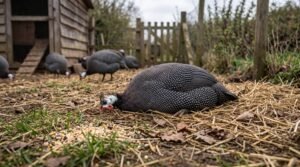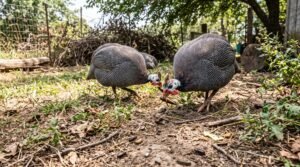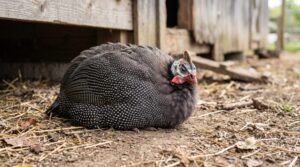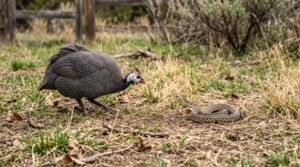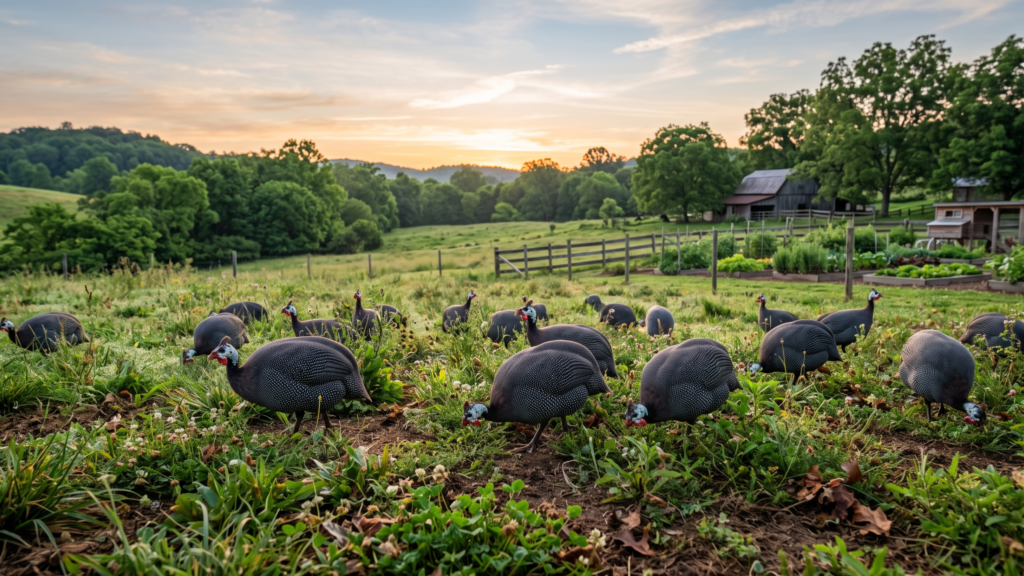
Guinea fowl earn their keep on a farm through pest control, predator alerts, low feed costs, protein-rich eggs, and lean meat, all while asking for very little upkeep in return. If you’ve been on the fence about adding these odd, speckled birds to your property, here’s what they actually bring to the table once the initial noise complaints wear off.
I didn’t take guinea fowl seriously the first time I saw them. They looked like chickens that had been left out in the rain too long, and the racket they made over a stray cat convinced me they were more trouble than they were worth. A few seasons of keeping them changed my mind completely. They’re not pets, and they’re not going to replace your laying hens, but as working birds on a homestead, they do jobs that nothing else in the barnyard handles quite as well.
Here’s a quick look at what’s ahead before we get into the details.
| Benefit | What It Means for You |
|---|---|
| Natural pest control | Fewer grasshoppers, beetles, and garden pests without spraying chemicals |
| Alarm system | Loud calls alert you to predators, strangers, or anything unusual |
| Predator deterrence | Group mobbing behavior discourages hawks, foxes, and snakes |
| Low feed costs | Strong foragers that need less supplemental feed than chickens |
| Nutritious eggs | Small eggs that are notably high in protein and amino acids |
| Lean, flavorful meat | A low-fat, gamey alternative to chicken or turkey |
| Minimal housing needs | Hardy birds that tolerate basic shelter and free-range life |
| Garden-friendly foraging | They eat bugs without scratching up beds the way chickens do |
| Compatibility with other livestock | Get along with chickens, ducks, goats, and more |
| Natural fertilizer | Droppings add nitrogen back into pasture and garden soil |
1. Natural, Chemical-Free Pest Control
This is the reason most people bring guinea fowl home in the first place. Guineas spend their days working the ground, and grasshoppers, beetles, spiders, and other crawling or hopping insects are exactly what they’re after. On my own place, letting a small flock range through the garden rows during the growing season noticeably cut down on the number of squash bugs I was hand-picking off the leaves by midsummer.
What makes them useful here is how they forage. Unlike chickens, guineas don’t dig or scratch deeply into soil, so they clear insects from garden beds and flower borders without leaving craters behind. If you’re trying to move away from pesticides, a working flock of guineas is a genuine option — their appetite for insects lets them help manage pest pressure without relying on synthetic sprays, which fits neatly into an organic growing approach.

2. A Loud, Reliable Alarm System
Guinea fowl are famous for being noisy, and on a working farm, that’s a feature rather than a flaw. They react to almost anything out of the ordinary — a car pulling in, a hawk overhead, a stranger near the coop — with a sharp, repetitive call that carries a long way. That high-strung, reactive temperament is exactly what turns them into a natural alarm system, making it much harder for predators or unfamiliar visitors to approach unnoticed.
I’ve had guineas sound off minutes before I noticed a delivery truck coming up the drive, and more than once they’ve tipped me off to a hawk circling before it ever got close to the coop. If you keep other livestock and want an early-warning system that never needs batteries, this is one of the clearest advantages of running a mixed poultry flock alongside your chickens.
3. Group Predator Deterrence
Beyond just sounding the alarm, guinea fowl often act together when a threat shows up. They tend to band together against predators, which adds a real layer of protection for whatever other animals share the property with them. A determined fox or a low-flying hawk is far less likely to press an attack against a flock that’s moving as a group and calling loudly than against a single, isolated bird.
This doesn’t mean guineas replace secure housing — you’ll still want a solid setup for anything that hunts at night. If predator pressure is a real concern on your property, it’s worth pairing this natural deterrence with the practical steps in our guide on protecting your flock from foxes, hawks, and other predators.
4. Lower Feed Costs Through Foraging
Guinea fowl are strong, independent foragers, and that translates directly into savings at the feed store. They’re skilled at scratching and picking their way through overgrown fields and lawns to find their own food, which means a free-ranging flock can cover a meaningful share of its own diet during the growing season.
That said, foraging isn’t a substitute for a balanced diet, especially for young keets or during winter months when insects are scarce. Supplemental feed still matters, and knowing how much to budget by life stage and season makes the difference between a thrifty flock and a hungry one.
5. Protein-Rich, Nutrient-Dense Eggs
Guinea eggs are smaller than chicken eggs, but they punch above their weight nutritionally. A peer-reviewed comparison of amino acid quality across common poultry eggs found that guinea fowl eggs scored the highest of any egg tested for total amino acid quality, along with the highest essential amino acid content of the group. That’s a meaningful finding — it means the protein in a guinea egg is unusually well-suited to what the human body actually needs.
Guinea hens are also famously less protective of their eggs than a broody chicken, which in practice just means they’re often easier to gather once you know where the hens are hiding their nests (and they will hide them). If you’re curious how guinea egg production compares to a standard laying flock, our breakdown of how many eggs guinea fowl actually lay per year is worth a look.
6. A Lean, Flavorful Meat Option
If you raise poultry partly to put food on the table, guinea fowl meat is worth a look. It runs leaner and lower in fat and calories than a lot of other protein sources, and most keepers describe the flavor as gamier and richer than chicken — closer to a cross between chicken and pheasant. It’s not going to replace a broiler flock if volume is your goal, since guineas dress out smaller, but as a diversified protein source for the homestead freezer, it earns its place.
7. Hardy Birds That Need Minimal Housing
Guinea fowl are tougher than they look. Compared to chickens, they’re hardy birds that get by with less day-to-day attention, which makes them a good fit for anyone who doesn’t have time for a high-maintenance flock. They handle heat well thanks to their African origins, though cold climates call for a heated, dry shelter and more grain during winter, when their usual insect diet disappears.
Their independence cuts both ways, though — guineas roost in trees if you let them, and they don’t always respect fence lines. Before you build anything, it’s worth reading through our guinea fowl housing guide so you know what actually keeps them safe overnight versus what they’ll simply ignore.
8. Bug Control Without Garden Damage
It’s worth calling this out separately from general pest control, because it’s the detail that wins over a lot of gardeners. Chickens are enthusiastic diggers, and a flock of hens can shred a flower bed looking for grubs. Guinea fowl largely skip that behavior — they don’t spend their day scratching up flower beds the way chickens do, which means you get the pest-control benefit of a foraging bird without the collateral damage to anything you’re actively trying to grow.
If you’re weighing which bird fits your land better, our comparison of guinea fowl versus chickens walks through the trade-offs in more depth.
9. Easygoing With Other Livestock
Guinea fowl tend to slot into an existing farm setup without much friction. They generally get along with other animals, and plenty of homesteaders run them alongside chickens, ducks, goats, and even bees without issue. On a diversified property, that compatibility means you don’t have to choose between guineas and the animals you already keep — they can share pasture and coop space with minimal conflict once everyone’s used to each other.
The main thing to manage is the introduction period, since guineas can be standoffish with new birds at first. Our guide to introducing new guinea fowl to an existing flock covers how to do that without a lot of stress on either side.
10. Free Fertilizer for Pasture and Garden
Every bird that forages across your land is also fertilizing it, and guineas are no exception. Their constant scratching and pecking naturally aerates the soil as they go, and their droppings add nutrients back into the ground behind them. Because they’re light-bodied compared to larger livestock, they don’t compact the soil the way heavier animals can. Whether you let them range freely over pasture or collect and compost their droppings for the garden, it’s a quiet, ongoing benefit that adds up over a season.
A Quick Word on the Tick Control Claim
You’ll see guinea fowl marketed heavily as a tick-control solution, and I want to be straight with you about what the research actually shows, because I’d rather you go in with accurate expectations. The evidence is mixed. One older, small-scale study on Long Island found that guinea fowl noticeably reduced adult tick populations within enclosed test areas. But a more recent, controlled study out of Old Dominion University tells a different story, finding no evidence that guinea fowl are an effective biological control for lone star ticks or the pathogens they carry. University of Maine’s tick research program backs that up more broadly, noting that while guinea fowl and chickens are commonly promoted as tick controls, actual tick consumption tends to be minimal and doesn’t meaningfully reduce local tick populations. Guineas will eat ticks when they come across them, but I wouldn’t count on them alone to solve a serious tick problem on your property — think of it as a nice side benefit of a foraging flock, not a replacement for other tick management.
Frequently Asked Questions
Are guinea fowl worth it if I already have chickens? Often, yes — they do different jobs. Chickens are better dedicated egg producers, while guineas add pest control, an alarm system, and predator deterrence that chickens don’t offer to the same degree. Many homesteaders run both together successfully.
How many guinea fowl should I start with? A small starter group of six to eight birds is a common recommendation for new keepers, since guineas are flock-oriented and don’t do well kept in pairs or alone.
Do guinea fowl need as much care as chickens? Less, in most cases. They’re hardy foragers with a strong independent streak, though young keets need the same careful brooding as chicks, and adults still need protection from predators and cold winters.
Will guinea fowl stay on my property, or do they wander? They range widely and don’t respect fences the way you might hope. Most keepers manage this with training from a young age, consistent feeding routines, and adequate space rather than fencing alone.
If you’ve been weighing whether guinea fowl fit your homestead, the honest answer is that they’re not for everyone — but for pest control, an early-warning system, and a genuinely useful working bird that asks little in return, it’s hard to find a better fit on a diversified property. Start small, give them time to settle into their routine, and pay attention to what they actually do on your land rather than what the marketing promises. Have you kept guinea fowl before, or are you considering your first flock? I’d love to hear what’s tipping the scale for you.
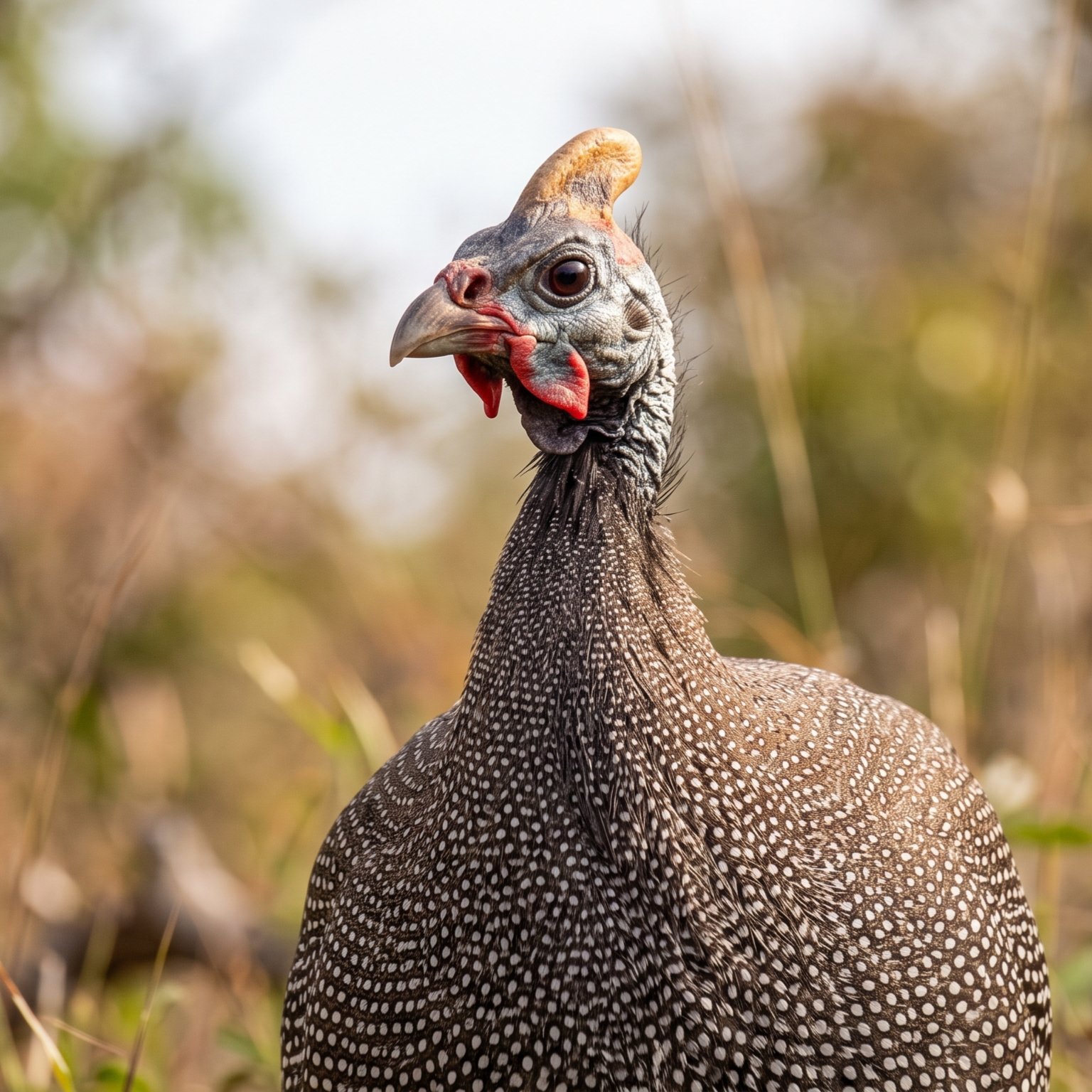
Hi, I’m Rayyan. I raise guinea fowl and share practical, research-backed guides for backyard keepers and homesteaders. I combine hands-on flock experience with trusted poultry management and university extension resources to help you raise healthier, more productive birds — with confidence, not guesswork.