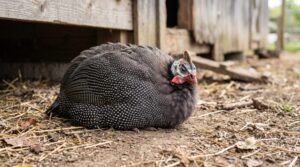
Collecting guinea fowl eggs comes down to three things: finding the nest, gathering the eggs gently, and handling them in a way that keeps them clean and intact until you’re ready to store or hatch them. It sounds simple, but guineas don’t make it easy — they hide their nests, lay in communal clutches, and rarely use the nesting boxes you set up for them.
I learned this the hard way in my first season. I assumed my guinea hens would use the same boxes as my chickens. Instead, I found a clutch of 27 eggs tucked into a patch of tall grass along the fence line, three weeks after they’d started laying. Once I understood how guineas actually nest, collection got a lot easier — and a lot less like a scavenger hunt.
This guide walks through when and where guinea fowl lay, how to gather eggs without cracking or losing them, how often to check nests, and what to do with eggs once they’re in your hands — cleaning, sorting, and getting them ready for the fridge or the incubator.
Here’s what to keep in mind before you head out to gather eggs:
- Guinea hens lay in hidden, shared nests on the ground, not in boxes, so you’ll need to actively search your property rather than wait for eggs to show up in one spot.
- Collect at least once a day, ideally twice during peak laying season, to keep eggs clean and reduce the chance a hen goes broody on you unexpectedly.
- Handle eggs gently and keep the pointed end down during transport and short-term storage.
- Skip washing unless an egg is visibly soiled — the natural coating on the shell is your best defense against bacteria.
- Check every egg for cracks, odd shapes, or thin spots before deciding whether it’s fit for the kitchen or the incubator.
When and Where Guinea Fowl Lay Eggs
Guinea hens are seasonal layers. In most climates, they start in spring — typically March or April — and keep laying through summer into early fall, tapering off by October, often in bursts of daily eggs followed by a pause.
Where they lay is the bigger challenge. Unlike chickens, guinea hens rarely use nesting boxes unless they were raised alongside chickens and picked up the habit early. Left to instinct, they’ll scratch out a shallow depression in a secluded spot — under a shrub, in tall grass, along a fence line, or tucked into a brush pile — and several hens will often share the same nest, which is why clutches can grow to 20 or 30 eggs before anyone notices.
A few habits make guinea nests easier to find:
- Watch for patterns in the evening. Hens often return to the same general area to lay, so noting where a bird disappears into cover for a few minutes is a good starting clue.
- Look for a guard. A male guinea will often stand watch near the nest while a hen is laying, which can give away the location before you spot the nest itself.
- Check dense, low cover first. Guineas favor spots with overhead concealment — under bushes, in overgrown corners of the run, or against structures — over open ground.
- Offer a sand pile as an alternative. Guineas seem to prefer nesting in sand over straw or hay, so a shallow box or bin of sand in a quiet corner can sometimes coax them into a spot you actually control. If you’re weighing whether a dedicated coop box is even worth setting up, it’s worth reading about whether guinea fowl actually use nesting boxes before you invest time building one.
If you free-range your flock, expect to spend the first few weeks of laying season scouting the property. Once you find an active nest, guineas tend to keep using it as long as it isn’t disturbed too obviously.
How to Collect Eggs Without Damaging Them
Guinea eggs have noticeably harder, thicker shells than chicken eggs, which makes them a bit more forgiving to handle — but they’re also smaller and more oddly shaped, which makes them easier to miscount or overlook in a cluttered nest.
A few practical habits help:
- Use both hands and a soft-lined basket or bucket. Line it with straw, a towel, or shredded paper so eggs aren’t knocking against a hard surface or each other.
- Pick up one egg at a time. Resist the urge to scoop several at once — it’s how cracks happen.
- Leave a few eggs behind if you want the hen to keep laying there. If you clear a nest completely, a guinea hen will often abandon the spot and start a new, hidden nest elsewhere — which means you’re back to searching. Leaving four or five eggs in place usually keeps her returning to a nest you already know.
- Move slowly and quietly near the nest. Guinea hens are flighty and easily spooked; a hen startled off a nest may not come back to it at all. The same calm, unhurried approach that works for catching and handling guinea fowl without stressing them applies here too.
- Transport eggs pointed-end down if you’re not processing them right away — it keeps the air cell properly positioned and reduces yolk contact with the shell membrane.
If you’re gathering from a large communal clutch, work through it methodically from one side to the other so you don’t miss eggs buried under grass or leaves.
How Often to Collect Guinea Fowl Eggs
During active laying season, collect at least once a day — and twice a day if you can manage it, especially with a free-range flock or in hot weather.
Frequent collection matters for a few reasons:
- Freshness and food safety. The longer an egg sits outside, exposed to temperature swings, dirt, and droppings, the more its quality and safety decline.
- Preventing broodiness. A guinea hen won’t usually go broody until a nest has accumulated around 25 to 30 eggs. If you’re collecting daily, you keep that number low and avoid a hen suddenly disappearing to sit on a hidden clutch you didn’t know about.
- Reducing losses to predators and weather. A nest full of eggs sitting in the open is an easy target for snakes, raccoons, and other opportunistic predators. Daily collection limits how much is at risk at any one time.
If you’re deliberately trying to hatch a clutch naturally, the calculation changes — you’ll want to leave eggs in place and let the hen accumulate a full nest before she settles in to brood. For general egg collection, though, daily rounds are the standard. If you’re trying to get a sense of what your own flock should be producing before you start tracking nests, the guinea fowl egg production calculator is a handy starting point.
What to Do With Dirty Eggs
Ground-nesting means guinea eggs pick up dirt, grass, and the occasional smear of droppings more often than eggs from a clean nesting box. How you handle a dirty egg affects how long it lasts.
- Dry-clean first. A soft cloth, dry paper towel, or fine sanding pad lifts off loose dirt without introducing moisture.
- Only wash if it’s genuinely soiled. Light dust or a bit of straw doesn’t need water — save washing for caked-on dirt or droppings.
- Use warm water if you do wash. Water warmer than the egg itself helps push contaminants out and away from the shell’s pores, rather than drawing bacteria inward.
- Never soak eggs, especially in cold water — it can pull bacteria through the shell’s pores.
Should Guinea Fowl Eggs Be Washed?
In general, no — not unless they’re visibly dirty. Fresh eggs are laid with a natural coating called the bloom, or cuticle, which seals the microscopic pores in the shell and forms the first barrier against bacteria and moisture. Washing removes that coating, so a clean, unwashed egg actually holds up better in short-term, room-temperature storage than one that’s been rinsed. Once you do wash an egg, refrigerate it promptly, since its natural protection is gone.
This is also why washed and unwashed eggs need different storage approaches:
| Unwashed, clean eggs | Washed eggs | |
|---|---|---|
| Natural coating | Intact | Removed |
| Storage location | Can sit at cool room temperature | Refrigerate immediately |
| Best for | Everyday kitchen use, short-term storage | Eggs that were visibly soiled |
If you plan to sell your eggs, check local regulations — some regions require washing and sanitizing before sale regardless of how clean the eggs look.
How to Inspect Eggs for Cracks
Every egg deserves a quick once-over before it goes into a carton, the fridge, or the incubator — cracked shells are an open door for bacteria and, if you’re hatching, a real risk to the developing keet inside.
- Look the shell over in good light, rotating it slowly to check the whole surface for hairline cracks, not just obvious breaks.
- Feel for texture changes. A crack you can’t quite see is sometimes easier to feel as a ridge under your fingertip.
- Check the shape. Guinea eggs are naturally smaller and more tapered than chicken eggs, but avoid anything unusually ridged or overly round — these are more prone to weak spots.
- Set aside anything questionable. A cracked egg can still go straight to the kitchen if you catch it early, but it shouldn’t go into long-term storage or an incubator.
If you’re sorting for hatching, this is also the moment to set aside eggs with color abnormalities like rings or pale patches, since these can signal shell quality issues that affect hatch rates.
How to Store Fresh Guinea Fowl Eggs
Once eggs are collected and checked over, storage comes down to two quick decisions: whether the egg was washed, and how soon you’ll use it.
- Unwashed, clean eggs can sit at a cool room temperature for a couple of weeks without much quality loss, thanks to the intact bloom.
- Washed eggs should go straight into the refrigerator, since they no longer have that natural barrier.
- Store pointed-end down, whether on the counter or in the fridge — this keeps the air cell at the top of the egg where it belongs.
- Keep eggs meant for hatching cool but not cold — around 40–54°F (6–12°C) — and turn them daily if you’re holding them more than a few days before setting them in an incubator, since fertility starts dropping off after about a week to ten days.
For the full breakdown of shelf life, refrigeration guidelines, and how storage differs between eggs and meat, my earlier guide on storing guinea fowl eggs and meat safely covers that in more depth — this article is focused specifically on getting eggs safely from nest to storage. [Link to that article once you send me the URL — it wasn’t in my approved internal link list, so I’ve left it unlinked for now.]
Signs an Egg Should Be Discarded
Not every egg you collect is worth keeping. Toss an egg if you notice:
- A crack, even a small one, especially if it’s been sitting for more than a day or two.
- A strong, off odor, which is one of the more reliable signs of spoilage.
- A shell that feels slimy, unusually rough, or powdery.
- Visible mold on the shell.
- Floating in a bowl of water — a well-known freshness check, since air pockets grow larger as an egg ages, though this is a rough guide rather than a food-safety guarantee.
When in doubt, it’s not worth the risk. Between a flock that’s usually laying daily and the low cost of a single egg, discarding a questionable one is the easy call.
Frequently Asked Questions
Can I collect guinea fowl eggs every day without upsetting the hen?
Yes, and it’s actually the better habit for a flock you’re not trying to hatch from. Daily collection keeps clutches small, which reduces the odds a hen goes broody on a hidden nest. Just leave a handful of eggs behind if you want her to keep using the same spot rather than relocating.
Why do guinea hens hide their nests instead of using a coop box?
It’s instinct. In the wild, ground-nesting birds rely on concealment rather than a defended structure to keep eggs safe from predators, and domesticated guinea fowl haven’t lost that behavior the way chickens largely have. Some guineas raised alongside chickens will use a nesting box, but most default to a hidden spot on the ground.
What should I do if I find a guinea nest with eggs of very different ages?
This is common with communal nests, since multiple hens often lay in the same spot over several weeks. If you’re collecting for the kitchen, this doesn’t matter much — just check each egg for cracks and freshness. If you’re hoping to hatch, it’s worth setting aside the older eggs, since a wide age spread in one clutch will lead to keets hatching on different days.
Is it normal to lose track of a nest during the season?
It happens to most keepers at some point, especially with a free-ranging flock. If you go a stretch without finding fresh eggs from a hen you know is laying, it’s worth doing an evening walk of the property to see where she’s disappearing to.
Once you’ve got a rhythm for finding nests and collecting daily, the rest becomes routine. If you’re curious how your flock’s laying compares to what’s typical, it’s worth reading about how many eggs guinea fowl lay in a year, and if incubation is the goal, I’ve also mapped out what the timeline from egg to keet looks like day by day. Have a nest-finding trick of your own, or a guinea hen who’s outsmarted you a time or two? I’d love to hear about it in the comments.
Hi, I’m Rayyan. I raise guinea fowl and share practical, research-backed guides for backyard keepers and homesteaders. I combine hands-on flock experience with trusted poultry management and university extension resources to help you raise healthier, more productive birds — with confidence, not guesswork.