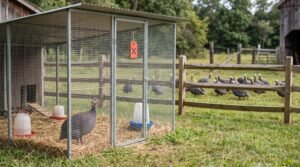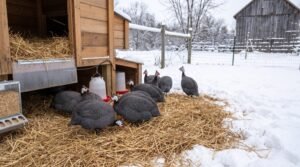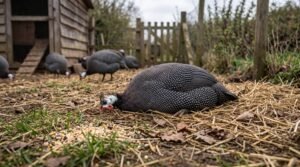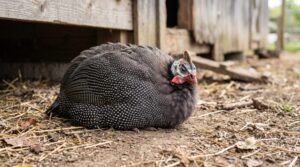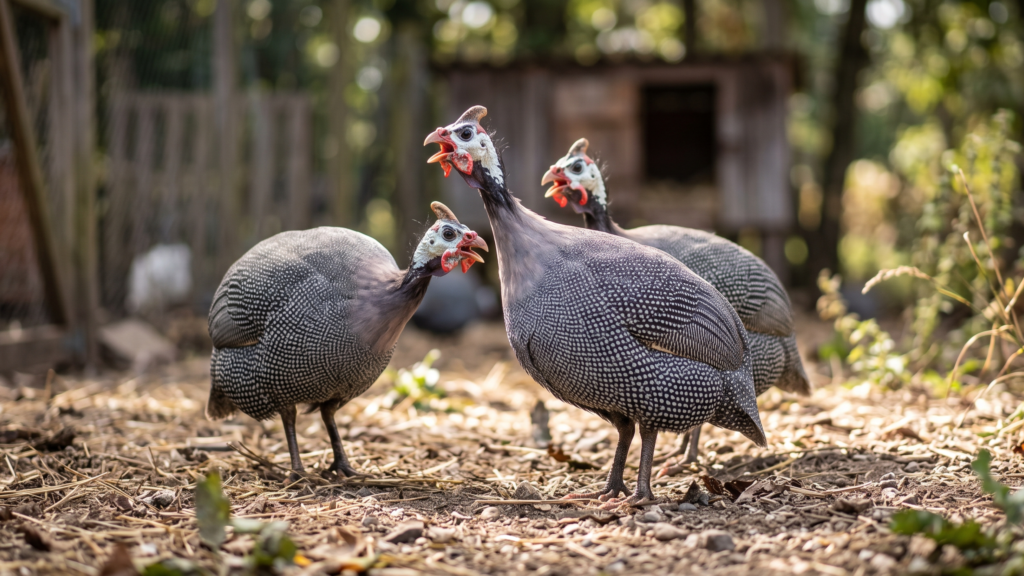
Guinea fowl are loud because noise is how they survive: they use vocal calls to stay connected as a flock, warn each other about predators, defend territory, and attract mates. Some of that noise is completely normal, and some of it is your birds telling you something needs attention.
I remember the first week I brought guinea keets home, thinking I’d basically bought chickens with better spots. By the time they hit adulthood, I understood why longtime keepers laugh when new owners ask if guineas are “quiet like hens.” They are not, and they were never going to be. But once I learned to read what the different calls actually meant, the noise stopped feeling like chaos and started feeling like information.
This guide breaks down exactly why guinea fowl are so vocal, how to tell normal noise from a warning sign, and what you can realistically do to keep the volume manageable — for you and for your neighbors.
- Guinea fowl are naturally loud; it’s an evolved survival trait, not a training failure.
- Females make a two-syllable “buck-wheat” call; males make a one-syllable “chi-chi” call — useful for telling males and females apart by sound alone.
- Common triggers include predators, hunger, boredom, mating season, and simple flock chatter.
- Total noise scales with flock size, so a smaller group is genuinely quieter, not just perceived that way.
- You can reduce — but never fully eliminate — guinea fowl noise through space, routine, and flock management.
Why Guinea Fowl Are Naturally Loud Birds
Guinea fowl didn’t evolve to be quiet. In the wild grasslands and scrublands of sub-Saharan Africa, they move in large, loosely organized flocks across open territory, and that dispersed, roaming lifestyle pushed them to develop loud, far-carrying calls to keep the whole group alerted and safe. A guinea fowl that goes quiet in the wild is a guinea fowl that’s easy to pick off. Noise is protection.
That instinct doesn’t switch off just because your birds live in a fenced yard instead of the savanna. Guinea fowl are highly social, flock-oriented birds, and much of their vocalizing exists simply to keep the group communicating — who’s where, what’s nearby, and whether everything’s fine. This is the hardest thing to explain to people used to chickens: hens go quiet when content, but guineas talk when content. It’s the silence you should worry about.
The Main Reasons Guinea Fowl Make Noise
Guinea fowl noise almost always falls into one of a handful of categories. Once you can recognize the pattern, most of what sounds like random racket actually makes a lot more sense.
Flock Communication
This is the background hum of guinea fowl ownership. Communication keeps the flock united while moving and feeding, so as your birds forage, they’re constantly calling back and forth to stay in contact. It’s usually a lower, more conversational chatter than an alarm call, and it tends to ebb and flow throughout the day rather than spike suddenly.
Alarm Calls
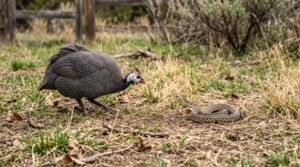
This is the sound most new owners panic over the first time they hear it — a sharp, repeated, almost mechanical shriek that can sound like the whole flock has lost its mind. Alarm calling exists specifically to warn the rest of the group about predators, and guineas are notoriously trigger-happy about what counts as a threat. A hawk overhead, a strange dog, an unfamiliar person, even a plastic bag caught in the wind can set them off.
Guinea fowl are relatively unintelligent when it comes to sorting real threats from harmless ones, and even after repeated exposure to something harmless, they often won’t stop reacting to it. That’s frustrating from a “please be quiet” standpoint, but it’s also exactly why people keep guineas as informal guard birds in the first place.
Territorial Behavior
Guinea fowl are also vocal about ownership. Territorial calling is how they mark and defend key resources like feeding areas, roosting spots, or the boundaries of what the flock considers “home.” Recently added new birds or rearranged the run? Expect a noisier adjustment period while everyone re-establishes where they stand.
Mating Season Calls
Spring and early summer bring a noticeable jump in volume. Mating displays rely heavily on vocal performance to attract a partner, and once males start pairing off with hens, you’ll often hear more calling, chasing, and general commotion than at any other time of year. Several longtime keepers describe this pattern the same way: young hens buck-wheat almost nonstop as soon as they’re old enough, calling loudest through the season until they’ve chosen a mate — at which point the noise drops off noticeably.
Stress, Fear, and Environmental Changes
Guinea fowl are easily rattled, and stress noise is one of the most common — and most fixable — causes of excessive calling. They tend to be disturbed by nearly anything, and even a small change in the yard can trigger crying out. New equipment, a repositioned coop, unfamiliar sounds, or a disrupted routine can all set off a wave of anxious calling that lasts far longer than a genuine predator alarm would.
Hunger or Crowding
Basic needs matter more than people expect. When guinea fowl don’t have enough space, they feel crowded and uncomfortable, and start calling more as a result — the fix is usually letting them range and forage more freely rather than confining them tightly. Food scarcity causes the same effect: when birds can’t feed themselves adequately, especially in winter, the hungriest ones will call constantly until they’re satisfied, so keeping a steady food supply helps keep the flock calmer. If you’re dialing in rations, our guinea fowl feeding guide covers what a properly fed flock actually needs day to day.
How to Tell Males and Females Apart by Their Calls
If you’re trying to figure out your flock’s sex ratio by ear, the calls themselves are actually the most reliable clue you have — more dependable than wattle size or posture. Male guinea fowl make a one-syllable call that sounds like “wheat,” while females make a distinctive two-syllable call that sounds like “buck-wheat.”
Here’s the catch that trips up almost everyone: females can also make the male’s one-syllable call, but males can never make the two-syllable female call. So if you hear the two-note “buck-wheat” from a bird, you’re listening to a hen — guaranteed. If all you’re hearing is the single-note “chi-chi” or “check,” that bird could be either sex, and you’ll need to keep listening over a few days to catch a female making her signature call.
| Call Type | Sound | Made By |
|---|---|---|
| One-syllable | “Chi-chi” or “check” | Males and females |
| Two-syllable | “Buck-wheat” | Females only |
Is Excessive Noise a Sign of a Problem?
Most guinea fowl noise is completely normal — this is simply a loud species. But there’s a difference between typical flock chatter and noise that signals something’s actually wrong.
A few patterns are worth paying closer attention to:
- Constant, unrelenting screaming with no obvious trigger — could point to an ongoing stressor like a predator lurking nearby, overcrowding, or a persistent food or water shortage.
- A sudden increase in noise from a normally quiet bird — worth investigating, since illness, injury, or a new pecking-order conflict can all change vocal behavior.
- Noise that continues well after dark — normal occasionally, but consistent nighttime calling often means something is disturbing them at the roost, from a predator testing the perimeter to poor housing security.
If you notice consistent nighttime disturbances, it’s worth reviewing your setup against our guide on guinea fowl housing and coop requirements to rule out a security gap. And if the noise comes paired with lethargy, appetite loss, or other symptoms, it’s worth cross-checking against common guinea fowl diseases rather than assuming it’s behavioral.
How to Reduce Guinea Fowl Noise
You cannot make guinea fowl silent — that’s not a realistic goal, and anyone who promises it is overselling. But you can absolutely bring the volume down to a manageable level with the right management choices.
Keep Your Flock Size Reasonable
Flock size has a bigger effect on total noise than most people expect, and the math is straightforward: more birds means more voices joining every alarm. A group of four guinea fowl alarming together produces a manageable amount of noise, while fifteen birds alarming together is far more substantial. As a rough guide, four to six birds tends to be a noise-manageable flock size when you have neighbors nearby, while ten or more on a small property really needs either very tolerant neighbors or enough acreage to create real distance.
If you’re still deciding how many birds to start with, our beginner’s guide to starting a guinea fowl flock walks through sizing a flock around your space realistically.
Give Them Enough Space
Cramped conditions breed noise. Guinea fowl that feel boxed in will let you know about it, and the fix is straightforward — provide at least 2 to 4 square feet of space per bird, a range confirmed by University of Kentucky Cooperative Extension guidance on raising guinea fowl, and allow more open grazing area whenever possible. Free-ranging birds are typically calmer than confined ones, even if the trade-off is less predictable roaming. If you’re weighing the two setups, our comparison of free-range vs. confined guinea fowl covers the noise trade-offs alongside safety and cost.
Feed Them Consistently
A guinea fowl that isn’t worried about its next meal has a lot less to shout about. Keeping feed reliably available, especially through winter when foraging drops off, removes one of the most common and easily fixed noise triggers. This matters even more with a mixed flock — our guide on whether guinea fowl can live with chickens, ducks, and turkeys covers how to prevent feed competition between species.
Position the Coop Thoughtfully
Where you place housing and range areas affects how much noise reaches sensitive spots like a neighbor’s property line. Setting the coop farther from shared boundaries, and encouraging the flock to forage toward the interior of your property, softens the impact without changing anything about the birds themselves.
Reduce Startling Triggers
Since so much guinea fowl noise comes from being startled, minimizing sudden surprises helps more than people expect. Predictable daily routines, secure fencing that keeps out roaming dogs, and gradual introductions to new equipment or structures all reduce the number of alarm-worthy moments in a given day. If predator pressure is a recurring trigger in your area, our guide to protecting guinea fowl from foxes, hawks, and other predators addresses the root cause rather than just the noise it produces.
Manage the Loudest Individuals
Flocks often have one or two birds that set the tone. In many guinea fowl groups, certain individuals are noticeably noisier than the rest and tend to instigate calling in the whole flock, so selectively removing the loudest birds can leave the remaining ones calmer, since they pick up on the quieter behavior around them. I’ve seen this play out in my own flock — rehoming one particularly reactive hen changed the entire group’s baseline noise level within about a week.
Raise Keets Around Calmer Birds
If you’re starting from scratch, early conditioning matters. Raising keets and exposing them to calmer surroundings before they’re fully grown can help control how noisy they become as adults, and hatching them alongside steadier birds like chickens can be a positive influence, since chickens are far less noisy and flighty. For a full walkthrough of raising keets from day one, see our week-by-week guinea fowl keet care guide.
What Doesn’t Work
A few “solutions” people try are worth flagging before you consider them. Debeaking or attempting to physically alter a bird’s ability to vocalize is not a humane or recommended practice, and it doesn’t address the underlying cause anyway — a stressed or hungry bird will still act stressed and hungry. If noise genuinely isn’t workable in your situation despite management changes, it’s more honest to rethink flock size or location than to pursue anything that compromises the birds’ welfare.
Final Thoughts
Guinea fowl are loud because being loud is what kept their wild ancestors alive, and that instinct came home with them. Most of what you’ll hear — flock chatter, alarm calls, mating season racket — is completely normal guinea fowl behavior, not a sign you’re doing something wrong. The exceptions worth watching for are sudden changes in a bird’s usual pattern, unrelenting noise with no clear trigger, or nighttime disturbances, since those are more likely to point to a real problem.
If the noise is manageable but not ideal, start with the basics: right-size your flock, give them room to range, keep feed consistent, and reduce unnecessary surprises. Those changes won’t turn guineas into quiet birds, but they’ll take the edge off.
Has a particular sound from your flock ever caught you off guard before you knew what it meant? I’d love to hear how you’ve managed noise on your own property — and if you’re just getting started, our guide on 10 mistakes every beginner guinea fowl keeper should avoid is worth a read before you bring birds home.
FAQ
Are guinea fowl louder than roosters? Roosters are loud in short, predictable bursts, mainly at dawn. Guinea fowl are loud in a different way — less predictable, more frequent throughout the day, and triggered by a much wider range of stimuli. Many keepers who’ve had both describe guineas as more persistently noisy overall, even if a rooster’s individual crow is briefly louder.
Do guinea fowl get quieter with age? Somewhat. Very young keets are relatively quiet since their calls don’t fully develop until around 8 to 10 weeks old. Noise typically peaks during the first mating season and can settle into a more predictable pattern once birds have paired off and matured, though the species never becomes genuinely quiet.
Can I keep just one guinea fowl to reduce noise? It’s not recommended for the bird’s welfare. Guinea fowl are intensely social and a single bird isolated from a flock will often call excessively out of distress, trying to locate others of its kind. A small flock of four to six tends to be both more humane and, counterintuitively, more manageable in total noise than one anxious, calling individual.
Is it legal to keep noisy guinea fowl near neighbors? This varies significantly by city, county, and property zoning, so it’s worth checking local noise ordinances and livestock regulations before committing to a flock in a residential or semi-rural area. Our guide on legal rules for keeping guinea fowl is a good starting point for what to check.
Hi, I’m Rayyan. I raise guinea fowl and share practical, research-backed guides for backyard keepers and homesteaders. I combine hands-on flock experience with trusted poultry management and university extension resources to help you raise healthier, more productive birds — with confidence, not guesswork.