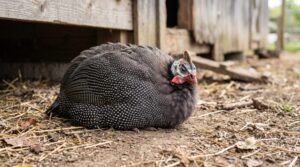
Pearl Guinea Fowl are the dark gray, white-speckled birds most people picture when they hear “guinea fowl” — hardy, loud, excellent foragers, and one of the most popular choices for backyard tick and pest control in the US. If you’re thinking about adding them to your place, here’s what you actually need to know about their looks, their diet, their day-to-day care, and how to house them properly.
I’ve kept guinea fowl for years now, and Pearl is the variety I keep coming back to. They’re not a “set it and forget it” bird — but they’re a lot closer to that than most people expect once you understand what makes them different from chickens. Everything below — feeding, housing, daily care — works with that foraging instinct rather than against it.
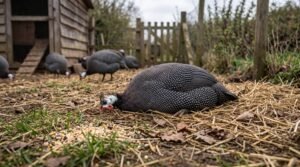
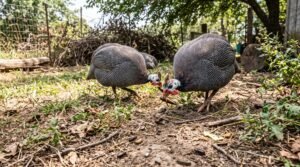
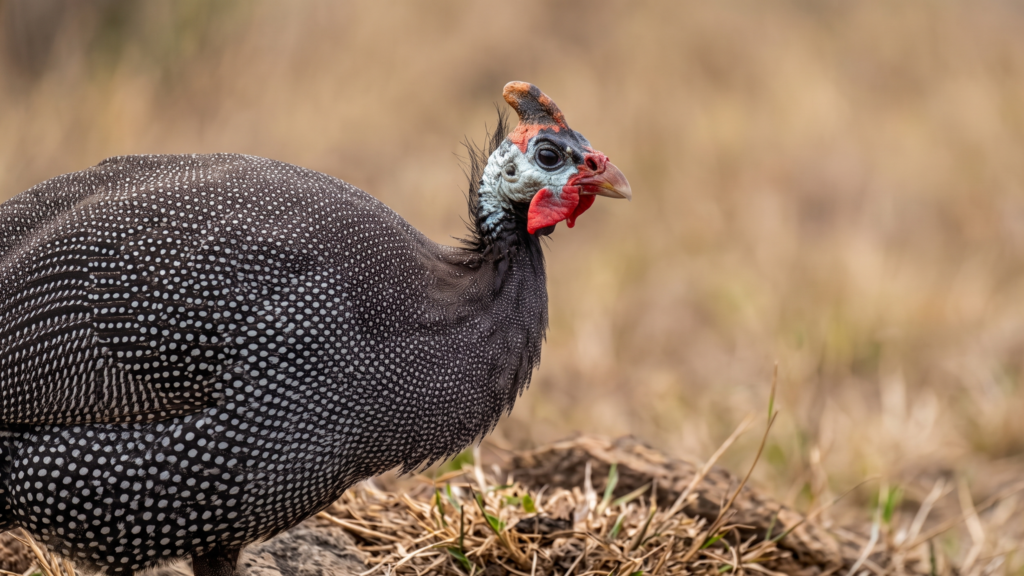
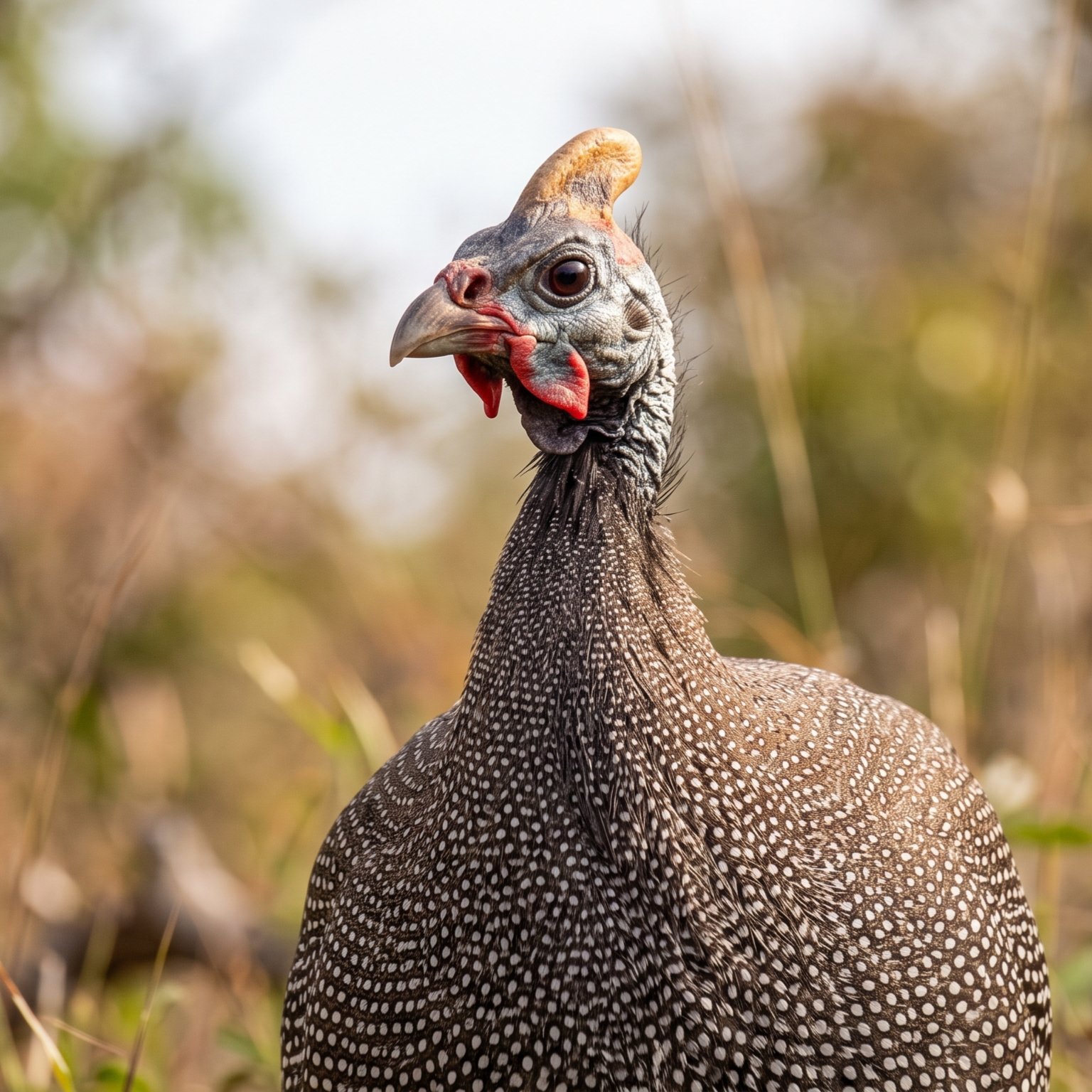
- Appearance: Dark pearl-gray plumage covered in small white spots, bare bluish-gray helmeted head, no feathers on the neck
- Weight: Roughly 3–4 lbs at maturity, with some meat-type strains running heavier
- Temperament: Alert, independent, flock-oriented, not cuddly
- Egg production: Around 60–100+ small eggs per year, seasonal (spring through fall)
- Lifespan: 10–15 years with good predator protection
- Protein needs: Higher than chickens at every life stage
- Coop space: 3–4 sq. ft. per adult bird minimum, plus a larger run
What Do Pearl Guinea Fowl Look Like?
The name gives it away. Pearl Guinea Fowl carry pearl-gray feathers dotted with small white speckles, giving them a patterned look that stands out from other backyard poultry. Look closer at a flock, though, and you’ll notice the shade isn’t perfectly uniform bird to bird — selective breeding for meat production means some individuals run lighter and some darker, so you’ll rarely find two guineas that match exactly.
The head and neck are bare skin rather than feathers, which helps the bird regulate its body temperature, and the skin itself is an odd mix of blue, red, and black that gives the face a slightly clownish look. Add the short, curved beak and the bony helmet on top, and you’ve got a bird that’s genuinely hard to mistake for anything else in the barnyard.
A mature guinea is roughly the size of a large chicken, typically settling around 4 lbs, with short rounded wings and a short tail that give it an oval silhouette in flight. Males and females look nearly identical — they don’t reach sexual maturity until their second year, which is part of why sexing them by eye is so difficult. One reliable clue: males tend to carry a larger wattle. Voice works better — hens make a distinctive two-syllable “buckwheat” call that males can’t reproduce, while males are limited to a single-note chirp.
Pearl and White are the two original varieties tracing back to the wild guinea fowl of West Africa, and the two color lines have historically bred true rather than mixing freely. You’ll also see Lavender, Royal Purple, and specialty French/Jumbo strains bred for faster growth and heavier meat yields, but Pearl remains the most recognizable and widely kept guinea fowl breed in North America.
Personality and Behavior
Guineas are not chickens with a fancy hat. They keep much stronger survival instincts than domestic chickens and behave far more independently — guinea fowl generally do best in a free-range setup where they can find most of their own food and don’t need constant human handling. Don’t expect a lap pet. Guinea fowl aren’t known for being friendly, docile, or affectionate the way some chicken breeds are.
That independence is what makes them useful. Mine patrol the fence line and garden beds without any direction from me, and the first sign of a hawk overhead or an unfamiliar vehicle in the driveway triggers an alarm call the whole flock picks up within seconds. If you want a genuinely low-maintenance watch bird, this is the trade-off: less affection, more utility.
What Do Pearl Guinea Fowl Eat?
Guinea fowl are omnivores with a noticeably higher protein requirement than chickens at every stage of life, and getting that wrong is one of the most common beginner mistakes.
Protein Needs by Age
Keets need a 24–26% protein starter ration, dropped to 18–20% protein from roughly the fifth through eighth week, and then switched to a standard 16% layer mash after that, according to University of Kentucky Cooperative Extension guidance on raising guinea fowl. If your local feed store doesn’t carry a feed at the exact protein level you need, you can blend a higher-protein feed with layer mash to land in the right range.
| Life Stage | Protein Level | Feed Type |
|---|---|---|
| Keets (0–4 weeks) | 24–26% | Unmedicated starter |
| Growers (5–8 weeks) | 18–20% | Grower ration |
| Adults, non-breeding | 16–18% | Layer mash |
| Breeders (pre-laying) | 17–19% | Breeder ration |
Feed should always be given as mash or crumbles — pelleted feed isn’t recommended for guineas. I’ve found mine simply pick around pellets and waste more of them than they would crumbles, so this isn’t just an extension-office formality.
Foraging and Supplemental Feed
This is where guineas separate themselves from most backyard poultry. They’re excellent foragers that can pull a significant share of their diet straight from the environment, eating insects, seeds, grasses, and weeds — which cuts your feed bill and helps with pest control at the same time. A flock with real range access needs noticeably less commercial feed than one kept in a run.
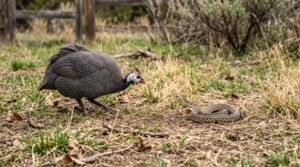
Ticks deserve a special mention, since it’s the number one reason most people get into guineas in the first place. Guineas have long been used against wood ticks and other insects like grasshoppers, flies, and crickets, and because they eat deer ticks specifically, a working flock can meaningfully lower a property’s Lyme disease risk. They’ll also take down slugs, and a flock has been known to mob and kill snakes.
Even with strong foraging, don’t skip the basics:
- Provide grit at all times if birds are eating any vegetation or whole grains, since guineas have no teeth and need it to grind food in the gizzard
- Keep oyster shell available separately for laying hens, or use a layer feed with calcium already balanced in
- Give clean water at all times — guineas drink more than you’d expect for their size, especially in hot weather
- Never medicate keet starter feed unless a specific health issue calls for it
In my experience, guineas that are allowed to range from a young age become dramatically better foragers as adults than birds kept penned early on — it really is a learned skill, not just an instinct that switches on.
Guinea Fowl Care Basics
Pearl Guinea Fowl are genuinely low-maintenance once established. They adapt to a wide range of climates and do well living mostly outdoors, and their robust immune system makes them hardy compared to a lot of other backyard poultry. That said, “low-maintenance” doesn’t mean “no maintenance,” and there are a few areas where guineas need more attention than chickens, not less.
Training Them to Come Home
New guineas — whether keets or adults — need to be taught where “home” is before you ever let them roam. It’s best to keep new birds confined to the hen house for a week or two so they get used to the location, since letting them out immediately risks them wandering off for good. After that settling period, let them out gradually rather than all at once. This single step is the difference between a flock that reliably returns each evening and one that scatters across the neighborhood.
If you want daily eggs collected somewhere predictable rather than hidden in tall grass, keep hens confined to the coop until around noon each day during laying season — they’ll lay indoors rather than establishing hidden nests outside.
Egg Laying
During laying season, a guinea hen — an adult female at least a year old — will typically produce about one egg a day, and the eggs can be eaten just like chicken eggs. Production is seasonal, generally running spring through fall, and most sources put annual output somewhere in the 60–100+ range depending on the strain and how well the flock is managed. Guinea eggs run smaller than chicken eggs with noticeably thicker shells, which is part of why they store and ship well. For anyone weighing guineas primarily as layers, it’s worth comparing that seasonal pattern against the numbers in our guide to annual guinea fowl egg production before deciding how many hens you actually need.
Predator Protection
Guineas are more predator-aware than most poultry — that alarm call works both ways, alerting you and, ideally, spooking off whatever triggered it. But awareness isn’t the same as safety. Guinea fowl can’t see in the dark, which makes them easy targets if they’re caught outside a secure shelter after dusk. A flock that free-ranges by day still needs a genuinely predator-proof structure to lock into at night. If you’re dealing with hawks, foxes, or raccoons specifically, it’s worth working through a dedicated plan for protecting guinea fowl from common predators rather than assuming instinct alone will keep them safe.
Health
Guineas are generally disease-resistant compared to chickens, but they’re not immune to poultry illness, and a bird that’s normally loud and active going quiet is a warning sign worth acting on quickly. Keep an eye out for the same red flags you’d watch for in any flock — lethargy, discharge from the eyes or nostrils, and sudden drops in feed or water intake. If you notice anything off, it’s worth reviewing common guinea fowl diseases, symptoms, and treatment options early rather than waiting to see if it resolves on its own.
Housing Requirements for Pearl Guinea Fowl
Housing is where guinea fowl diverge from chickens the most, and it’s the area where new keepers tend to under-build.
Space Per Bird
Adult guineas need three to four square feet of coop space per bird, more than what’s typically recommended for chickens of similar size. The Guinea Fowl Breeders Association recommends bumping that up to a full 4 square feet per bird whenever the flock might be confined indoors for extended stretches, such as during a rough winter — the extra room helps prevent the stress and boredom-driven pecking that shows up when guineas can’t get outside.
Don’t just measure the total footprint of the building, either. Feeders, waterers, nesting areas, and the footprint of roosting bars all eat into the usable clear floor space, so factor those in before assuming your numbers work out.
Roosting and Height
Guineas are natural tree-roosters by instinct, and getting them to accept a coop takes deliberate setup. Aim for a coop with plenty of roosting space and at least 6 feet of interior height so you can install perches at different levels — guineas strongly prefer roosting up high. Set the roosting bars wide and sturdy, starting around 4 feet off the ground and stepping up from there.
Guinea fowl that are trained to roost inside a shelter at night consistently outlive birds that roost in trees, where they’re exposed to owls and other night predators. This single habit — training them to come inside at dusk — is probably the highest-leverage thing you can do for flock longevity.
Bedding, Ventilation, and Layout
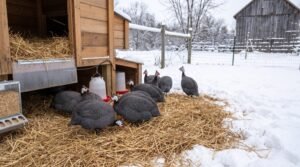
Cover the floor with an absorbent bedding material like wood shavings, chopped hay, or straw, and as long as it’s kept dry, it can stay in place for months before you need to fully replace it — damp litter, on the other hand, is a disease risk and should be swapped out right away.
Ventilation matters more than most first-time keepers expect. Position all ventilation openings above roost level so moisture can escape through the roof line rather than blowing cold air directly onto the birds — ridge vents, soffit vents, and screened high windows all work well for this. Skip insulation altogether: as Poultry Extension’s small-flock housing guidance notes, insulated coops tend to trap moisture inside the structure, which in turn drives respiratory problems in housed birds.
Nesting boxes aren’t strictly necessary the way they are for chickens — guineas are ground nesters by instinct and mostly ignore boxes unless you take specific steps to encourage their use. If you’re weighing whether to install them anyway, our breakdown of whether guinea fowl actually use nesting boxes covers what does and doesn’t work.
The Run
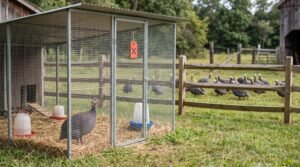
The coop is only half the picture — guineas need considerably more room to move once you factor in an attached run. A good rule of thumb is 2–3 times the coop’s floor space in an attached, covered run, since guineas need much more elbow room and roosting space than chickens do even outside the sleeping quarters. If you’re planning the layout from scratch, it’s worth working through detailed guinea fowl housing space requirements for both the indoor coop and the outdoor run before you start building, since retrofitting an undersized run later is a lot more work than sizing it right the first time.
If free-ranging isn’t fully practical on your property — maybe you’re near a busy road or don’t have the acreage — it’s worth reading up on free-range versus confined guinea fowl setups to see how much of their natural behavior and pest-control value you can preserve in a more contained system.
Frequently Asked Questions
Do Pearl Guinea Fowl need a heat lamp as adults? No. Adult Pearl Guineas handle a wide range of temperatures well on their own. Heat is only necessary for keets during their first several weeks, before they’re fully feathered.
Can Pearl Guinea Fowl live with chickens? Yes, in most cases. They’ll often share a run peacefully, though guineas need more space and higher roosts than chickens are used to, and males can occasionally be territorial during breeding season.
How many Pearl Guinea Fowl should I start with? Most hatcheries set a minimum order around 5–6 keets, partly for shipping survival and partly because guineas are a flock species that does poorly kept alone or in pairs.
Why do my guineas refuse to use the coop? Almost always a training issue rather than a design flaw. Confine new birds to the coop for a week or two before giving them range access, and keep reinforcing the habit at dusk until it sticks.
Final Thoughts
Pearl Guinea Fowl reward a bit of upfront effort with a genuinely low-maintenance, high-utility bird for the rest of their long lives. Get the protein levels right while they’re young, build a coop that actually accounts for their need for height and roosting space, and take the time to train them home early — and you’ll end up with a flock that handles most of its own tick control, sounds the alarm on anything unusual, and asks very little of you in return.
Have you kept Pearl Guineas before, or are you weighing them against another variety? I’d genuinely like to hear how your setup compares to mine — feel free to share in the comments, and if you’re just getting your flock off the ground, our beginner’s guide to starting guinea fowl farming is a good next stop.
Hi, I’m Rayyan. I raise guinea fowl and share practical, research-backed guides for backyard keepers and homesteaders. I combine hands-on flock experience with trusted poultry management and university extension resources to help you raise healthier, more productive birds — with confidence, not guesswork.