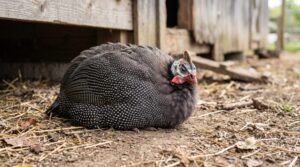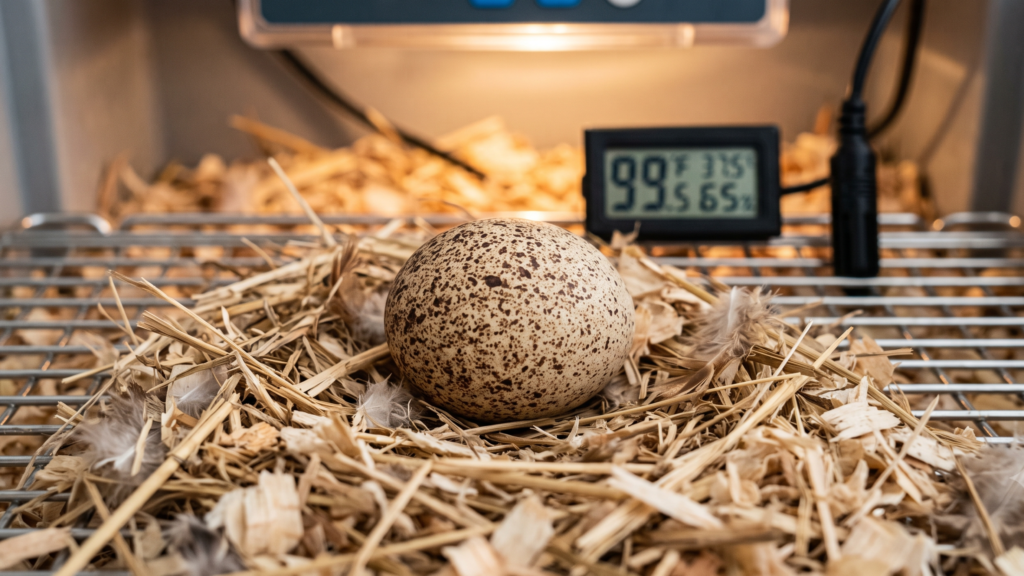
Guinea fowl eggs take 26 to 28 days to hatch, whether you’re using an incubator or a broody hen, and success comes down to three things: fertile eggs, stable temperature, and the right humidity curve. Get those right and you’ll have a brooder full of peeping keets by day 28.
I still remember my first hatch. I’d raised chickens for years and figured guinea eggs would behave the same way in the incubator. They didn’t. My humidity was too high, my air cells were undersized, and I ended up with keets that were fully formed but too swollen to pip their way out. That failed hatch taught me more than any of my successful ones — guinea eggs play by their own rules, and once you understand why, the whole process gets a lot less mysterious.
This guide walks you through everything from selecting eggs to the moment your keets dry off in the brooder, including the mistakes that trip up most first-timers.
Before you start collecting eggs, it helps to understand how guinea fowl reproduce and lay in the first place, since egg quality starts well before the eggs ever reach your incubator.
A quick look at the numbers before we get into the details:
- Incubation length: 26–28 days
- Incubator temperature: 99.5°F (37.5°C) forced-air, or 100.5–101.5°F (38.1–38.6°C) still-air, measured at the top of the eggs
- Humidity, days 1–24: 45–55% relative humidity
- Humidity, lockdown (days 25–28): 65–70% relative humidity
- Turning: 3–5 times daily, minimum, stopped at lockdown
- Typical hatch rate: 65–75% of set eggs, slightly lower than chickens
Why Guinea Eggs Aren’t Just Small Chicken Eggs
Guinea eggs look like a novelty next to chicken eggs — smaller, more pointed at one end, and covered in a shell that feels almost like porcelain. That shell isn’t just for show: it’s noticeably thicker and tougher than a chicken eggshell, which offers good protection out in the wild but makes moisture management inside an incubator trickier.
Because the shell is so dense, guinea eggs lose moisture much more slowly than chicken eggs do. That’s why they need lower humidity for roughly the first 25 days of incubation — it gives the egg time to lose enough moisture to form a properly sized air cell. Run your incubator at chicken-egg humidity and you’re setting yourself up for exactly the problem I had on my first try: keets that grow too large for their air cell and can’t get into position to pip.
If you’re weighing whether to hatch guinea eggs or chicken eggs this season, it’s worth comparing the two side by side — I cover the practical differences in guinea fowl versus chicken production.
Selecting Eggs for Hatching
Not every egg in the nest box deserves a spot in your incubator. Hatch rate starts with egg selection, and a little culling up front saves you disappointment three weeks later.
- Shape matters. Skip eggs that are unusually round, overly pointed, wrinkled, or oddly shaped — these tend to have positioning or moisture-loss problems during incubation.
- Check for cracks. Even hairline cracks let in bacteria that can spoil the egg or contaminate your whole incubator.
- Go with fresher eggs when you can. Hatchability starts dropping noticeably after about a week of storage, so eggs collected within the last several days will generally outperform older ones.
- Store point-down if you’re holding eggs. Keep them somewhere cool, around 50–60°F, and turn them daily until you’re ready to set them.
- Consider your flock’s age. Eggs from hens in their second breeding year tend to hatch better than eggs from very young or very old birds.
If you’re just building your starter flock and deciding whether to begin with eggs, day-old keets, or adults, that decision affects how soon you’ll be hatching anything at all — buying your first guinea fowl walks through the trade-offs.
Setting Up Your Incubator
Whatever incubator you’re using, give it time to prove itself before you trust it with real eggs. Run it empty for at least 24 hours, checking that temperature and humidity hold steady, before you set anything inside.
A few setup basics that make a real difference:
- Location matters more than people expect. Put the incubator somewhere with a stable ambient temperature, away from direct sunlight, drafts, and foot traffic. Temperature swings in the room translate directly into swings inside the incubator.
- Use a calibrated thermometer and hygrometer. Built-in incubator gauges are notoriously unreliable, and a couple of degrees off is enough to tank a hatch.
- Let shipped or chilled eggs warm up first. If eggs have been in transit or refrigerated, give them 12 to 24 hours at room temperature before they go in. Setting cold eggs straight into a warm, humid incubator is a good way to crack shells and kill embryos.
- Know your incubator type. Forced-air (fan-driven) incubators distribute heat evenly. Still-air incubators stratify, with warmer air pooling near the top, so you’ll need to measure temperature at egg level and run it slightly hotter than a forced-air unit would need.
For a broader rundown of coop and equipment basics before you get to the incubation stage, see guinea fowl housing and equipment essentials.
Temperature and Humidity: The Two Numbers That Matter Most
If you only remember two settings from this whole guide, make it these.
| Incubator Type | Temperature | Measured At |
|---|---|---|
| Forced-air | 99.5°F (37.5°C) | Egg level |
| Still-air | 100.5–101.5°F (38.1–38.6°C) | Top of the eggs |
Humidity works on a two-stage curve, and getting this sequence right is where most hatch problems start or get avoided entirely.
- Days 1–24: Hold relative humidity between 45–55%. Some experienced keepers run it even drier, closer to 40%, particularly in humid climates — the goal is proper moisture loss, not a fixed number.
- Days 25–28 (lockdown): Raise humidity to 65–70%. This softens the internal membranes so keets can maneuver into hatching position without getting shrink-wrapped inside the shell.
I check my hygrometer against a separate calibrated one every few hatches, since I’ve had built-in incubator gauges drift by 10% or more without any warning. That single habit has saved me more hatches than any other change I’ve made.
For a day-by-day breakdown of what’s happening inside the egg at each stage, it’s worth reading through the full guinea fowl egg incubation timeline alongside this guide.
Turning the Eggs
Turning mimics what a hen does naturally when she shifts on the nest, and it prevents the developing embryo from sticking to the shell membrane.
- Turn eggs at least three to five times a day, with more frequent turning generally producing better results, especially in the first week.
- If you’re turning by hand, use an odd number of turns per day so the eggs spend a different amount of time on each side overnight.
- Automatic turners simplify this considerably and are worth the investment if you hatch more than a couple of batches a year.
- Stop turning entirely at lockdown, around day 24 or 25, and leave the eggs undisturbed from that point on.
Candling: Checking Progress Without Guessing
Candling is the only way to know what’s actually happening inside the shell, and guinea eggs candle well despite their thick shells because the shell itself is pale.
A practical candling schedule:
- Day 7–10: Look for a web of blood vessels and a visible dark spot (the embryo). Clear eggs with no visible development are almost certainly infertile and can be removed.
- Day 14–18: The embryo should fill noticeably more of the shell, and the air cell at the blunt end should be visibly larger. Remove any eggs showing a blood ring, which indicates the embryo died early.
- Day 23–24 (before lockdown): Do a final check for movement and air cell size, then leave the eggs alone from here on.
Work quickly and in a dark room — extended time out of the incubator can stress developing embryos. If an egg smells off, remove it immediately; a spoiled egg can contaminate the whole batch.
Lockdown: The Final Three Days
Lockdown is exactly what it sounds like — stop turning, raise the humidity, and close the incubator until hatching is done.
- Stop turning around day 24–25.
- Raise humidity to 65–70%.
- Resist opening the incubator to check on things. Every time you lift the lid, you lose heat and humidity right when the keets need stability most.
- Expect pipping to start around day 25–26, with hatching typically wrapping up by day 28.
After the Hatch
Once a keet pips, patience is the only tool you need. Hatching is exhausting work, and the process from first pip to fully out of the shell can take a full 24 hours.
- Don’t assist too early. Give a struggling keet at least 24 hours from its first pip before considering any help, and only intervene if the membrane has dried and the keet is clearly stuck.
- Leave keets in the incubator until they’re dry and fluffy. A wet keet pulled out too soon can chill quickly.
- Wait for the full hatch window to close, generally about 24 hours after the first keet hatches, before moving anyone to the brooder.
- Have the brooder ready in advance, warmed and set up, so keets aren’t waiting around once they’re dry.
Once your keets are settled, the next few weeks are just as important as the incubation itself — our week-by-week keet care guide picks up exactly where this one leaves off.
Natural Incubation: Using a Broody Hen
If you’d rather skip the incubator, natural incubation is an option, though it comes with trade-offs. Guinea hens can go broody even when the eggs underneath them aren’t fertile, and they’re not known for being attentive mothers — a big part of why most keepers reach for an incubator instead.
A broody chicken hen is usually your best bet if you want to go the natural route. According to poultry management guidance from Extension, a bantam hen can cover roughly 12 to 15 guinea eggs, while a larger chicken hen can manage 20 to 28 at once, and chicken hens generally make steadier mothers than guinea hens do.
A few things to know before you try this method:
- Guinea hens themselves are flighty and unpredictable sitters — nature can work, but it’s a gamble.
- If you’re using a broody chicken, treat her for lice and mites before setting her on eggs.
- Expect the same 26–28 day timeframe as artificial incubation.
- A guinea hen sitting outdoors on a hidden ground nest is vulnerable to predators, so factor that risk in before letting her go it alone.
If predator pressure is a concern for a hen sitting on eggs outside the coop, it’s worth reading up on protecting your flock from foxes, hawks, and other predators before hatching season starts.
Common Hatch Problems and What Causes Them
Even with everything dialed in, hatch rates for guinea fowl typically run a bit lower than chickens — usually somewhere in the 65–75% range for set eggs. Here’s what tends to go wrong when a hatch underperforms.
| Problem | Likely Cause |
|---|---|
| Keet fully formed but dead in shell | Humidity too high early on, undersized air cell |
| Clear egg with no development | Infertile egg, or embryo died very early |
| Blood ring visible on candling | Early embryo death, often from temperature swings |
| Keet pips but can’t finish hatching | Membrane dried out (shrink-wrapped) from low lockdown humidity |
| Low fertility across the whole batch | Breeder flock age, nutrition, or male-to-female ratio |
| Sticky, weak, or malformed keets | Incubator temperature too high or too low overall |
If low fertility or poor hatch rates are a recurring issue rather than a one-off, it’s worth stepping back and looking at your breeding flock’s diet and condition — feeding plays a bigger role in fertility than most people expect, and our complete feeding guide is a good place to start.
Frequently Asked Questions
How long does it take to hatch guinea fowl eggs? Guinea fowl eggs take 26 to 28 days to hatch, whether incubated artificially or under a broody hen.
Why is my incubator humidity so important for guinea eggs specifically? Guinea eggshells are thicker and denser than chicken eggshells, so they lose moisture more slowly. Running humidity too high in the first 24 days prevents a proper air cell from forming, which is one of the most common reasons for dead-in-shell keets.
Can I hatch guinea eggs under a chicken hen? Yes, and many keepers prefer it. Chicken hens tend to be steadier, more reliable sitters than guinea hens, though the incubation length still runs 26 to 28 days rather than the 21 days a chicken egg would take.
Should I help a keet that’s struggling to hatch? Only as a last resort. Give it at least 24 hours from the first pip, and only assist if the membrane has visibly dried and the keet shows no more progress on its own. Helping too soon often causes more harm than good.
What’s a normal hatch rate for guinea fowl eggs? Expect somewhere around 65–75% of set eggs to hatch under good conditions, slightly lower than the typical chicken hatch rate, mainly due to guinea eggs’ greater sensitivity to humidity.
Hatching guinea fowl eggs rewards patience and a willingness to trust the process over the urge to check and double-check. Get your temperature steady, respect the humidity curve, and give lockdown the quiet it needs, and day 28 will take care of itself.
Have you had a hatch go sideways, or one that surprised you with how smoothly it went? I’d love to hear what worked in your setup — drop a comment below, and if you’re getting ready for your first hatch, browse the full blog for more guides to get you there.
Hi, I’m Rayyan. I raise guinea fowl and share practical, research-backed guides for backyard keepers and homesteaders. I combine hands-on flock experience with trusted poultry management and university extension resources to help you raise healthier, more productive birds — with confidence, not guesswork.