Guinea fowl handle heat better than most backyard poultry, but once temperatures climb into the high 90s°F, even they can slide into heat stress fast — and it can turn dangerous within hours if you miss the signs. The good news is that prevention doesn’t take much: shade, airflow, and cool water solve most of the problem before it starts.
I’ve kept guineas through more than a few brutal summers now, and the biggest lesson I’ve learned is that these birds are stoic. They don’t complain the way chickens do. By the time a guinea looks obviously distressed, it’s often already in trouble. This guide covers exactly what to watch for, what to change about your setup before the heat hits, and what to do if a bird is already struggling.
Here’s what actually matters when the temperature climbs:
- Guinea fowl tolerate heat better than chickens, but risk still rises sharply above 95–100°F, especially with high humidity.
- Keets (young guineas) are far more heat-sensitive than adults and need closer monitoring.
- Panting, spread wings, and pale skin around the face are the earliest warning signs — don’t wait for collapse.
- Shade, ventilation, and constant access to cool water prevent the vast majority of heat-related problems.
- Free-ranging guineas will usually self-regulate if given the option to seek shade and water, but confined birds depend entirely on you.
How Much Heat Can Guinea Fowl Actually Handle?
Guinea fowl originated in the savannas and scrublands of sub-Saharan Africa, and that heritage is exactly why they handle hot weather so much better than domestic chickens do — they’re simply built for a warmer climate and are much less prone to overheating in the first place.
Even so, there’s a ceiling. Most sources put the comfortable upper limit for adult guinea fowl around 100°F, and while they can tolerate higher temperatures for short periods with the right precautions in place, past that point you’re not just watching for discomfort — you’re watching for a genuine emergency.
Humidity changes the equation more than raw temperature does. Poultry cool themselves primarily by panting, a process that depends on evaporation, and general poultry research pegs the onset of heat stress at around 80°F, becoming clearly visible in bird behavior by the mid-80s. When humidity climbs alongside temperature, that evaporative cooling stops working as well, which is why a muggy 90°F day can be more dangerous for your flock than a dry 100°F one.
If you’re still deciding how to set up your flock for the season, my seasonal care guide covers what changes across the whole year, not just summer.
Keets Need Extra Caution
Adult guineas are tough, but keets are a different story. Young birds haven’t fully feathered out and can’t regulate body temperature the way adults can. Ironically, keets actually need a warm brooder environment in their first days of life — but that same fragility cuts both ways once they’re past the brooder stage and exposed to real summer heat without full feathering to protect them. If you’re brooding keets during a heat wave, check on them more often than you think you need to. My guide on raising keets week by week walks through temperature needs at each stage in more detail.
Signs of Heat Stress to Watch For
Guineas are quieter about distress than chickens, so you have to actively look rather than wait for obvious signals. The progression tends to follow a pattern, and catching it early is what makes the difference.
Early signs include:
- Panting with an open beak — rapid, shallow breathing that helps the bird lose heat through evaporation, usually the very first thing you’ll notice.
- Wings held away from the body — birds extend their wings to expose more skin to the air and improve airflow around the body.
- Reduced feed intake paired with increased water intake — one of the earliest and most reliable signs, since digestion itself generates internal heat.
- Seeking out shaded or breezy spots — birds cluster near fans, vents, or shade rather than foraging normally.
If those early signs go unaddressed, things escalate. Watch for:
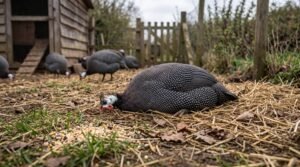
- Lethargy and reluctance to move, with birds standing motionless or sitting rather than foraging
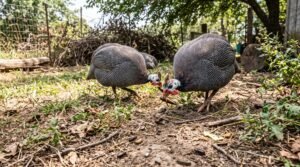
- Pale or grayish skin around the face and wattle area, as blood shifts toward the surface to release heat
- Stumbling, loss of coordination, or collapse — at this stage, you’re dealing with a medical emergency, not routine discomfort
In my experience, guineas will often go quiet before anything else changes — the flock chatter drops off noticeably on the worst afternoons. That silence is worth paying attention to on its own, even before you see panting.
Setting Up Your Coop and Run for Summer
Most heat stress is preventable with the right setup, and most of the fixes are cheap. Here’s what actually moves the needle.
Shade Is Non-Negotiable
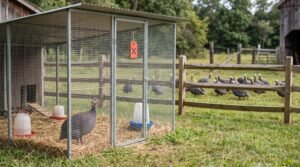
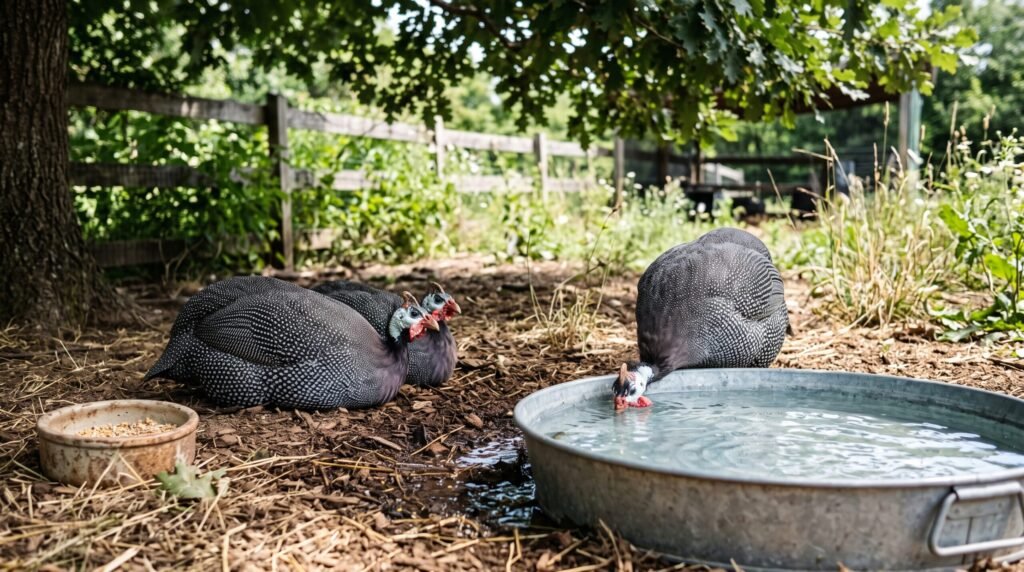
Guineas need shade available at all times during the hottest parts of the day, whether that’s natural tree cover, a tarp over part of the run, or a dedicated shade structure. During high heat, birds should always have access to a shaded, well-ventilated spot with a real breeze moving through it — shade alone without airflow isn’t enough. If your run doesn’t have natural shade, even a simple shade cloth stretched over one corner makes a real difference.
Ventilation Matters More Than You’d Expect
Stagnant air traps heat around the birds even when the shelter itself is shaded. Moving air is one of the most effective tools you have for helping guineas cope with hot, humid weather — something as simple as a box fan positioned in the coop, or exhaust fans installed to pull air through, can make a noticeable difference. If you’re building or upgrading a shelter with summer in mind, my coop design guide covers ventilation placement that works across seasons, and the housing guide goes into coop setup basics if you’re starting from scratch.
One thing I learned the hard way: don’t tuck your birds into a dark, enclosed corner of the coop thinking you’re protecting them from sun. A still, shadowy space lets body heat build up around the birds just as much as direct sunlight does. A shaded spot with airflow beats a dark, still one every time.
Bedding Choices Help More Than People Realize
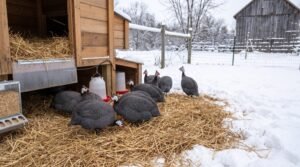
What’s under your birds’ feet affects how hot and humid the coop gets. Sand is generally considered the best litter choice for hot, humid weather because it doesn’t hold onto moisture or break down the way organic bedding does. Damp, decaying litter adds humidity to the air right where your birds are standing, which works against everything else you’re doing to keep them cool.
Water and Feed Adjustments for Hot Weather
Water is the single most important resource during a heat wave, and it needs more attention than just “keep the waterer full.”
Having enough water space, working waterers, and genuinely cool water all encourage birds to drink more, and flushing out lines and containers regularly keeps that water fresh rather than stagnant. Water sitting in a black plastic waterer in direct sun can get surprisingly warm by midafternoon, and warm water doesn’t tempt a stressed bird to drink the way cool water does. I try to check and refill waterers at least twice on the hottest days, more if I notice birds crowding around them.
A few other adjustments worth making:
- Add extra waterers spread across shaded areas so no bird has to cross open sun to drink.
- Consider electrolytes during extended heat waves. Heat-stressed birds lose electrolytes through panting and excretion, and adding electrolyte supplements to drinking water can help replace what’s lost.
- Feed during cooler hours. Because digestion generates internal heat, birds naturally cut back on feed intake as temperatures rise — you can work with that instinct by offering the bulk of feed early morning or evening rather than midday.
- Offer cold treats. Cold fruit like watermelon, or even frozen corn or peas, can genuinely help cool birds down, though guineas tend to be wary of new foods at first. Introduce these before the heat wave hits so your flock already recognizes them as food. For more on what belongs in a guinea’s regular diet, my feeding guide has the full breakdown.
If you’re weighing whether free-ranging or a confined run suits your setup better for summer specifically, it’s worth reading through free-range vs. confined guinea fowl — birds with room to roam tend to find their own shade and water more readily, but confinement gives you more control when a heat wave is forecast.
What to Do If a Bird Is Already Heat-Stressed
If you spot a guinea showing clear signs of heat stress — heavy panting, lethargy, pale skin, or reluctance to move — act right away rather than waiting to see if it recovers on its own.
- Move the bird to shade and airflow immediately. A cool, ventilated spot away from direct sun is the priority, even if it means bringing the bird indoors temporarily.
- Offer cool water right away. Don’t force water into the bird’s beak, but make sure fresh, cool water is right in front of it.
- Wet the bird’s legs and feet with cool (not ice-cold) water. This helps lower body temperature gradually without the shock of sudden cold.
- Separate the affected bird from the rest of the flock if possible, so you can monitor it without the stress of flock activity around it.
- Watch closely for the next hour. If the bird doesn’t improve, or if you see stumbling, collapse, or unresponsiveness, treat it as an emergency and contact a vet experienced with poultry.
Prevention is always easier than treatment, but knowing these steps ahead of time means you’re not scrambling to figure it out mid-crisis.
A Quick Look at Summer vs. Winter Guinea Fowl Care
Since so much of guinea fowl care is seasonal, it helps to see how summer priorities differ from winter ones side by side.
| Factor | Summer Priority | Winter Priority |
|---|---|---|
| Shelter focus | Maximize shade and airflow | Block drafts, retain warmth |
| Water | Keep cool, refill often | Prevent freezing |
| Feeding | Cooler hours, lighter feed | More feed for body heat |
| Bedding | Sand, dry, non-insulating | Deep litter for warmth |
| Biggest risk | Heat stress, dehydration | Frostbite, hypothermia |
If cold-weather prep is also on your radar, my winter care guide covers that side of the calendar in the same level of detail.
Final Thoughts
Guinea fowl are tougher in hot weather than most backyard poultry, but “tougher” doesn’t mean immune. The birds that get into trouble are usually the ones without enough shade, without cool water close by, or without an attentive keeper checking on them during the worst part of the afternoon. Set up shade and ventilation before the heat wave arrives, keep water cool and plentiful, and learn to recognize panting and wing-spreading as your early warning system rather than something to shrug off.
Have you dealt with a heat wave with your flock this summer? I’d love to hear what setup changes worked for you — drop a comment below, or check out common guinea fowl mistakes if you want to make sure your whole setup is dialed in before the next one hits.
FAQ
Can guinea fowl overheat even with access to shade? Yes, especially in high humidity, which reduces how effectively panting cools them down. Shade helps, but it should be paired with airflow and cool water rather than relied on alone.
Do keets need different summer care than adult guineas? Yes. Keets are far more vulnerable to temperature extremes in both directions and need closer monitoring than fully feathered adults during a heat wave.
Is it safe to hose down my guinea fowl to cool them off? Wetting the legs and feet with cool water is fine for a bird already showing heat stress, but avoid soaking the whole body or using ice-cold water, since a sudden temperature shock can add stress rather than relieve it.
Will free-ranging guineas find shade on their own? Usually, yes — guineas are good at seeking out shade and cover instinctively. But during extreme heat waves, it’s still worth confirming shaded areas and water sources are actually accessible across the whole range area, not just near the coop.
Hi, I’m Rayyan. I raise guinea fowl and share practical, research-backed guides for backyard keepers and homesteaders. I combine hands-on flock experience with trusted poultry management and university extension resources to help you raise healthier, more productive birds — with confidence, not guesswork.