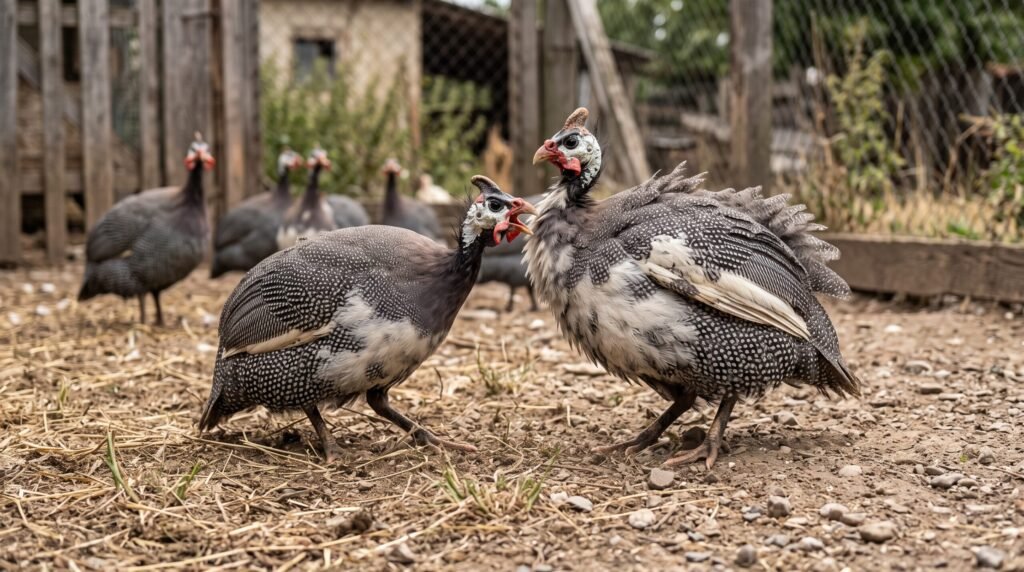
Guinea fowl fight mostly to settle rank, meaning who eats first, roosts where, and wins a mate, and short bursts of chasing and pecking are a normal part of that process. It turns into bullying when one bird is targeted nonstop or hurt, and you can usually calm things down with a better male-to-female balance, more room, extra feeding stations, and slower introductions.
If you’ve watched your guinea fowl go from peaceful foraging to full-speed chasing in a single afternoon, you know how alarming it looks. In my own flock, the loudest scuffles tend to happen at the feeder and every spring, which is no coincidence. This guide explains why guinea fowl fight, how to tell normal squabbles from real bullying, and what to change so every bird stays safe.
Here’s the short version if you’re dealing with a fight right now:
- Normal: brief chases, a few pecks, no blood, and the loser backs off and eats later.
- Bullying: one bird is hounded relentlessly, wounded, or too scared to eat, drink, or roost.
- Common triggers: too many males, crowding, shared feeders, new birds, and breeding season.
- Fastest fixes: more feeders and drinkers, hiding spots, a better ratio of males to females, and gradual introductions.
- Last resort: separate injured birds and, if needed, reduce the number of males.
What Is the Guinea Fowl Pecking Order?
The pecking order is the flock’s ranking system. It decides who gets first access to feed, water, roosting spots, and the best mates. Birds sort it out with posture, chasing, and pecks rather than constant all-out fights, and once everyone knows where they stand, the aggression usually drops.
Poultry specialists at university extension programs describe mild pecking as a normal part of setting up this order. Most of that research is on chickens, but the same basic logic shows up in guinea fowl.
Guineas add a seasonal twist. Wild helmeted guinea fowl travel in sizable flocks outside the breeding season, then split into pairs as males grow more aggressive and chase one another. Your backyard birds still carry that rhythm. Like other fowl, males and females also tend to keep separate rankings, with males usually outranking females.
Why Guinea Fowl Fight
Fighting rarely has a single cause. Usually a few of the triggers below stack up at once.
Rank Is Still Being Settled
Any change reshuffles the deck: new birds, a bird returning after being sick, or young birds maturing. In a stable group the order may settle within a few days, but new additions can take several weeks to find their place. That’s why introducing new birds carefully makes such a difference.
Breeding Season Hormones
In spring, males get territorial and edgy. The breeding season brings ritualized chasing, and males can bloody each other in real fights. Hens are usually calmer, though a hen guarding a nest or keets can get prickly too.
Too Many Males or the Wrong Flock Size
Every extra male is another rival. The simplest way to cut male-on-male fighting is to get the male-to-female ratio right.
Group size matters as well. Extension guidance suggests that mid-sized groups of poultry are the trickiest, too big for a stable hierarchy and too small for a tolerant one. The research is on chickens, so treat it as a useful principle rather than a guinea-specific rule, but it’s a good reason to think hard about the right flock size for your setup.
Competition for Resources
Rank means access, so every limited resource becomes a flashpoint. That includes feeders, waterers, perches, and dust-bathing spots. Extension specialists note that overcrowding intensifies competition for feed and water space, which raises stress and pecking. If you’re unsure whether your birds are cramped, check how much room each bird needs indoors and out.
Mixed Ages, Breeds, and Species
Combining birds that weren’t raised together often upsets the social order. Many keepers also report guinea males harassing roosters and low-ranking hens, so keeping guineas with chickens deserves extra supervision, especially in spring.
Stress, Boredom, and Diet
Sudden changes in routine, boredom, and an unbalanced diet can all push birds to peck more. Several nutritional factors are known to increase feather pecking in poultry, so make sure you’re covering what guinea fowl actually need to eat before blaming personality.
Normal Pecking Order vs. True Bullying
Not every chase is a problem. This quick comparison helps you decide when to step in:
| What you see | Normal pecking order | True bullying |
|---|---|---|
| Duration | Short bursts that fade within days | Daily, relentless, lasting weeks |
| Contact | Chasing, posturing, a quick peck | Pinning, repeated hard pecks, blood |
| Target | Rank gets sorted among several birds | The same bird is singled out, often by a group |
| Victim’s behavior | Backs off, returns later to eat | Hides, avoids feed, water, and roost |
| Outcome | Calm once ranks are clear | Wounds, bare patches, declining condition |
Watch for these red flags that a bird needs help:
- A bird that stays hidden or sits apart from the flock all day.
- Visible wounds, especially on the head, neck, or back.
- A bird that’s pushed away from the feeder or kicked off the roost every night.
- Bare patches or feather loss, though that can have other causes, so look closely before assuming a bully.
One more thing to keep in mind: blood draws attention. Fowl tend to peck at injured or weak birds, so even a small wound can turn a minor scuffle into a pile-on.
How to Reduce Bullying in Your Guinea Flock
Work through these roughly in order. The first few fixes solve most problems.
Balance the Males
If males outnumber hens, expect friction. Aim for fewer males per hen and be prepared to rehome extras if fighting stays intense. If you’re not sure who’s who, learn to tell males from females before making changes, so you don’t remove the wrong birds.
Add Feeders, Drinkers, and Room
Spread several feed and water stations around the yard or coop so one dominant bird can’t guard them all. I’ve found that placing them out of sight of each other works better than lining them up side by side. Also make sure there’s enough perch space that lower-ranking birds aren’t shoved off at bedtime.
Create Escape Routes and Hiding Spots
Low-ranking birds need a way to break the line of sight. Shrubs, leaning pallets, straw bales, or crates give them somewhere to retreat, and a chaser often loses interest once its target disappears.
Introduce Newcomers Gradually
Quarantine new birds first, then keep them where the flock can see them but not touch them for a while. Rushing this step is the most common way I’ve seen a manageable adjustment turn into real bullying.
Raise Birds Together When You Can
Birds that grow up together learn each other’s rank early, with far less drama. If you can, start with raising keets in the same brooder rather than mixing very different ages later.
Keep Them Busy
Bored birds peck. Scatter grain, hang a head of cabbage, and give them a proper dust-bathing spot. Birds with room to roam also have an easier time avoiding each other than birds stuck in a small pen.
Separate When You Have To
Take an injured bird out until it heals, since wounds invite more pecking. If one bird is clearly the aggressor, many keepers find it works better to remove the bully than the victim, because a victim returning after time away is treated like a newcomer all over again. Keep the separated bird in a pen alongside the flock so everyone can still see each other, then reintroduce once things calm down.
When the Fighting Doesn’t Stop
Sometimes the honest fix is fewer males. Keepers commonly remove males one at a time until the flock settles, and some choose to rehome surplus cocks. It’s never a fun decision, but a peaceful flock with fewer birds beats a crowded one where someone is always getting hurt.
Final Thoughts
Guinea fowl will always squabble a little, and a pecking order is how they keep the peace. What you control is whether the squabbles stay brief. Balance your males, spread out resources, give low-ranking birds somewhere to hide, and introduce new birds slowly.
Your next step is simple: spend fifteen minutes watching your flock at feeding time and count how many birds get pushed away. What does your flock’s pecking order look like right now? Share what you’re seeing in the comments, and browse more flock behavior guides for what to try next.
FAQ
How long does it take for a guinea fowl pecking order to settle?
In an established group, a few days is typical. When you add new birds, it can take several weeks before everyone finds their place. If the aggression is getting worse rather than easing, don’t wait it out. Make changes.
Can guinea fowl kill chickens?
It’s uncommon, but it can happen. Keepers report guinea males cornering and pecking hens, especially during spring. Watch mixed flocks closely and separate any bird that’s being pinned or wounded.
Can I keep guinea fowl without males?
Yes. Hens lay eggs without a male, so a hens-only flock works if you aren’t hatching eggs. Many keepers also find that flocks with fewer males are calmer.
Why is my guinea fowl suddenly aggressive toward me?
Males can become more aggressive in breeding season, and hens guarding a nest or keets may charge people who get too close. Give them space and avoid cornering them.
Hi, I’m Rayyan. I raise guinea fowl and share practical, research-backed guides for backyard keepers and homesteaders. I combine hands-on flock experience with trusted poultry management and university extension resources to help you raise healthier, more productive birds — with confidence, not guesswork.